We've gone more than 14 months without minor league baseball games. We don't know when we'll see the Buffalo Bisons – or any other team – back on the field, nor do we know which teams will play in which leagues and under what structure.
The pandemic has only heightened the mess of baseball's development system, which Major League Baseball was already planning to take over for 2021 before Covid-19 prevented the 2020 season from starting.
But the details are still being worked out. And there's lots of them, both big and small. As Thanksgiving approaches, one key element that appears set is the minors will drop from 162 teams to 120 and the 30 MLB teams each will have only four affiliates.
"It's a bit of a pyramid you're trying to figure out that you've got foundational questions that need to be answered before you can move up to the next level," International League president Randy Mobley told The News this week by phone from the league office in Dublin, Ohio. "You're waiting for MLB to decide what 120 teams will be in Minor League Baseball. We don't know what teams will be in the International League. We don't know if there's even going to be something called the 'International League.' We don't know, for instance, if all of Triple-A might just be broken into several divisions."
People are also reading…
In the absence of a replacement to the expired Professional Baseball Agreement between the majors and minors, teams no longer will have Player Development Contracts with parent clubs. Instead, they will have a Player Development License with MLB as a whole, which will then assign them a parent that is geographically aligned.
The Bisons are expected to remain as Toronto's Triple-A affiliate, although that has not yet been made official by the Blue Jays.
"We'll follow the lead on Major League Baseball when that is resolute and we can comment more specifically on it," Toronto General Manager Ross Atkins said when asked by The News on a recent video call. "I would expect we're not talking weeks. We'll start to have clarity here sooner than later and follow MLB's lead on that front."
With that backdrop in mind, he's an attempt to answer some key questions currently lingering over the game:
What is MLB doing here?
The plan is called "One Baseball" and it allows Commissioner Rob Manfred's central office to run all aspects of the game, perhaps all the way down to Little League. By 2022, and perhaps sooner, the office of the minor leagues in St. Petersburg, Fla., is expected to be shuttered and individual leagues will not have their own presidents. Pat O'Conner, the longtime president of the minors, has announced he's retiring on Dec. 31 and Peter Woodfork, who has worked in multiple MLB jobs, including the umpire program, was appointed MLB's senior vice president of minor league operations and development earlier this month.
The theory is there will be increased marketing and sponsorship opportunities for the minors, better cross promotion through MLB.com and thus more revenue. MLB will take over scheduling and managing the umpires, and pushing a player health and wellness initiative to increase pay, improve conditions for travel and force cities to improve their playing facilities.
How different will the minors look?
It will be radically different at lower levels as entire leagues like the New York-Penn League are expected to be eliminated. NY-P teams such as the Batavia Muckdogs, Auburn Doubledays and the Rich Baseball club in Morgantown, W. Va., could be transitioned to college wood-bat leagues or shut down entirely.
Dire straits.
Two words that describe the situation for Minor League Baseball. The Bisons and roughly 160 other teams are on pause until April 2021. We have no idea what things will look like when they come back. And for many teams, if they come back.
In Triple-A, no one knows if we'll keep the two-league structure with the International League and Pacific Coast League, perhaps go back to some sort of three-league structure like when the Bisons were in the American Association from 1985-97 or simply go with five or six divisions of one league spread across the country.
Cutting down travel is the key element, especially for Pacific Coast League teams like Nashville and Memphis that have to travel cross-country and could now be paired against IL clubs. Fresno of the PCL is expected to drop to Class A and the parent Washington Nationals announced Thursday they're bringing their Triple-A team to Rochester after the Red Wings were dumped by Minnesota. The Twins are expected to be working with St. Paul, which will join Sugar Land, Texas, in moving up from independent leagues. Several sources say Jacksonville, Fla., is likely to move up from Double-A to Triple-A as part of several city shifts.
What's the status of the 2021 season?
The most likely scenario has Triple-A players leaving spring training and breaking camp around the same time as the big leaguers and starting the season in April, with Double-A and Class A teams opening in May.
But no team knows who's in their league or has a schedule and, of course, the virus can make its own schedule. The Bisons routinely have the next year's schedule out in August and start selling suites and party areas for key dates on Oct. 1. None of that work has taken place this year.
Can teams operate if no fans are allowed?
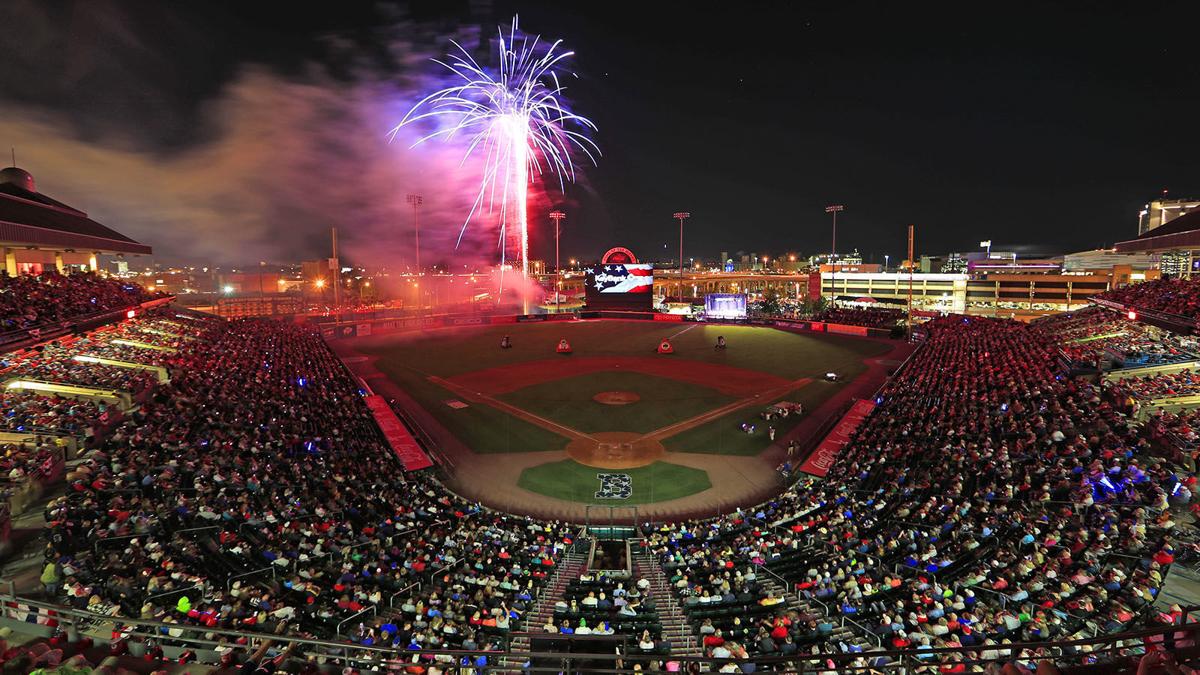
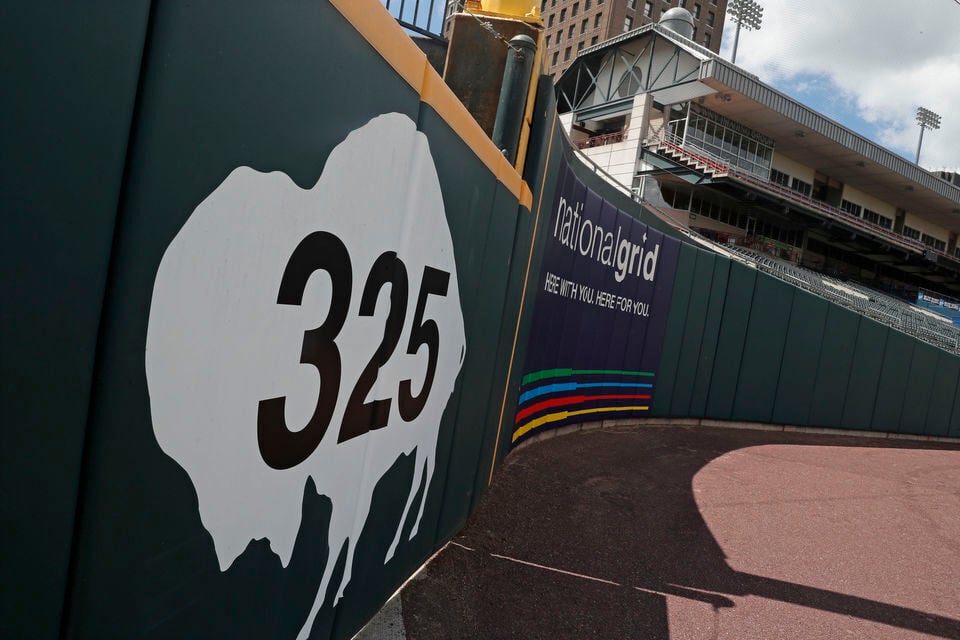
There's no TV money to prop up the minors. It's a gate-driven business. No fans seems like a nonstarter. The Bisons determined in the spring that social distancing of Sahlen Field's capacity of around 17,000 would allow them to sell only around 2,500 seats, far from what they do on most summer weekend nights.
"Very, very difficult to not have fans," said Rich Baseball Operations President Mike Buczkowski. "Any minor-league team without fans will really struggle. People have been pretty creative in thinking about what other things you can do in lieu of baseball, like 'Dining on the Diamond' or other nongame day events, but to play games with no fans, I don't see how from a business standpoint we can do that. Reduced capacity would be difficult but doable, but I don't see how teams can operate successfully with no fans."
What standards are the majors imposing upon the minors?
MLB will undertake a program to give every ballpark a onceover in hopes of getting upgrades related mostly to its health and wellness initiative. From Class A to Triple-A, from newer places to a 32-year-old facility like Sahlen Field, teams will have plenty to consider.
"I expect that almost every ballpark will need to upgrade its facility in some way," Buczkowski said. "Over time, there are things that were never contemplated that you're now going to have to consider."
The Bisons are lucky they got a free lighting upgrade from MLB and the Blue Jays, because many teams will need those. Other things that will have to be addressed include size of clubhouses and training facilities; dressing areas for females who may serve as umpires, trainers, coaches, nutritionists and sport psychologists; meal preparation zones; and technological upgrades to accommodate 2020-era video analytics systems.
MLB will draw up league schedules, with focus on limiting travel. There could be mandates for more flights rather than long bus trips, more day games on getaway days, fewer odd start times like morning School Days games.
Speaking of Sahlen Field, what are the chances the Blue Jays play in Buffalo again?
It's remote. Although the same could be said for the Jays opening their season in Toronto, especially in the wake of Friday's news that the Raptors will have to play their NBA games in Tampa. One likely scenario could be the Jays opening elsewhere and transitioning back to Toronto when (or if) the Canadian border reopens. The costs and heavy lift involved in making Sahlen Field an MLB park doesn't automatically eliminate Buffalo, because the Jays remain thoroughly pleased with how their experience went here, both on the field and off.

The Blue Jays played their entire 26-game home schedule for 2020 in Sahlen Field.
"When the Jays made their decision, I was thrilled for the Buffalo club," Mobley said. "I knew they would do a great job and it meant Buffalo was back in operation and Rochester as well as the Alternate Training Site. It was a real double win for us. The first time I saw a game on TV, I remember sending Mike (Buczkowski) a text just saying, 'It looks fantastic' with the new lights, with everything in blue. It was amazing to see."
Logistically, however, it makes much more sense for the Jays to simply open the regular season at their spring training home in Dunedin, Fla., where the team's massively renovated player development complex is up and running, the weather is better in April and some fans would be allowed in the seats. Buczkowski said some aspects of the service level rebuild in Buffalo remain intact if the Jays wanted to return but it seems impossible to think the Jays and Bisons could play here at the same time.
If they can't play in Toronto, the Blue Jays are a good bet to revisit plans to play in Pittsburgh's PNC Park, like they had decided to do in July until Pennsylvania health officials blocked the move.