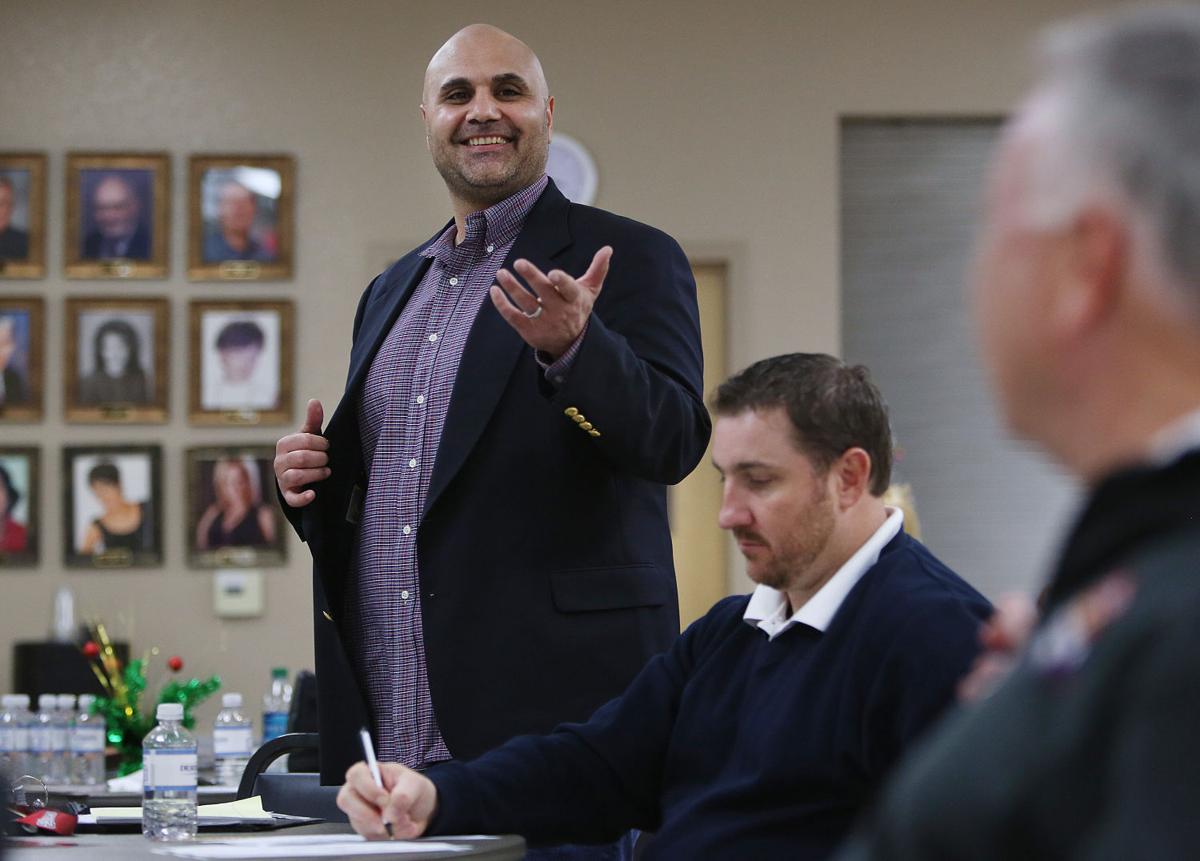
When Mohsen Farhang moved to Tucson 45 years ago, the freeway to Phoenix was still considered new. Tucson was a cow town. Antiquated Bear Down Gym housed the UA’s basketball team and capacity at Arizona Stadium was just 39,000.
The son of an Iranian rice dealer followed his brother, Mansour, to Tucson. They dreamed big dreams. Not just big dreams, supersized.
After graduating from the UA, Mansour became Iran’s ambassador to the United Nations. Mohsen, known as “Mo,” embraced Tucson’s culture. He opened a country bar, the Maverick King of Clubs, at 22nd Street and South Swan Road.
It was a modest honky-tonk in a modest honky-tonk town but it didn’t diminish his ability to think big. He signed the biggest names of the day: Willie Nelson and Tammy Wynette. Superstars. He signed Waylon Jennings and the boys. Jerry Lee Lewis. Charlie Pride.
People are also reading…
No act was too big for the little ol’ Maverick.
Mo’s oldest son, Ali Farhang, saw it all unfold. He saw Tucson’s rise from Trail Dust Town to a metropolis of 1 million people. As he went through Sabino High School and the UA, Ali witnessed Tucson emerge, a player on the national sports stage.
The Colorado Rockies, Arizona Diamondbacks and Chicago White Sox staged baseball here every spring. The PGA and LPGA tours rolled by. The Copper Bowl drew more than 49,000 fans. Oklahoma played here. So did Wisconsin, Baylor and BYU. USA Baseball moved its headquarters to Hi Corbett Field. McKale Center was a regular part of the NCAA basketball tournament rotation. Tucson won three Pacific Coast League baseball championships.
And then it all went away.
“Poof,” Farhang says now, shaking his head. “It hit me hard.”
Farhang, 43, remains, at heart, a wanna-be football player. On the wall at his midtown law office, Farhang & Medcoff, is a large color image of former Pittsburgh Steelers running back Jerome Bettis. The Bus.
Ali Farhang has become Tucson’s version of The Bus.
The driving force behind Tuesday’s inaugural Nova Home Loans Arizona Bowl is a former Sabino Sabercats linebacker who turned out a lot like his father, Mo.
“I’ve got some promoter in my blood,” he says. “People say Tucson will never be a sports town again. They say it’s a fait accompli. I’ve heard enough of that Latin talk. It was time to do something about it.”
When Mountain West Conference rivals Colorado State and Nevada kick off Tuesday’s game, Farhang won’t wear the traditional, almost sappy bowl-game blazer seen at every bowl game from Miami to Pasadena. He’ll wear a baseball jacket. So will his staff.
This isn’t your grandfather’s bowl game.
After two years of diligence, two years of getting quizzical looks from people whose expressions suggest “this will never work,” Farhang and his 50-member Arizona Bowl committee will show that The Game Is Back On.
For stopping the outflow of sports in Tucson, Farhang is the Star’s 2015 Southern Arizona Sports Figure of the Year.
“Without Ali, there wouldn’t be a game,” says Alan Young, CEO of the Arizona Sports & Entertainment Commission, whose Phoenix-based group joined Farhang in re-establishing a bowl game in Tucson. “He’s a bulldog.”
In 1989, Tucson attorney Burt Kinerk, former Tucson Toros general manager Merle Miller and civic leader Larry Brown successfully created the Copper Bowl, which enjoyed an 11-year run under title sponsors Domino’s Pizza, Weiser Lock and Insight.com.
Struggling financially, the game was pirated away by the Fiesta Bowl in 2000. After earning his law degree at the University of Denver, Farhang returned to Tucson in 2001 and became a member of Tucson’s Fiesta committee. Small world: Young was the Fiesta Bowl’s chairman until the event changed management three years ago.
From that friendship, Farhang began thinking about getting Tucson back on the bowl map.
“I’d periodically bring it up,” he says. “I thought when Sun Devil Stadium underwent renovations that we could get the Cactus Bowl here for a year or two, but then the group signed with Chase Field and I knew we’d have to start from scratch.”
Among the potential negative variables was that Farhang, who has sons aged 16 and 10, and is married to Tucson attorney Lia Farhang, is one of those busy-around-the-clock types who filled his days coaching football at Salpointe Catholic and in the Chargers’ youth football organization.
How could he possibly find enough time to get a bowl game up and running? Financial reward? Farhang does not get paid by the Arizona Bowl.
He enlisted the support and help of Tucson health care executive Fletcher McCusker and commercial real estate executive Mark Irvin — “I got them excited,” he says — and momentum was established.
“Everyone said they couldn’t do it this year,” says Kinerk. “But they just wouldn’t take no for an answer. I know how much work is required to operate a bowl game. You’ve got to have a guy like Ali or it won’t go.”
Farhang discovered that the Mountain West Conference wanted another bowl affiliate. Campusinsiders.com was eager to get involved in a bowl game. And once Farhang got fellow Salpointe assistant coach Jon Volpe of Nova Home Loans to agree to a multiyear deal as title sponsor, the NCAA gave its approval.
“I almost wanted to name the game the ‘Tucson Renaissance Bowl’ because I believe Tucson is at the start of a renaissance as a place to be,” says Farhang. “Our growth downtown is remarkable and impressive. And now, instead of lamenting our losses in sports, my mantra is ‘why not do something to change that narrative.’
“If we do this intelligently, we can add as we go. This is just a start.”