


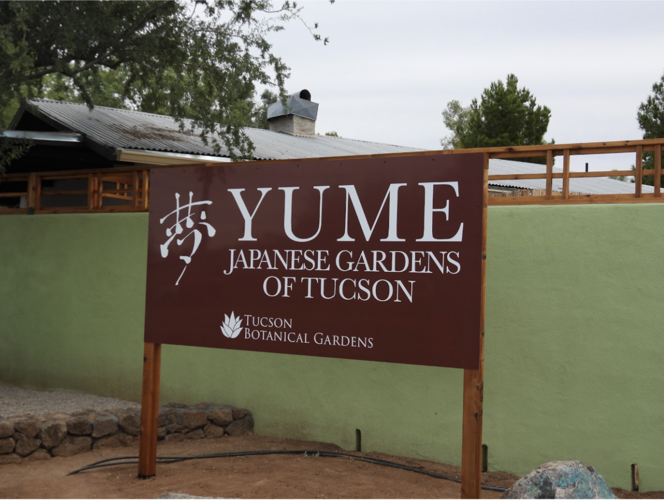
Tucson Botanical Gardens is restoring and reopening Japanese gardens in central Tucson.
Yume Japanese Gardens of Tucson reopens on Oct. 11, providing a green refuge where visitors are immersed in Japanese culture and heritage through landscape design, festivals, ceremonies, performing arts, museum exhibitions and workshops, said Adam Ferral-Wartman, Tucson Botanical Gardens director of horticulture.
He called the gardens “a haven of greenery and tranquility for the Tucson community.”
Yume first opened in January 2013 when founder Patricia Deridder, a Belgian who lived in Japan for 15 years, transformed hard desert clay into a series of intimate courtyard-style gardens. The gardens were designed to share the healing qualities of Japanese gardens and to honor her parents, according to the Botanical Gardens.
Last year, Deridder approached Tucson Botanical Gardens about acquiring the space because she was struggling to maintain the gardens due to low attendance.
The organization “jumped at the opportunity,” Farrell-Wortman said.
Once the purchase was complete, staff decided a cultural garden deserved full respect, he said.
“We needed to do a kind of full overhaul and makeover of the space,” he said.
They addressed the structural integrity of the buildings and hard infrastructure while beginning new plantings.

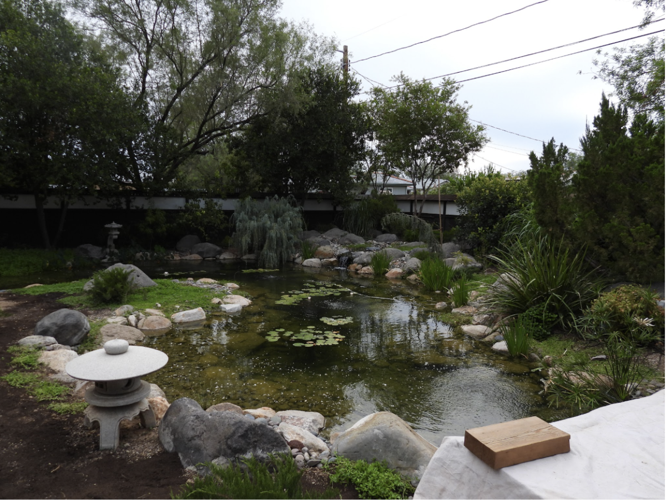
A quiet pond surrounded by rocks, lily pads and garden plants sits beneath shaded trees at Yume Japanese Gardens in Tucson, Ariz., on Sept. 23, 2026, creating a peaceful corner within the landscaped grounds.
Because the Botanical Gardens lacked expertise in Japanese gardening, they hired world-renowned landscape architect Takuhiro Yamada, who visited the property several times and continues to advise via live video
The idea was “to make sure that we are providing as authentic a Japanese garden experience as possible in the Sonoran Desert,” Farrell-Wortman said. “It’s not completely possible because Japan doesn’t have any deserts.”
Robin Lansing, now head gardener for Yume, described the practical work that began in May 2025 to prepare the gardens for reopening.
“There were, and are still, some amazing anchor plants here, some beautiful pine trees and other shrubs,” she said. “But the soil had been depleted, and the irrigation was very old and not working well.”
Staff started a soil regeneration program.
“Almost like starting with probiotics, if you will, for your tummy to get your tummy feeling better,” Lansing said.
The goal was to rebuild healthy microbiomes so the ground could support life again.
A donor then funded a complete replumbing of the irrigation system.
“Having the consistent water to the garden has enabled us to plant more plantings and ground cover and things like that it wasn’t able to sustain before,” Lansing said.
The Japanese-style garden pond, which had been leaking, was fully rebuilt with another donor gift.
The pond’s deck is nearly finished. Small fences and gravel top dressing are being added, Lansing said.
A Canadian cedar bridge was installed and carefully wrapped so it will be in mint condition for opening, she added. And one more tree still sits in its pot along the corridor that leads to the bridge, waiting to be planted.
“I’m personally excited to see actual bamboo in Arizona,” Lansing said of the renovations. “Bamboo grows amazingly in Arizona. You just don’t see it very often because it’s very invasive.”
She is also eager for the wisteria arbor, known in Japanese as a fujidana. The old structure was so low that most people had to duck. During renovations, workers cut back the vines last winter.
“Next year the wisteria on that will be spectacular,” Lansing said. “This year it kind of grew in knots, and so it won’t be as lovely and draping, but it will be up, and it will be a shady spot, and it will look down this lane to this beautiful bridge.”
One of her favorite places is the tsukubai, the stone water basin near the tea garden and is used in ceremonies.
“Part of the tea ceremony is the cleanse of your mind, soul, body,” Lansing said.
Before reaching the tea house, participants stop and cleanse at the stone, she said.
“And then even entering the tea house, there are things that you do to say you are leaving the world behind. You keep shedding the world so that you are prepared for tea,” she said.

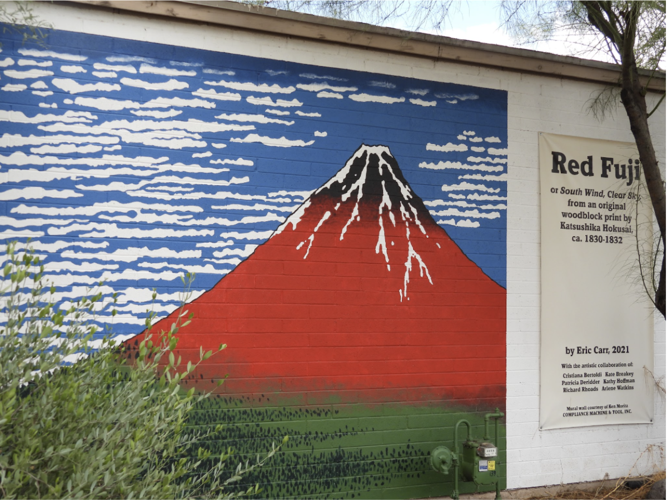
A mural inspired by Hokusai’s “Red Fuji” decorates a small building at Yume Japanese Gardens in Tucson, Ariz., on Sept. 23, 2026, blending traditional Japanese art with the garden’s desert setting.
The restoration remains a multi-year process. More planting is still needed, and small details around the pond are unfinished. But with core work complete, it’s time to invite the public back
“Yume had a lot of different maintenance that required it to be closed until it met the high standards that (Tucson Botanical Gardens) has for its gardens,” Ferral-Wartman said. “After over a year of major infrastructure work like irrigation replacement, soil rehabilitation, pond reconstruction and building refurbishing, we believe the space is now ready to share with the Tucson community.”
“While a garden is never ‘finished,’ we believe Yume is at a place that honors the great horticultural practices of Japan and is able to support educational and cultural programming,” he added in a written statement.
When Yume reopens on Oct. 11, visitors will find both a renewed landscape and ongoing cultural programs. In the coming months, the gardens will offer an eight-week haiku workshop, fall haiku walk, Japanese basket weaving workshop and a Voices of Autumn concert.
The lost garden has been found again.
Arizona Sonoran News is a news service of the University of Arizona School of Journalism

