

NEW YORK — New England's fall foliage typically peaks in late September and early October. But around the country, leaf-peeping season runs longer than you might think.
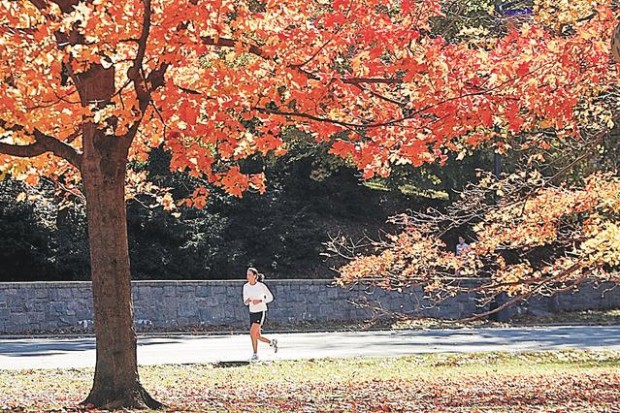
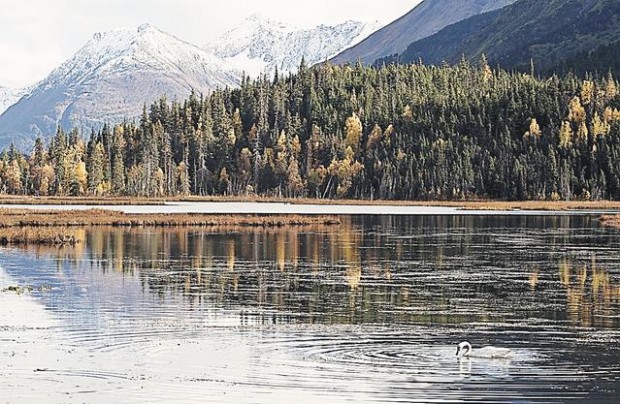
Autumn comes early in Alaska, brushing Denali National Park with purple and gold in late August. In warmer climates and near sea level, fall colors can last well into November. Last year, trees in New York City's Central Park were still putting on a show the week before Thanksgiving.
And while New England is the undisputed queen of classic autumn scenery, other regions brag about foliage too, from Yosemite National Park in California to North Carolina's mountains to Michigan's Upper Peninsula. The U.S. Forest Service links to fall color reports in all but a few states at www.fs.fed.us/news/fallcolors.
Verna Pratt, who has coauthored five books about Alaska's native plants, grew up in Massachusetts and admits that "nothing matches the maples" back east in the fall. "But there are things that bring good colors here in Alaska," added Pratt, who lives in Anchorage.
People are also reading…
In most regions, color appears first in northerly areas and higher elevations, then gradually spreads to valleys, coastal areas and southerly regions. But precisely when the leaves turn, and how brilliant the colors will be, can't be predicted too far in advance, because it depends on early fall weather.
"One of the things that is really critical is cool nights," said Howard Neufeld, a professor of plant physiology at Appalachian State University in Boone, N.C. "Starting in September, if it starts to get cool but not below freezing, if you have clear cool days and cool nights, it stimulates fall color."
Cold and rainy weather, with less sunlight, results in fewer reds. That's because sunlight stimulates red pigment, Neufeld said. And if it's too warm, chlorophyll stays active longer, keeping leaves green. Trees need cool temperatures to degrade chlorophyll and "reveal the red and orange colors," Neufeld said.
Here are some details on where and when to see fall foliage in other parts of the country.
ALASKA: In Fairbanks and Denali National Park, "fall will begin mid-August, and it will be peaking there the end of August and first week of September," said Kyle Kelley, general manager of Alaska Wildland Adventures, whose late-summer tours include fall foliage viewing in Denali and other areas. Fall lasts just a few weeks, "and then all of a sudden those bright colors are gone, and you're into winter pretty quickly," he said.
But on the Kenai Peninsula and in Anchorage, "we have a more temperate climate. The fall colors kick in about the third week of September and into the first week of October," Kelley said.
NEW ENGLAND: Foliage in New England usually peaks the last week of September through mid-October, according to Jeff Folger, a photographer and blogger who chases fall color for Yankee magazine and tracks foliage at www.yankeefoliage.com.
Folger advises travelers to pick a central location as a base of operations, such as Conway, N.H.; Woodstock or Bennington, Vt.; the Berkshires in Massachusetts; or Sebago Lake in Maine. Then explore the area rather than try to cover too much ground in a couple days. If you can do only one trip, Folger says Oct. 4-10 is often a prime color week, with southern New Hampshire a good place to start.
MICHIGAN: Fall color can be found in many parts of the state, such as the Upper Peninsula's hardwood forests and the northwest region including Petoskey, Charlevoix and Traverse City.
"From mid-September to late October, we see a variation of fall color rolling through from the western Upper Peninsula to the southeastern portion of the state," said Kirsten Borgstrom of Travel Michigan. "The lakes tend to pop toward the last moment, mid- to late October."
Recommended destinations include Michigan wineries, parks like Pictured Rock National Park in Munising, and scenic roads like M119, nicknamed the "Tunnel of Trees."
NORTH CAROLINA: Fall color usually appears in the mountains the second week in October at 3,000-5,000 feet, said Neufeld, the Appalachian State University professor. Good leaf-peeping places include Newfound Gap and Clingmans Dome in the Smoky Mountains; Mount Mitchell, which is the highest peak in eastern North America; and the Blue Ridge Parkway.
CALIFORNIA: In Yosemite National Park, as in other places, "fall colors arrive at different times in different areas," said Kenny Karst, spokesman for DNC Parks & Resorts at Yosemite Inc., the park's concessioner. In Tuolumne Meadows, at 8,500 feet, October is the best time for foliage. But in Yosemite Valley, at 4,000 feet, "it's not uncommon to see trees turning colors sometimes even later than the first week of November," Karst said.
Leaf-peepers also find their way to the Plumas National Forest, in the Sierra Nevada range.
PHOTO TIPS
Jeff Folger photographs fall foliage and provides commentary for Yankee magazine's www.yankeefoliage.com Web site, where readers from around the country ask questions about fall color and post stories about what they're seeing. Folger's pictures can be seen at www.vistaphotos.net. He offers these tips for amateur photographers trying to get good shots of autumn color in any region:
• Don't discount overcast days for shooting. Cloudy days are great because colors are more saturated.
• On sunny days, try lying on the ground, looking up through a tree with the sun coming through the leaves, and watch the colors explode as you shoot.
• Try focusing on a single branch or one glorious leaf instead of trying to get a panoramic view of an entire valley or mountain range.
• Try using an ordinary pair of blue sunglasses as a light filter by holding it in front of your camera lens to intensify the colors.
— The Associated Press


