

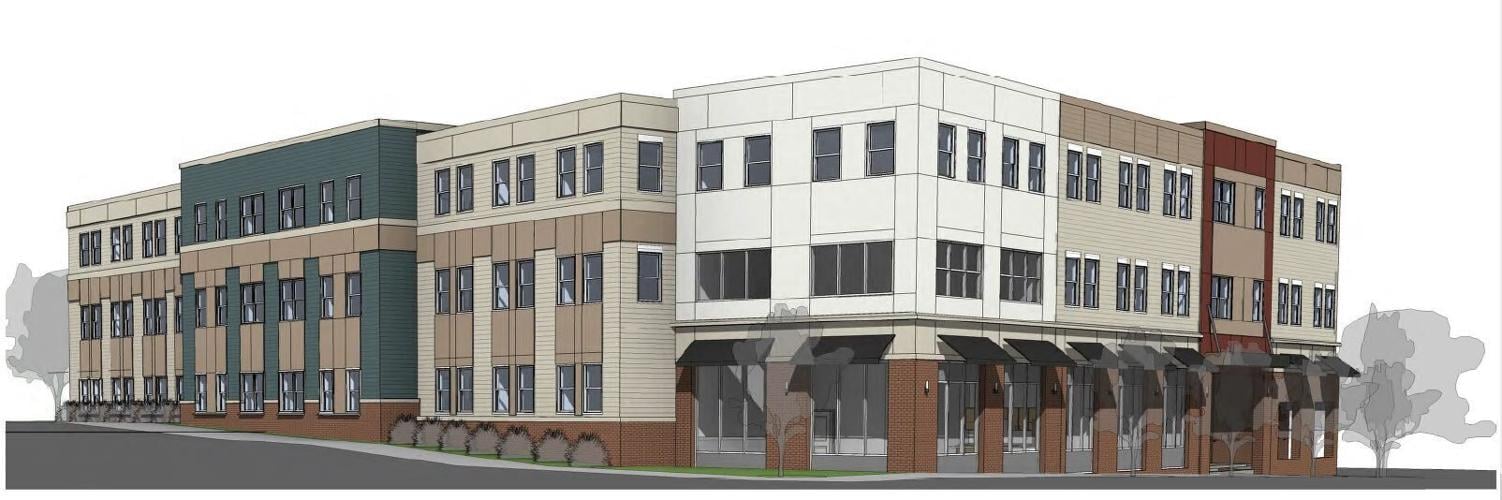
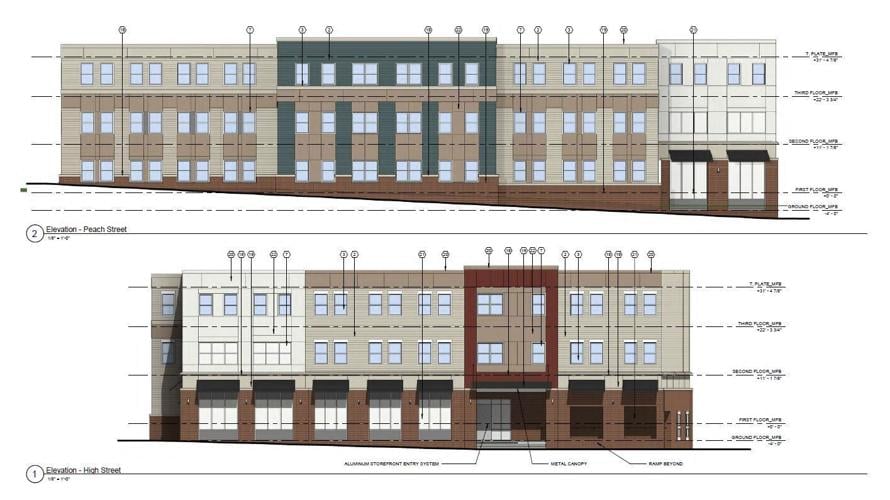
Thomas Whitney thought the proposal by his Dunkirk-based non-profit agency to construct an apartment building and 11 new houses in the city's Fruit Belt had neighborhood support.
After all, the Southern Tier Environments for Living was partnering with the Fruit Belt Community Land Trust and the city. And in keeping with STEL's mission, the project at High and Peach streets was geared toward households with lower incomes, as well as some people with special needs.
But that's not the way nearby residents saw it. And neither did the Buffalo Planning Board, whose members not only tabled the discussion earlier this week but left the public hearing open in an unusual move after echoing residents' criticisms one by one.
The historic neighborhood adjacent to the Buffalo Niagara Medical Campus is at a crossroads, torn between growing spinoff development from the nearby Buffalo Niagara Medical Campus – including market-rate housing – and a desire to ensure any development remains affordable to existing residents.
People are also reading…
The pushback over the latest proposal is an example of just how difficult and complicated adding new construction to an established neighborhood can be.
"This is such a great opportunity for the Fruit Belt. But there’s just a concern that this one, which really could be a turning point for the neighborhood, is done right and does everything that the trust wants and the neighbors want," said Planning Board Vice Chair Cynthia Schwartz, who works at Roswell Park Comprehensive Cancer Center on the nearby Buffalo Niagara Medical Campus. "It is not a case of being against a project, but making sure that a project can be as good as it can be."
In particular, neighbors, including those across the street from the project site, said they weren't informed or consulted in advance, didn't know enough about the project, and had heard conflicting information about it that concerned them.
"It’s unfortunate that there has not been enough communication with the people who live directly around these structures that are being planned," said Dennice Barr of Grape Street, president of the Fruit Belt Advisory Council.
"Have you spoken to anyone in the neighborhood?" asked Vanessa Warner of Rose Street. "If there was any community input, you wouldn't have these concerns."
Planning Board Chairman James Morrell acknowledged that personal communication is more difficult because of the pandemic, but it's not impossible, especially since "it's not that many houses within a one-block radius" of the project site. He cited past examples of developers going door-to-door with notices.
"I think there needs to be some more in-depth community engagement, to talk about the issues," Morrell said. "I normally don’t get this personal on a particular project, but we’ve been there several times on projects in the Fruit Belt."
STEL, which specializes in providing services and affordable housing for those with mental illness, special needs and other disabilities, is planning a two-phase project, using 27 city-owned parcels totaling 2.03 acres of land, on four streets. Rents would be targeted toward those earning 50% or 60% of the area median income.
The $20 million project would include a new 42,000-square-foot apartment building, with 33 units, on eight parcels at High, Peach and Grape streets. The three-story building – with a facade of brick and fiber-cement siding or panels – would include 21 one-bedroom and 12 two-bedroom units. Fifteen units would be reserved for special-needs tenants, with an even lower income threshold, although the nonprofit is still determining exactly whom to target.
The rest of the parcels would be used to build five traditional three-bedroom duplexes, one two-bedroom duplex and five single-family homes throughout the neighborhood. All will have their own driveways, sidewalks, patios and porches.
There was no criticism of these "scattered-site" duplexes and single-family homes – all of which will also be rentals for now, because of the terms of the state low-income housing tax credits that will finance them. Eventually, STEL and the land trust plan to sell those units, in keeping with the trust's mission, officials said at the public hearing. But that hadn't been made clear previously, said neighbors, who questioned if there was an opportunity for ownership.
"Our long-term mission is to own the land and sell to homeowners, so they can generate wealth," said Robert Knoer, an attorney who is a member of the land trust's board. "That is ultimately our goal."
Neighbors also complained that the parking plan proposed by STEL is inadequate and will create more problems on the streets. The design by Rochester-based SWBR and Greenman-Pedersen includes eight parking spaces on a lot adjacent to the apartment building, but a GPI representative said a transportation demand management study had concluded there was "plenty of parking nearby" on the streets.
That led to ridicule by neighbors. "I’d like to see that," said Brandi Barrett of Peach Street. "I have people who work at the Medical Campus park their cars here just so they don’t have to pay to park."
They also objected to the planned demolition of a single structure – a wood-frame building that was previously used by the Community Action Organization.
And they worried that STEL planned to bring in tenants who could pose a risk to the neighborhood. "I’ve been hearing a lot of rumors that this was going to be a place for people with mental illness," said Ricardo Washington, a neighborhood resident. "There are quite a few kids in the neighborhood."
Board members echoed residents. "The parking study is totally deficient," Schwartz said. "I cannot believe this parking plan is anything but a headache for the neighborhood, and it really needs to be rethought."
Knoer said the units are not designated for anyone requiring "additional services," but could be used for people who are "in transition." That would help the nonprofits in their bid for the tax credits when they apply in April.
As for the CAO building, Knoer said it's "not in shape to be rehabbed," so "we just don't believe that makes sense."
Knoer said the group held a meeting in December on Zoom and another one two weeks ago, with about 20 attendees. He said the group sent postcards to property owners in the neighborhood, based on information from the county, but acknowledged that renters might not receive such notices.
But neighbors voiced skepticism. "I just received notice as well," Washington said. "I'm not sure how you were getting out the marketing for this project, but it’s been terrible."


