

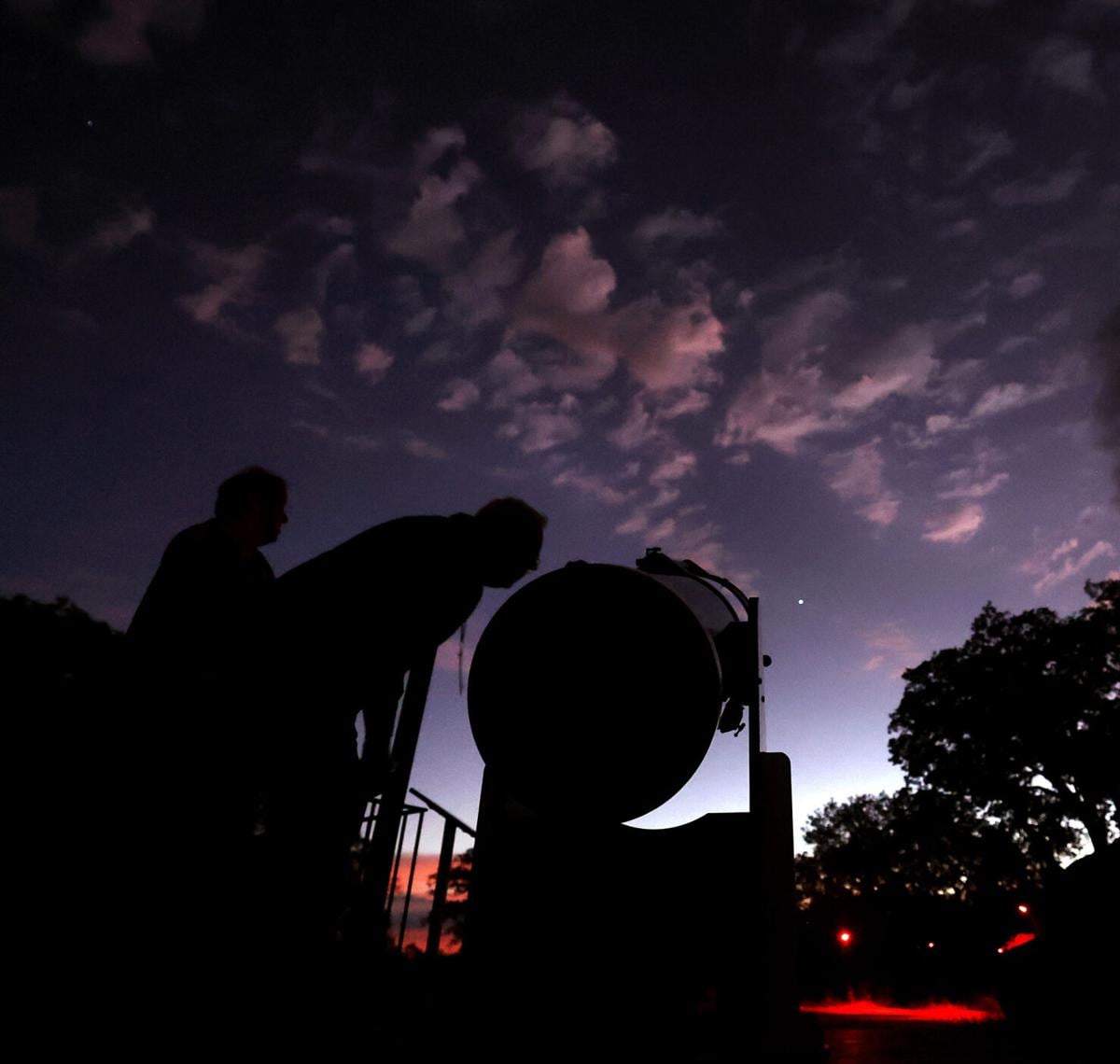
Saturday, Sept. 19, is Astronomy Day. The theme of Astronomy Day is “Bringing Astronomy to the People.” Astronomy Day is a worldwide event celebrated each spring and fall: https://www.astroleague.org/astronomy-day-fact-sheet/.
I recommend you check with the Tucson Amateur Astronomy Association, Inc. (TAAA) at Tucson Amateur Astronomy Association to see what it might offer the public. Also check with the Flandrau Science Center and Planetarium (520-621-4516), Starizona (520-292-5010), and Stellar Vision (520-571-0877) to see what they might offer.
People are also reading…
Fall officially starts on Tuesday, Sept. 22, at 5:05 p.m. when the sun appears to cross the celestial equator, going from the northern part of the sky into the southern part of the sky.
As the Earth travels around the sun on its yearly circuit, the sun appears to move against the starry background. The tilt of the Earth’s axis with respect to its orbital plane around the sun gives us our seasons.
The sun is in the northern part of the sky from the vernal (spring) equinox around March 21 until the autumnal equinox around Sept. 21.
Of course, we cannot see the sun sitting against the starry background because it is so bright, and the stars are hidden in the daytime sky.
The ancients learned to look at the stars along the horizon just before sunrise and just after sunset, giving them a good idea as to the sun’s actual position in the sky.

