

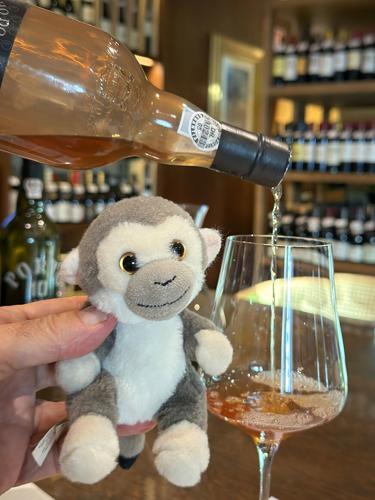
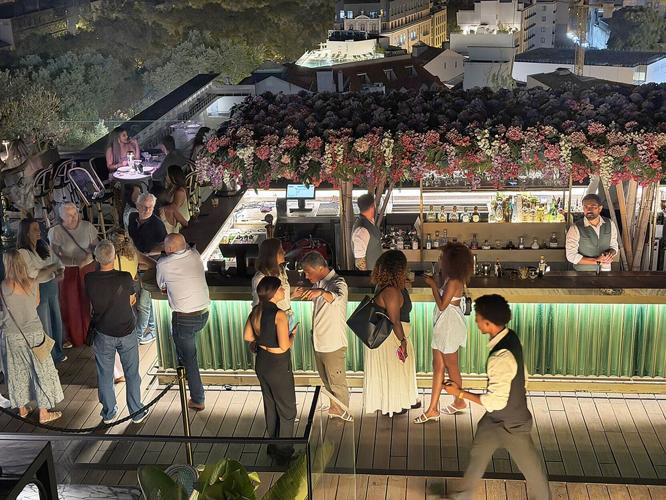
What I thought I knew about port wine, before I arrived in Portugal, was admittedly not much and even that proved to be rather off the mark. Trim, mustached Miguel Mota gently modulated my ignorance during an hourlong tutorial at 1933, the wine shop and viniculture classroom at my Lisbon hotel, the Tivoli Avenida Liberdade (Leading Hotels of the World).
I had known that all port wines are fortified with brandy, bringing a characteristic robustness to even the lightest varieties. I was also aware that red port came in two styles — the ruby (briefly aged and deeply red) and tawny (longer aged to a brownish or golden red) and in white, but rosé port wine, which made its appearance in 2008, was new to me. It has a fragrant, complex taste, situated nicely in richness and acidity between typical whites and reds.
Port is often taken after meals, as a digestif, but at the conclusion of class, I went straight across the hall to Seen, a Japanese-fusion restaurant (with strong Portuguese influences), for a jetlag-friendly meal centered around a delightful miso-marinated chicken main course.
People are also reading…
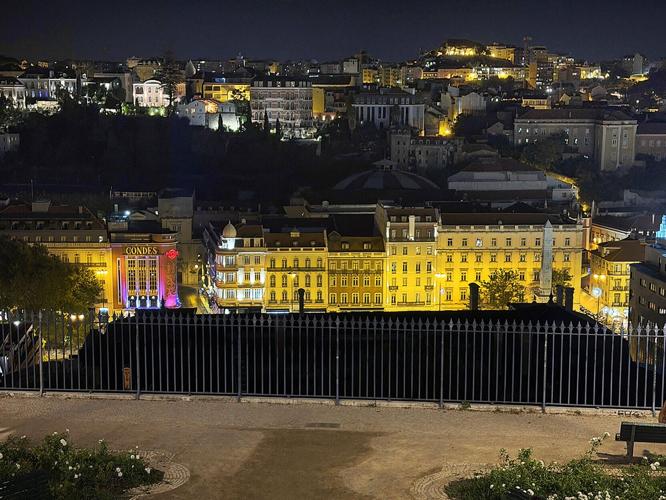
The next day was my birthday. Lisbon residents Carlos Simoes, a prominent international attorney with whom I have both a productive professional relationship and friendship, and his wife, Jessica Leao, graciously took me out to celebrate at BAHR, a gourmet restaurant that has to be good because its name is spelled almost the same as mine. We then took a long, graceful walk back together, pausing at the commanding Miradouro de Sao Pedro de Alcantara (Viewpoint of Saint Peter of Alcantara), one of the many designated public viewpoints over hilly Lisbon. As I would discover, you have to climb many streets in town, but the view is always worth it. From here, we could see over brightly illuminated buildings toward the night-blackened Tagus River far beyond.
Despite its location on the European shore of the Atlantic Ocean, Lisbon was revealing a Mediterranean sensibility, with a relatively light and healthy cuisine and a complementary vigorous wine culture. Its rectilinear houses and offices climb and descend the city’s many hills, crisscrossed by sinuous, narrow streets and sometimes challengingly narrow sidewalks. It has that livable grace you get in the best parts of Italy and Greece but with a business-like purposefulness that you might expect from the capital of a small nation that once ruled a worldwide empire many multiples its own size.
Through the ever-efficient concierge at my hotel, I booked a daylong road trip with Amiroad Luxury Transports, whose dapper driver, Jorge Andrade, took me on a personal guided tour of the city and surroundings. We saw the seaside Torre de Belem (Bethlehem Tower), a 16th-century fortification that had been the point of embarkation for the Portuguese explorers who helped reshape the history of humankind. Nearby, I made a hit-and-run raid on Pasteis de Belem, the city’s preeminent pastry shop. Founded in 1837, it is famous for the round, egg-yolk-based treat known as the pastel de nata, which is to Lisbon what the somewhat similar canele is to Bordeaux. I emerged with a small stash for myself and two extra for Jorge.
For an out-of-town detour, I asked Jorge to take me down the coast of the peninsula just south of the city, which is lined with white-sand beaches. I had neglected to bring a bathing suit, but Lisbon’s sophisticated open-mindedness made that irrelevant. After being dropped off and pointed in the right direction, I walked along a path above the shore until I came upon the secluded, cliff-walled Praia da Adica, which is officially clothing-optional and where the option not to clothe was embraced by nearly all. My lack of appropriate attire was thereby entirely appropriate.
A necessary side excursion for a writer was Bertrand, the world’s oldest operating bookshop (established in 1732). You know a bookstore is good when the staff are passionate about literature. A bilingual young woman guided me through options, and I bought my teenaged son an anthology of Lisbon poets in the original Portuguese, which he does not speak, and in Spanish, which he does.
Just down the road stands a bronze statue of the satirical 16th-century Portuguese poet Antonio Ribeiro Chiado. Across the street from that is another bronze of a poet — Fernando Pessoa, shown seated in front of his favorite cafe, looking so lifelike you would think he was sharing coffee with you. Pessoa composed verse in varying styles, assuming for each a different name and personality. In 1935, at the age of 47, he died in a Lisbon hospital from the effects of alcoholism. His last words were written in English: “I do not know what tomorrow will bring.”
On the next day of my visit, I had an unapologetically sybaritic lunch at my hotel’s ground-floor Portuguese seafood restaurant, Cervejaria Liberdade. You know that a seafood place knows its stuff when it makes a diner who favors terrestrial food feel he was spot-on in choosing codfish lagareiro style. It is a Portuguese way of preparing aromatic roasted or grilled seafood by dousing it with copious amounts of olive oil, garlic and seasonings.
I then walked the short distance to the city’s recently opened Leica Store. My family has been using Leica cameras for three generations now, and at every Leica Store I have visited around the world, I have been incentivized to buy everything, new and used. With the help of the manager here, Diogo Camilo, I emerged with the company’s just-released, incomparably sharp 35mm Noctilux — my birthday present to myself. For 101 years now, every time photographers have thought that Leica could not outdo itself in lens quality, it has done just that.
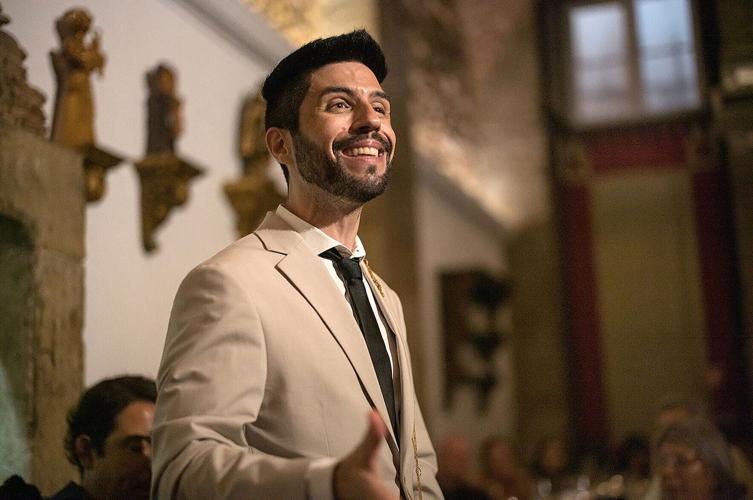
There was nothing for it but to spend my last day in Lisbon photographing the city way into an evening that concluded with dinner and fado music. Fado, which can be translated as “fate,” is to Portugal what reggae is to Jamaica and country music is to Nashville — an expression of the region’s soul in song. Working class in origin, the style favors touching ballads, often about love and loss, the sea and, per its name, fate. At Casa de Linares, I was given a courtside seat next to the large fireplace where two musicians, one with a Spanish guitar and the other with the unique Portuguese version of the instrument, would periodically take seats to play for one of three singers — one man and two women — who rotated throughout the night. Their songs were rendered with conviction and often with a sense of longing but never with melodrama. The music called for our attention but never begged for it.
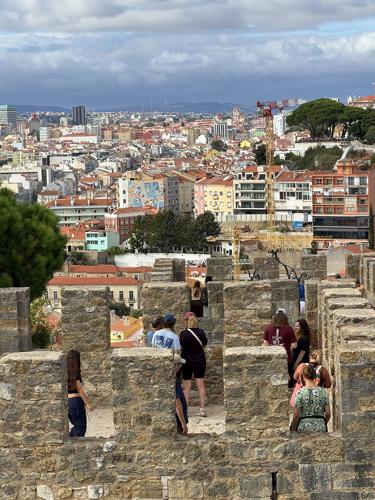
The next day, I climbed up and around the passageways and battlements of Castelo de Sao Jorge (Saint George’s Castle), which rewarded my efforts with fine views of the city and the ocean. I did not get to the Jeronimos Monastery in time to gain entry, but the appended late-Gothic Igreja de Santa Maria de Belem (Church of Saint Mary of Bethlehem) was letting in anyone who wished to attend mass, which I did. It is a handsome, towering structure in which the amplified voices of the clergy would echo and linger after each passage was recited.
By the end of my visit, I saw Lisbon is a capital city of energy and engagement. And — it has for me the touch of the poet. As with much of what is good about poetry, it has to be taken in heartfully but in measured steps to be best understood.
____
If you go ...
Staying there:
Tivoli Avenida Liberdade. You could not ask for a better location, right on the main boulevard at Avenida da Liberdade 185. The five-star property has one of the best hotel fitness centers I have used. Reserve through Leading Hotels of the World: tel.: +1-800-223-6800; www.lhw.com/hotel/Tivoli-Avenida-Liberdade-Lisbon-Portugal/.
Dining there:
Seen and Cervejaria Liberdade, both at the Tivoli Avenida Liberdade, are worth diversions wherever you are staying.
BAHR & Terrace. OK, my name is Behr, so I am going to recommend it, but the restaurant earned that right. Praça Luis De Camoes 2, Lisbon; tel.: +351-21-340-8253; www.bahr.pt/en/.
Casa de Linares for Portuguese dining accompanied by fado. Beco dos Armazens do Linho 2; tel.:+351 913 630 336; www. casadelinhares.com.
Shopping:
The Leica Store Lisbon is at Avenida da Liberdade 258. Leica cameras and lenses are finished in Germany, but much of the core manufacturing is actually done in Portugal.
Pasteis de Belem for pastries is a necessary stop — a pilgrimage destination for foodies — and for anyone who visits Lisbon. Rua de Belem 84 92.
Touring:
Amiroad Luxury Transports, tel.:+351 914 075 830; email: amiroad@amiroad.pt.
Ease of access and dress:
English, which is mandatory in Portuguese public schools, is spoken just about anywhere you will likely visit. It is OK to look like a tourist, but whenever I walked around in a business-casual outfit with sport coat and pocket square, I was politely addressed initially in Portuguese.
_____


