

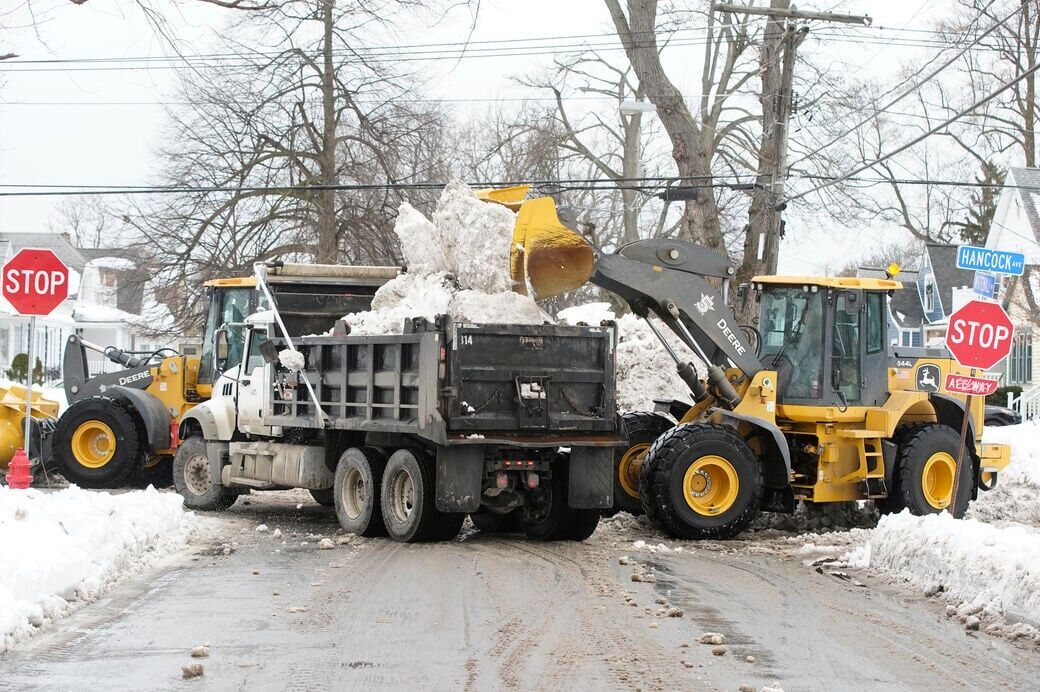
Elected officials, union leaders and key Albany observers are raising new questions about the state and city response to last week's Christmas blizzard, citing a lack of proper equipment, less than timely implementation of driving bans and the need for more efficient use of the National Guard.
A better prepared and more coordinated response, they say, could have prevented at least some of the 39 deaths in Erie County attributed to the storm.

The region's death toll from the Christmas weekend blizzard has grown to at least 40 people.
The most blistering criticism stems from Melissa DeRosa, the one-time top aide to former Gov. Andrew M. Cuomo who was involved in a host of disaster responses during her Capitol tenure. DeRosa contends Gov. Kathy Hochul ignored lessons gleaned from past Western New York snowstorms by failing to recognize its potential severity and impacts. While meteorologists were "shouting warnings from the rooftops" for five previous days, DeRosa, the former secretary to the governor, says the state should have been better prepared for the onslaught that buried the City of Buffalo in more than 4 feet of snow for several days.
People are also reading…
"I’m not sure that we needed to lose this many (lives)," she said in an interview. "If communication had been better on the front end, had resources been better pre-deployed, had there been enforcement on the road closures, this could have been a very different situation. It certainly does not look from where I sit that this was well executed."
A Hochul spokeswoman would not directly address DeRosa's charges, while Buffalo Mayor Byron W. Brown continues to contend that city's response was "good" under the conditions.

The parking lot of the Tops supermarket on Jefferson Avenue was filled with emergency vehicl…
But South Councilmember Christopher P. Scanlon is also registering concerns about the City of Buffalo's response, two days after County Executive Mark C. Poloncarz expressed his own complaints about a snow fighting response he called "embarrassing." Scanlon, one of Mayor Byron W. Brown's staunchest political supporters, on Friday filed a series of Council resolutions directing the city to amend its snow fighting plan to include blizzards after Brown on Wednesday acknowledged it is not prepared for such events.
Scanlon also requested that the budget be amended to purchase additional plows and that existing equipment be inventoried to determine the extent of inoperable vehicles, which he said contributed to a less than optimal response.
"Equipment needed for the Buffalo Police Department, Buffalo Fire Department and Department of Public Works has to be a priority," he said Friday. "I don't believe there are enough snowplows, etc. to address the situation."
Scanlon said the city needs to reassess its needs in an era when severe storms may become more the norm than exception. He said DPW may need smaller plows for cramped streets, and believes city efforts were hampered by broken down equipment.
Vincent Ventresca, president of Buffalo Professional Firefighters Local 282, said many firefighters during the blizzard were unable to get to fires or calls for emergency medical assistance because of weather conditions, streets clogged with parked or disabled cars, and equipment breakdowns that left fire crews stranded.
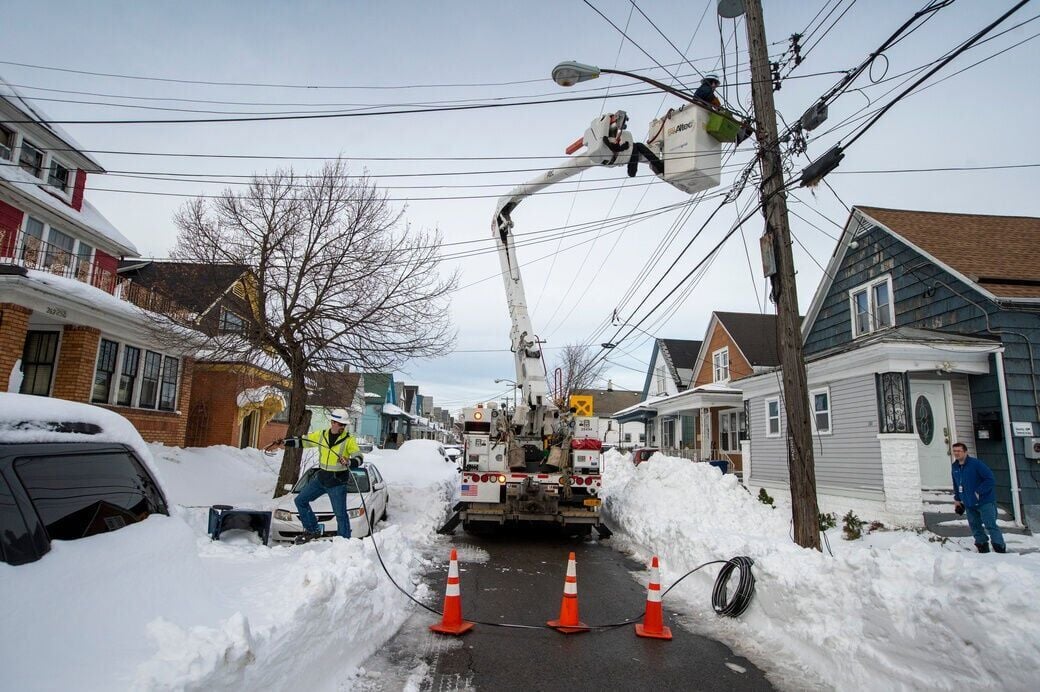
"We’ve never had this. Even though we get snow in Buffalo, from November to March, we’ve never had it blow to the degree it did," said Kenneth Kujawa, National Grid regional director for Western New York.
“We can’t get to calls. This whole situation brings light to the devastation and disrepair of our fleet of vehicles ... something we’ve been trying to get the city to pay attention to for years,” Ventresca said.
He said the deadly blizzard highlights the need for more modern equipment better suited to getting through narrow streets during hazardous weather.
“It’s been awful,” Ventresca said. “We’ve got four pumper trucks now that can drive, but are unable to pump water because of mechanical breakdowns. Our Fire Department is living in the past, with no movement in sight.”
Fire Commissioner William Renaldo disagrees with critics who say some of the Fire Department’s equipment is antiquated and badly in need of repair. But he has also begun discussions with his top aides to find better ways to handle the next blizzard that hits Buffalo.
“The deaths we had during this storm were tragic, an absolute tragedy. Any time you have a weather event like this, you want to use it as a learning experience, to figure out what you can do more efficiently, more effectively,” Renaldo said. “They say this is a once-in-a-lifetime storm, but I would say if it happened once, it could happen again.”
The #BNDrone shows you the massive scale of a snow dump on Bradley Street near SUNY Buffalo State, one of several used by the city to store the snow that is removed from streets by crews working around the clock to clean up after the Blizzard of 2022.
Renaldo said the department has two snowmobiles, an all-terrain vehicle and four Chevrolet Tahoes that are specially equipped to work in extreme weather conditions.
"After the storm we had in November, we ordered a mini-track ambulance that is equipped with tracks you have on a tank,” Renaldo said, noting the vehicle will not arrive for about seven months, but that he is open open to purchasing other vehicles that can be used on narrow streets and in extreme weather.
Mayor Brown said that even the most modern equipment would bog down in a storm of such historic proportions.
"We were prepared. We were ready. And yes there was equipment that broke down and got stuck," he said Friday. "But National Guard, state and county equipment got stuck – the snow was just that deep and thick. Whiteout conditions made it impossible for the first responders to see. Their lives were threatened."
Still, Brown said the November storm allowed the city to address new concerns with requests for vehicles such as those described by Renaldo. The city also filed an "after action report" following the November event with the Common Council, outlining recommendations for dealing with major snowstorms.

Erie County Executive Mark C. Poloncarz said during a news conference Wednesday said that the county had taken over snow removal efforts in a large chunk of the city, from Broadway at the Cheektowaga line to the waterfront.
"I bet you a lot of people who should have paid attention to it never even read it," he said.
The mayor said the city has now contracted with New York University's Wagner School - which he called "one of the best public policy schools in the nation" – for an objective review of the city response.
"This is a perfect opportunity for us to learn," he said. "Before we start jumping to a lot of emotional decisions ... let's see what this study says. In fact, this could even be used nationwide."
DeRosa, meanwhile, offered the most severe observations, charging that the state has not learned from mistakes addressed by the Cuomo administration from the big November snow of 2014. That resulted in new procedures such as installing guard gates on major roadways to prevent stranded vehicles. Even that measure was not enacted before residents went to work and eventually became stranded, she said. She also blasted the City of Buffalo's need to seek volunteer snowmobilers when plenty of winter vehicles were available from state agencies such as the Department of Environmental Conservation.
"They sort of botched the road closures," DeRosa contends. "And once that happened (you could have) had trained professionals that could go and help in search and rescue. Instead, you had a situation where your government leaders are pleading with civilians to do that job."

At least 40 people have died in Erie and Niagara counties due to the blizzard that paralyzed the city of Buffalo for six days.
DeRosa noted that when a major storm was predicted in 2019, Cuomo dispatched 450 National Guard troops to Buffalo for a storm that never reached predictions. But it was a "better safe than sorry" approach, she said, compared to the 54 troops sent by Hochul.
"Hochul was lieutenant governor. She was part of our administration. She did not play a huge role, per se, but she was there," DeRosa said. "This isn’t like you have some brand new governor or some brand new administration. She should have taken the lessons learned from that 2014 storm and applied them moving forward. It doesn't look like it."
She also continued to focus on the personal performance of the successor to her old boss.
"When we were in office we did not leave those decisions to the locals. When there was a major crisis or event, the governor would come in and take responsibility and ownership of the entire situation," DeRosa said. "In this instance, what was missing was a quarterback. There was nobody in charge. There was no one calling the shots."
Hochul spokeswoman Hazel Crampton-Hays would not directly address DeRosa's charges on Friday.
"We remain committed to doing everything in our power to support recovery efforts, including deploying all available State resources, providing operational guidance to local governments, and securing swift federal support," she said in a statement.
But administration officials provided a full timeline of Albany's response, including a detailed list of personnel and equipment dispatched to Western New York for the blizzard. They noted that before the storm hit on Dec. 23, New York State had already deployed 518 agency personnel and equipment, including 75 plow trucks, 20 large bucket loaders, 18 snowmobiles, five tow plows and eight generators.
They also said state agencies such as the Division of Homeland Security and Emergency Management Services and the Thruway Authority began planning emergency operations as early as Dec. 21.
State personnel from the National Guard, State Police and Department of Transportation were dispatched, along with dozens of individual pieces of equipment. From DEC, the officials reported seven forest rangers, 24 environmental conservation officers, 31 4x4 trucks, 18 snowmobiles and eight UTVs deployed.
They also countered DeRosa's claims of Hochul's lack of local news conferences to note the governor conducted interviews with several Buffalo and New York City radio and television stations throughout the storm "to inform New Yorkers about the winter storm and encourage them to stay off the roads."
News watchdog reporter Dan Herbeck contributed to this report.


