

Erie County Executive Mark Poloncarz was at a conference table next to Gov. Kathy Hochul in the Marriott Harborcenter last year, facing Kim and Terry Pegula, when he told them what he wanted to say about a new stadium for the Buffalo Bills: He wanted it in Buffalo.
"It was my preference, and I told the Pegulas that straight to their face at a negotiation session," he said Monday during a meeting with Buffalo News editors and reporters.
Poloncarz even walked the South Park site he favored with others, he said, to see how a Bills stadium on that site might be situated on land where the old Commodore Perry housing projects stand. And the Pegulas did not reject the idea, he said.

So far, Gov. Hochul's plan to tie the Seneca funds to the stadium costs has generated little attention from state legislators locked in a budget battle over the state's controversial bail reform law and other issues.
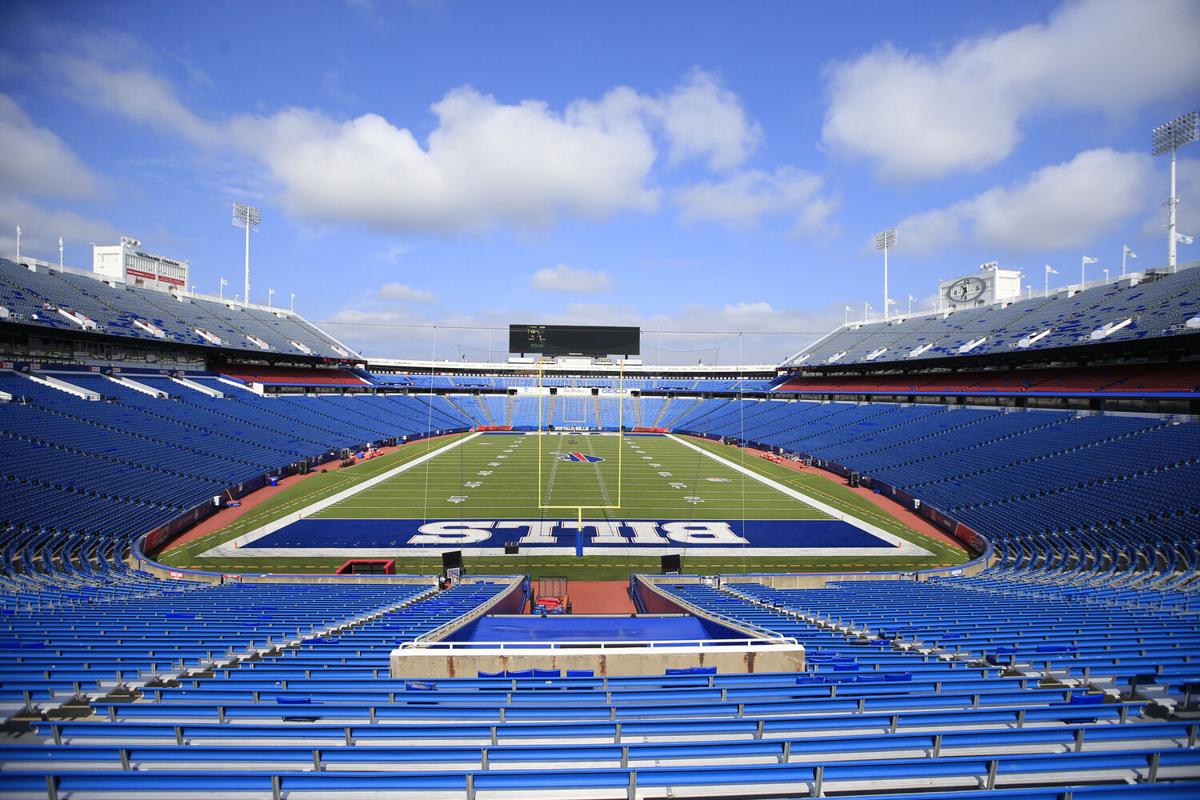
A lot happened after that day and in the end, a deal was crafted and announced last week that will keep the Bills and their stadium in Orchard Park, their home since 1973.
People are also reading…
The county executive had little to say about negotiations as they went on, but he provided some details Monday about what led him to agree to a deal that went against his preference. He cited factors including cost and the time it would take to build in the shadow of downtown. The time lost to legal fights associated with displacing residents and acquiring property would also have delayed construction.
"The timeline was a big concern," he said. "This is Buffalo. There's usually lawsuits dropped every five days with regards to the construction of something, and we'd already heard word that lawsuits were coming."
In addition, the Orchard Park location has no land acquisition costs. But if the stadium were to be moved to Buffalo, the county and state would have been on the hook for that property, Poloncarz said.
"If people think the amount of money that we contributed for the construction in Orchard Park was large, the commitments from the state and the county would have been substantially more," he said, referring to a city relocation. "I'm not so certain we could have gotten approval for that kind of money."
Neither could Poloncarz have promised residents that he wouldn't raise taxes to pay for a new stadium, he said. The stadium deal announced last week is not expected to raise county property taxes.

While personal seat license prices in Buffalo may not be as drastic as in bigger NFL markets, some fans think the contribution already made by the public to keep the team in town is enough.
More realistically, relocating the stadium in Buffalo would have required more planning. And much of that didn't take place, even though all sides agreed it was necessary after the last stadium lease deal was reached a decade ago.
Poloncarz acknowledged that after the last stadium deal was sewn up, all sides agreed to serve on a committee to consider future sites for a new stadium. Those conversations began under the team's prior owner, Ralph C. Wilson Jr.
By 2014, with future ownership of the team up in the air, a flurry of new conversations began over where a new stadium should go, with the state tapping a California architectural and planning firm to start scouting locations, including Buffalo city sites.
But those conversations did not continue at any robust pace after the change in Bills ownership, and Poloncarz himself had been advocating to renovate the existing stadium.
Serious back-and-forth negotiations were expected in 2020.
"But then what happened? Covid hit," he said.
In addition, the state's commitment to stadium negotiations was not nearly as strong as it had been when the prior lease deal was negotiated because of a change in players under former Gov. Cuomo.

Community advocates are demanding that elected leaders refuse to approve any new Buffalo Bills stadium deal unless it's accompanied by a strong community benefits agreement to ensure that the Bills organization gives back to the people of Buffalo and Erie County.
With the prospect of a stadium in Buffalo gone, some are pressing for a community benefits agreement that will require the Bills to commit to funding community priorities. They also want more openness and transparency in negotiating an agreement that serves the needs of city and county residents.
Poloncarz said conversations have been underway regarding a community benefits agreement. Three county legislators, including Chairwoman April Baskin, are serving on that committee. But Poloncarz said the negotiations won't be open to all community organizations.
He said the county already had heard from community organizations, and their priorities are being discussed, he said. He also said he's confident that a final community agreement will be done by the Sept. 1 deadline.


