

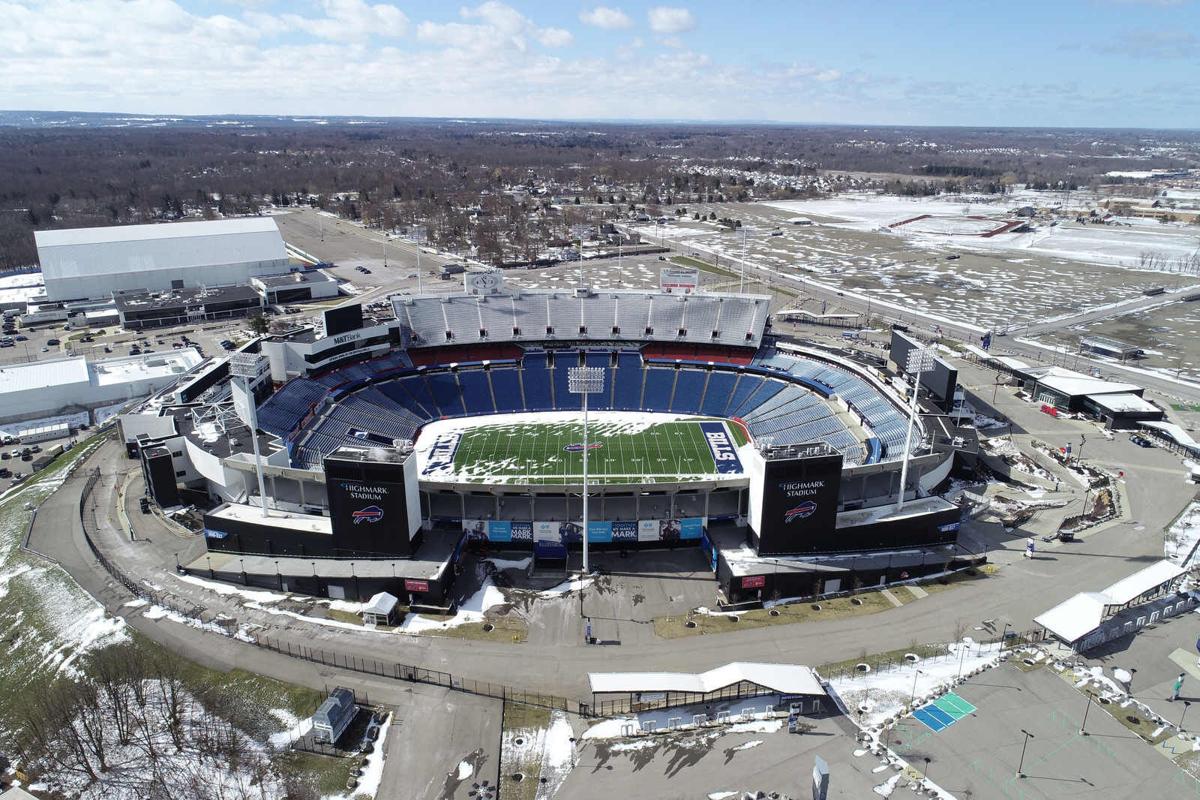
The broad terms of the new Bills stadium deal may have been announced on Monday, but it's not a done deal yet. Groundbreaking is not expected until spring of next year and many things need to fall into place before then.
It could take months before all elements of the agreement are finalized. Environmental reviews and pre-construction design and engineering work still must be done. And none of that can be done before the memorandum of understanding between the Bills, state and Erie County has been signed and approved by all parties.

While nonbinding, the 15-page MOU indicates what would be expected of New York State, Erie County and the Bills when a final deal is signed.
The Bills, Erie County and the state expect to have all necessary documents and approvals for the stadium deal signed and approved over the next five months. Before the Sept. 1 deadline, a number of meetings will be held to familiarize key players with the terms and obligations of the transaction. If all major documents are not approved by September, the Bills would have the right to negotiate alternate arrangements with other parties.
People are also reading…
At the state level, the first step is for the State Legislature to vote on and approve the state budget in order for the state to set aside the money to fund its portion of the new, state-owned Bills stadium. The state is on the hook to pay $600 million for its share of stadium construction, although Gov. Kathy Hochul has said she intends to allocate $418 million in casino revenue from the Senecas to offset the state's stadium costs.
The state would need to reconvene the Erie County Stadium Corporation, which was originally incorporated in 1998 as a subsidiary of Empire State Development and still has serving members, said Pamm Lent, a spokeswoman for Empire State Development, the state's economic development agency.
The county would be tapped to provide a state-required assessment on the environmental impact of the new stadium.
Final documents associated with the stadium deal must be approved by multiple state agencies: the Erie County Stadium Corporation, Empire State Development and the Public Authorities Control Board. The State Comptroller's Office would also need to approve final documents, Lent said.

"Anyone who's saying this is going to raise my taxes – this will not raise your taxes. This we can afford using or current resources in county government."
As part of the approval process, the state-controlled stadium corporation would have to hold a public hearing on the project.
At the county level, the Erie County Legislature must approve:
• The memorandum of understanding outlining the terms of the deal
• A community benefits agreement stating how the Bills would financially support community priorities
• Two resolutions that would allow $250 million in budget surplus and borrowed money to be earmarked for stadium construction
• And documents transferring county-owned stadium property to the state.
The Bills and the county also need to work out an extension of the existing stadium lease agreement on a year-to-year basis since the new stadium won't be finished before the lease for the current stadium expires.
In light of County Executive Mark Poloncarz's assertion that the new stadium deal would not result in any property tax increases to residents, no County Legislature leaders have expressed major objections that would prevent the deal from being approved. Poloncarz met in person with Democratic and Republican-supported legislators Sunday night and Monday morning to fill them in on the deal terms before they were made public.
"It seems like he got a fair deal for taxpayers," said Joseph Lorigo, who heads the Republican-supported minority caucus.
Both Legislature Chairwoman April Baskin and Democratic Majority Leader Timothy Meyers said they are hopeful the approval process will move forward smoothly. They said they expect to receive a copy of the stadium memorandum of understanding sometime this week. Once received, the Legislature will have at least 30 days to review the document and convene committee meetings to discuss terms before voting on it.
"The governor’s new stadium won’t be a product of progress," Seneca Nation President Matthew Pagels said. "It will be a monument to Albany’s vindictive desire to punish the Seneca people. Ultimately, it’s something we’re all too familiar with.”
"I would be hopeful that after 30 days, it’s going to happen and we’d want to move head," Meyers said. "We don’t want to rush, but I want to be hopeful. I think we can do that."
But the memorandum of understanding is not the only document that requires Legislature sign off. So do the community benefits agreement and the construction coordination agreement, both of which are likely to raise some questions.
In regard to the construction agreement, Lorigo said that while he supports giving local union workers priority in constructing the new stadium, he would advocate for local non-union construction workers to play a role in stadium construction before giving away construction jobs to union workers outside of Western New York.

Erie County Executive Mark Poloncarz said the Bills have committed to signing a CBA, but details about how much the Bills would contribute and where the money would flow have yet to be negotiated.
All legislators also will face pressure from community advocacy groups to ensure that the community benefits agreement, which would dictate what subsidies the Bills would provide to support community needs, is thoughtful, generous and not treated as an afterthought in the overall stadium deal.
Baskin cited the need for fair and equitable public transportation to the stadium, diversity of stadium-related job and business contracting opportunities, and youth and cultural investments over the 30-year term of the lease deal.
"I have faith in Pegula Sports Entertainment and I have faith in the county that we will be able to come together to work on a community benefits agreement that will strongly impact all of the communities in Erie County over the next 30 years," Baskin said.
Baskin said she, Meyers and Republican Legislator John Mills of Orchard Park would have seats on the negotiating committee, along with representatives from the County Executive's Office, the Bills and the state.
Because the new lease deal results in the new stadium being owned by the state instead of by the county, the full lease agreement would not come before the Erie County Legislature for final approval.
Erie County also cannot borrow any money for stadium construction until all required Legislature approvals are made.


