SAN FRANCISCO — TikTok signed agreements with three major investors — Oracle, Silver Lake and MGX — to form a new TikTok U.S. joint venture, ensuring the popular social video platform can continue operating in the United States.

A TikTok logo is shown on a phone Jan. 17 in San Francisco.
The deal is expected to close Jan. 22, according to an internal memo seen by The Associated Press. In the communication, CEO Shou Zi Chew confirmed to employees that ByteDance and TikTok signed the binding agreements with the consortium.
"I want to take this opportunity to thank you for your continued dedication and tireless work. Your efforts keep us operating at the highest level and will ensure that TikTok continues to grow and thrive in the U.S. and around the world," Chew wrote in the memo to employees. "With these agreements in place, our focus must stay where it's always been—firmly on delivering for our users, creators, businesses and the global TikTok community."
People are also reading…
Half of the new TikTok U.S. joint venture will be owned by a group of investors — among them Oracle, Silver Lake and the Emirati investment firm MGX, who each will hold a 15% share. ByteDance itself will hold 19.9% of the new app, and another 30.1% will be held by affiliates of existing ByteDance investors, according to the memo. The memo did not say who the other investors are and both TikTok and the White House declined to comment.
The U.S. venture will have a new, seven-member majority-American board of directors, the memo said. It will also be subject to terms that "protect Americans' data and U.S. national security."

Oracle Corp. headquarters in Redwood City, Calif.
U.S. user data will be stored locally in a system run by Oracle. The memo said U.S. users will continue "enjoying the same experience as today" and advertisers will continue to serve global audiences with no impact from the deal.
TikTok's algorithm — the secret sauce that powers its addictive video feed — will be retrained on U.S. user data to "ensure the content feed is free from outside manipulation," the memo said. The U.S. venture also will oversee content moderation and policies within the country.
American officials previously warned that ByteDance's algorithm is vulnerable to manipulation by Chinese authorities, who can use it to shape content on the platform in a way that's difficult to detect.

The TikTok Inc. building in Culver City, Calif.
The deal marks the end of years of uncertainty about the fate of the popular video-sharing platform in the United States.
After wide bipartisan majorities in Congress passed — and President Joe Biden signed — a law that would ban TikTok in the U.S. if it did not find a new owner in the place of China's ByteDance, the platform was set to go dark on the law's January 2025 deadline. For a several hours, it did.
The algorithm was a central issue in the security debate over TikTok. China maintained the algorithm must remain under Chinese control by law, but the U.S. regulation passed with bipartisan support said divestment of TikTok must mean the platform cuts ties — specifically the algorithm — with ByteDance.

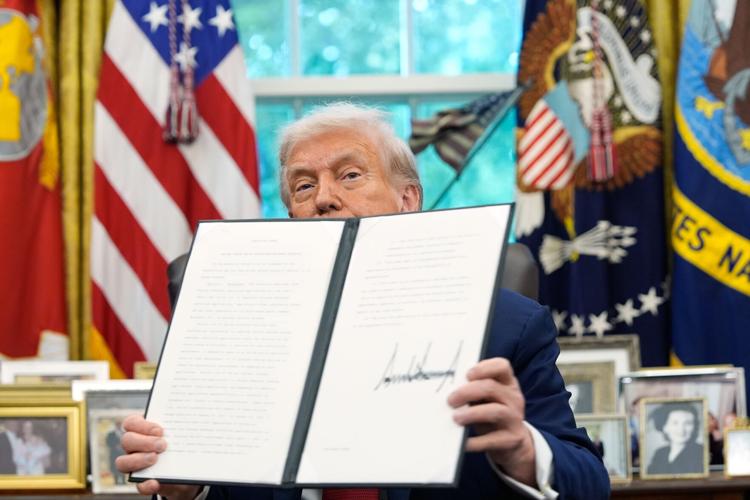
President Donald Trump holds a signed executive order Sept. 25 regarding TikTok in the Oval Office at the White House in Washington.
On his first day in office, President Donald Trump signed an executive order to keep the app running while his administration tried to reach an agreement for the sale of the company.
Three more executive orders followed, as Trump, without a clear legal basis, continued to extend the deadline for a TikTok deal. The second was in April, when White House officials believed they were nearing a deal to spin off TikTok into a new company with U.S. ownership that fell apart after China backed out following Trump's tariff announcement. The third came in June, then another in September, which Trump said would allow TikTok to continue operating in the United States in a way that meets national security concerns.
TikTok has more than 170 million users in the U.S. About 43% of U.S. adults under the age of 30 say they regularly get news from TikTok, higher than any other social media app including YouTube, Facebook and Instagram, according to a Pew Research Center report published this fall.
Shares of Oracle jumped $9.07, or 5%, to $189.10 in after-hours trading.
How to take a break from social media
Be easy on yourself and ask for help about social media use

"If you're reading this article, kudos to you for thinking about reevaluating social media," Agarwal said Trying to meet your goals is all about celebrating the small wins.
At the least, set small benchmarks for yourself like spending 10 minutes less on social media than the day before. The right amount of social media time is different for everyone since some people actually use these apps to brand and help market themselves. Find your own social media sweet spot, and remember, even if you scroll too much on social media one day, you can try and meet your goal tomorrow.
Another way to keep you on track is to share your goal with someone you trust. A friend or loved one who can kindly nudge you when they notice you've been on social media for awhile.
Helpful exercise to remind you what you're missing by scrolling

Scrolling through social media while hanging out with friends isn't uncommon nowadays, but when you think about how unengaged you are in those moments, it can put social media use into perspective.
Agarwal suggests the next time you're in a room with others at a family or friends gathering and you see yourself scrolling through social media instead of engaging with others, take a minute to physically remove yourself from the room and isolate in another room. Listen and feel how much you may be missing out on.
"What that does is it gives your brain a signal. If you force yourself to leave the room, you realize how much you're using that app and missing out on other people," Agarwal said. "It's a good physical reminder of being present in the moment and not on your on your phone and scrolling through social media."
Use your phone's screen-time tracking feature and limit social media use

Most smart phones nowadays track your screen-time and usage already. It's a good idea to figure out your average screen time per day so you have a benchmark that you can work on.
On iPhone, you can go into your "Screen Time" settings, which displays the amount of time you spend on each app and allows you to put timers on specific apps to limit how long you're on them. Android phones have similar features in the "Digital Wellbeing" settings. Additionally, Facebook, Instagram and TikTok offer the same features within the app settings themselves.
Physically distance yourself from your phone and apps

When you're at home and have free time, put your phone in a drawer or somewhere you can't see it. Oftentimes limiting the ability to quickly and easily pick up your phone is enough to keep you off of social media, said Agarwal. If your phone is what keeps your hands from fidgeting, try to have some objects around the house that relieve stress, like a stress ball, fidget toy or yarn and crochet hooks.
Hide your social media apps on your phone by placing the app on the second or third page of your home screen or bury the app inside an "app folder" with a bunch of others. When you're waiting in line or have a free five minutes, instead of grabbing your phone — take in the view, practice some breathing exercises or read a book.
Benefits of taking a social media break

Ever hear of "text neck?" It's the result of looking down at our phones when scrolling or texting, straining the neck muscles over a long period of time. Taking a break from social media helps relieve neck pain and gives your eyes a break from bright screens.
People may also be more connected than ever through social media, but a 2018 University of Pennsylvania study found that people who limit their time on social media experience less depression and feelings of loneliness.
Taking a break from social media will give you better sleep, too. Research suggests that nighttime use of social media is driven by FOMO (fear of missing out), and keeps people scrolling longer at night instead of going to sleep.
Reevaluate what you want out of social media

What is the reason that brought you onto social media? This is the question Agarwal said to ask yourself when trying to figure out if it's time to take a social media break. If you're not getting the same satisfaction from the reason you use social media, it may be time to look for alternatives.
If you joined social media to...
1. Find community: Look for clubs and groups in your neighborhood where you can meet and interact with others IRL (in real life).
2. Be inspired: Consume other forms of media like magazines, books, podcasts, movies or live events.
3. Buy and sell things: Try using other apps, like OfferUp or NextDoor, or visiting local events and marketplaces in person.
Two and a half hours.

Two and a half hours — that's the average amount of time people spend on social media each day.
It may not sound like a lot, but that time can really add up — and at what cost? Social media has proven negative effects on mental health (especially for teens), self-image and for some is a huge time-waster.
University of Penn's Anish Agarwal, an emergency physician, researcher, and deputy director for the Center for Digital Health, said it's important to constantly be reevaluating the role social media plays in daily life.
The bottom line: taking a break from social media is healthy for you. Read on for guidance and tools to help you limit screen time on these apps.