WILMINGTON, Delaware — As President Donald Trump seeks to crack down on what he says is widespread illegal voting by noncitizens, several people charged with that crime are trying a novel strategy to get their cases dropped.
Five people being prosecuted in separate federal cases in Miami and Madison, Wisconsin, argued for the first time in court that the 1996 law used to charge them is unconstitutional, according to a Reuters review of court filings.
A ruling for the defendants, which could come before the Nov. 3 midterm elections, would raise questions about the federal government's authority to prosecute noncitizen voting cases. The Trump administration has pushed to deport noncitizen voters, raising the stakes for defendants who previously faced as little as a $150 fine if convicted.
The defendants were accused of violating the federal "Voting by Aliens" statute enacted three decades ago. The law makes it illegal for noncitizens to vote in federal elections, and violators can be fined up to $100,000 or imprisoned for up to a year.
People are also reading…

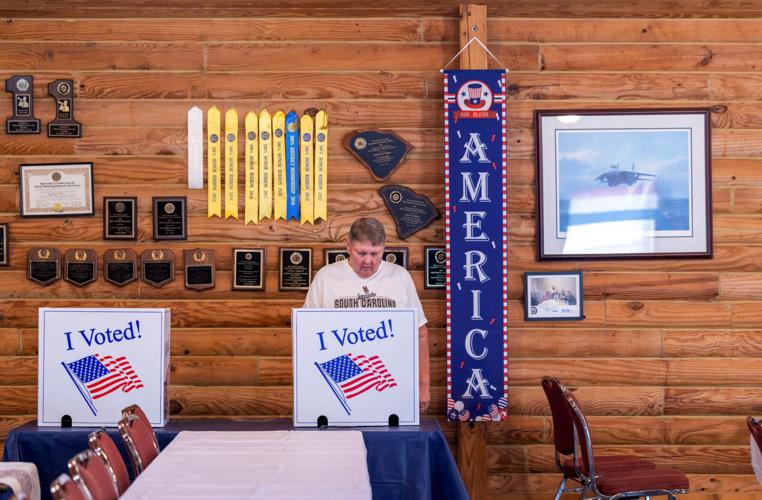
A voter casts his ballot at a polling station in a Republican primary runoff between U.S. Sen. Darline Graham, R-S.C., and U.S. Rep. Ralph Norman, R-S.C., for the U.S. Senate seat Aug. 25 in Cayce, S.C.
In the five cases identified by Reuters, defendants asserted that the right to determine voter qualifications is reserved for U.S. states under the Constitution. While all states require voters to be citizens, the defendants argue that it is up to states to prosecute a violation, not the federal government.
Trump's Justice Department argued that the Supreme Court recognized that Congress has the authority to protect the integrity of elections and has passed laws such as one criminalizing repeat voting in the same election.
In addition, the DOJ has argued the statute does not regulate elections but focuses on immigration, where Congress has clear authority to legislate. The statute was part of the sweeping Illegal Immigration Reform and Immigrant Responsibility Act of 1996. The DOJ compared it to Congress limiting election campaign contributions by foreign nationals, which courts have upheld.
Defendants in the five cases hope the judges rule to dismiss the charges on constitutional grounds before their trials start. That is due as soon as Oct. 5, with the last of the five scheduled to begin Dec. 14.
Trump, who has repeatedly made unsubstantiated claims of widespread election fraud and questioned the legitimacy of U.S. election results, has said that noncitizen voting is a widespread problem that undermines the integrity of U.S. polls.
But a Reuters analysis published July 19 showed noncitizen voting is incredibly rare. Only 129 people have been charged in the 30-year history of the law. The typical defendant was a lawful permanent resident with deep community ties who voted in the mistaken belief they were allowed to do so.
In the midterm elections, when presidents' parties usually suffer losses, Trump's Republicans are fighting to retain control of Congress. The president's repeated claims about widespread noncitizen voting could be part of an effort to sow doubts about the election's legitimacy if Democrats take control of Congress, experts have said.

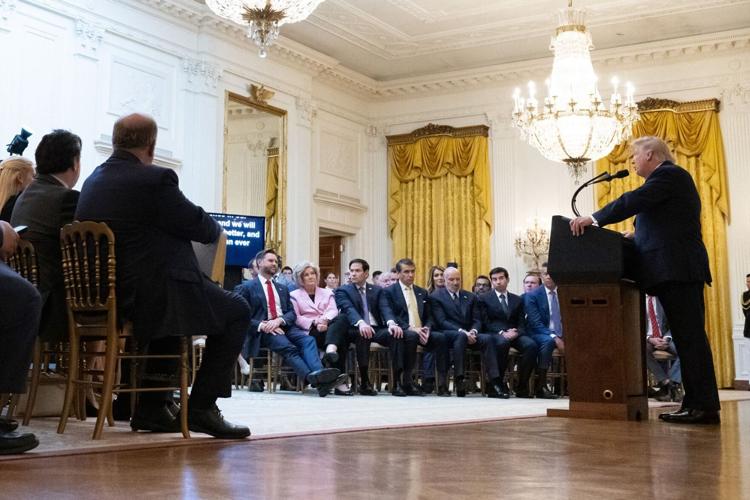
US President Donald Trump addresses the nation from the East Room of the White House on July 16 in Washington.
Until Trump's second term, most defendants charged with noncitizen voting worked out deals to plead guilty and were often sentenced to fines of around $150, similar to a speeding ticket.
However, the Trump administration began pushing to deport noncitizen voters last year, raising the stakes for defendants.
The first constitutional challenge to a noncitizen voting case was raised in March by Christian Erazo Valdez, a citizen of Ecuador, according to records from the federal court in Madison, Wisconsin. He was charged in October with voting in the 2024 presidential election. A ruling on his motion for dismissal is expected soon.
Another judge, U.S. District Court Judge David Leibowitz in Miami, heard oral arguments Tuesday on a motion to dismiss charges against Chelsea Cox, a Jamaican woman charged with voting in the 2020 election, on the constitutional argument.
A government lawyer said if the alien voting law was unconstitutional, it would cast doubt on the Uniformed and Overseas Citizens Absentee Voting Act, which requires states to accept ballots from U.S. citizens abroad, including members of the military. "I could imagine, in other words, a couple of shoes dropping after this case," Leibowitz said at Tuesday's hearing. The judge did not say when he would issue a ruling.
In addition to the five cases, one judge has ruled on the issue, siding with the Justice Department. U.S. Judge Jacqueline Becerra in Miami on Sept. 9 declined to dismiss the voting charge against Wilner Renaud, a Haitian citizen who entered the U.S. in 1993 and who voted in 2022, according to court records. He told investigators he applied for naturalization and thought he was a citizen, according to court records.
A jury found Renaud not guilty on Tuesday, according to his attorney, Daniel Rashbaum.
Last month, Gaynell Jeffries, a citizen of Canada, was acquitted of the noncitizen voting charge by a federal judge in a nonjury trial in Florida. She said she had relied on the mistaken advice of a government election official who told her permanent residents could vote, which her lawyer said was a form of entrapment.
Depending on where you live, missing the voter registration deadline will also mean forgoing voting in the 2026 midterm elections.