


Suddenly, the pandemic that has ravaged the world is raging far worse not in the United States, but on the other side of the Peace Bridge.
The province of Ontario issued its third stay-at-home order of the pandemic on Wednesday as rapidly spreading Covid-19 variants overwhelmed hospitals.
Canada, which previously seemed to control the coronavirus far better than its neighbor to the south, now finds itself in the grip of fast-spreading variants in its most populous provinces. Ontario reported an average of 3,093 new Covid-19 cases a day over the past week, up 32% from the week before, and Premier Doug Ford imposed a four-week stay-at-home order starting Thursday to try to keep the rate from rising further. In Quebec, the rate of infection has doubled over the past two weeks. And in British Columbia, the deadlier, faster-spreading Brazilian variant of the virus has taken hold.
Meanwhile, Canada's long-lagging vaccination effort is only now starting to pick up steam.
Amid all that bad news, even those who would like to see land crossings between Canada and the United States open again say that Canada's latest wave of Covid-19 cases will likely keep the border largely closed for the immediate future.
People are also reading…
"There's no question that the only thing Canada's going to be worried about for the next month or two months is bringing this new wave under control," said Edward Alden, senior fellow at the Council on Foreign Relations and a visiting professor of U.S.-Canada economic relations at Western Washington University in Bellingham, Wash.
On Monday, Alden published an op-ed in the Toronto Globe and Mail headlined: "It's time for (Prime Minister Justin) Trudeau to open the border." But only two days later, Alden said in an interview: "I don't anticipate any movement until the Canadians feel like they're on top of the situation."

"Both leaders agreed to take a coordinated approach based on science and public health criteria when considering measures to ease Canada-U.S. border restrictions in the future," said a statement issued by the two governments late Tuesday.
How did it happen?
To hear Dr. Isaac Bogoch tell it, plenty of bad things happened all at once in Canada, leading the nation into its current predicament.
After what he called "a pretty impressive second wave" of the virus in January, government officials in Canada loosened restrictions just as new virus variants entered the country and before the nation was able to ramp up the pace of its vaccinations, said Boguch, an infectious disease specialist at the University of Toronto.
"And when you factor those three things together, it makes for a pretty rapid rise in cases," he said.
It also makes for a pretty ugly comparison between what is happening in Canada and what is happening in the United States. Infection rates have been rising in many U.S. states – including New York – but not nearly at the pace of what's happening up north. As of Thursday, Ontario's seven-day average rate of positive infections – long seen as a key indicator of the pandemic's intensity – stood at 6.5%. That is nearly double the rate in New York State.
Making matters worse, Bogoch said, is the fact that Canada's hospitals never had time to fully recover from the second Covid-19 wave in January. Intensive care units remained busy just as the third wave hit in March, and now many are overwhelmed.
The U.S. and Canada largely shut land borders between the two countries last March 21 in order to slow the spread of the novel coronavirus.
The British variant of the virus, which spreads faster, is now making its way across Ontario. Christine Elliott, Ontario's health minister, spelled out the situation for reporters in Toronto on Wednesday.
"Our hospitals are being hit hard," she said. "Intensive care units have more patients now than they ever did in previous waves. With many hospitals at capacity, we are seeing patients being transferred to other hospitals for the care they need, sometimes hundreds of kilometers away."
Hospitals are under strain, too, in British Columbia, which has been recording record daily case counts. Provincial health officials say an increasing number of the cases they are seeing are from the faster-spreading, more deadly Brazilian variant.
Some 21 members of the National Hockey League's Vancouver Canucks are believed to have the Brazilian variant, forcing the team off the ice since late March.
“This is a cautionary tale for all of us," Dr. Bonnie Henry, the provincial health officer in British Columbia, told reporters Tuesday.
What's the answer?
Bogoch, the infectious disease specialist from Toronto, said there is no quick way for Canada to end its Covid-19 spike.
"We're not vaccinating our way out of this," he said.
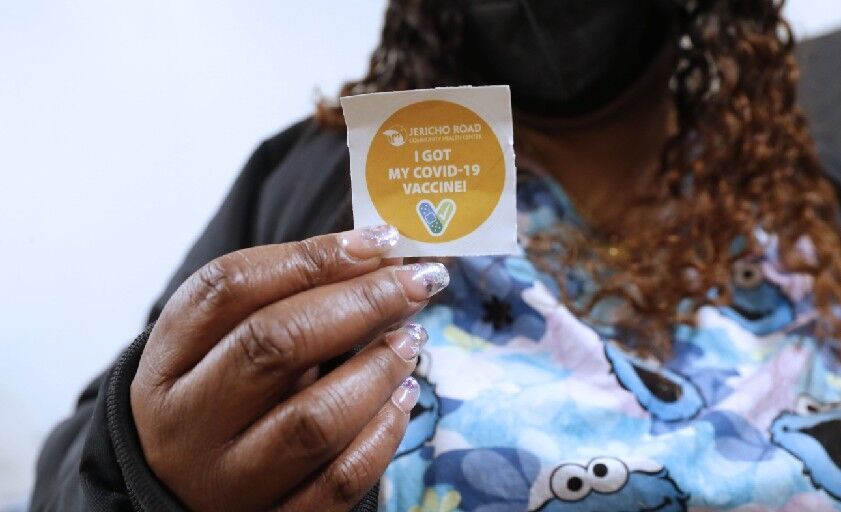
The U.S. will likely reach herd immunity months before Canada will – and that fact, some fear, may prolong the border shutdown that started along with the pandemic a year ago.
As of Wednesday, only 16.5% of Canadians had received at least one shot of Covid-19 vaccine, according to the Our World in Data Covid-19 Data Explorer. The United States had vaccinated nearly twice as many people per capita.
A lack of pharmaceutical manufacturing facilities forced Canada to depend on imported vaccines, and only now is the pace of those imports – and vaccinations – starting to accelerate.
"We have an opportunity in the next 28 days to be able to vaccinate – if the supplies come in – 40% of Ontario adults," Elliott, the province's health minister, said on Wednesday.
The problem is, the virus could continue to spread during those 28 days. To try to prevent that from happening, Ford, the Ontario premier, imposed that stay-at-home order.
And that is just a sample of the sort of restrictions that are being imposed again all around Canada. Toronto this week is shuttering its schools for two weeks. Quebec closed its schools and its nonessential businesses last week. British Columbia has temporarily barred indoor dining and religious services.
Facing a weary and worried public, Canadian officials are advising patience.
"We're getting closer to the end of this battle & we just need to stick together a little longer," Ford said on Twitter on Thursday. "I promise you that better days are ahead of us."
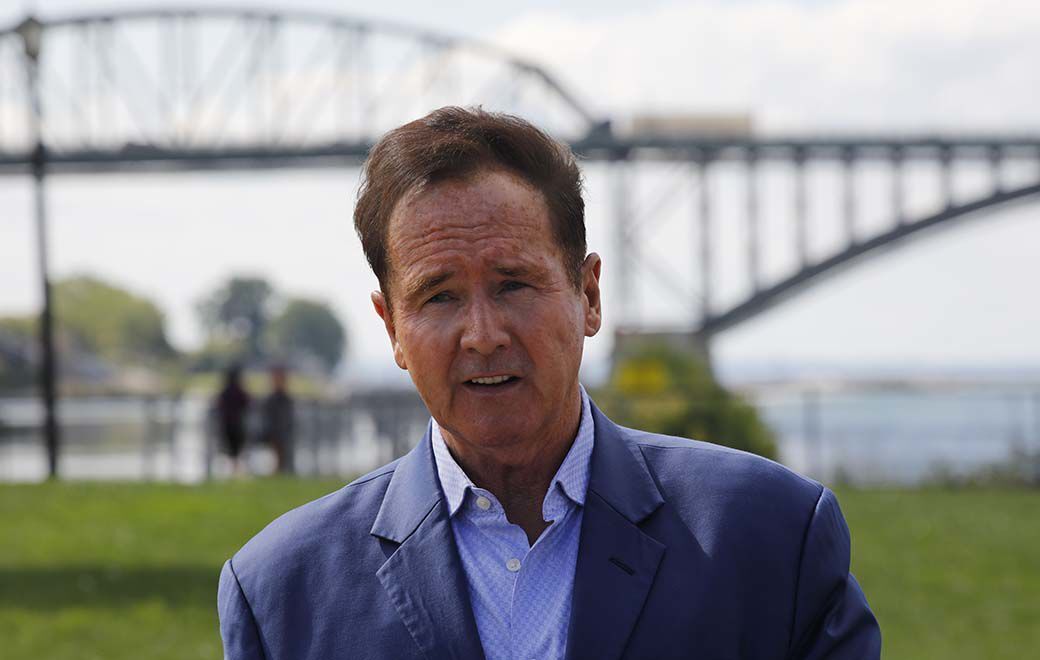
"I challenge the administration to work with me to reach a goal for a partial re-opening of the Northern Border by Memorial Day of this year with a full re-opening by July 4 of this year," U.S. Rep. Brian Higgins said.
The border shutdown
With Canada facing such a severe wave of Covid-19 infections, the nation's leaders aren't even talking about reopening the border.
Instead, they are urging Canadians to not even travel within the country.
"Now is not the time to travel across the regions for recreational reasons," Dr. Theresa Tam, Canada's chief public health officer, said at a news conference with Trudeau on Tuesday. "Limit your travel to essential trips only to do your part to stop the spread."
What concerns Alden, the expert on U.S-Canadian economic relations, is that Canada seems uninterested at this point in even planning for an eventual border reopening.
"If by July 1 the case rate is much lower in Canada, I don't think they're going to be prepared to snap their fingers and open the border," he said. "The groundwork is not going to have been done to allow for a safe and gradual border reopening. This takes advance preparation, and as far as I can see, and nobody's told me otherwise, none of that is happening."
Rep. Brian Higgins, a Buffalo Democrat who has been the loudest voice in Congress pushing for the border to be reopened, said he understands that Canada faces a serious Covid-19 problem right now. But he said that problem should not stop public officials on both sides of the border from acknowledging a developing reality: Vaccines will bring the pandemic under control before long.
Urging both governments to begin by allowing more people to visit their loved ones and property across the border, Higgins said: "I still think that you can have a successful and safe opening, provided that you confirm or certify that you have been vaccinated."
For now, though, Canadian leaders don't seem particularly interested in such arguments.
Canada's health minister, Patty Hajdu, said at a Tuesday news conference that Canadian officials are keeping an eye on case rates both in Canada and internationally – which show that Canada is by no means alone in facing yet another wave of Covid-19 infections.
In light of such data, "clearly now is not the time to consider international travel," Hajdu said.


