

WASHINGTON – Rep. Brian Higgins of Buffalo won't stop pushing for a gradual but relatively quick reopening of the Canadian border – but in Canada, some officials are pushing for just the opposite.
Canada should "roll out further protective actions at the Canada-U.S. land border," the premiers of Ontario and Quebec said in a joint letter to Canadian Prime Minister Justin Trudeau last week.
And while Higgins thinks the two nations should be developing a plan for eventually reopening the border, Canada's minister of intergovernmental affairs, Dominic LeBlanc, told CBC earlier this month: "This doesn't feel like the right moment to have those conversations."
In other words, there's grave resistance in Canada to reopening the border while America's closest ally suffers through its worst wave of Covid-19 cases.
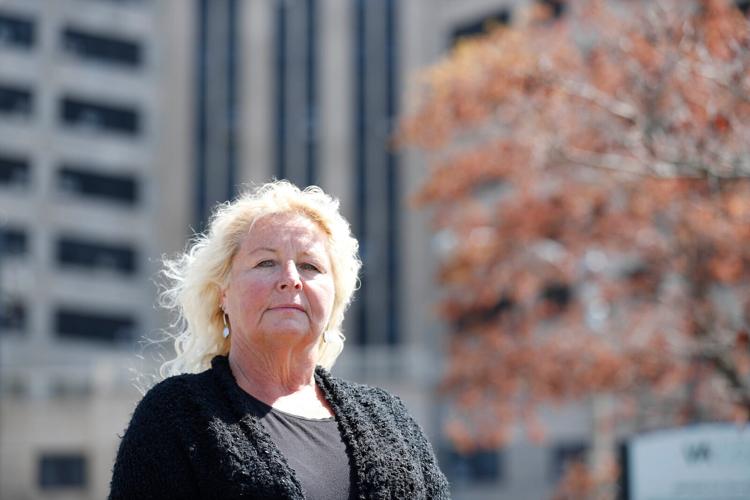
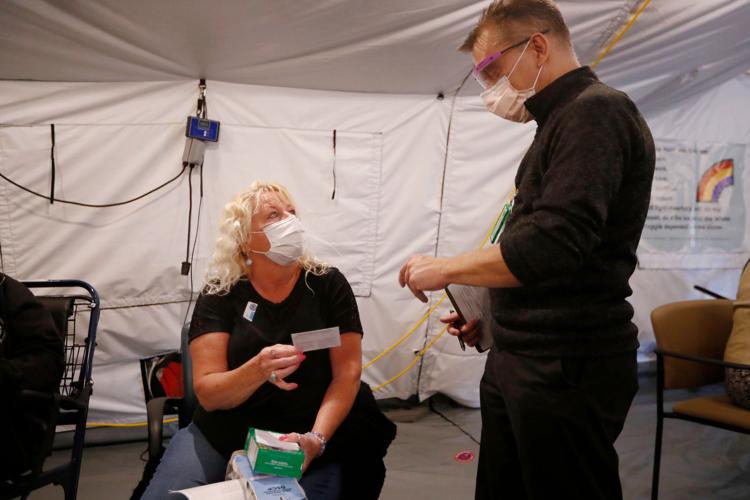
And that resistance spells frustration not just for politicians like Higgins, but also for people like Sandy Pearce. An American citizen living in Fort Erie with her husband of 42 years, she traveled to Buffalo last week for the first time in months – to get a vaccine she couldn't quickly get in Canada, and to visit and care for her aging mother and stepfather in Hamburg.
People are also reading…
Pearce longs for the days when she could make that trip regularly, and she thinks the two governments should be planning to make that happen rather than periodically announcing, as they did last week, that the border would be shut to nonessential travel for yet another month.
"Nothing is being done," said Pearce, who founded a group called Families Are Essential that's pressing for looser border restrictions. "There's no plan. Every month, it's like a stab in your heart: 'No we're closed till May 21; No, we're closed, we're closed'."
Canada's reluctance
News of the latest extension of the border closure came amid Canada's grimmest week of the pandemic. Canada reported more than 8,000 new cases of Covid-19 daily throughout the week. More than half of them in its most populous province, Ontario, where hospital intensive care units were at or near capacity.
Aiming to limit the spread of the virus, Canada shut off air travel from coronavirus-wracked India and Pakistan, Ontario barred nonessential travel to Quebec and Manitoba, and Canadian officials again repeated a mantra they have recited for months.
"We are strongly advising against all travel," Canada's minister of public safety, Bill Blair, said at a briefing on Friday. "Now is not the time for taking trips abroad to other countries or even for traveling across Canada."
Some Canadians haven't been heeding that warning. The Canadian press has been rife with stories about snowbirds who fly into border cities such as Buffalo or Detroit and hire taxis to take them home to Canada, all in an effort to dodge the three-day quarantine in a government-approved hotel that's required of all Canada-bound air travelers. Meanwhile, in their letter to Trudeau, Ontario Premier Doug Ford and Quebec Premier Francois Legault said travelers entering Canada have opted to pay fines rather than submit to quarantine requirements, while others have arrived bearing fake negative Covid-19 test results.
To prevent such things from occurring, "the introduction of stricter measures for travelers crossing at land borders is a significant step to achieve that goal and ensure that collectively we are doing all we can to protect our citizens," Ford and Legault wrote.
On Friday, Blair indicated that the Canadian government might be willing to get tougher at the border if need be.
"We continue to take strong measures to secure borders to slow down the spread of Covid and I believe we have demonstrated our resolve to and willingness to add additional layers when that is warranted," Blair said.
Canada is also still lagging on vaccinations. Lacking any vaccine manufacturing plants of its own, Canada has been relying on imports. And as a result, on a per capita basis, the Our World in Data Covid-19 Data Explorer shows that the U.S. has fully vaccinated nearly 10 times more of its residents than Canada has.
"We do recognize, as vaccination rates go up and, hopefully, as we see the public health measures that are in place now bring down those case counts, there will be a conversation that we can have both with the American administration and with provinces and territories about what is the right posture at the international borders," LeBlanc, the Canadian intergovernmental affairs minister, told the CBC. "But for the moment, there's no active discussion [about] adjusting those measures."
In fact, an agreement to reopen the border may never come.
"What I actually think may happen is that the U.S. will decide on its own that it is going to modify its restrictions," with Canada following at a later date when the pandemic ebbs, said Christopher Sands, director of the Canada Institute at the Wilson Center think tank in Washington.
Officially frustrated
Canada's reluctance to even talk about easing the border restrictions and the U.S. government's resulting silence don't sit well with Higgins or the handful of other officials who have raised concerns about the border closure.
"Because Canada is experiencing a spike in Covid and they have a vaccination problem doesn't mean that we shouldn't have a plan for the border," said Higgins, a Buffalo Democrat. "In fact, I think it underscores the need to have a plan to open the border."
Fort Erie Councillor Nick Dubanow – one of the few Canadian politicians to call for such a plan – agreed.
"It's our 14th month" with the border largely closed, Dubanow noted. "It just seems that we need a plan and we need to figure out: What do we need to achieve? Is it vaccinations? Is it (a lower number of Covid) incidents? What's the phase-in going to be?"
It seemed that such a plan would be developed when President Biden, on his second day in office in January, called for talks with Canada and Mexico and, within two weeks, the development of new health protocols at the borders.
Since then, the Biden administration has largely gone silent on the issue. Officials at the Department of Homeland Security, for example, did not respond to a detailed list of questions The Buffalo News submitted regarding the Canadian border and its eventual reopening.
But the State Department spoke last week, issuing a travel advisory that, for the first time ever, put Canada on its "do not travel list." The reason? Canada's high rate of Covid-19.
To help extract Canada from that problem, Biden indicated last week that he may be willing to provide Canada with more vaccines beyond the 1.5 million doses of AstraZeneca vaccine that the U.S. had already agreed to send north.
"We don’t have enough to be confident to send it abroad now, but I expect we are going to be able to do that,” Biden told reporters.
Hearing that, Higgins said: "That's great, but it should also come with conditions, then, that require a serious engagement between the United States and Canadian governments about opening the border to loved ones who want to reunite."
The human impact
People who are separated from their loved ones by the closed border have been increasingly outspoken of late, calling on both governments to loosen their border restrictions – but there are no signs of any such thing happening anytime soon.
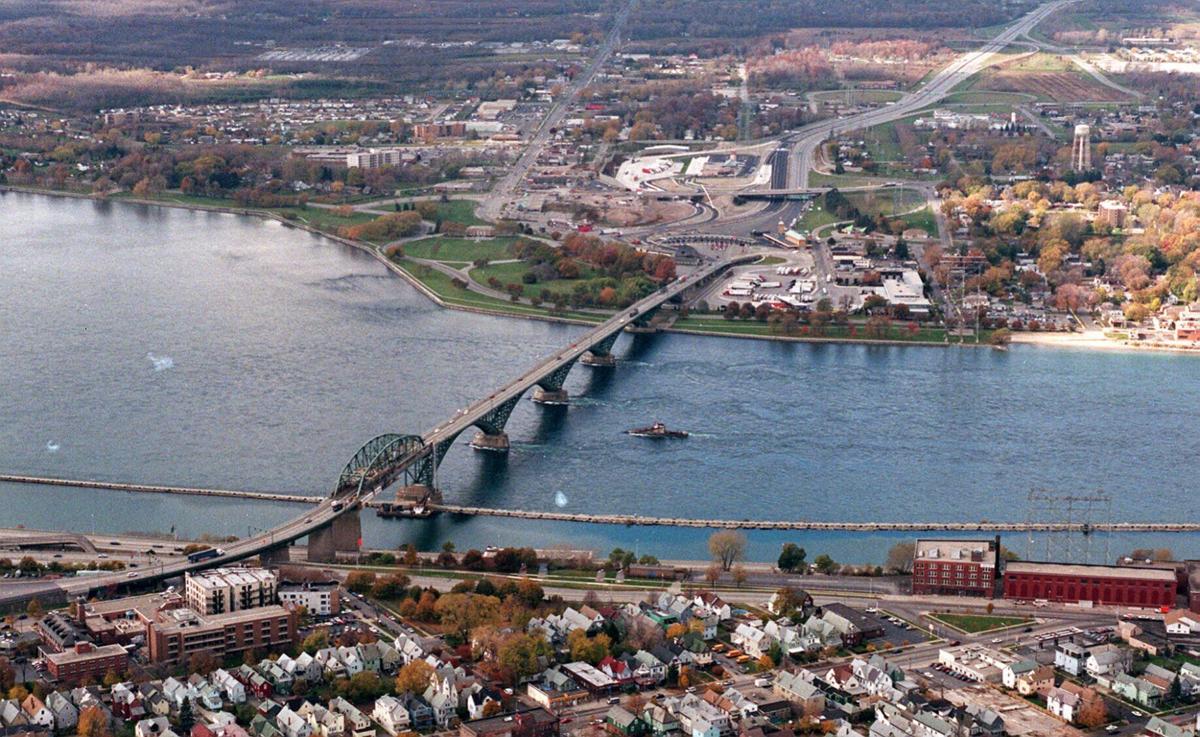
Pearce's group – which grew to 1,200 members strong in five and a half weeks – has taken to protesting weekly on both sides of the Peace Bridge, as well as the Ambassador Bridge between Detroit and Windsor, Ont. Their goal: pressuring the two governments to make it easier for people to visit their loved ones on the other side of the border.
"We need to do something else because what we've been doing for over a year (which was mainly writing to politicians) isn't working," Pearce said. "I think we need to have peaceful protests."
Pearce, 60, personifies the dilemmas faced by many residents of Canada with family in the states. Her mother is 90 and her stepfather is 92, and they need someone helping them. Pearce was happy to do it and quarantine at their Hamburg home, but she stopped coming over regularly after November "because Justin Trudeau said he was going to make it more difficult for Canadians to return to Canada."
She returned to the states last week, though, because as an Army veteran, she qualified to get a shot at the Buffalo VA Medical Center. She'll stay with her mom and return to Canada after her second shot in three weeks.
Other people with loved ones on the wrong side of the border have it even worse.
"I haven't seen my family in 14 months," said Devon Weber, an American who lives in Montreal who formed Let Us Reunite, another group aiming to ease the border restrictions. "We have people who have children who haven't seen their fathers in 14 months."
And there's little indication that will change anytime soon.
Customs officers in Western New York haven't heard a word about any reopening plan – and in fact, they hear about the monthly extension of the border closure from news reports before they hear it from agency officials, said Paul Kwiatkowski, president of the union that represents customs officers in the Buffalo area.
U.S. customs officers have one advantage over their Canadian counterparts. Kwiatkowski said most of the Buffalo-area customs officers have been vaccinated.
But Dubanow, the Fort Erie councillor, delivered some bad news that bodes poorly for Canada's readiness to reopen the border.
"We haven't vaccinated our front-line border officers yet," Dubanow said. "And they've certainly been concerned about that lack of access to vaccines."


