

WASHINGTON – The U.S. and Canadian governments couldn't be more adamant about it: The land border between the two countries must remain closed for at least another month – especially given that Canada is suffering an unprecedented wave of Covid-19 infections.
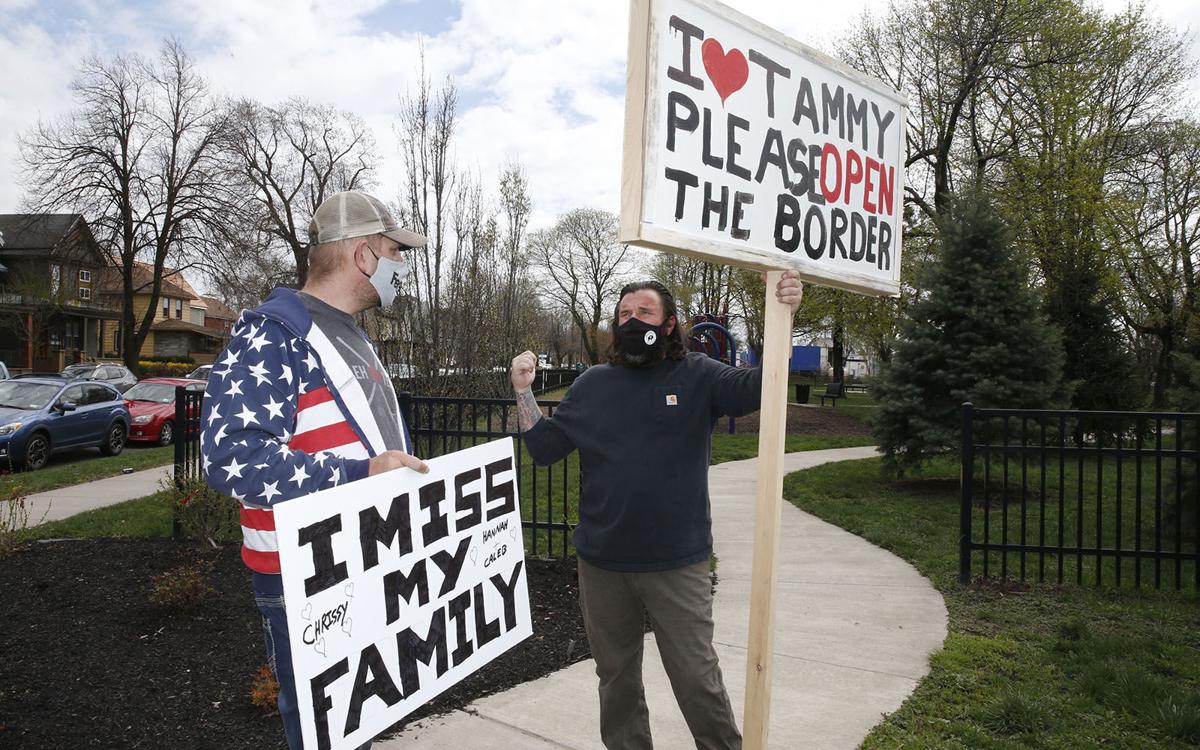
But people who have been pushing for a border reopening plan are only growing more frustrated now that the two governments have shut the border for a 14th consecutive month, until at least May 21.
That divide between what the governments are saying and what advocates of a border reopening think grew only more stark on Tuesday, a day after U.S. Customs and Border Protection announced that the border shutdown would continue.
"On March 21, 2020, the U.S., Mexico, and Canada temporarily restricted non-essential travel across the U.S.-Canada land borders. These restrictions will remain in effect until 11:59 p.m. EDT on May 21, 2021," the CBP website said in announcing the extension on Monday night. "We are maintaining cross-border activities with Canada and Mexico that support health security, trade, commerce, supply security, and other essential activities while taking critical steps to protect our citizens and to curb spread of the virus."
People are also reading…
The border restrictions had been scheduled to expire at 11:59 p.m. Wednesday.
The latest extension of the border shutdown comes as no surprise, given that Canada is experiencing an unprecedented surge in Covid-19 cases.
The pandemic is especially dire in Ontario, where the provincial government reported Tuesday that 2,202 people were hospitalized as of Monday. That is nearly three times the number hospitalized with Covid-19 in Ontario a month ago. Many of the Covid-19 cases are in metro Toronto, where hospital intensive care units are so overwhelmed that one is setting up a series of tents to serve as a field hospital.
Given the severity of Canada's third wave of Covid-19 infections, the border closure and other restrictions on travel must remain in place, at least for now, Canadian Prime Minister Justin Trudeau said Tuesday.
"Our strict travel testing and quarantine measures are extremely important, which is why we're keeping them in place," Trudeau told reporters in Ottawa.
"Once again, I want to be very clear: This is not the time to travel," he added.
Canada's third wave stems from variants of the virus that are running rampant in parts of the country, as well as its sluggish progress toward vaccinating its population. According to The World in Data's Covid-19 Data Explorer, a quarter of the U.S. population was fully vaccinated against Covid-19 as of Monday – but in Canada, which has struggled to import vaccines, only 2.47% of the population had completed its shots.
Even so, Rep. Brian Higgins, a Buffalo Democrat, said it is time to allow vaccinated people to cross the border.
“It’s 395 days since the United States-Canadian border closed, and the closure was just extended another 30 days," Higgins said on the House floor. "Families on both sides of the border have been torn apart: People who love each other, parents, grandchildren, unable to see each other. We need a plan to open the U.S.-Canadian border. With vaccines, face masks and good physical distancing, we can do so safely and successfully.”
Meanwhile, groups that advocate on behalf of families split by the border have been pushing for a reopening plan.
An American-led group called Let Us Reunite has started a "Demand the Plan" campaign to pressure the two governments to get ready for a border reopening.
And the leader of a similar group based in Canada on Tuesday lashed out against Bill Blair, the Canadian minister of public safety and emergency preparedness, for saying on Twitter: "We will continue to do what it takes – for as long as it takes – to keep Canadians safe."
Hearing that, the founder of Faces of Advocacy, Dr. David Edward-Ooi Poon, replied: “ 'For as long as it takes' is quite insensitive but you clearly must be feeling the pressure. It’s time to come up with a border plan, Bill. Families are counting on you."


