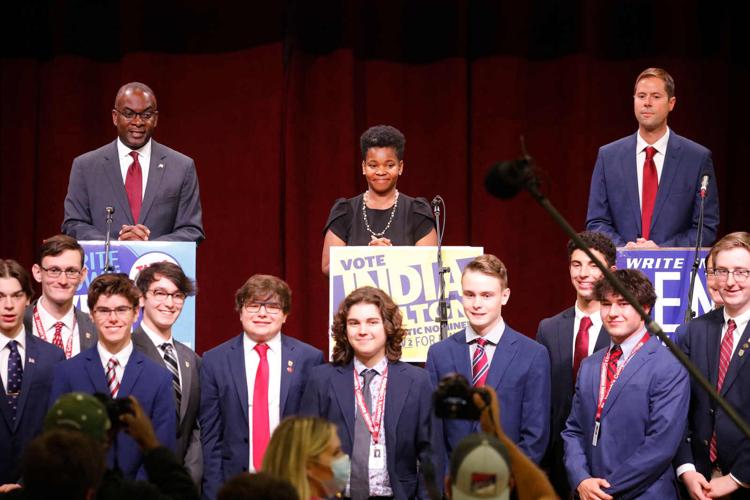
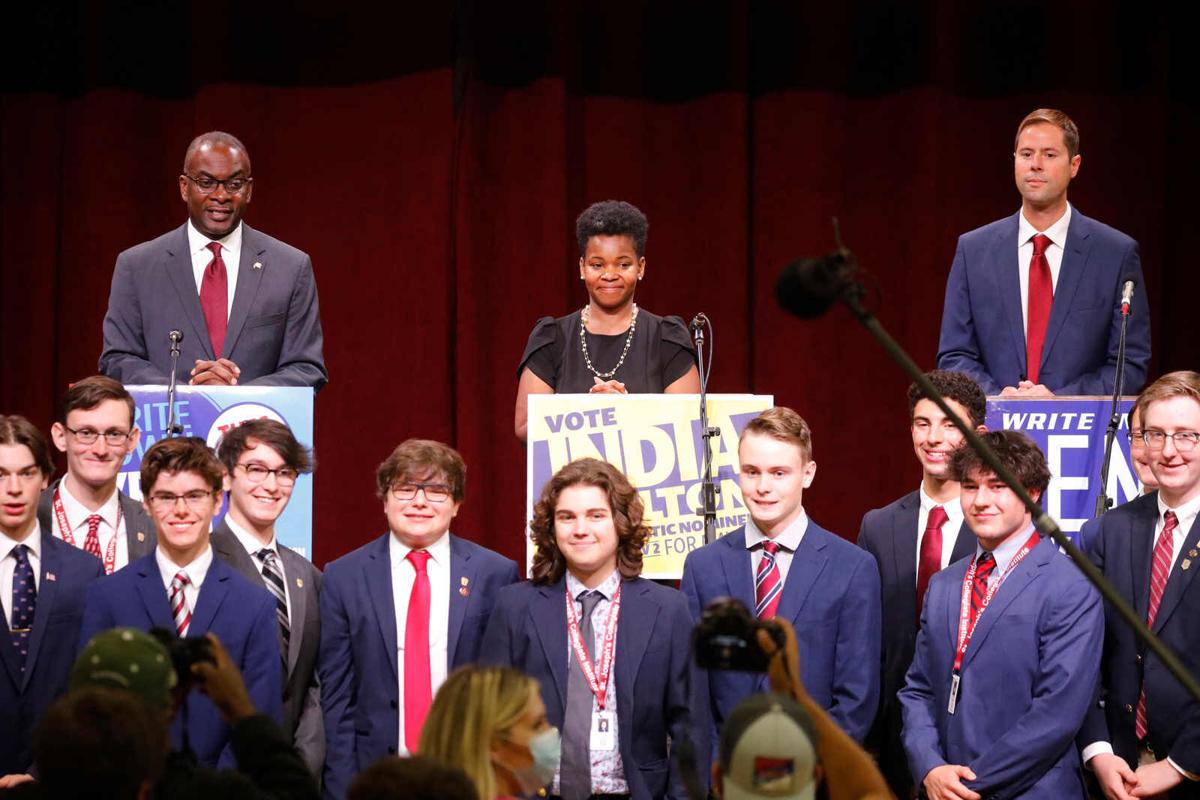
Ted Lina’s government class students staged their annual election season debate at St. Joseph’s Collegiate Institute Wednesday, and once again, they did not disappoint.
Mayor Byron Brown and challenger India Walton met for only the second time during the long campaign that finally winds down this weekend. They broke no new ground. Neither offered a blockbuster to sway undecided voters (if any such person exists in this divided electorate). And the incumbent and Democratic nominee both left the St. Joe’s gym to resume their attacks and watch their avalanche of campaign mail arrive at homes throughout Buffalo.
But on this Sunday the issues and fine details of debate skills lie beside the point. The real value of the Wednesday affair was simply that it took place. In a campaign season marked by both sides dismissing the need for this kind of encounter, Walton injected a dose of refreshment when she relented her earlier refusal and agreed to meet Brown at the 37th annual event.
People are also reading…
“I would hate to disappoint the students here at St. Joe’s,” she said after the debate when asked why she changed her mind about a second faceoff with Brown following their Sept. 9 affair at the Frank J. Merriweather Library sponsored by the Buffalo Association of Black Journalists and WUFO Radio.
Good government groups like the League of Women Voters often sponsor debates and forums during campaign season for candidate grilling by questioners and opinion forming by voters. But this year, Brown and Walton failed to recognize the need and desire of voters to hear from these very different candidates during a once-in-a-lifetime general election for mayor.
During the primary campaign, Brown refused to debate. He all but ignored his upstart opponent, never even mentioning her name. He was too busy guiding the city through its pandemic response, he said then, to engage his from-out-of-nowhere challenger.
Back then, Walton said the mayor’s refusal “undermines democracy.”
“We look to the GOP as guilty of voter suppression, but this is just an injustice,” she said. “I’m not a career politician and have ideas that vary from what he stands for.”
Then Walton stunned Brown in the June 22 primary. Suddenly, the mayor wanted to debate. And just as suddenly, Walton didn’t.
“We believe it more appropriate to prepare to take office than to engage in a lengthy series of debates with a candidate who wouldn’t debate India until she beat him,” Walton spokesman Jesse Myerson said in early September.
There are those who believe that when St. Joe’s went ahead with its debate by slating write-in candidate Ben Carlisle against Brown, Walton may have experienced a change of heart. Perhaps she had not realized the affair’s key spot on the Western New York political calendar since Lina started it in 1984. It would have looked bad to skip this one.
Others say she might need the exposure in a race of which nobody can confidently predict the outcome because of the uncertain dynamics surrounding its write-in nature.
What we do know is that more than at any other time in its long history, the St. Joe’s debate is now firmly cemented into the local political landscape. Brown knew it; Walton knew it.
And maybe both candidates finally came to the realization that meeting in debates sponsored by legitimate organizations like St. Joe’s or the League of Women Voters should be part of the process – whether they like it or not.
When Brown and Walton met at the Merriweather Library last month, neither shook hands. They barely acknowledged each other in a break with debate decorum.

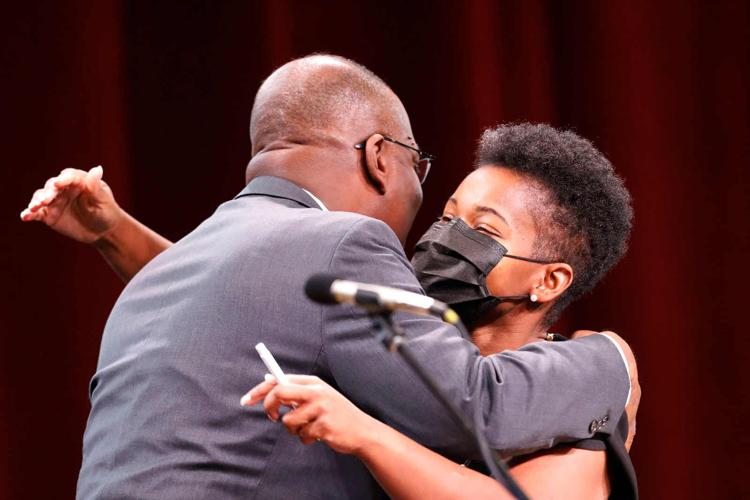
Buffalo Mayor Byron Brown and Democratic candidate India Walton embrace before the start of the debate.
At the start of Wednesday’s debate at St. Joe’s, the pair this time exchanged smiles, then handshakes, then a hug. The hug may not have ranked high in the grand scheme of this bitter contest, but it took place.
And it would not have happened without the St. Joe’s debate.