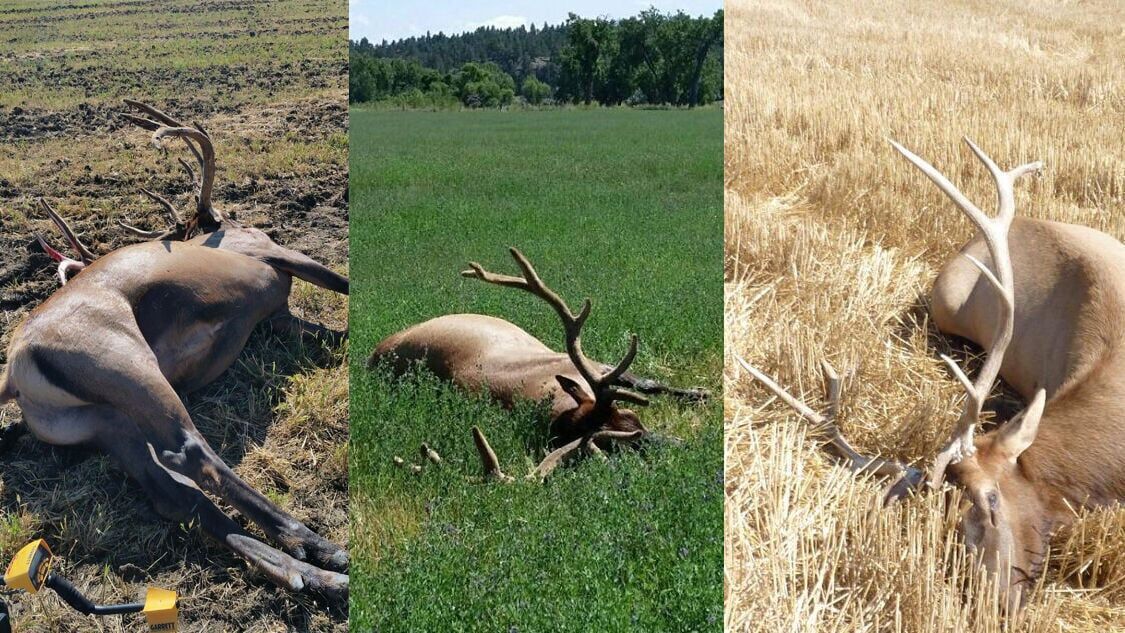
You might not know it, but your bank account is probably slimmer because of poachers who go out and illegally kill thousands of animals in the United States every year.
A five-year research project by a Missoula-headquartered nonprofit, the Boone and Crockett Club, found that poaching costs U.S. taxpayers more than $1.4 billion annually in conservation costs, or the amount that is lost when an animal is poached and the crime isn't reported, discovered or prosecuted.
When averaged out across all states, it's estimated that every state, including Montana, loses out on nearly $29 million in fines and replacement costs every year due to wildlife crimes.

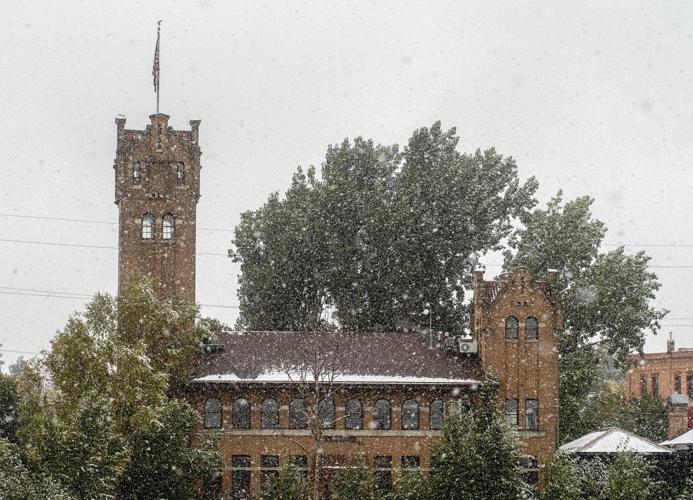
Snow falls over the Boone and Crockett Club headquarters in Missoula in 2019.
And by losing out on money from fines, Montana is losing a major revenue source that could help pay for things like habitat conservation and enforcement of wildlife laws. Also, hunters who don't buy licenses and get away with it are costing the state a significant amount of money.
People are also reading…
The Boone and Crockett Club, a national organization that was founded in 1887, recently conducted the study on poaching's impact as a response to plummeting wildlife populations due to unregulated harvests and poaching. It released a 150-page report called "Poach and Pay" in September.
"Poachers are stealing from hunters, but they are stealing from all of us, whether you hunt or not, because wildlife belongs to all of us," explained CEO Tony Schoonen. "This is a theft of a public resource."

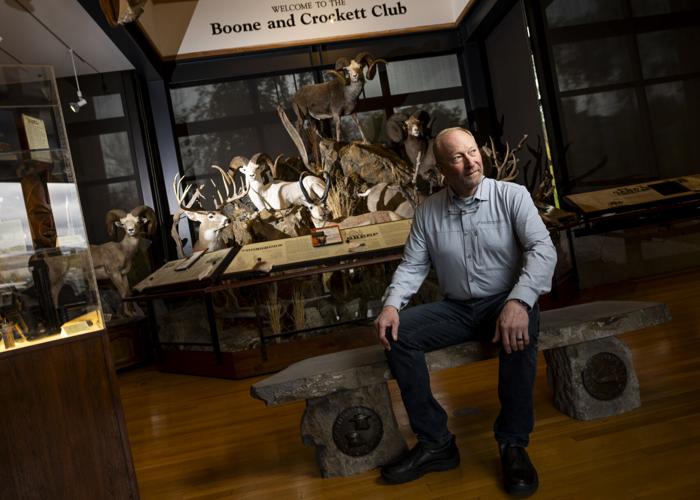
Tony Schoonen, the CEO of the Boone and Crockett Club, poses for a portrait on Thursday, Oct. 16, 2025.
And using what they called a "detailed data collection effort and statistical analysis," they found the detection rate of wildlife crimes in the United States falls somewhere between 2.66% and 5.41%.
"Let me repeat that in more plain terms," Schoonen added in a press conference. "Only about 4% of poaching incidents are detected."
He noted that the crime of theft across the country, like shoplifting, has a much higher detection rate, about 25%.

From a "thrill kill" rampage on deer to nine trophy black bears, Lou Royce has investigated many poaching incidents. But it's the unsolved cases that haunt him.
"The significant underreporting of wildlife crimes is because poaching is such a cryptic crime," Schoonen said. "The environments where most illegal big game activity occurs are often vast, uninhabited and difficult to access, with few potential witnesses. These conditions, coupled with the limited number of conservation officers patrolling large areas, make it rare for law enforcement, or anyone frankly, to directly observe these crimes."
Using data for average fines and replacement costs assessed by states for poaching, the organization found there is a minimum nationwide loss of $302.6 million in fines and $1.13 billion in replacement costs every year.
The study found trophy poaching was the most common wildlife crime behavior type, followed by opportunistic poaching.
Schoonen said the conservative estimate of 95% of wildlife crimes going undetected is what he calls a "dark figure."
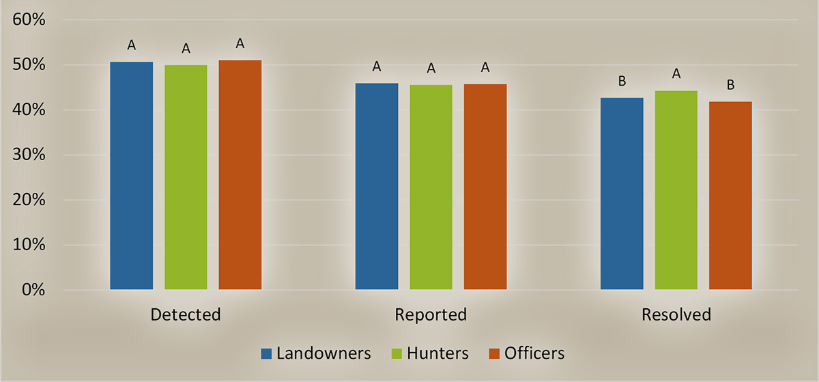
Indicate the percentage of illegal take that you believe goes (Undetected, Unreported, Unresolved) in your state of residence.
“We have long known that poaching is a major problem in the United States, but we didn’t truly understand the magnitude of the problem until this Poach and Pay research,” Schoonen said. “With this defensible assessment of the dark figure, we can clearly describe the conservation cost of poaching and prove that poaching is not a victimless crime. Not only do we lose individual wildlife, we are also losing a valuable public resource with a high cost.”
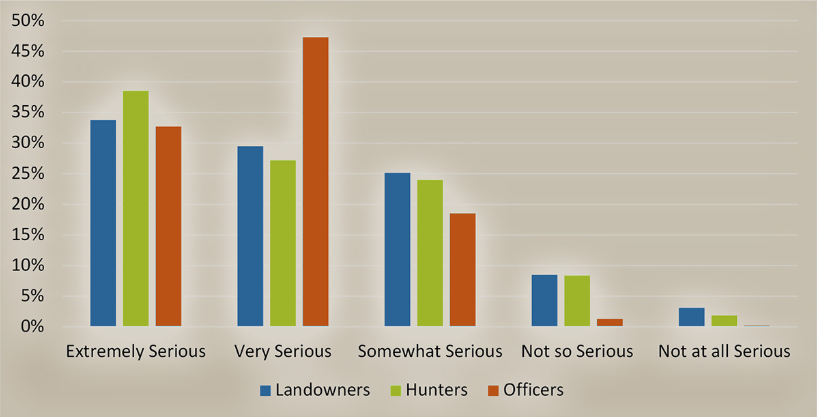
How serious of a problem do you consider the illegal take of wildlife to be in your state of residence in general?
The study came up with policy recommendations.
"We know that conservation officers face extraordinary enforcement challenges, including vast patrol areas, limited manpower, advanced offender technologies and entrenched rural cultural acceptance of poaching as 'folk crime'," Schoonen noted. "To address these issues, officers and stakeholders recommended prioritizing increased officer visibility, anonymous reporting systems, public education efforts and the provision of financial incentives for reporting violators."
They surveyed prosecutors around the country, and almost half felt the illegal take of big game should be treated as a felony theft of a public resource in certain cases, especially if the animal's value exceeds the state's felony threshold.
To report a wildlife crime or public property crime, call 1-800-TIP-MONT or visit online at fwp.mt.gov/enforcement/tipmont/.
Enjoy this overview of Boone and Crockett Club's impact on North American conservation efforts.
For more information about Boone and Crocket Club, visit: https://www.boone-crockett.org
David Erickson is the business reporter for the Missoulian.