

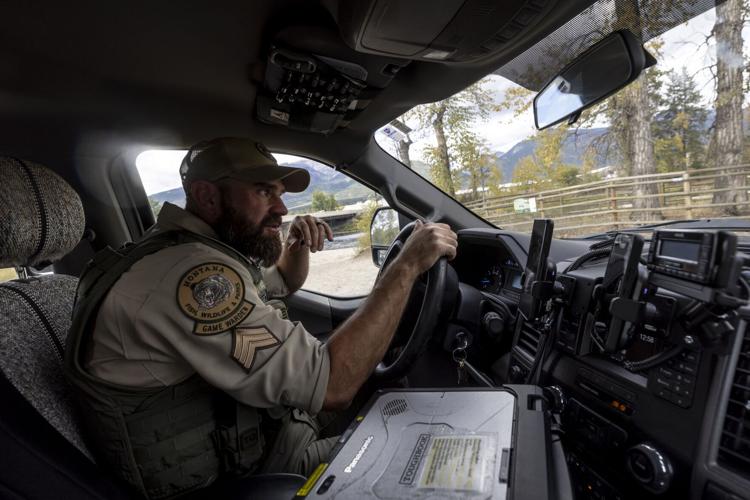

Lou Royce, a game warden sergeant based in the Bitterroot Valley, has seen and investigated all kinds of wildlife crimes and poaching cases in his nearly two decades working for the state in various positions. This part of Montana has long been a hotspot for poaching.
People are also reading…
There have been incidents of kids with guns in cars going on a "thrill kill" rampage on deer, or more nefarious cases like the man who poached nine trophy black bears out of one area near Darby.
He specifically remembers a case of houndsmen illegally treeing a mountain lion with the aid of dogs and then calling a friend with a permit to drive a long distance to shoot the animal — a practice that's illegal in Montana.
Royce has helped prosecute people who posed illegally as outfitters to help out-of-state hunters kill trophy elk. He has patrolled rivers in a kick boat to make sure people are fishing with a license, and he's ridden on horseback to remote backcountry areas in an effort to show that no place is out of reach of the law. He's done everything from investigating huge poaching rings and solving nuisance wildlife problems to helping educate the community that he's there to protect a valuable public resource: Montana's prized wildlife.
But the worst part of the job, and what haunts him, are the unsolved crimes — especially the ones that go unnoticed. A lot of the frustration comes with knowing that he'll never know about the vast majority of illegally killed animals in Montana.
"And I feel like we have a really engaged and passionate public, so I think that we do better in Montana, but I can't see us doing more than like 10%."
Those numbers are shocking when you do the math and think about it. And they're certainly shocking to Royce.
"And so, in my busy district, if I had a really busy hunting season and I ended up confiscating 25-30 animals, and I figured that was 10% of what was illegally harvested in just my district alone, you're thinking hundreds of animals, you know, we never find out about," he said. "Nobody saw it happen or somebody saw it happen and they thought, well, I'm not gonna call, you know?"
A huge part of Royce's responsibility is building trust in the community and maintaining personal relationships so that people do call in tips about illegal poaching.
"That's where those relationships that the wardens build in their communities are important," he said. "I hear from people all the time like 'hey, I'm not a snitch but this just isn't right, you guys need to know about this.' And so just that little nugget of information, we can oftentimes build a case on."
Montana law defines poaching as the illegal taking, killing, possession, or waste of a wild bird, mammal, or fish, with different amounts of restitution. For example, the restitution for poaching a mountain lion is $500, and for a bobcat or paddlefish it's $300. But restitution for illegally killing a trophy animal is larger. The largest restitution amount is $30,000 for poaching a mountain (bighorn) sheep with at least one horn equal to or greater than a three-fourths curl as defined by commission regulation.
Every few weeks, especially in the fall during hunting season, Montana Fish, Wildlife & Parks sends out press releases asking for the public's help in identifying poaching subjects.
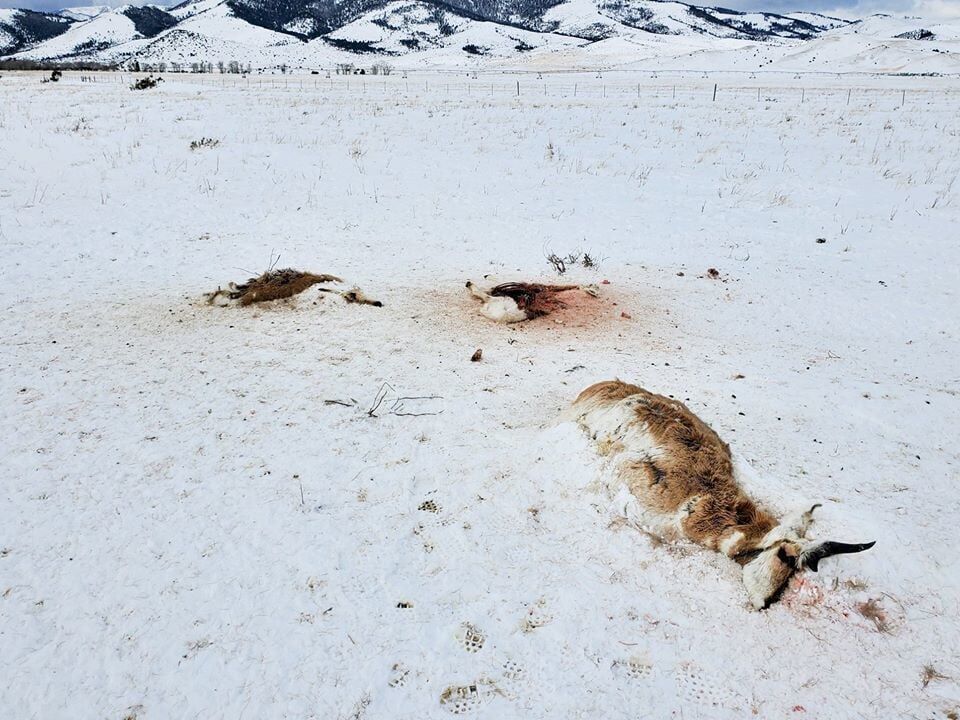
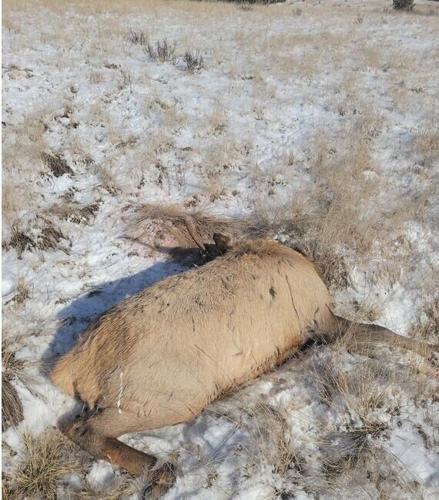
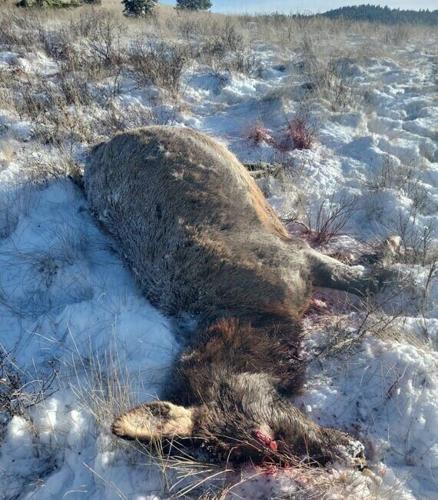
In the past two seasons, FWP said game wardens were trying to track down information on different poaching incidents related to elk, deer, black bears, pronghorn antelope, wolves and bighorn sheep that have been illegally killed across Montana, with many of the carcasses left to waste. For many of the recent cases, it doesn't appear any suspects have been identified. One press release led to important tips in a Bitterroot Valley elk-poaching case, another prompted helpful tips in a Missoula-area case.
But, overall, nobody really knows how many animals are illegally killed in Montana each year.
In part, that is because many crimes go undetected. But reporting from Lee Enterprises also revealed that FWP does not track two types of poaching incidents: suspected but unsolved cases and cases that result in felony prosecution. The data the agency does collect shows that FWP issued 82 poaching-related citations as of 2024. That's a 62% drop in violations from 2015, when wardens handed out 217.
Huge patrol areas, more calls
For 16 years as a field warden based in Darby, the area Royce patrolled was over 1,000 square miles. In eastern Montana, he said, some wardens patrol 2,000 square miles, an area quite a bit larger than the state of Rhode Island.
With that kind of a vast patrol area, maybe covered by two game wardens along with a supervisor like Royce, they rely on tips from the public.
"You know, when I'm driving around training new wardens and things, I tell them, 'You're probably going to see maybe 25% of the crimes you investigate, you'll actually see it happen," he said. "And that's probably being pretty generous on that 25%. And most of the time, you get a call, you respond out, you find some evidence, you start building a case that way."
And there are other factors that make it hard for law enforcement to keep up with poaching.
For one, the call load is higher than it has ever been, with the huge population boom that's hit all of Montana, including Missoula and Ravalli counties, since the pandemic.
And investigating a wildlife crime often takes a very long time, usually many months, sometimes even years.
But advances in technology have sometimes helped in tracking down the perpetrators.
Royce recalls an incident when a tipster found a cow moose carcass in an area where the state doesn't give out any cow moose tags for harvest. The meat had obviously been harvested, but Royce and his team didn't have much information to go on.
To find the perpetrators, they used cell phone data.
"We wrote a search warrant to Google because we knew exactly about when this moose was killed based on when it was found by the person who called us," Royce recalled. "And so we did a geofence warrant for this area and got our suspects. And then we were able to go through the whole process with multiple warrants to be able to identify who they were, and then got enough probable cause to get the search warrant."
It took over a year before they were able to go inside the home of the couple and search the freezer.
Inside, they found unlabeled meat, but Royce and his crew had it DNA tested to make sure it was moose.
"We had two people involved, and they ended up throwing the charges out on one, and the other one took the plea agreement," Royce recalled. "And I think he lost hunting privileges for like three years or something and paid like a couple thousand dollars in fines, something like that. So we were hoping for a little bit more on that."
Royce said he believes that case was a "pretty bad one."
"Especially because it's a spot where moose are pretty rare," he said. "There's like one bull tag in that district and no cow harvest at all. So it was pretty significant to the population, just having that one female moose taken out."
What are the motives?
J.D. Douglas, the assistance chief of law enforcement for Montana Fish, Wildlife & Parks, has been helping to track down poachers and the perpetrators of other wildlife crimes for 25 years.
He's seen people do it for all kinds of reasons, from simple ignorance of the law to more dishonorable motives.
"I would just say it's overall greed, whether they want the biggest or the best or just want to circumvent the rules or whatever, it's just overall greed and selfishness," Douglas said.
But what never changes is how it impacts the public resource.
"Whether someone is doing it for monetary gain, personal greed or selfishness or a lack of respect, it's all serious," Douglas explained. "It all has a dramatic impact on the resource. It depends on what the animal was that was removed, whether it's a trophy bull moose or a cow moose, so all the calves are lost for the future. But overall, they're all of equal value to the citizens of Montana."
Douglas also said some people just need to brag about getting trophy animals, even if they don't have the licenses for those animals.
"I do think that there is a competitive nature that gets fueled by some of these people to go after and target the biggest and the best," Douglas said.
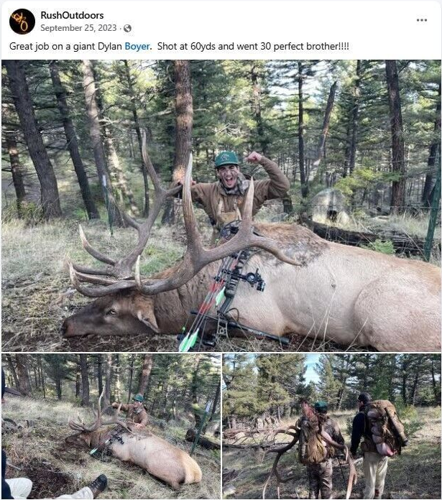
Social media plays a role in that, allowing people to show off their illegal kills.
"Obviously in the modern era social media does play a part in everything we do," he added.
A post on social media also sometimes helps law enforcement become aware of, and prosecute, wildlife crimes. For example, in a recent case, social media bragging by poachers in Musselshell County led to their conviction.
"We don't have the resources to sit there and surf it, that usually comes from the general public themselves, pointing something out and providing something to us," Douglas said.
Royce, the Bitterroot game warden, said the motivation for committing a wildlife crime varies.
"There's a lot of people that it's just like an opportunistic thing, you know," he said. "I don't think that they set out from their house that day and thought 'I'm gonna go out and do that.'"
But the opposite can also be true, he noted.
"There are a fair number of people who, I'm convinced by investigating all these years, that they specifically were leaving their house that morning and thinking, 'I'm gonna go and break some kind of a fish and game law,'" he said. "You know, when a guy loads up a spotlight, drives out at midnight and starts shining in a farmer's field, it's not like they're probably thinking of obeying the law."
As for monetary profit, Royce knows that a small percentage of cases do involve people motivated solely by money.
"There is a commercial aspect to some of the poaching we see," he said.
Neither Douglas or Royce would make a definitive statement as to whether the penalties for most successful poaching prosecutions are enough of a deterrent to prevent other people from making the same mistakes.
"You know, the fines don't seem to be as much of a deterrent, but jail time and a loss of privileges are a big deal," Royce said. "Oftentimes I talk to people and they're like, 'Well, what does (losing hunting) privileges mean to this guy because he didn't have privileges to hunt anyway?' But yeah, it does seem like that's a big deal. People can't go buy a hunting license and be able to brag about stuff that they harvest or whatever."
Big cases, big impact
During Douglas' time in law enforcement for the state, there have been some huge poaching cases in Montana.
When asked about some of the most infamous cases, Douglas immediately mentioned Philip Mark Payton, a man the Missoulian once called "one of Montana's most notorious poachers."
"He took a game animal in every unlawful way he could — at night, over baits, from roads, over limits, using other people's tags, closed seasons, you name it," said Douglas at Payton's 2007 sentencing, when Douglas was the FWP's lead criminal investigator in the case.
Investigators documented 86 animals that Payton and accomplices killed illegally over a number of years, including moose, elk, deer, antelope, mountain goats and black bear.
However, due to the statute of limitations, Payton only ever admitted to killing 30 of the animals.
Former Missoulian reporter John Cramer documented Payton's carnage.
"Authorities portrayed him as an arrogant, ruthless killer of wildlife, a Texan who came to Montana and left a trail of carnage strewn across the landscape for 15 years, taking the biggest and the best trophy animals and leaving their populations poorer for it," Cramer wrote.
But at Payton's sentencing, Cramer noted that Payton wouldn't spend a single day behind bars for the killing spree.
"Prosecutors sought a lengthy prison term for Payton, who violated virtually every hunting law on the books, but he instead received a large fine ($52,744), probation and had his hunting, fishing and trapping privileges revoked for life," Cramer wrote.
Douglas also points to a case from 2022, when 18 men, almost all of them from out-of-state, were convicted of illegally killing at least 48 animals over a period of years.
At the time, then Montana Fish, Wildlife & Parks director Hank Worsech called it "one of the most disturbing poaching cases in recent history."
Douglas said the biggest handful of cases over the last couple decades "represent literally thousands of unlawfully taken game animals."
Hunters who follow the law and who are frustrated at not getting an animal they were after have a legitimate gripe with poachers, Douglas believes.
"After we've took down a case like the Phillip Mark Payton case or the Ruth case in Seeley, we see a big improvement in resources on the game range," he said. "Because of the animals and the quality of animals those people were taking at the time. I would venture to guess throughout the state you'd see similar results of successful prosecutions. It does have a noticeable impact."
Fear and intimidation: Impacts on game wardens
In 2023, the Billings Gazette documented a scathing report issued by Montana's Legislative Audit Division that found many game wardens felt fear, intimidation and poor morale within FWP.
“We really found a series of issues that have damaged the culture in the Enforcement Division, but maybe more importantly really hurt trust between the wardens out in the field and the chief’s office in Helena,” legislative auditor Jeremy Verhasselt said in a podcast.
The Enforcement Division audit surveyed 106 game wardens and received 78 responses. Among other findings, the audit determined:
- Half of wardens believe they had experienced retaliatory behavior or intimidation by the chief's office in the last five years
- The Enforcement Division had not developed a plan for data gathered by wardens
- The scope of warden duties had not been adequately defined despite the expansion of recreation in Montana
- On the topic of federal dollars, from 2019 to 2021, some of the biggest budgetary decreases hit park patrol and criminal investigations
To report a wildlife crime or public property crime, call 1-800-TIP-MONT or visit online at fwp.mt.gov/enforcement/tipmont/.
David Erickson is the business reporter for the Missoulian.


