


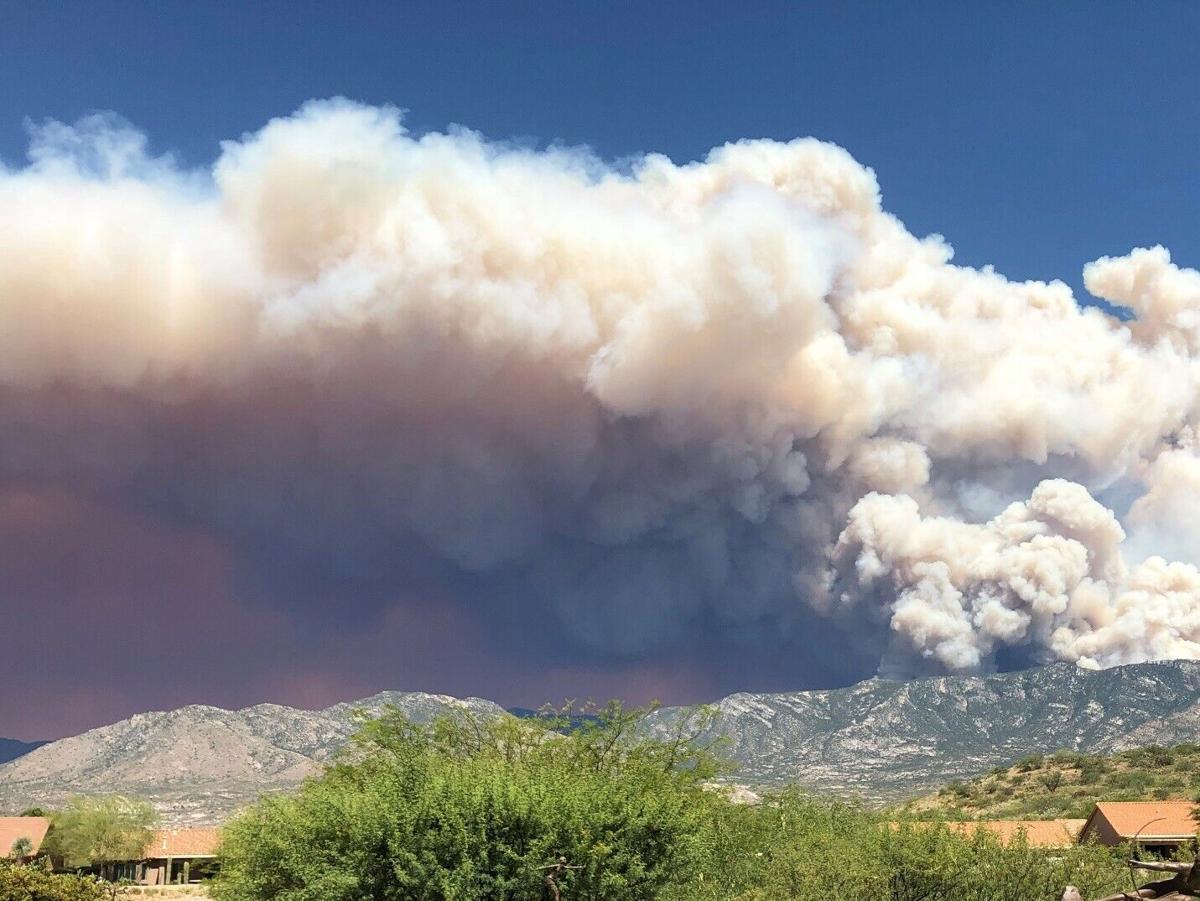
Wildfire damage around the world is catastrophic today, alongside climate change, flooding, and historical wind damage to property. SaddleBrooke has taken action to reduce the community's fire risk, but the risk remains.
In June and July 2020, a massive wildfire burned across the Catalina Mountains, from the south near Ina Road in Tucson to just outside SaddleBrooke to the north, a distance of 20 miles. It destroyed 119,000 acres over seven weeks. A lightning strike in the mountain wilderness, triggered by a storm near Tucson, started the fire. It threatened hundreds of homes and prompted multiple evacuations in the Catalina Foothills. Residents of the Oro Valley section were displaced. Fortunately, the inferno stopped just short of SaddleBrooke. This is how it all happened.
In the third week of June, on one of the year's longest days, the morning sun rose at approximately 5:30 a.m. over SaddleBrooke, at the lower elevation of the northernmost Santa Catalina Mountains. Those foothills looked like gray ghost silhouettes against the pallid early-morning backlight. Smoke and dense ash from the Bighorn Fire obscured the sun as it peeked above the ridgeline. Nudged by southern winds, the incineration of combustible scrub and tree growth raced north toward Oracle with a vengeance, prompting evacuations. Nature was on a disastrous binge with no intent of decelerating.
And then, in all its glory, the tangerine sun appeared high in the sky. Not red, not yellow, but the color of a bruised tangerine. Usually a fiery red glare, the rising star at the center of the solar system was altered by smoke from the seething fire below, graying the dynamo sphere of hot plasma. For a few days in mid to late June, SaddleBrooke was under a beguiling tangerine sun. For a magnetic moment, it was captivating, moving me in complicated ways through melancholy grandeur.
To the right of the sunrise, almost due south, stood the 9,150-foot granite Catalina peak. The spectacular sheer cliffs and crags, gullied by time, became a mountain that lost its face to the hell of flames. Harsh rock formations appeared split by some cosmic ax, standing as a testament to nature's endurance. Proud but haunting, the massif rose, broad-shouldered, toward the heavens. The Bighorn fire roamed the mountain for weeks, conjuring an alpha-omega of firestorms. It carved dispiriting gray gashes and vulgar charcoal lacerations that disfigured the mountain from north to south.
During daylight hours, a DC10 air tanker jet dropped flamingo-pink retardant, further jolting the Catalinas as it throttled out of a long slurry drop. Twelve thousand gallons in eight seconds dampened the inferno beneath this flying machine of mercy. A menagerie of animals ran for their lives through the maw of torching vegetation, leaving their flaming, charred homeland behind.
Evocative of all this destruction was a young, white-rumped mule deer with a broken left rear knee. For several evenings, it found its way to my patio fence along the SaddleBrooke 12th fairway, searching for water as it dragged the useless appendage behind with every step. Thick brownish-black weeping tear lines ran like dreadful tattoos from her eyes down the muzzle to her mouth. She clambered to within three feet of me, to a water bucket I had set out. The trauma of the lethal conflagration and her skeletal damage overpowered her fear of humans. The demand to quench her thirst was more significant than fear. This adolescent deer had an uncertain future indeed, with few tomorrows.
The nights brought a fireworks display worthy of the finest pyrotechnics. From the Catalina ramparts, the fire line crept down the mountainside to nearly the 3,000-foot elevation. It resembled a red military picket line punctuated by precipitous steeples. Occasionally, a considerable flame-up, the ignition of a mature tree, materialized as a sentinel standing tall along the picket line. Random, outsized fire spots vented towering flames through the night. Still, the magnificent Santa Catalina Mountains held fast, proudly displaying strength against an all-out attack. To the true heart of outdoorsmen and environmentalists, this torrid vision looked pornographic.
The fire burned to within two miles of the northeastern edge of SaddleBrooke, near the outlying Preserve Golf Course. The Historical Registry Solano Ranch stagecoach stop, an eighteenth-century historic dwelling in Canyon Del Oro, the valley northeast of the fairways, was imperiled. A fleet of firefighting vehicles and hotshots assembled nearby to fight the dangerous encroachment.
Earth is an intrinsically flammable planet because of its carbon-rich vegetation, increasingly dry climates, atmospheric oxygen and widespread lightning. This mesmerizing lollapalooza of an inferno had plenty of guile, leaving SaddleBrooke with a lasting memorial.
As citizens, we have much work to do so that this unholy wound to Mother Nature and all her creatures does not reopen. Surely, humankind can circumscribe the potential destruction of our environment's life-supporting ecosystem. If not, the detonation of blazes along the Catalina Mountains ridge will again visit its hell of flames on us.
Jerry Wilkerson is a former press secretary for two Members of Congress and a former CBS Chicago WBBM NewsRadio and Chicago Daily News correspondent. He is a retired police commissioner and Navy veteran living in SaddleBrooke. franchise@att.net.
 For sale: Tucson's Park Place mall

