

A female Gamble Quail flew into our patio picture window one morning with such force that it pitched backward nearly 10 feet. As it lay on its side dying, the male partner took up a sentry post next to his fallen mate. He was a sentinel marking circles around his lady for hours. Chirping, twittering, sadly climbing on top of the bird, pecking at her beak in a hopeless ceremony of professed love and devotion. Staying with her for nearly eight hours until sunset, he finally left our yard. After nightfall, I laid his grand dame to rest, hoping he did not view the procession.
The next morning, he was back perched on our fence, calling out to a partner that no longer existed. As the day passed, he would appear from time to time, gamboling around the area of the patio where she had fallen. I named him Willie, in honor of General George S Patton’s dog, a white English Bull Terrier. Willie was ever faithful to his superior. Always at his side, while traveling with Patton everywhere, including to bed, where Willie snored much of the night.
He was alongside his master in 1944 as the general’s tank corps raced across Europe, liberating Nazi-held territory while bringing freedom to the starving, suffering, and displaced. When Patton pressed on to Berlin, Willie was standing tall with the general, proud, determined, and gritty.
The dog had belonged to an RAF pilot who occasionally brought the pup along on bombing missions. One night the pilot didn’t return from a mission. Patton’s staff purchased the dog for the general, and presented him to Patton at his English Headquarters near Peover Hall, in Knutsford. The general wrote in his diary, “My bull pup took to me like a duck to water. He is 15 months old, pure white.” Going on to write, “Willie is crazy about me and almost has a fit when I come back to camp. He snores, too, and is company at night.” Staff appreciated that Willie would precede Patton into headquarters alerting “Old Blood and Guts” was on the way.
When Sgt. Bill Maudlin, 'Stars and Stripes' cartoonist, met Gen. Patton in March 1945, he described Willie this way: "...Beside him (Patton), lying in a big chair, was Willie, the bull terrier. If ever a dog was suited to a master, this one was. Willie had his beloved boss's expression and lacked only the ribbons and stars. I stood in that door, staring into the four meanest eyes I'd ever seen..."
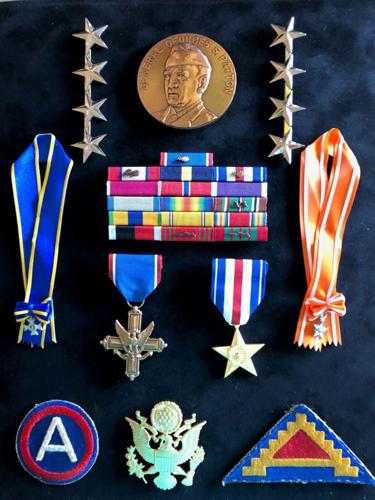
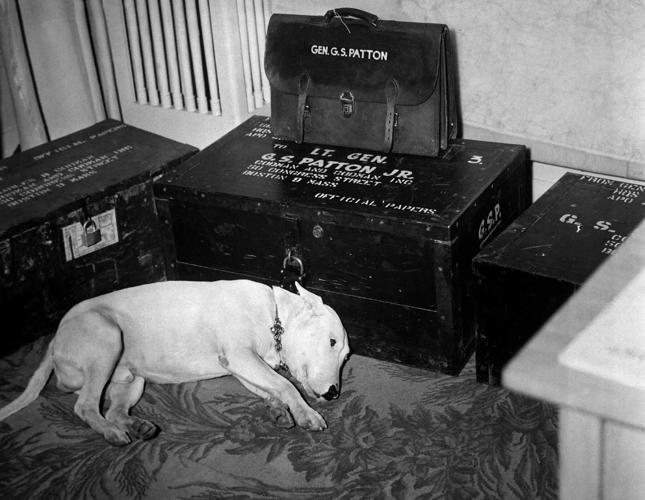
Patton is considered one of the most successful combat generals in U.S. history. He died on December 21, 1945, 12 days after breaking his neck in a car accident near Mannheim, Germany. Willie could not comprehend what happened to Patton and suffered separation anxiety attacks. He posted himself next to Patton’s personal belongings packed in trunks and a private leather satchel for shipment to the States. Willie was transported back to live at 'Green Meadows Farm' with Patton's wife and daughters. He lived almost 12 years and quietly passed away in 1955 at the family farm in Massachusetts.
“Do everything you ask of those you command,” was Patton’s mantra, and lead from the front. “It is foolish and wrong to mourn men who died. Rather we should thank God that such men lived.”
As the days of summer conceded that fall was upon us, it was hard to discern Willie from the other male Quail’s visiting our back yard. I know he is out there, yearning beyond reason for his missus. Like Patton's Willie, he remains lost without his other half. Occasionally, a lone Quail will roost on our fence post and chatter a cry during the last vestiges of dusk, when the sky is nothing more than a pale cerise. His lonesome song of loss unrequited. I’ve heard it told that birds’ mate for life. With that, I’ll warrant Willie is heartsick and oh so lonely.
Jerry Wilkerson lives in SaddleBrooke. He is a former press secretary for two U.S. Congressmen, a prior Chicago CBS radio reporter and talk show host, who is a naval veteran, and served as a Police Commissioner. Email him at franchise@att.net.
 U of A’s fall enrollment down more than 20%, sources say


