

As I have previously mentioned, a recent survey conducted by the National Pest Management Association (NPMA) showed that ants are the most common nuisance pest in the United States. When it comes to indoor ants, one ant stands out in particular this time of year.
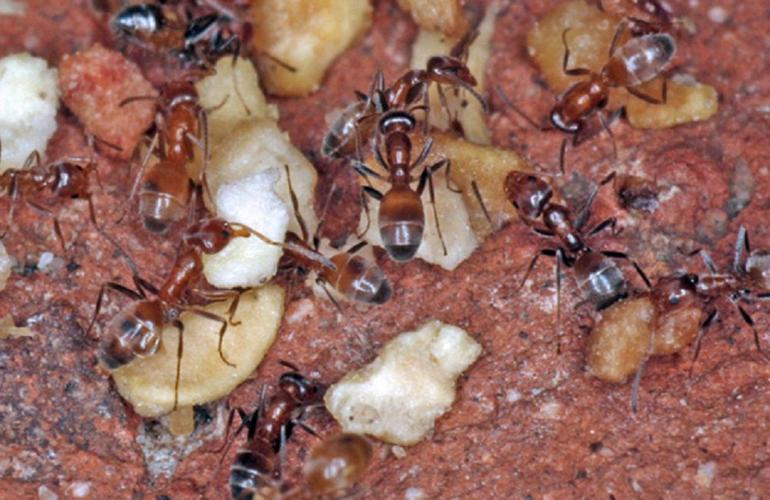
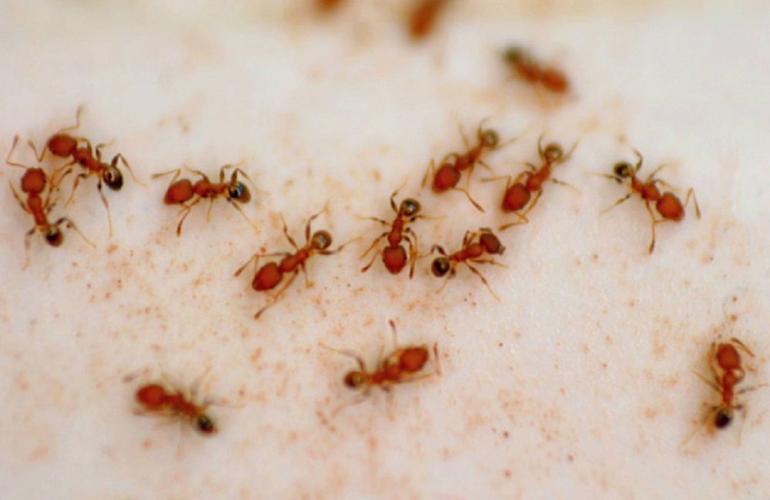
Service calls at our SaddleBrooke service office have begun to pick up for odorous house ants, also sometimes referred to as sugar ants. If you accidentally crush one, you will quickly learn why they have such an unusual name, as they will emit a smell similar to the odor of rotten coconuts. These ants are highly-tolerant of other ants and occasionally live in compound colonies with other species.
Completely black in color, they tend to be no more than 1/16 inch long. Found throughout the world, odorous house ants are one of the more common household ants. In addition, unfortunately for homeowners, this species is known for being one of the most difficult household ants to control because it has the innate ability for "getting into things."
We know odorous house ants will appear each summer because they always take advantage of artificial heating in buildings to survive the winter and create hospitable conditions for themselves during spring. They will infest almost all areas of a building where food is available and infests many areas where food is not commonly found. Infestations commonly occur in food service areas. Hospitals are of heightened concern with this species, as these ants can spread disease and contaminate sterile equipment and rooms.
Odorous house ants have a wide preference in the types of food consumed. In infested areas, if sweet, fatty, or oily foods are left uncovered for only a short period of time, one can likely find a trail of sugar ants to the food. They will also eat other insects.
They have multiple queens and are able to move their colonies from place to place when disturbed. They begin new colonies when a small group of workers and a single queen migrate from their colony to start a new colony. In addition, odorous house ants are crafty because they can build nests in walls, cabinet voids, behind baseboards, refrigerator insulation, the hollows of curtain rods, the folds of clothes, sheets and paper and other undisturbed dark spaces. In short, this ability to find places to build nests makes them extremely difficult to control.
Do-it-yourself control of odorous house ants is difficult, due to their nesting in inaccessible areas. Treatment must be thorough and complete at all nesting sites, as well as the foraging area. Thus, treatment must include walls, ceilings, floor voids, and electrical wall outlets. Baits are the preferred method of control for odorous house ants and several baits (insecticides) are labeled for indoor ant control. Ants nesting on the outside may be controlled by also using a perimeter barrier treatment. However, as mentioned earlier, their ability to migrate quickly when disturbed gives this species the ability to survive most conventional household pest control treatments.
A colony of odorous house ants will scatter if a toxic substance disturbs it, creating multiple problems where there had been only one. In controlling them, it is often advisable to seek a pest control professional.
Tommy Gee is the Manager for Truly Nolen in SaddleBrooke. His service office can be reached at (520) 247-2660. Founded in 1938, Tucson-based Truly Nolen of America (visit www.trulynolen.com) is one of the largest family-owned pest control companies in the United States.
 101 homes to be built on NW Tucson corner


