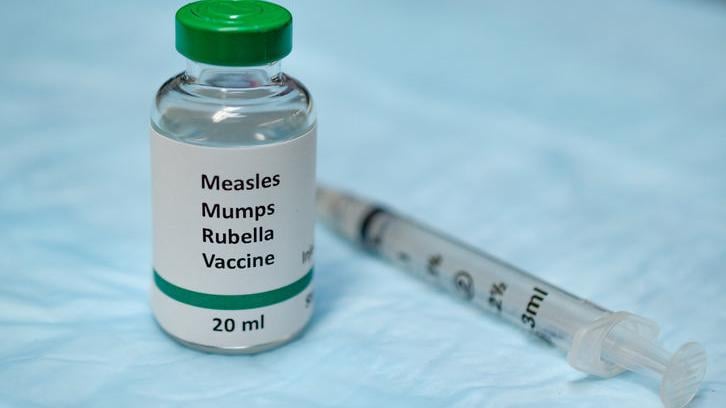
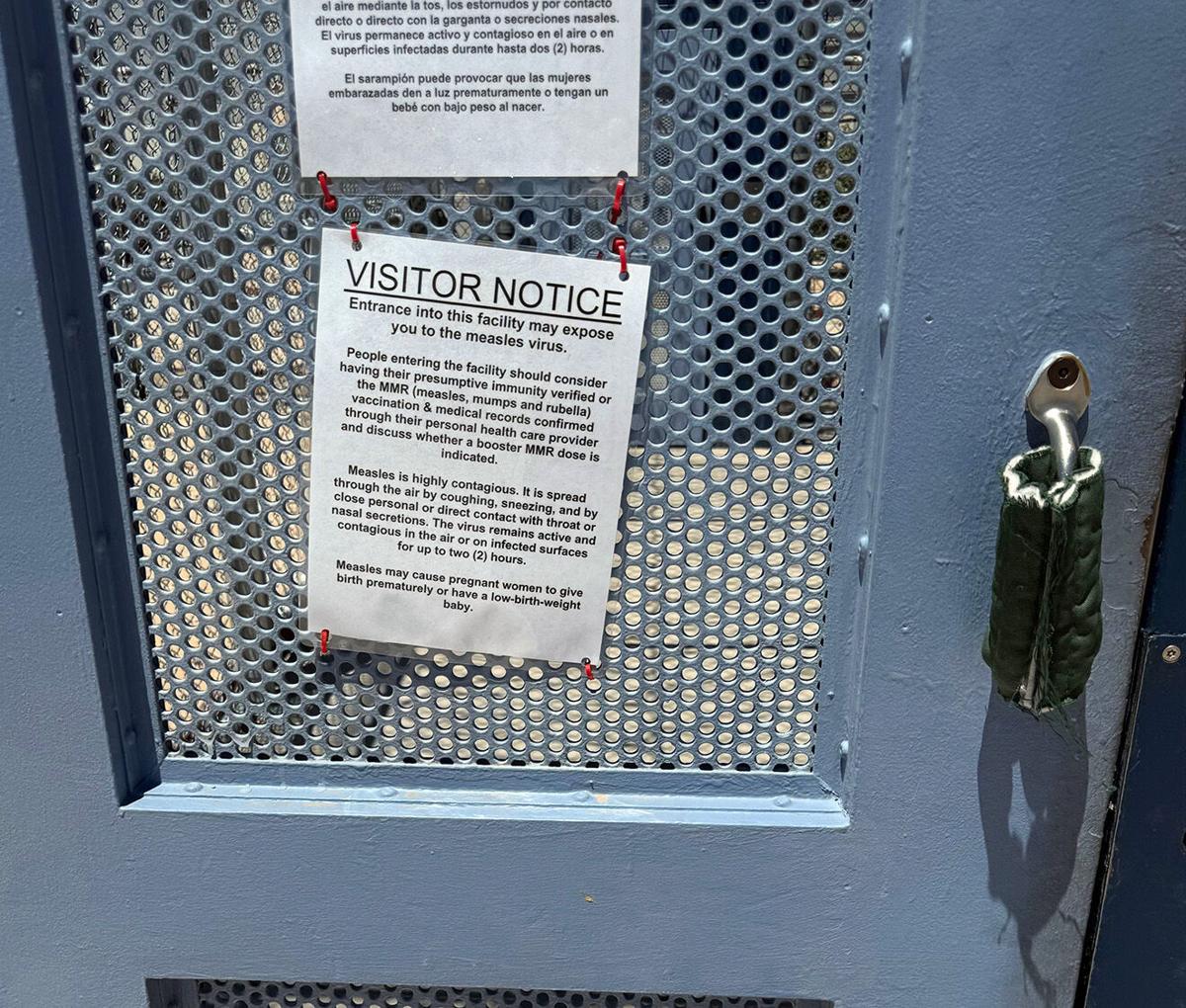
Federal officials have confirmed seven active cases of measles at an Arizona immigration detention center, prompting quarantines and restrictions on visitation.
The measles outbreak affects the Florence Detention Center, which includes Florence Service Processing Center and short-term holding facility Florence Staging Facility, an unnamed spokesman for the U.S. Department of Homeland Security said in a Tuesday email to the Arizona Daily Star. Both facilities are run by U.S. Immigration and Customs Enforcement, which also handles medical and mental health care there.
"ICE Health Services Corps immediately took steps to quarantine and control further spread and infection, ceasing all movement within the facility and quarantining all individuals suspected of making contact with the infected," the statement said. "All non-legal in-person visitation is currently suspended to protect the health and safety of the detainees, the staff, and the community."
People are also reading…
Several ICE detainees suspected of coming in contact with someone with measles were held in quarantine last week at Eloy Detention Center, but no cases have been confirmed there, according to a spokesman for CoreCivic, the private for-profit prison company that operates both Eloy and the Florence Correctional Center.
"CoreCivic follows Centers for Disease Control and Prevention measles protocols, including testing, quarantine, and monitoring procedures for individuals who may have been exposed prior to their arrival at our facilities, including our Eloy Detention Center and Central Arizona Florence Correctional Complex," CoreCivic spokesman Ryan Gustin said in an email. "Based on the results of these protocols, we can report that there are currently no confirmed measles cases at either of these facilities."
Rep. Greg Stanton, D-Arizona, conducted an unannounced oversight visit to Eloy on July 2 and reported hearing from staff that several detainees were in isolation for possible measles exposure.
Advocates at the Florence Immigrant and Refugee Rights Project are concerned about detainees' access to legal and support services during the quarantine. The nonprofit provides free legal and social services to immigrants held in ICE detention in Arizona.
Although DHS's statement said only non-legal visits are restricted during the lockdown, a Florence Project manager says that doesn't appear to be accurate.
"In fact, the information we have is that Florence Detention Center is subject to a full closure/lockdown due to measles quarantines, and all in person visits — including legal visits — are currently suspended," adult legal program manager Monica Cordero-Vazquez said in an emailed statement Tuesday.
An ICE spokesman did not immediately respond to the Star's request for clarification on whether legal visits were ongoing.
Detainees are also not being transported to immigration court due to the quarantine, which can delay their proceedings and extend their time in ICE detention, Cordero-Vazquez said.
Measles resurgence
The Star reported in February that ICE was quietly managing three confirmed measles cases in Florence ICE facilities. At the time, Phoenix shelter workers said ICE had failed to communicate with them about whether the released detainees volunteers were assisting could have been exposed to measles.
Volunteers say ICE isn't sharing information with them about the latest outbreak either.
"We have not been told anything by ICE," said shelter volunteer Anna Keating in a text message. "We have been hearing about measles from released detainees, congressmen and reporters."
So far this year, there have been 108 confirmed measles cases in Arizona, including 16 cases in Pinal County — including the seven cases just reported in ICE detention facilities — and two cases in Pima County, according to the Arizona Department of Health Services' measles website. Of the 330 confirmed measles cases in Arizona since the start of 2025, 96% of the infected individuals were unvaccinated, the agency said.
Pinal County Public Health Services recently warned the public of potential measles exposures for those who visited a Wendy’s in Coolidge on June 25, when a traveler with measles passed through the restaurant.
Even though the disease was declared eliminated in the U.S. in 2000, measles cases have been surging across the U.S. as vaccination rates have declined, especially since the pandemic.
In 2025, the U.S. recorded 2,268 measles cases, the highest number of infections in 30 years. This year is on track to soon surpass last year's figure, with 2,184 measles cases already confirmed in 2026, according to Johns Hopkins University's Measles Tracker.
Florence detainees with measles are being monitored to prevent the spread of the highly contagious disease, and all detainees are receiving "proper medical care," the DHS statement said.
"It is a longstanding practice to provide comprehensive medical care — including access to vaccines," the statement said. "This includes medical, dental, and mental health services as available, and access to medical appointments and 24-hour emergency care. This is the best healthcare than many aliens have received in their entire lives."
Advocates dispute the claim.
"Our clients often report that they do not receive adequate medical care while detained, and there are many people in detention right now with medical conditions and chronic illnesses," the Florence Project's Cordero-Vazquez said Tuesday. "It is unfortunate that we continue to see these concerning developments in the facilities that create health-related risks for the detained individuals and the potential of prolonging their detention in an already difficult environment."
The Florence Detention Center was the subject of a June report from the Florence Project, which decried "inhumane" conditions, including medical neglect and "severe overcrowding, with approximately 200-300 men held in rooms designed for about 100 people, and about 28 women held in trailers designed for 20 people."
Florence Staging Facility, the short-term facility within Florence Detention Center, is meant for stays of up to 72 hours, but in interviews with the Florence Project, some detainees reported being held there for weeks, the report said.
The report also highlighted the lack of accommodations for detainees with disabilities, insufficient food causing weight loss, no access to communication with legal services or family and lack of laundry services for detainees forced to wear the same clothes for days or, in some cases, weeks.
The Star reported in May on Cuban asylum seeker Deris Perez Martinez, who was held in the Florence Staging Facility for eight days without access to his diabetes medicine. By the time he was transferred to the long-term facility Florence Correctional Center, run by CoreCivic, Perez Martinez's blood-sugar level had reached nearly 500, his medical records show, which he said caused lasting vision problems.
Contact reporter Emily Bregel at ebregel@tucson.com. On X, formerly Twitter: @EmilyBregel

Emily Bregel
Border reporter









 Two pregnant detainees hospitalized in Arizona; one claims border agent struck her