




For Tucson birders, looking skyward usually means watching a soaring red-tailed hawk. Yet after sunset, another aviary appears overhead. The night sky contains a remarkable collection of bird constellations, some representing real birds while others represent creatures born entirely from mythology. Together they remind us that humans have always looked at the stars and found familiar feathers among the glittering lights.
Constellations are among humanity's oldest storytelling devices. Ancient cultures connected bright stars into patterns that helped them navigate, mark the seasons and explain the mysteries of the universe. Today, the International Astronomical Union officially recognizes 88 constellations that divide the entire sky into celestial neighborhoods. Most have roots in ancient Greek, Roman, Arabic or later European astronomy. While today's astronomers use constellations primarily as convenient map coordinates, many of the old stories and names remain delightfully intact. Fortunately, the celestial bureaucracy has not yet renamed Cygnus as "Sector B-17 Stellar Reference Zone."
Cygnus, the Swan, is one of the oldest bird constellations, having been named by Ptolemy in the second century as one of the original 48 constellations. Stretching across the Milky Way, Cygnus is one of the most beautiful sights of northern summer. Its brightest star, Deneb, forms one corner of the Summer Triangle. The constellation is associated with several Greek myths and is often linked to Zeus, who occasionally transformed himself into various animals. Looking at Cygnus gliding through the Milky Way is like watching a swan cruise down a celestial river illuminated by billions of distant suns.
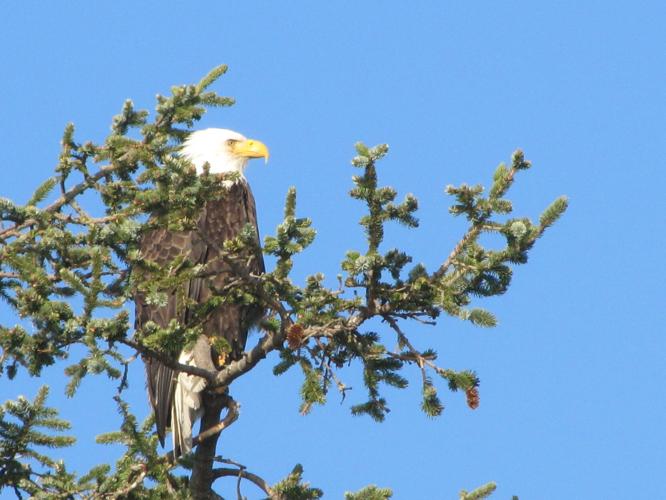
Another ancient bird is Aquila, the Eagle. In Greek mythology, Aquila was the mighty eagle of Zeus, carrying thunderbolts and divine messages. Aquila's bright star Altair forms another corner of the Summer Triangle. For observers in southern Arizona, Aquila soars high overhead during warm summer evenings.
The southern skies also contain several bird constellations added during the Age of Exploration (c. 1418-c. 1620). Pavo, the Peacock, Tucana, the Toucan, Grus, the Crane and Apus, the Bird of Paradise, were introduced by European cartographers who transformed the heavens into something resembling an exotic celestial aviary.
The most famous mythical bird constellation is Phoenix, the legendary bird that rises from its own ashes. Phoenix’s symbolism has endured for thousands of years. The constellation reminds us that renewal and resilience are themes as old as civilization itself. Many Tucson residents may find the symbolism appropriate after surviving a July afternoon when the thermometer appears to be auditioning for a role inside a blast furnace.
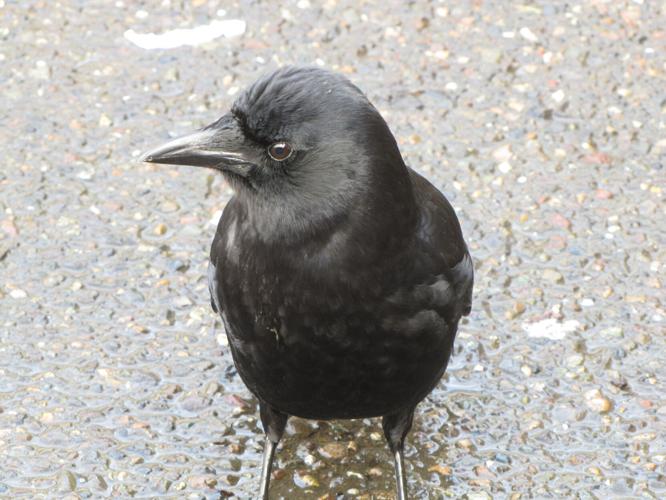
Two lesser-known bird constellations deserve special attention. Corvus, the Crow, is an ancient constellation located near Hydra, the Water Snake. According to Greek mythology, Apollo sent a white crow to fetch water. The bird became distracted while waiting for figs to ripen and returned late. Apollo turned the crow black and placed it among the stars as a permanent reminder about the consequences of procrastination. In the constellation, Corvus appears forever tantalizingly close to a celestial cup of water while the Water Snake blocks its path. It may be the oldest recorded example of "the dog ate my homework" defense failing spectacularly.
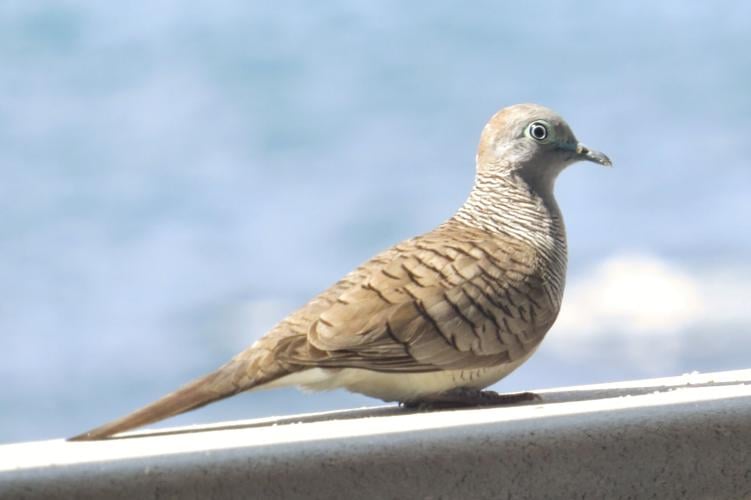
Another overlooked constellation is Columba, the Dove. Created in the late sixteenth century, Columba represents the dove associated with Noah's Ark, carrying an olive branch to signal the return of dry land. Columba adds a note of peace and hope to the southern sky. It serves as a gentle counterpart to Aquila's fierce eagle and Corvus's occasionally questionable judgment.
For Tucsonans, these celestial birds have special significance because the city is one of the world's great astronomy centers. Just northwest of downtown, the University of Arizona's astronomy program and Steward Observatory have helped shape modern astronomy for decades. The University's Richard F. Caris Mirror Laboratory has pioneered the creation of giant lightweight honeycomb telescope mirrors, a revolutionary technology now used in some of the world's most advanced observatories.
Recent achievements have continued this tradition. In 2025, the Giant Magellan Telescope project advanced into the National Science Foundation's final design phase, bringing one of the world's most ambitious observatories closer to reality. The massive primary mirror segments for this telescope are being produced at the Mirror Lab in Tucson. At the same time, University of Arizona astronomers celebrated the first scientific images from the Vera C. Rubin Observatory, another landmark achievement in modern astronomy. The Rubin Observatory is 8,800 feet above sea level on Cerro Pachon in Northern Chile and just began full survey operations on July 30, 2026. Rubin takes an image of the night sky every 40 seconds to complete a full scan of the southern sky every few days for the next 10 years. The observatory is expected to catalog millions of supernovae, more than five million asteroids (including ~100,000 Near Earth Objects) and image approximately 17 billion stars and 20 billion galaxies.
These accomplishments mean that while Tucson residents admire bird constellations overhead, local scientists and engineers are building the tools that allow humanity to study them in unprecedented detail. A rarity among cities, Tucson can claim both world-class birdwatching and world-class stargazing during a 24-hour period. Recently, we took our 16-year-old granddaughter on a whirlwind astronomical tour, which included daytime telescopic views of the planet Venus and solar flares on the sun at the University of Arizona’s Mt. Lemmon observatory, followed by a presentation and telescopic viewing at the Steward Observatory on campus, a program called Tucson’s Window to the Universe.
The next time you step outside beneath Arizona's famously dark skies, look upward. You may spot the Swan gliding along the Milky Way, the Crow waiting impatiently for a drink or the immortal Phoenix rising yet again. Together they form the world's largest bird sanctuary, one that never closes, never charges admission and thankfully never leaves droppings on your windshield.
If you have questions or comments about SaddleBrooke’s birds, or to receive emailed information about birds from Bob and Prudy, call (520) 330-0366 or email bobandpru@gmail.com. Previously published articles can be found online at birdingthebrookeandbeyond.com.


