LEXINGTON, Ky. — Greed always gets them in the end. That’s the way it works. Latest example: The NCAA. The issue: Student-athlete compensation. The arbiter: The Supreme Court, which dealt those who run collegiate athletics a definitive 9-0 defeat on Monday. In sports lingo, that’s known as a rout.
It was only a matter of time, of course. It stood to reason that considering the billions of dollars that college athletics generates that one day those who actually generate the revenue, the players, would stop and say, “Hey, what about us? Where’s our cut?” as others agreed. That day is officially here. The Supreme Court said so.
True, in NCAA vs. Alston, the Supreme Court ruled on the narrow issue of whether athletes can receive education-related benefits. The NCAA argued providing those benefits was above and beyond what regular students receive and would create an uneven playing field among competing schools. The athletes argued the NCAA’s standing should not stand. Lower courts agreed with the athletes. The NCAA appealed and lost. Monday, it lost again.
People are also reading…
The details of the ruling implied the NCAA was not just on the wrong side of this issue, but of bigger issues, as well. “The NCAA’s business model would be flatly illegal in almost any other industry in America,” wrote justice Brett Kavanaugh in his concurring opinion.
Kavanaugh added, “The bottom line is that the NCAA and its members are suppressing the pay of student-athletes who collectively generate billions of dollars in revenues for colleges every year. Those enormous sums of money flow to seemingly everyone except the student-athletes.”
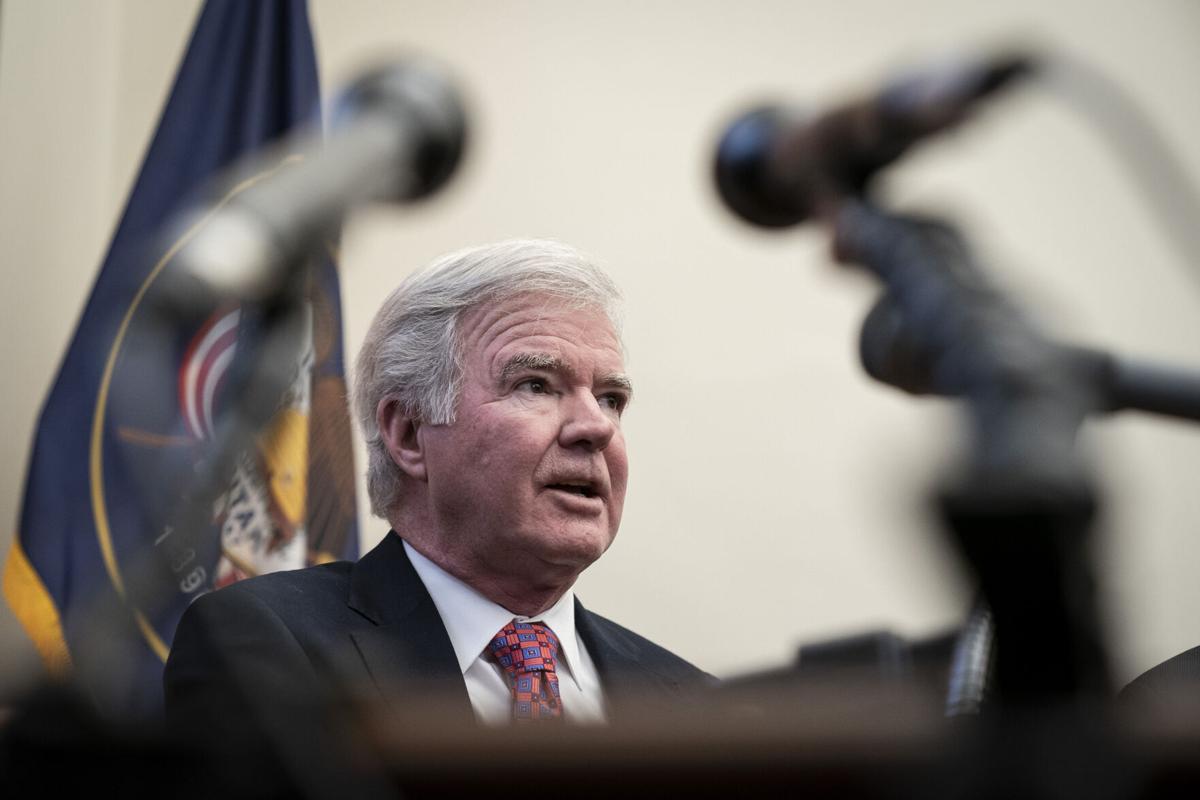
In its chronic disconnect from reality, the NCAA saw this as some kind of win, focusing on the “education-related” part of the ruling, insisting the court “reaffirms the NCAA’s authority to adopt reasonable rules.” Not that we should have expected anything else from Mark Emmert, the NCAA president with the $2.75 million salary, whose legal strategy is rooted in arrogance and delay. Just Tuesday we learned the body is delaying yet again another vote on possible name, image and likeness rules.
Actually, it was justice Neil Gorsuch who got to the heart of the matter. “Those who run this enterprise profit in a different way than the student-athletes whose activities they oversee,” Gorsuch wrote in his opinion.
Kentucky basketball coach John Calipari makes $9 million a year. Kentucky football coach Mark Stoops makes $4.75 million. Kentucky athletics director Mitch Barnhart’s base salary is $925,000 per year. Despite the coronavirus pandemic, the SEC announced a per-school payout of $45.5 million in February. Three months later, the conference announced it would pay $23 million per school to help with the financial effects of the pandemic.
The ruling handed down from the U.S. Supreme Court on June 21 was unanimous
Somehow, it’s never enough. Ticket prices keep rising. Pleas for donations are never-ending. The College Football Playoff is about to be expanded from four teams to 12, not so much for the sake of giving more schools a chance at the championship, but (also) for the sake of making more money. There are bills to pay.
Player compensation is coming. That train is too far down the track. The only question is when. Several states’ NIL laws are to take affect in July. Meanwhile, schools have started announcing their own NIL plans — UK’s is called “The Kentucky Road” — in hopes of trying to maintain some sort of control over the situation. Sports law attorney Michael McCann points out that many are “more restrictive than state NIL statutes.”
Meanwhile, the NCAA’s strategy has been to ask Congress for help. So far the response has been less than sympathetic. Tweeted Connecticut senator Chris Murphy on Monday, “The NCAA collusion machine, designed to keep college athletes impoverished so the billions in profits can be kept for a small cabal of insiders, is finally starting to crumble to pieces.”
Monday’s Supreme Court ruling likely opens the door for further lawsuits and legislation. The tide has turned. You can’t reap millions in revenue from an enterprise that is based on the work of amateurs. Blinded by money, the NCAA has only itself to blame.
Transfers to watch in 2021-22 college football season
DEMARKCUS BOWMAN, RB

— Current team: Florida
— Former team: Clemson
— The Buzz: Florida returns most of its ground production from last season, led by Dameon Pierce (503 yards) and Malik Davis (310 yards) but Bowman provides the Gators with a true playmaker at tailback. His presence could give Dan Mullen a key piece for another run toward an SEC championship.
BIG KAT BRYANT, DE

— Current team: UCF
— Former team: Auburn
— The Buzz: Bryant reunites with former Auburn coach Gus Malzahn at UCF, where he instantly provides the team with a legitimate pass rusher on the edge. His familiarity with defensive coordinator Travis Williams’ system should give him a huge edge while providing the Knights with SEC-level talent as well.
TY CHANDLER, RB

— Current team: North Carolina
— Former team: Tennessee
— The Buzz: North Carolina is looking for someone to help fill the role created by the departures of Michael Carter and Javonte Williams, who combined to rush for 2,385 yards with 28 touchdowns last season. Chandler is an established tailback that gives the Tar Heels a big boost out of the backfield.
JACK COAN, QB

— Current team: Notre Dame
— Former team: Wisconsin
— The Buzz: Coan provides Notre Dame with a transitional piece as the program moves on from Ian Book, who finished his Fighting Irish career with 8,948 passing yards with 72 touchdowns. Coan appeared in 25 games for the Badgers with 18 starts, finishing with 3,278 yards, 23 touchdowns and eight interceptions.
ERIC GRAY, RB

— Current team: Oklahoma
— Former team: Tennessee
— The Buzz: Oklahoma has produced at least one 1,000-yard rusher in three of the four seasons under coach Lincoln Riley. Gray could fit that mold as an all-around tailback for the Sooners, whose versatility makes him an attractive option for an offense that ranked sixth in the nation in scoring last season.
JERMAINE JOHNSON, DT

— Current team: Florida State
— Former team: Georgia
— The Buzz: Johnson has impressed his new teammates and coaches with his relentless work ethic this spring showcasing the speed and strength that make him a legitimate threat as an edge rusher for the Seminoles. He has all the potential to be one of the best pass rushers in the ACC this season.
MCKENZIE MILTON, QB

— Current team: Florida State
— Former team: UCF
— The Buzz: Milton looks to return to action following a horrific knee injury in 2018 that nearly cost him his right leg. A successful comeback from the graduate transfer could provide Florida State with the spark it needs as it continues to develop an offense that is young and inexperienced under coach Mike Norvell.
CHARLESTON RAMBO, WR

— Current team: Miami
— Former team: Oklahoma
— The Buzz: Miami adds an experienced playmaker in Rambo, who accounted for 743 yards and five touchdowns for the Sooners in 2019. He helps provide the Hurricanes with a legitimate threat at receiver, pairing him with senior Mike Harley in a partnership that could produce big numbers in 2021.
WAN’DALE ROBINSON, WR

— Current team: Kentucky
— Former team: Nebraska
— The Buzz: After two seasons at Nebraska, Robinson returns to his home state where he was the top high school prospect in the 2019 recruiting cycle. He brings a dynamic playmaking ability to a program that hasn’t produced a 1,000-yard receiver since Randall Cobb in 2010.
TYKEE SMITH, DB

— Current team: Georgia
— Former team: West Virginia
— The Buzz: Georgia coach Kirby Smart bolstered his secondary with the addition of Smith, who earned All-Big 12 honors in 2019 and 2020 while amassing 111 tackles, 10.5 tackles for loss and four interceptions in 21 games for the Mountaineers. Smith joins a Bulldogs unit that managed just nine interceptions in 2020.