



A miniature apartment sits inside a black trash bag. Clothes, shopping bags and other belongings spill out of its doorway.
In another scene, a tiny U-Haul is hitched to a coffin and a Polly Pocket toy opens to reveal a hoarded house.
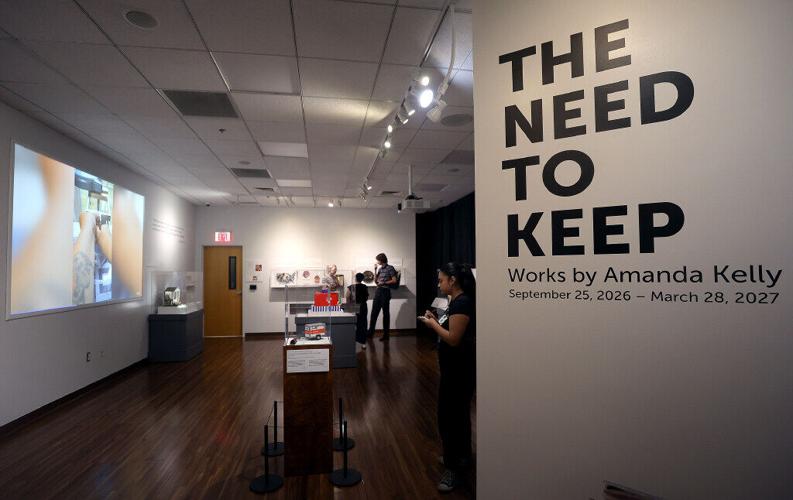
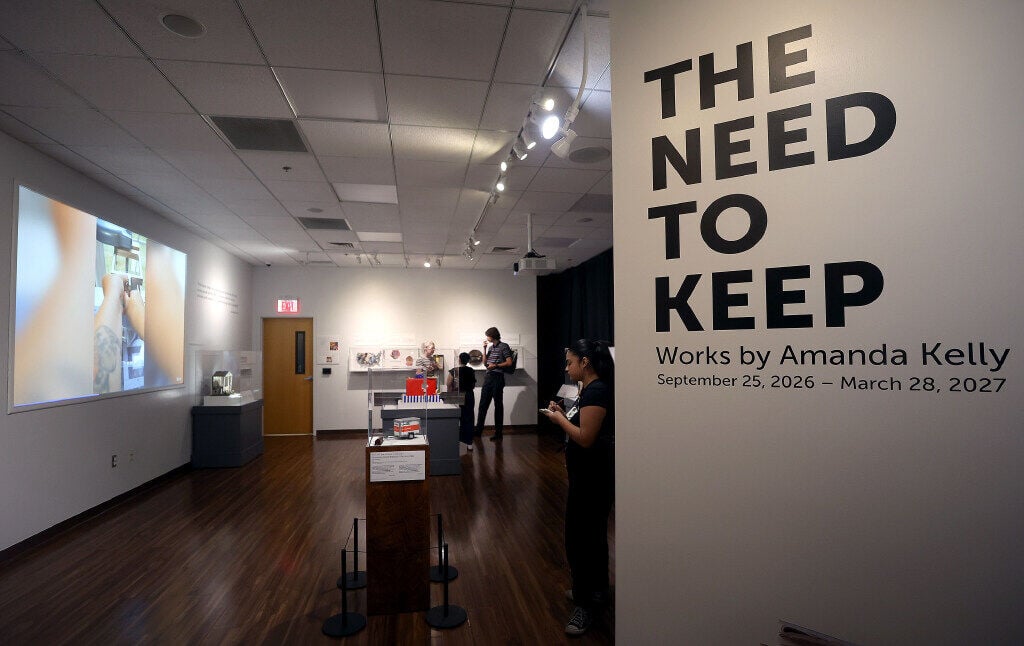
These are some of the worlds artist Amanda Kelly has created for “The Need to Keep,” a new exhibit at Tucson’s Mini Time Machine Museum of Miniatures. Through carefully constructed scenes, Kelly explores the objects people hold onto, the memories attached to them and the impact of hoarding disorder.
The exhibit opened Sept. 25 and will be on view through April 11, 2027.
Kelly, a Brooklyn-based artist and educator, does not live with hoarding disorder, but people close to her do. Much of the exhibit grew out of her MFA thesis on compulsive hoarding and the accumulation of objects.
“When I was making works based on my own experiences, it was like therapy for me,” Kelly said during a recent museum preview. “I feel like art is definitely therapy, and miniatures can be used as a therapeutic tool.”
“The Avalanche,” the apartment inside the trash bag, was inspired by an experience Kelly had during the pandemic. She went with her wife and others to the New York City apartment of a woman who had died. When someone opened a closet, new clothes with their tags still attached spilled into the hallway. They had to climb over the pile to reach a bedroom filled with more clothes.
Kelly wanted the work to reflect what she learned while researching hoarding disorder: It can affect people regardless of income. She modeled the bag around a luxury fashion trash bag, bringing the apartment scene together with questions about shopping, consumption and how people perceive hoarding.
“It does not matter who you are,” Kelly said. “It affects everybody.”

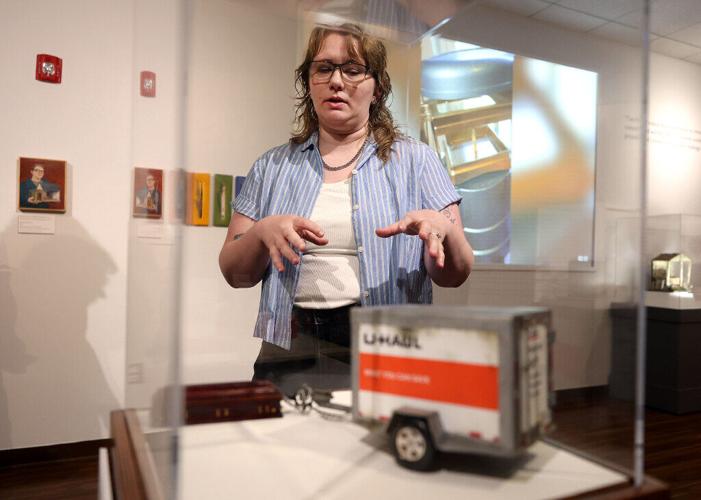
Amanda Kelly talks about her piece “You can’t tow a U-Haul to the Grave,” during a preview of her show “The Need to Keep,” at The Mini Time Machine Museum of Miniatures, 4455 E Camp Lowell Drive in Tucson, Ariz. on September 24, 2026. Kelly draws on her own past experiences with loved ones to create pieces that center around a hoarding disorder.
Another piece, “You Can’t Tow a U-Haul to the Grave,” puts a coffin and U-Haul trailer together to make its point: People cannot take their possessions with them when they die.
Kelly said she finished that piece in about three weeks, while others took months or even a year. She built the trailer largely from scratch with materials including foam core, wood and plastic. The coffin is 3D printed.
“When I finished it, I was like, ‘Oh my God, I think I made one of my best pieces,’” she said. “It’s one of my favorites.”
In “Pocket Hoarder,” Kelly reimagines the nostalgic Polly Pocket toy as a hoarded house. The piece connects childhood play with the desire to escape into a world you can control.
That feeling is part of what drew Kelly to miniatures in the first place.
“When I was growing up, I didn’t have control over my environment,” she said. “Now it’s like I can actually make something look exactly like I want it to.”
Kelly began making miniatures more than a decade ago after discovering the art form online. She bought a dollhouse kit, started taking commissions and eventually began creating miniature sets professionally. She now teaches at the Fashion Institute of Technology and uses handmade parts, found objects and 3D printing in her work.
Museum curator Emily Wolverton said she was drawn to Kelly’s pieces because they show how miniatures can tell stories beyond the fantasy and whimsy visitors might expect.
“I really love having this to remind folks that miniatures aren’t just about dollhouses and fairy tales,” Wolverton said. “You can actually really tell some important stories that need to be told with miniatures.”

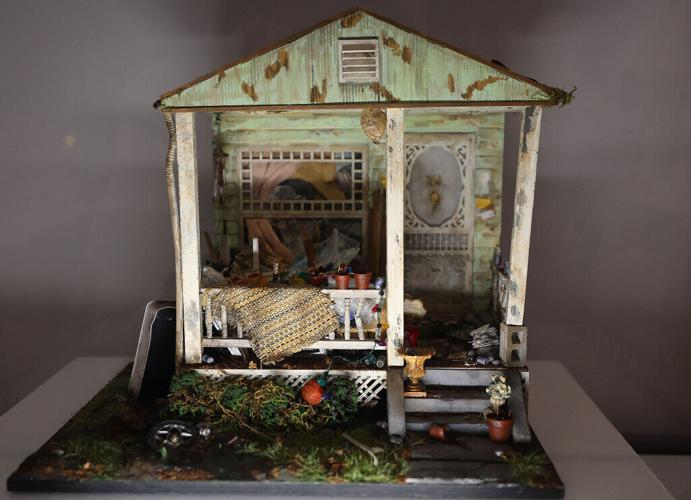
“Hoader’s Porch,” by Amanda Kelly is part of her show “The Need to Keep,” at The Mini Time Machine Museum of Miniatures, 4455 E Camp Lowell Drive in Tucson, Ariz. on September 24, 2026. Kelly draws on her own past experiences with loved ones to create pieces that center around a hoarding disorder.
There are no human figures in Kelly’s scenes. Instead, the belongings left behind suggest people used the spaces and invited visitors to look closely at what those objects might mean.
The museum worked with the National Alliance on Mental Illness Southern Arizona while preparing the exhibit and has mental health resources available for visitors. Visitors can also share stories about objects they keep on a gallery wall. Wolverton said those responses will be given to Kelly at the end of the exhibition.
“We all feel the need to keep objects,” the museum’s exhibit brochure says. “Why we keep them tells a story.”
“The Need to Keep: Works by Amanda Kelly” is on view through April 11, 2027, at The Mini Time Machine Museum of Miniatures, 4455 E. Camp Lowell Drive. The museum is open Tuesday through Sunday from 9 a.m. to 4 p.m. For more information, visit their website.

