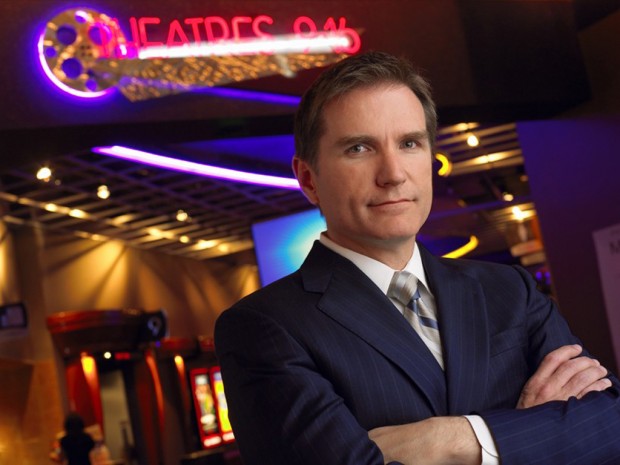
PHOENIX - The state's largest movie chain will outfit its theaters with equipment to help those with hearing and sight problems, including those who are deaf or blind.
In a consent decree filed late Thursday in U.S. District Court, Michael Bowers, president of Harkins Theaters, agreed to install closed-caption and descriptive video systems in half of the 25 theaters it operates in Arizona by June 15. The balance of its theaters will have the equipment by Jan. 15, 2013.
Only a pair of theaters in Maricopa County - the aging Harkins Arcadia 8 theater, which the company plans to close, and its IMAX theater in Tempe, where there is not yet compatible equipment - will be exempt.
The deal, which awaits approval by Judge Roslyn Silver, would end a five-year-old lawsuit filed by the state Attorney General's Office and the Center for Disability Law accusing the chain of illegal discrimination. The company is not admitting guilt but said it is making the changes rather than dealing with the time, expense and uncertainty of continued litigation.
People are also reading…
The Americans with Disabilities Act prohibits discrimination on the basis of disability.
Based on that, the Attorney General's Office sued Harkins for failing to equip more theaters for those with hearing or vision difficulties.
Harkins won the first round; Silver concluded that requiring theaters to set up equipment for the deaf and the blind goes beyond "practical, common-sense boundaries." She said the disabled will never be able to fully and equally enjoy movies the same as others.
But the 9th U.S. Circuit Court of Appeals ruled last year the only way for Harkins and other chains to escape the ADA mandate is to prove they are entitled to an exception by showing that installing the equipment would be a financial hardship or "fundamentally alter the nature of its services."
Attorney General Tom Horne said Thursday the evidence proves there was no hardship.
"It's not that expensive," he said, adding he disagreed with Silver's assertion there is no way to make films equally accessible to the deaf and the blind. "I watch movies in foreign languages with subtitles and I enjoy them," he said.
Assistant Attorney General Rose Daly-Rooney, who handled the case, said the basic cost of the equipment is $2,000 for each auditorium. Harkins currently operates 25 theaters in Arizona with a total of 346 auditoriums. One, the Spectrum 18, 5445 S. Calle Santa Cruz, is in Tucson.
Closed captioning allows the script to appear on a screen in front of the individual patron. It remains invisible to other viewers.
Blind patrons will get headsets that will broadcast a narrative of the action on the screen in addition to the dialogue.