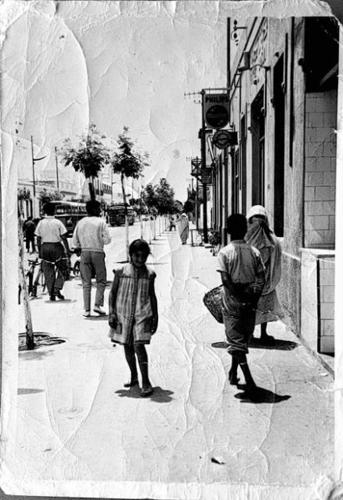
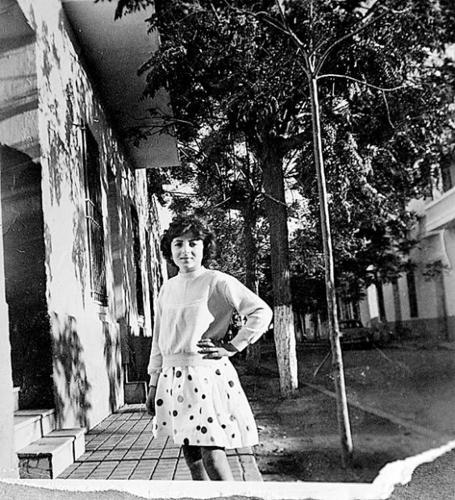
When Edith Shaked was born in Tunisia in 1948, the Jewish population of that North African country was 105,000.
Today, it's down to 1,200.
"They're all old people, just waiting to die," says Shaked, who immigrated to the United States in the mid-1970s and has lived in Tucson since 1980.
She was 13 when she and her family left Tunisia in 1961, following a wave of anti-Jewish actions and the arrest of her father.
"We knew it was the end of the Jewish community in Tunisia. Our Arab neighbors were crying."
Tunisia wasn't alone. In the mid-1940s, close to 1 million Jews lived in the Middle East and North Africa outside of Palestine — some in communities dating back almost 3,000 years.
Only a few thousand Jews remain in the region today — a phenomenon explored and explained in the documentary "The Forgotten Refugees," which will be shown Sunday as part of the Jewish Film Festival.
People are also reading…
"People know about the history of the Palestinian refugees, but the testimony of the Jews in Arab countries has gone practically unheard," says Shaked, who teaches several Holocaust courses online for Pima Community College.
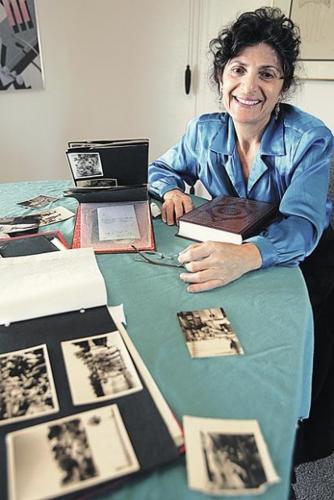
Yet she bears no animosity toward the people she once called friend and neighbor. Hauling out a Quran autographed by the husband of a childhood Arab friend, Shaked says, "We had good relations with the Arabs."
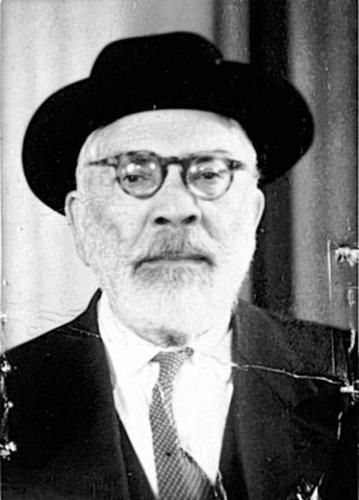
She was born in Nabeul, a small coastal town on the Mediterranean coast of Tunisia. Her mother's ancestry was French, Italian and Spanish. Her father's family had been in Tunisia for centuries. His father, Moshe Haddad, was an esteemed rabbi and judge.
Though Tunisia was a French protectorate, it sided with the Nazis during World War II. Slave labor camps were set up in the country.
Other Jews were shipped off to the death camps in Europe. "Two of my mother's cousins died in Auschwitz," says Shaked. However, there were also "righteous" Arabs who hid the Jews, she adds.
After the war, things seemed to stabilize, even though, says Shaked, "the society was completely segregated."
The oldest of four, she attended a French elementary school. Her father worked at a French bank.
In middle school she went to school with Arab children. It was an idyllic childhood, sprinkled with memories of oranges and the scent of jasmine, and daily trips to the beach.
But in 1956, Tunisia became independent of France. Some 30,000 Jews left. Tunisia, says Shaked, was becoming an Arab/Muslim country. "They started the process of Arabization in the schools, in the language."
In 1959, her rabbi grandfather left for Israel after another rabbi was stabbed by an Arab.
Her own family followed in 1961. "The Arabs were burning Jewish shops and synagogues. Then they arrested my father.
"He sat us down and told us we were leaving. Then he gave me his gun, wrapped in a newspaper, and told me to take it to the garbage. It was illegal to have a gun. The next day they came and searched the house."
Days later, they sailed for a refugee camp in Marseille. A month later they took a boat to Israel. Final destination: the small settlement of Kiryat-Gat.
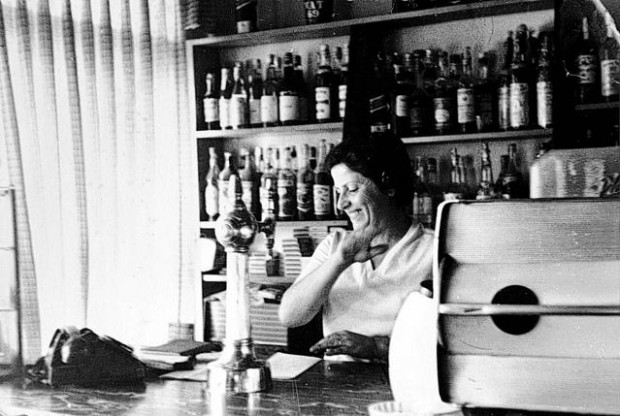
Her parents opened up a restaurant. Shaked went to boarding school, and then Hebrew University in Jerusalem, where she would meet her future husband, Moshe Shaked.
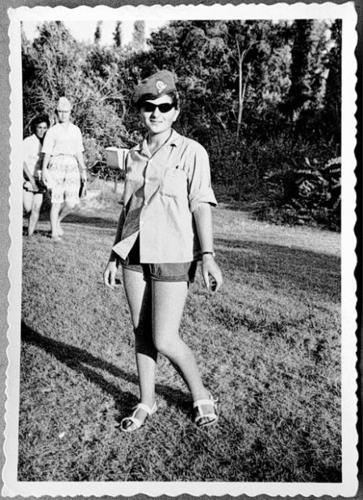
By the early '70s, she was living in a kibbutz and teaching Hebrew to American students.
Then she went to teach at the University of Lyon. Eventually, she followed Moshe Shaked to America. They married in 1977, raising three children.
Every other year, Edith Shaked returns to Israel, where her mother still lives. But she's never been back to Tunisia.
"I do feel nostalgic for the community," she says. "We don't want our history to disappear."
memories of tunisia
Documentary
• What: "The Forgotten Refugees."
• When: 2 p.m. Sunday.
• Where: Gallagher Theater, University of Arizona Student Union.
• Cost: $8, $6 for students and seniors age 65 and older.
• More information: 299-3000, Ext. 106.