
The towering front door dwarfs visitors making them feel as if they're smaller versions of themselves - a proper beginning for a tour through Tucson's Mini-Time Machine Museum of Miniatures.
Within seconds you realize there's another, regular-sized door for final entry into the museum at 4455 E. Camp Lowell Drive, near North Swan Road, but by then, you're prepared to experience the history and stories told by the antique and contemporary miniatures housed within.
The self-guided tour starts in a magnificent rotunda, where you can read about the museum's founder, Pat Arnell, who received her first set of miniatures in the 1930s.
The miniatures enthusiast didn't seriously start collecting them until 1979 and since has accumulated one of the finest collections in the country, making her well known in the miniature community, which includes local, national and international organizations.
People are also reading…
Her museum is said to be the first built in the country specifically to showcase miniatures, according to the museum staff.
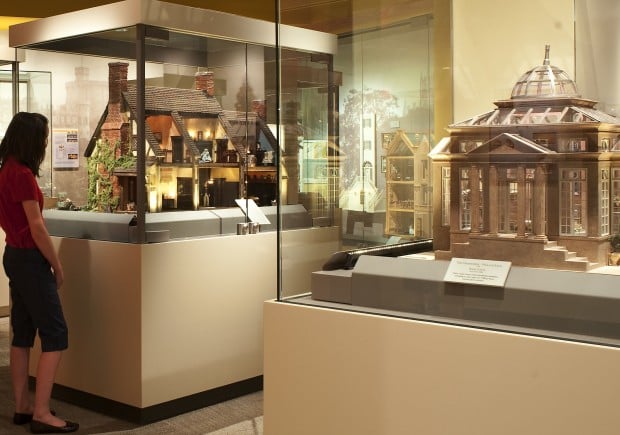
The Mini-Time Machine is separated into three galleries - Exploring the World, History Gallery and the Enchanted Realm - each with a different theme.
From the rotunda room, you can go one of two ways - one entrance takes you to the Enchanted Room, where fantasy-based miniatures await. The second door leads to the History Gallery. There, you'll find antique miniatures.
Between those two galleries lies the Exploring the World gallery in which miniatures from other countries and cultures are kept.
"People should plan on spending a couple of hours here," said Lisa Hastreiter-Lamb, the museum's associate director and director of education.
Fantasy too
A grand tree beckons you to the Enchanted Realm gallery.
It's the only one where sounds transport museum guests to far off places where fairies, wizards, pocket dragons, witches, frog princes, mermaids and unicorns reside.
On the side of the gallery, which features Christmas- and winter-themed miniatures, you can hear the wind whipping up fresh batches of snow.
But back to the Enchanted Tree, which is easily as tall as a one-story house.
Three faces decorate the tree's bulky trunk. A face with a friendly smile greets visitors as they walk through the gallery's entrance. A snow-covered face points you in the direction of a winter wonderland, and finally, a scowl completes the tree's faces.
It's hard to peel your eyes off the tree, but let them wander toward the "Forget-Us-Not Fairy Castle."
Displayed in its own prominent glass case, the castle is home to a cast of characters straight out of a fantasy world sure to please children and the young at heart. Fairies flutter about, mermaids dive into the castle's moat and dragons stand guard on the castle's roof.
The castle's every nook and cranny tells a different story.
Arnell commissioned the castle from a couple in 1998 and more than 40 other artisans contributed to the work's completion.
Use your Imagination
In 1985 Arnell acquired "The Yellow Rose of Texas" house, now in the Exploring the World gallery.
The Texas mansion is the work of Brooke Tucker, a popular artist in the miniature world and the daughter of the late actor Forrest Tucker.
The house is thought to be the only complete miniature house Tucker created during her career.
"The Yellow Rose of Texas" captures a charming home moments away from hosting a wedding celebration. There's a five-layer cake waiting to be cut in the dining room. Gifts are beautifully wrapped and sit on a second-floor table in the three-story mansion. A Rolls-Royce decorated with yellow roses sits in the driveway. But oddly, there's not a single person in the home.
That's where a visitor's imagination takes over and most likely concludes that the bride and groom are exchanging wedding vows at a nearby church as their guests watch.
Another highlight in the Exploring the World gallery is "Chateau Meno," an elaborate 14-room palace in the Rococo style of French architecture purchased by Arnell in 2006.
It had been owned by a Georgia woman who had made it her life's work to construct the chateau in her basement, said Hastreiter-Lamb.
"She had no background in miniatures when she started the project," Hastreiter-Lamb said. "The woman taught herself how to do everything necessary to complete the house."
It took the woman 30 years to finish the house and she found some innovative ways to complete the chateau, Hastreiter-Lamb said.
The house's designer used the top of a lipstick tube to create trash cans, and some of the home's many decorative chandeliers were made using the metal rings on canning jars, Hastreiter-Lamb said.
Arnell is impressed by the woman's work.
"Because of the fact I make things myself, I can appreciate all the time and effort she put in to it," Arnell said.
Old and original
Arnell obtained the collection's oldest room box at an auction in January and fittingly, it's found in the History Gallery.
The 1742 "Nuremberg Kitchen" was produced in great detail by artisans in Germany.
"It's amazing something like this has lasted so long," Arnell said. "It has all the original furnishings."
Arnell and her husband prefer not to talk about what they paid for pieces in their collection, but a similar "Nuremberg Kitchen" from 1742 was sold early this year for $12,500 on an online auction.
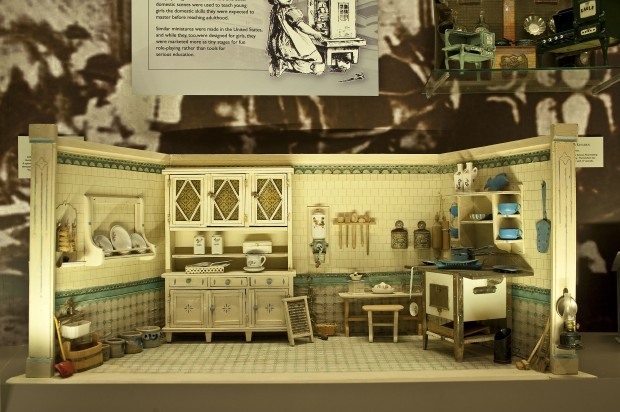
Another kitchen in the gallery, called the "Nuremberg Turn-of-the-Century Kitchen," was manufactured by a German toy company in the late 19th and early 20th centuries, Hastreiter-Lamb said.
The kitchen is operational and features a working meat grinder, which is better suited for oatmeal than meat, and an oven that can heat up mixtures with candles.
"I think of it as an early Easy-Bake Oven," Hastreiter-Lamb said.
The room is stocked with all of the necessities, from dustpans and brooms to cabinets and tables.
"Both of the kitchens really reflect real-life kitchens," Hastreiter-Lamb said. "They wanted girls to have an authentic experience."
You're likely to notice that some of the miniatures in the History Gallery look a bit too big for their houses.
Unlike today's artists, early artisans didn't always follow a scale.
Well-made miniatures are exactly proportionate to their originals. Artists often measure and design miniatures using a "one-inch scale," Arnell explained. So every inch in the miniature world represents 12 inches in the full-sized world.
lots of visitors
Pat Arnell and her husband, Walter, opened the Mini-Time Machine Museum of Miniatures last Sept. 1 to showcase her vast collection of antique and contemporary miniatures.
More than 26,000 people have walked through its three galleries since the approximately 16,000- square- foot- museum opened on the north side.
"We're absolutely astounded at the results we have had," Pat Arnell said. "I knew people would be interested, but I had no idea it would be the way it has been. It has been wonderful."
Arnell's museum of miniatures is a rare find in the United States. Miniature museums can be found in Indiana, Denver and Kansas City, but sometimes they have other collections, such as dolls and toys, according to the National Association of Miniature Enthusiasts.
Other art museums across the country, such as the Phoenix Art Museum and the Art Institute of Chicago, own miniature collections.
Arnell previously housed her collection in the home she shares with her husband, who was an academic dean of engineering at California State University-Long Beach and an engineering professor at the University of Arizona.
Pat Arnell stayed home to raise their two daughters, Vicky and Sarah.
Their home is not far from the museum. It operates as a nonprofit organization and puts all of the museum's proceeds back into the museum.
Arnell plans to continue adding to her collection so the museum remains fresh, but because of space, they may have to rotate certain displays in the future. She's also open to hosting visiting miniatures from other museums.
plenty to see
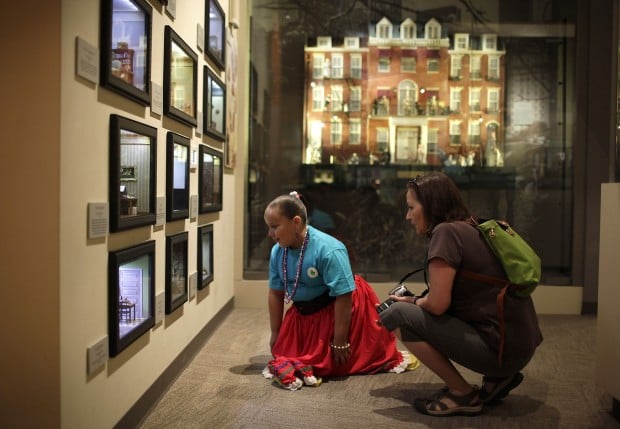
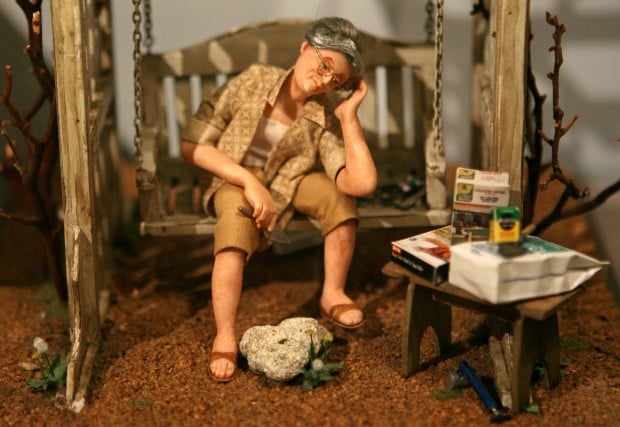
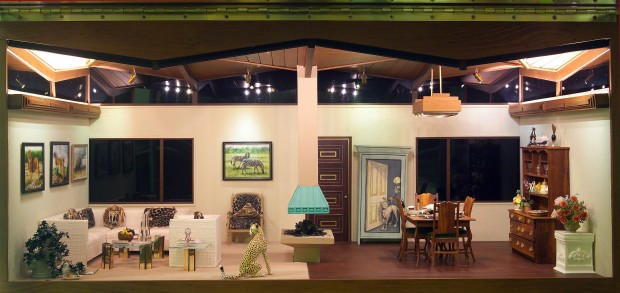
There's a lot to see at the museum considering the incredible detail of the houses and room boxes.
Hastreiter-Lamb suggests visitors take one quick walk through all three galleries to get a feel for the museum and "then go back to the areas that capture your imagination."
Most visitors have a story about a dollhouse they owned or a set of miniatures they received when they were younger, and they bring those stories to the museum, Hastreiter-Lamb said.
Find your favorite miniatures and really examine the detail of the room boxes or houses, Hastreiter-Lamb said.
"In a single house, you can spend the whole afternoon looking through it and making discoveries," she said.
Weekly sessions
Children ages 7-10 can spend their summer exploring the museum.
Seven weekly sessions will be offered at the museum, where children will create and furnish their own miniature castles, gingerbread houses, gardens, a home for a gnome and other activities.
Children will also play games, watch movies and meet special guests, including live animals.
The first session is June 7-11.
Tuition for a one-week session is $200 per child or $180 for museum members.
Go to the museum's web site at www.theminitime machine.org for more information.
collections from around world
Work by well-known miniatures artists are on display in the museum, which features more than 200 houses and room boxes that Pat Arnell and her husband, Walter, have acquired from all over the United States and the world.
They find houses and room boxes at auctions, buy directly from artisans and sometimes commission pieces.
Pat Arnell also designs her own room boxes.
"It's addictive," Pat Arnell said of collecting miniatures.
Arnell doesn't like to talk about what her library of houses and room boxes is worth, which isn't uncommon among miniatures collectors, said Lady Collette Renfro, an advanced miniature collector near Chicago.
Danielle Arnet, whose "The Smart Collector" column appears in the Star's At Home section each Sunday, viewed some images in Arnell's collection and believes it could well be worth seven figures.
"A collection as extensive and selectively gathered as this can easily run over a million dollars. And well beyond," she said.
Renfro, who owns her own dollhouse museum and shop, said prices vary in the miniature world based on whether items in the room boxes or houses are mass-produced or custom-made by artisans.
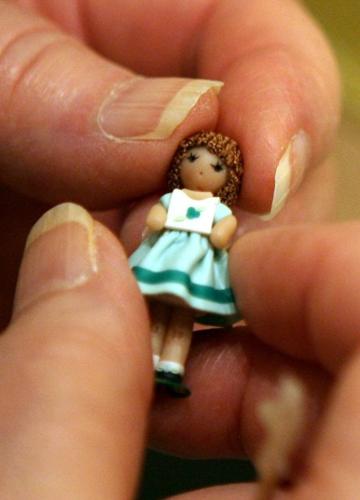
A doll that is mass-produced could cost as little as $7.95, but a custom-made doll can cost as much as $2,000, she said.
Renfro has been fond of miniatures for some 50 years now and is familiar with the Arnells.
She believes the couple's willingness to share their collection with others will expose visitors to the art form and educate people about miniatures.
"Tucson has a gem there," she said. "You're going to get people from all over the world visiting just to see the museum."
If you go
• What: Mini-Time Machine Museum of Miniatures.
• Where: 4455 E. Camp Lowell.
• When: 9 a.m. to 4 p.m. Tuesday through Saturday.
• Cost: $7 for general admission, $6 for seniors, $5 for children ages 4-17 and free for children under 3.
Active-duty military personnel and their families will be admitted into the museum for free from Memorial Day through Labor Day 2010 as the museum participates in Blue Star Museums. The museum is closed Sunday and Monday and all major holidays.
• More info: Go to the museum's website at www.the minitimemachine.org for more information or call 881-0606.
By the numbers
26,000+
visitors to the museum since it opened
15,560
square feet in the museum
9,000
square feet dedicated to Pat Arnell's collection
$249.99
cost of a wizard miniature in the museum's gift shop
200+
houses and room boxes in Arnell's collection
$35
cost of an individual membership to the museum
$0
admission offered to active members of the military and their families from after Memorial Day through Labor Day
Contact reporter Andrea Rivera at arivera@azstarnet.com or 807-8430.