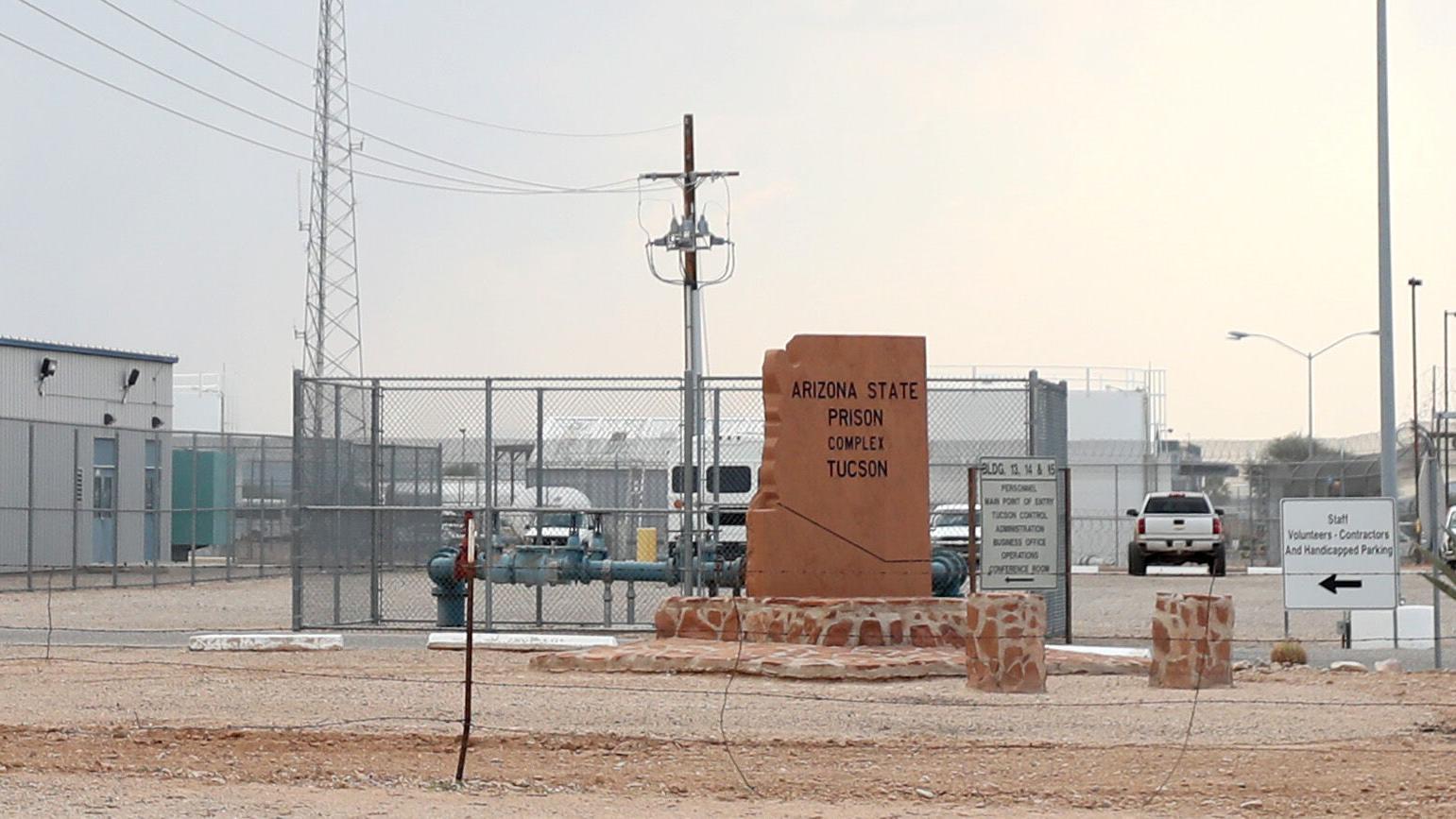
PHOENIX — A federal judge has appointed a receiver to oversee the state prison healthcare system for the next five years and given her virtually unlimited rights to make changes in staffing and how money is spent.
In a new order, U.S. District Court Judge Roslyn Silver said the state has failed to bring care for inmates up to constitutional standards despite various promises to do better to address claims filed in a 2012 lawsuit and having to pay multi-million-dollar fines since then.
Those shortcomings, the judge said, include chronic understaffing, care that should be handled by doctors going instead to nurses, failing to make referrals of complex conditions, and "inadequate resources, including funding and facilities."
"Accordingly, the court found that only a receiver with the powers and authority necessary to address each of the systemic failures would adequately remedy the failure of healthcare," she wrote in tapping Annette Chambers-Smith, and directing the state to pay her a $500,000-a-year salary. Chambers-Smith is former head of the Ohio prisons system.
People are also reading…
The judge's directive most immediately strips Ryan Thornell, director of the Department of Corrections, Rehabilitation and Reentry, of all of his powers to control healthcare for inmates and gives it to the receiver, subject only to Silver's own review.

A federal judge has appointed a receiver to oversee the state prison healthcare system for the next five years and given her virtually unlimited control over staffing and spending, saying the state has failed for years to bring care for inmates up to constitutional standards.
Those powers are broad, including hiring, firing, suspending, supervising, promoting, transferring, disciplining and deciding how much to pay the prison system's staff. Potentially more importantly, Chambers-Smith has the power to unilaterally end the contracts the state has signed with private companies whose employees have been providing much of the direct care that Silver has found wanting.
Corene Kendrick, deputy director of the National Prison Project for the American Civil Liberties Union, said that could remedy what she believes was a bad decision by state lawmakers years ago to farm out healthcare to for-profit companies — versus hiring their own staff — and doing it in a way she says was designed to produce the worst possible healthcare.
The problem began with contracts that start with a line item detailing the profit the company makes, she told Capitol Media Services. On top of that, the deal pays the contractor a flat per-day per-prisoner rate.
"That creates a perverse and completely understandable incentive to cut healthcare and not provide healthcare because every penny not spent is a penny in profits to the company," Kendrick said. In turn, that results in a company not hiring enough staff — and the state, for whatever reason, not enforcing the terms of the contract, she said.
"This is 14 years coming," Kendrick said. "The state needs to look into the mirror and figure out, did they back themselves into this mess?"
The judge also made it clear that, after 14 years of trying to get the problems resolved, she is ordering quick action.
She directed Chambers-Smith to prepare a plan within 180 days to deal with each of the unconstitutional deficiencies in the healthcare system and then set up a schedule for resolving each. She gave the receiver the power to hire staff and consultants to make all this happen, as well as to demand "sufficient office space" within the headquarters of the prison system.
Funding questions remain
Absent an order from a higher court, Chambers-Smith could be working within weeks.
That still leaves the question of cost to bring the prison healthcare system into constitutional compliance. Kendrick said firing the private companies, with their built-in profits, could help.
The judge also agreed to give Chambers-Smith access to $2.2 million that remains from earlier fines paid by the state after Silver issued previous contempt citations.
Less clear is what Silver would do if the receiver decides the only way to fix the system is to demand more money than is in the agency budget and the governor and lawmakers balk at providing additional dollars.
"She can't say in this order, right now, 'here's what's going to happen if they don't cooperate,'" Kendrick said. "As a federal judge, she has to presume that people are going to execute and obey court orders."
In other states where judges have appointed receivers, Kendrick said elected officials "do play ball."
"They don't want to be in a position where they're refusing to cooperate with a federal court,'' she said. "Even though they're (elected officials) not named as defendants, federal courts do have power to hold third parties in contempt for obstructing the reasonable execution of court orders."
There was no immediate comment about the new order from Democratic Gov. Katie Hobbs.
In the past, Hobbs has said she inherited the prison healthcare problem from her predecessors. She has worked with the Republican-controlled Legislature to add some additional funding to the system.
But ' ability to distance herself has diminished as she has now been governor since January 2023.
Silver, after years of minimal to no action to fix the system, said she had to take the ultimate action of putting the healthcare system under the court's control, through a receiver.
Legislative leader wants to appeal ruling
The move — like so much else that has happened since the lawsuit was filed in 2012 — isn't going to come without a fight.
"I would certainly want to appeal," said Senate Majority Leader John Kavanagh, a Fountain Hills Republican.
Kavanagh acknowledged there are shortcomings in the level of care provided, but he said the prison system is doing what it can. It's often hard to find professional medical staff given "the depressing environment to work in" and the rural location of the state's largest prisons, he said.
Kendrick said none of that is a legal excuse to fail to provide constitutionally required care.
In a previous filing, the state told Silver it should be excused from the requirement in a 2023 injunction requiring that it find board-certified doctors to work in the prison system. That argument did not impress the judge.
"Obviously, the failure to fill points to the need to increase the salaries, not reduce the required qualifications of staff and, by extension, the quality of care," Silver wrote.
Kavanagh said he's not convinced that more money will persuade more high-quality doctors to want to live and work in rural communities.
The senator conceded that it was the state government that decided to place some of its largest prisons in places like Florence, Buckeye, Yuma and Douglas, creating the problem of attracting professional staff.
"But it was also the prisoners' decision to commit crimes that got them into prison in the first place — not that I'm saying they don't deserve medical care," Kavanagh said.
Years of fines and scathing rulings
None of Silver's actions should come as a surprise to the governor or lawmakers.
The lawsuit was filed in 2012 by the ACLU, the Prison Law Office and Disability Rights Arizona on behalf of inmates. The state agreed to a settlement that was signed in 2015, promising to do better.
That didn't happen.
The state was fined $1.4 million in 2018 for failing to live up to the performance measures to which it had agreed, with Silver imposing another $1.1 million penalty in 2021.
Still, little changed.
In a 200-page 2022 order, Silver said the care provided by the state at prisons is "plainly grossly inadequate" and state officials are acting "with deliberate indifference" to the substantial risk of harm to inmates. Silver said the facts show not only were top prison officials aware of conditions that resulted in serious and unnecessary physical injuries and deaths to inmates, but that they actively ignored the problems.
Finally, earlier this year, she ran out of patience and said she would appoint someone to oversee the system, which she did late Friday.
"After nearly 14 years of litigation with defendants having not gained compliance, or even a semblance of compliance with the injunction and the Constitution, this approach has not only failed completely but, if continued, would be nothing short of judicial indulgence of deeply entrenched unconstitutional conduct," the judge wrote earlier this year.
"Plainly, only the imposition of the extraordinary can bring an end to this litigation and the reasons it was brought," Silver continued. "An end to unconstitutional preventable suicides. An end to unconstitutional preventable deaths. An end to unconstitutional failures to treat those in severe pain.''
Howard Fischer is a veteran journalist who has been reporting since 1970 and covering state politics and the Legislature since 1982. Follow him on X, Bluesky and Threads at @azcapmedia or email azcapmedia@gmail.com.



 Two pregnant detainees hospitalized in Arizona; one claims border agent struck her