
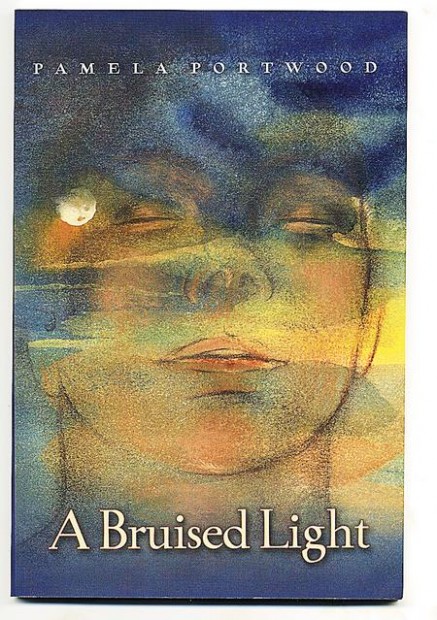
"There is a bruised light at dusk that is like the aura before an epileptic seizure. A moment when the hands held out before the self do not belong, but they are still familiar."
With those 34 words, Tucson poet Pamela Portwood gives us a glimmer into the world of epilepsy. Her world.
"A Bruised Light" is also the title of her first published book of poetry, a book in which she offers up not only her own take on epilepsy but also on what it did to such famous figures as Vincent van Gogh, Fyodor Dostoyevsky and Napoleon.
Some of the poems, many in monologue form, deal with these figures' seizures. Others focus on the other people or events in their lives.
Beginning with a list of more than 70 "philosophers, kings, musicians and saints," Portwood whittled it down to 17.
People are also reading…
Some she tossed aside because there was debate as to whether they really had epilepsy. Others got the boot, she frankly admits, "because I wasn't sure I could write a poem about them."
Hard to believe. Poetry, after all, has been her world since she was a teenager.
A self-described "oil-patch brat," Portwood, 49, grew up where the oil was.
"I spent a large chunk of my childhood in Venezuela. My father worked at an oil camp in the middle of nowhere."
During her junior year in college, she spent some time studying in Iran — 18 months before the revolution. There, she wrote six poems in four weeks. "I fell in love with the art and architecture of Iran."
In 1982 she came to Tucson to pursue a master of fine arts degree in creative writing at the University of Arizona.
Three years later, during her final semester at the UA, she suffered her first seizure. Others soon followed.
Known as complex-partial seizures, they were accompanied, in Portwood's case, by her licking her lips and kneading her clothes. She also lost her focus for a minute or two.
Still, the initial diagnosis came down not as epilepsy but as anxiety attacks.
"It made sense," says Portwood. "I was in my last semester and under a lot of stress."
For eight years, the seizures continued, even as Portwood became a freelance writer and art critic for the Tucson Weekly.
In 1993, she again sought medical help. "I said, 'My life is great. Why am I still having these attacks?' "
Once more, she was diagnosed as having anxiety attacks. "I was sent to an anxiety support group."
A month later, she had her first grand mal seizure while visiting with friends in New York.
Her husband, Mark Taylor, was with her and got her to a hospital in Yonkers.
Though told she was unconscious for only a few minutes, Portwood says the first thing she remembers was lying on a gurney waiting to be admitted.
Four days of testing all proved negative. Back home in Tucson, a neurologist told her a diagnosis of epilepsy would come only with another grand mal seizure.
She had another seizure. She got her diagnosis. Now came the real battle: trying to find the right medications — ones that wouldn't numb the memory and rob the intellect.
In the mid-1990s — about the same time that she finally found two medications that worked without devastating side effects — Portwood started writing art critiques for the Arizona Daily Star, a stint that continued through 1999.
During that time, she received a grant from the Arizona Commission on the Arts to write her book, "A Bruised Light."
After the writing was done, finding a publisher took another five years.
"This is not a poetry book about the ecstasy and terror of epilepsy," says Portwood.
That said, epilepsy does serve as the obvious muse on every page.
"It incredibly changed me as a person," says Portwood, who has not had a seizure in eight years but still suffers from memory lapses.
"I suppose it changes everything."
"A Bruised Light" (Star Cloud Press, $12.95) available at www.star cloudpress.com or at Antigone Books, 411 N. Fourth Ave., 792-3715.