

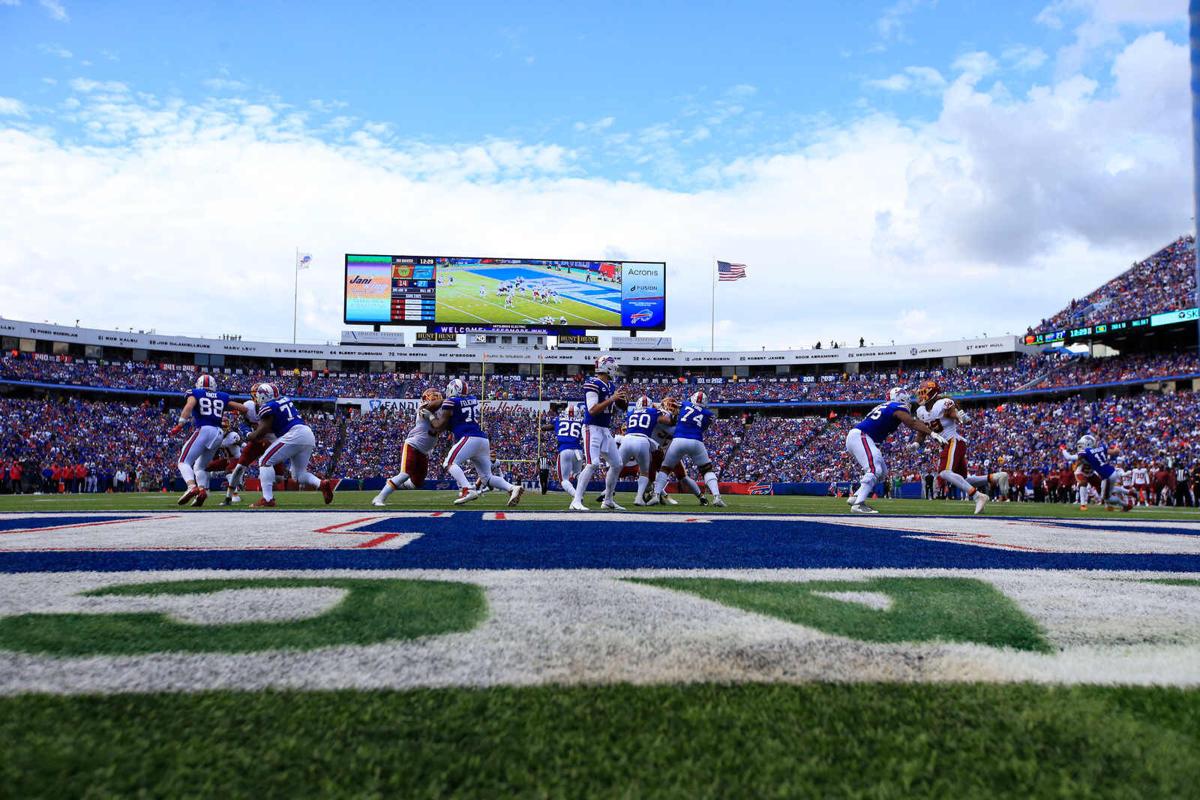
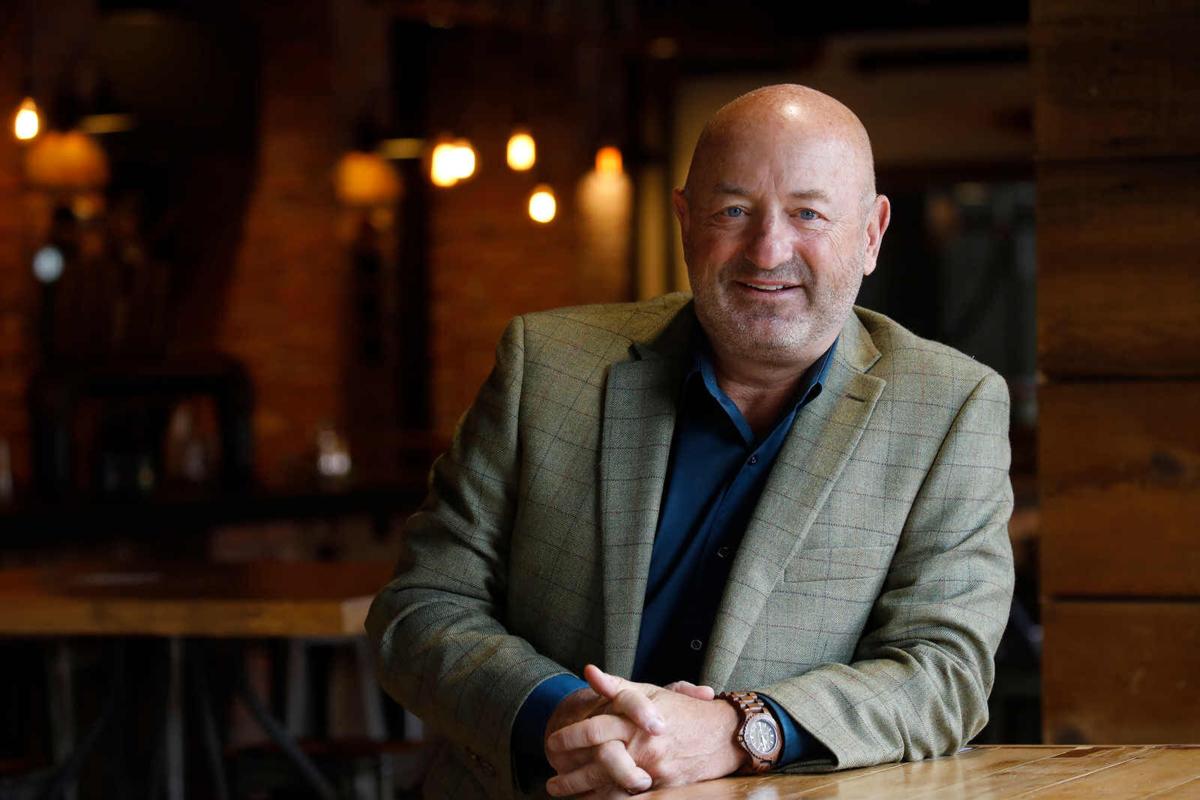
John Cimperman has been pondering a simple question with a complex answer. “How do we build a new stadium that fits Buffalo?” he asked rhetorically last week while sipping a craft beer at 42 North Brewing Co., the establishment he owns in East Aurora.
A longtime sports marketing executive before he became a beer entrepreneur, Cimperman has grappled with this type of question before. As director of marketing for his hometown Cleveland Cavaliers, he helped the team move into a new arena in the mid-1990s. Later that decade, as a top marketing official with the Los Angeles Kings, he played a key role in negotiating naming rights for the Staples Center, which was then under construction, and the planning of its surrounding development, L.A. Live.
Twenty-two years ago, Cimperman moved to Buffalo for an executive marketing role with the Sabres, and later opened his own national sports marketing agency, Cenergy, which he sold in 2014. Since then, he has launched and operated 42 North and worked as a marketing consultant for clients including the NHL, MLB Network and Delaware North – the latter of which also had him working on the Green Bay Packers’ Titletown development in the neighborhood around Lambeau Field.
People are also reading…
John Cimperman, who owns 42 North Brewing in addition to his career in sports marketing, weighs in on the chance to build a new stadium.
In a series of interviews with The News, which are condensed here, Cimperman emphasized the need for ancillary development around a new stadium, which the team hopes to build in Orchard Park, and the opportunity to build on the Bills as a “national brand.”
How are you viewing this stadium project?
Cimperman: It’s once every 50 years, at best, that you have a chance to do something like this, so let’s just not rush to throw a stadium up and then five years later wish it were somewhere else. How can this stadium project have an economic benefit beyond 10 home football games? How can we use this once-in-a-generation opportunity to be transformational for Western New York?
Do you like the idea of the stadium going downtown?
Cimperman: I would love to see all the studies that have been done to make that judgment. But the answer, for me, is as long as where it goes has a long-term vision: What is the ancillary development? How can this attract people and jobs for more than 10 days a year?
I don’t know if that’s Orchard Park. I don’t know if that’s downtown. But you have to look at this as a once-in-a-lifetime opportunity. Let’s do the right thing with it.
What is an example that stands out from your previous work?
Cimperman: Look at Cleveland, with an arena and a ballpark. But it wasn’t about the arena and the ballpark. It was about the Gateway Entertainment Complex (which connects the two facilities). Everything around the facilities economically benefited.
In Los Angeles, it wasn’t about the Staples Center. Our vision was L.A. Live, which includes the Nokia Theater, a Marriott hotel and 15 bars and restaurants. LA, in 1999, was more desolate than downtown Buffalo. There was no downtown LA. But Staples Center – which was adjacent to a convention center and had all this ancillary development – transformed downtown Los Angeles.
That would help address the major challenge of turning NFL stadiums into economic drivers: Lack of use. They only have a dozen or so events a year. So, you don’t just stick a stadium downtown to put it there. You build a downtown stadium because of what it means for the surrounding area.
Cimperman: Look at Cleveland. The waterfront is a great location, but what Cleveland realized now is the Haslams (the Browns’ owners) need to develop around that stadium, and they now have developmental rights there. The city turned the keys over to them, and it’s prime real estate. That’s going to include residential, entertainment and office buildings on the lakefront. The stadium is the hub – the prime-time programming.
The Green Bay Packers built out Titletown, which is hundreds of acres of interactive entertainment that is open seven days a week. We keep talking about hotels and bars, but the vision for that development is condos. It’s office buildings. In a market like Buffalo, I think people would love to have an office a couple blocks from the stadium – wherever it is. When you go to Titletown, you see that. There’s office space next to Titletown.
And that’s Green Bay, where the stadium isn’t close to a downtown area.
Cimperman: It reminds me of Orchard Park. People are parking in backyards. The only reason I hesitated on answering the question about which location is better is that I saw Green Bay and realized, “Wow, they actually have ancillary development.” You could do it, but you need to have the property, and the commitment of the community and zoning officials to do it.
Can you turn Orchard Park into a 365-day destination?
Cimperman: I would say yes with what I’ve seen in Green Bay, and in Foxborough (the Boston suburb where Patriot Place is located). Both of those venues are 20 or 30 minutes away from the hub of the city. It’s worked there.
I don’t think people traveling to the suburbs is a deal killer. It’s more about whether there’s the space, the ingress and some access to public transportation or rail. It’s more of an infrastructure question.
At the same time as we talk about building around a stadium, the Bills are looking to reduce overall capacity – and suites – in a new stadium. They want to cut the number of suites almost in half.
Cimperman: Which is a trend in all sports. In Cleveland, they removed 20 suites in the baseball stadium and replaced those with party suites and more bars, just because there’s not that corporate base.
SoFi Stadium in Los Angeles seats 70,000. Is it unreasonable to expect that same capacity in a new stadium here?
Cimperman: We’re Buffalo. SoFi doesn’t work. Building “Jerry World” (the nickname for A&T Stadium in Dallas) doesn’t work. We’ve got to make sure we build it to the corporate base of Buffalo and the ticket holders of Buffalo.
What do you think of the Bills’ plans for 60,000 to 62,000 seats, plus 3,000 to 5,000 on a party deck?
Cimperman: I think that’s smart. I know there’s been some negative reaction to the reduced capacity, but it is a trend we’re seeing across venue development – in particular, the reduction of premium seating. What I’m seeing in a lot of venues are these communal spaces, even craft beer decks. People – especially the younger generations – are looking for social interactions and those party decks are especially popular now. People are buying experiences. They’re not buying places.
Could a new stadium attract a Super Bowl?
Cimperman: We don’t even have enough hotel rooms and downtown infrastructure for an NHL All-Star Game. That would have happened by now. Let’s not build this with the hope of a Super Bowl.
Buffalo’s corporate base is less than half as big as the average NFL city. What are the implications of that?
Cimperman: I don’t see the size of our market as a huge liability. The passion of our fan base – that grit – are marketable assets. I would trade passion for size. How do we convey that to potential sponsors?
We have to fish in a bigger pond. How do you bring in some national dollars? Progressive, State Farm, Nationwide – whoever it is. These brands invest in sports.
You’ve got to find a way to attract dollars from outside the market, which is hard, but the passion of Bills fans is not just a Buffalo thing.
How important is fielding a winning team for attracting sponsorship dollars?
Cimperman: Winning is really important. This season is a great example. Because of the Bills winning, the majority of our games are now nationally broadcast and four are prime time. If you are brand X – State Farm, Allstate – and you have your logo behind the goalposts, all of a sudden the value of that sign is way up.
Winning equals exposure, and exposure equals more marketing and advertising dollars. If they’re integrated sponsorships – tickets, hospitality, the rights to use the logo, prime branding – they’re seven-figure deals for three to five years. If a sponsor is going to be integrated into a new stadium – building an interactive space, or a fan zone – those are, at minimum, five- and sometimes 10-year deals.
Anecdotally, from traveling around the National Football League seeing Bills fans in every city, the team seems to have a national fan base. You’re saying that is true from a branding perspective?
Cimperman: It is, and I see it with their recent success. There’s an opportunity to go beyond the boundaries of Western New York to attract partners. There’s a great legacy. It was dormant for 20 years, but there’s still a legacy. The Bills are a national brand.


