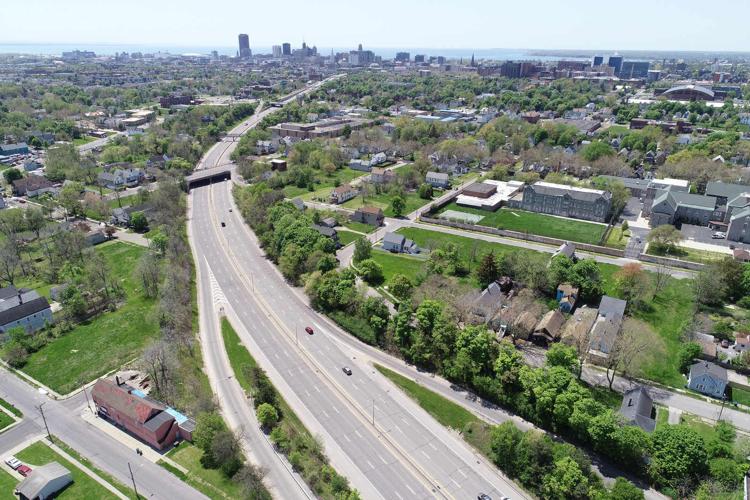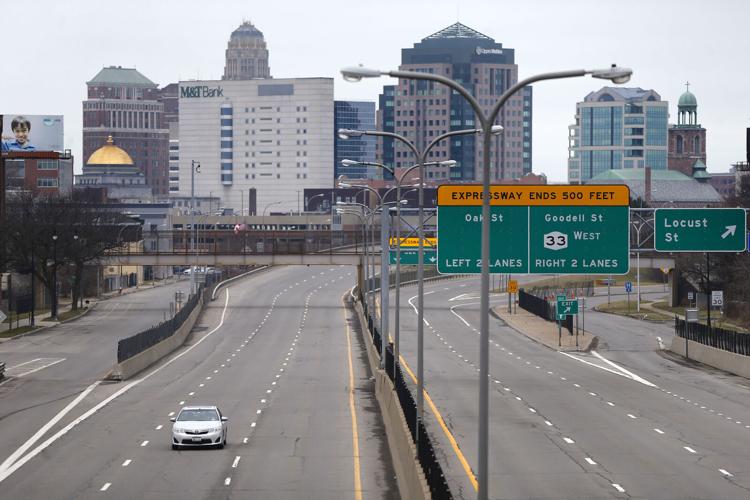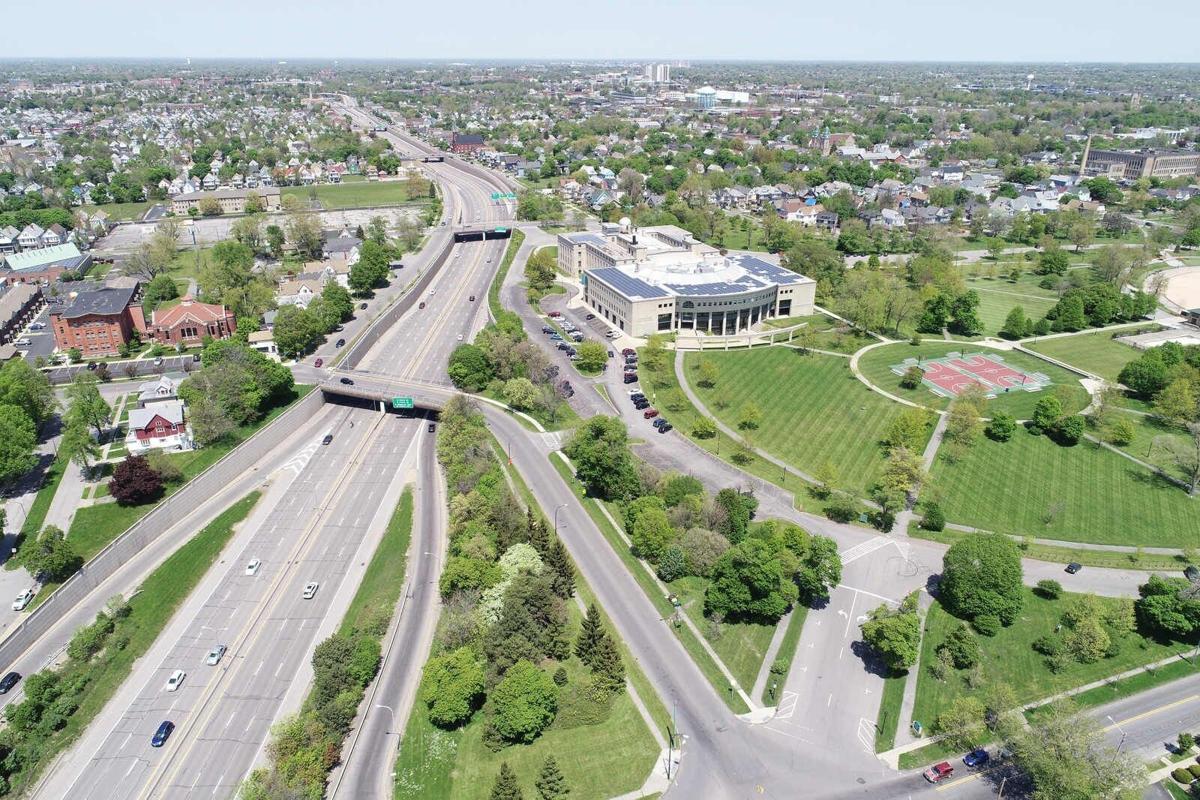
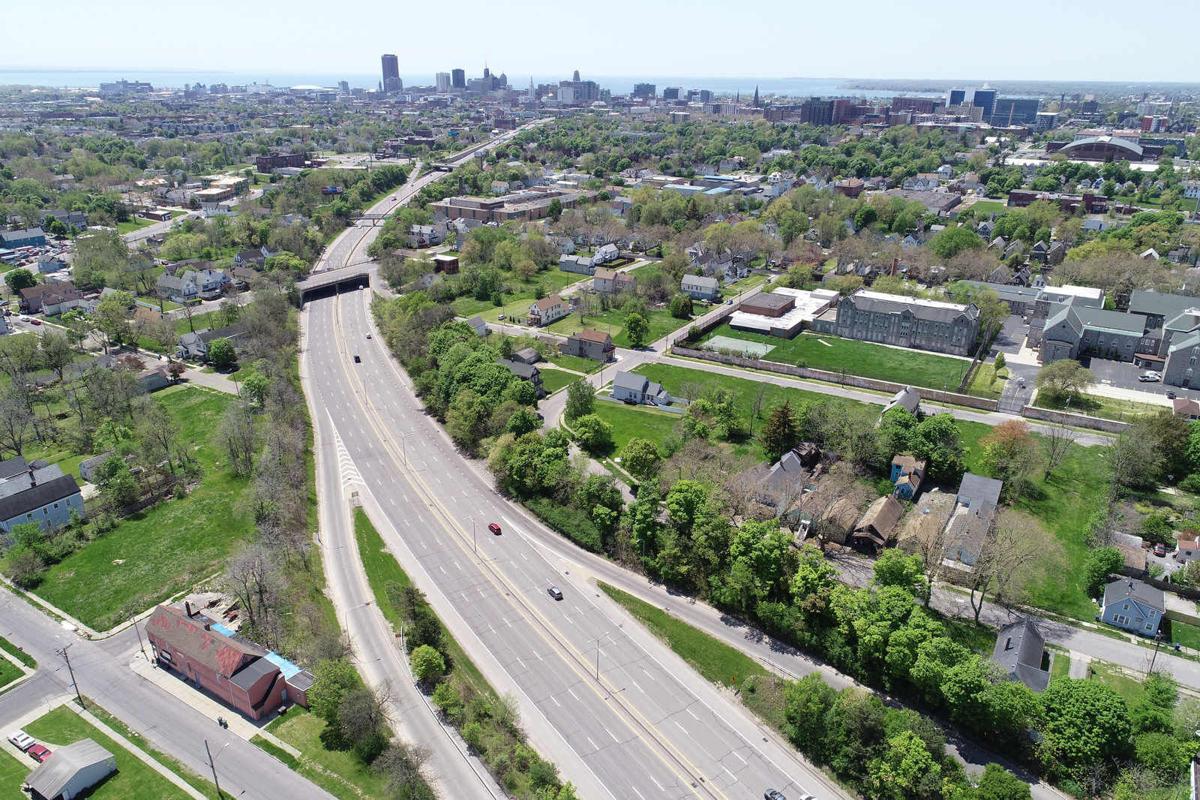
WASHINGTON – A Senate infrastructure compromise backed by President Biden slashes proposed funding to reconnect neighborhoods long divided by highways like Buffalo's Kensington Expressway.
That's just one of the objections that Rep. Brian Higgins – a Buffalo Democrat pushing for a bigger infrastructure investment – has to the emerging deal.

Rep. Brian Higgins is pushing for $500M to restore Humboldt Parkway, the historic tree-lined thoroughfare that united the East Side until the Kensington divided it in the 1960s.
Saying that Senate Republicans will never deliver the five extra votes needed to pass the infrastructure compromise, Higgins said in an interview Friday: "I just think the president's being played here. And I don't think it's beneficial to Buffalo, relative to the promise of the original bill."
The compromise, unveiled by 10 senators and Biden on Thursday, devotes $973 billion to highways, bridges, water projects, broadband and other infrastructure efforts. That's less than half the size of Biden's original $2.2 trillion proposal.
People are also reading…
Higgins was among several lawmakers who criticized the compromise Friday. But Higgins' comments stood out in part because of his anger that the compromise nearly obliterated a proposed program he had been counting on to replace the Kensington with a restored Humboldt Parkway.

“Rebuilding America’s crumbling infrastructure is a bipartisan issue, and Western New York has several projects that could directly benefit from this, most notably the Kensington and Scajaquada projects," a statement from Senator Charles E. Schumer said.
Biden's original proposal called for $20 billion to be set aside to reunite neighborhoods split by highway mistakes of the past, but the compromise would set aside $1 billion for that program.
"The bill sucks as it relates to that," Higgins said. "But you can bet that whatever is in the final version of the bill – and I think it will be more – I'm going to aggressively pursue that."
Senate Majority Leader Charles E. Schumer and Sen. Kirsten E. Gillibrand also strongly back the Kensington project. And the backing of those two New York Democrats, along with that of Higgins, means the project still has a good chance of getting funded, said Stephanie Barber Geter, steering committee chair of the community group that's been pushing it.
"I have full confidence in Congressman Higgins and Senator Gillibrand and Senator Schumer to bring it home," said Geter, of the Restore Our Community Coalition. "I know that these levels of back-and forth-bantering always occur, that there are winners and losers. But I know that they are in the fight."

The local and school aid targeted to the area under President Biden's American Rescue Plan won't come gift-wrapped. It will arrive, instead, tied together with red tape, with strings attached.
Higgins was largely alone in singling out the cut in funding to replace highways like the Kensington, but he was hardly alone in criticizing the bipartisan measure.
Rep. Alexandria Ocasio-Cortez, a Bronx Democrat and a progressive icon, tweeted a photo of the 10 senators and president who negotiated the deal – all of them white – along with an acerbic observation.
"The diversity of this 'bipartisan coalition' pretty perfectly conveys which communities get centered and which get left behind when leaders prioritize bipartisan deal-making over inclusive lawmaking (which prioritizes delivering the most impact possible for the most people)," she said.
Meanwhile, Republicans fumed that Biden had said that he would reject the bipartisan infrastructure package unless Congress also passed a much larger bill that includes Democratic priorities such as broadening access to health care and child care, while also addressing climate change.
Hearing that, Sen. Lindsey Graham, a South Carolina Republican who backed the compromise, tweeted: "No deal by extortion! It was never suggested to me during these negotiations that President Biden was holding hostage the bipartisan infrastructure proposal unless a liberal reconciliation package was also passed … I can’t imagine any other Republican had that impression.”
But Rep. Chris Jacobs, an Orchard Park Republican, said he was reserving judgment on the infrastructure compromise.
“It is encouraging that a bipartisan framework for hard infrastructure like roads, bridges, and broadband has been agreed to," he said. "However, as with any proposal of this size, the precise details matter. I will wait to see the full legislative text and what it may be paired with before I make a judgement on this package.”

The subject of whether to keep or do away with the Skyway ignites fierce yes-or-no emotion in Western New York, Kirst says.
Higgins also complained about the overall amount of funding in the compromise. Compared to Biden's original proposal, the compromise eliminated a number of efforts to combat climate change and trimmed the amount of money devoted to mass transit from $85 billion to $49 billion – meaning there would be less funding for projects like an idea to create a streetcar system in Buffalo.
The problem, Higgins said, was the negotiators' "silly optics" of keeping spending in the bill under $1 trillion.
"The nation's opportunity for a robust, inclusive and equitable rebirth is lost in this bill," Higgins said. "It's a capitulation."
Asked for a response to Higgins' comments, a White House spokesman stressed that the bipartisan compromise would still be the largest federal infrastructure investment in a century, and that it is just part of Biden's efforts.
"The president remains committed to his full legislative agenda – including the care economy and expanding child care, and additional investments in clean energy – and will work with members of Congress on drafting and passing a budget resolution that enacts his legislative priorities," the spokesman said.

The budget compromise, unveiled by 10 senators and Biden on Thursday, devotes $973 billion to highways, bridges, water projects, broadband and other infrastructure efforts. That's less than half the size of Biden's original $2.2 trillion proposal.
But to hear Higgins tell it, Biden and congressional Democrats should combine a larger infrastructure effort with all those other measures and pass it with only Democratic votes. To do that, they would have to use a parliamentary strategy called reconciliation, which would allow Democrats to pass the measure in the Senate with a simple majority, thwarting Republicans from killing the effort with a filibuster.
Gillibrand has not commented on the infrastructure compromise, but she has been raising concerns for months that the two-bill approach could doom some of the Democratic Party's priorities.
"I think that would be a horrible outcome for New York State, because some of the things that we desperately need investment in are the softer pieces of infrastructure, things like affordable daycare and universal pre-K and a national paid leave plan," Gillibrand said last week.
Asked for his comments on the bipartisan compromise, Schumer's office responded with a statement that held out hope for projects such as the Kensington while not exactly saying how the Senate majority leader felt about the deal.
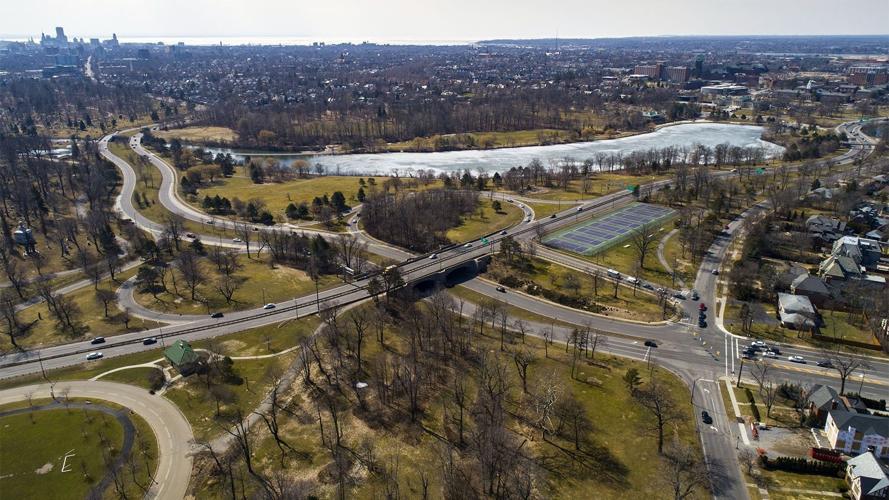
“Rebuilding America’s crumbling infrastructure is a bipartisan issue, and Western New York has several projects that could directly benefit from this, most notably the Kensington and Scajaquada projects," the statement said. "These are transformational projects that will reconnect unjustly fractured communities and restore the integrity of our legendary park system. As we work on multiple fronts to secure a big and bold infrastructure package, we can’t lose sight of the overall goal – to rebuild America and make ourselves more competitive than ever before.”