

WASHINGTON – A huge crowd gathered in a bitter wind on the White House lawn Monday to witness President Biden signing a $1.2 trillion infrastructure bill that he called a victory for the American people. But it was also a victory for four New York politicians with entirely different career trajectories: Gov. Kathy Hochul, Rep. Tom Reed, Rep. Brian Higgins and Senate Majority Leader Charles E. Schumer.
All four – a governor running for re-election, a Republican once seen as a potential candidate for governor before scandal waylaid his plans, a veteran House Democrat from Buffalo and the man blessed and/or cursed with the job of leading a 50-50 Senate – attended Monday's ceremony. And each of them reveled in the moment, calling the infrastructure bill a blessing for America without ever mentioning that it was also something of a political blessing for each of them.

"It's the largest infusion for infrastructure for Western New York certainly in 70 years and maybe even longer," said Senate Majority Leader Charles E. Schumer, a New York Democrat who compared the effort to the construction of the interstate highway system starting in the 1950s.
The bill-signing prompted Hochul's first trip to Washington since she succeeded scandal-plagued Gov. Andrew M. Cuomo, who resigned in August. She talked about it like a moment she couldn't miss.
People are also reading…
"I could not have thought of a better opportunity to just celebrate with the president and the legislators and other governors and everyone who made this happen," Hochul said in an interview after the ceremony. "This is historic. We were witnessing history."
The bipartisan measure aims to rebuild crumbling roads and bridges while also replacing hazardous lead pipes, bringing high-speed internet to underserved areas and preparing the nation for a green energy future.

A provision that's especially important to New Yorkers – restoring the full deduction for state and local taxes – remains in question.
But beyond that, the bill will give Hochul something that none of the other many Democrats running for governor next year will have: the opportunity to tour the state and announce projects to be funded through the infrastructure bill.
"This is a very big deal for the entire state of New York," said Hochul, who's from Buffalo. "So I'll be at many events. I'll be back in Western New York to announce some of our initiatives before too long and all the way down to New York City. So, there's a lot of good things happening."
Asked what her priorities for Western New York would be under the bill, Hochul mentioned the removal of lead water pipes and other water infrastructure projects, along with airport improvements. But then she added: "I believe that they'll be an opportunity for some signature projects that I'll be announcing in my State of the State Address related to Western New York."
A new stadium for the Buffalo Bills doesn't qualify for funding under the bill, but Hochul said she expects a stadium deal to be struck separately in time for it to be addressed in the new state budget she will propose early next year.
Before all of Cuomo's scandals, Hochul expected to be running for re-election as lieutenant governor – and Reed talked like a Republican candidate ready to challenge Cuomo. All that changed in March, though, when the Washington Post reported that Reed made inappropriate advances on a then-lobbyist while on an ice-fishing trip to Minnesota in 2017.

No matter what you think of it, the infrastructure bill is a 2,701-page tome whose fine print reveals big spending that could benefit Buffalo.
Days later, Reed, of Corning, announced he would not seek any political office in 2022 – meaning he would retire after 12 years in Congress highlighted by his tenure as the Republican chairman of the House Problem Solvers Caucus.
During those years, that bipartisan group of middle-of-the-road lawmakers introduced a number of proposals on important issues that often seemed to go nowhere – including one on infrastructure in 2018.
But that plan came back to life this summer, after Reed stepped down as the top Republican problem-solver. And when a bipartisan group of senators hammered out the infrastructure deal that Biden signed Monday, it echoed much of what the House Problem Solvers had suggested.
So for Reed, the bill's passage offered some vindication. After all, he had been pushing for bigger federal spending on infrastructure since his first days in Congress.
"It's a good day for America," said Reed, one of two House Republicans to attend the bill-signing ceremony. "We found common ground. I was proud to be there."
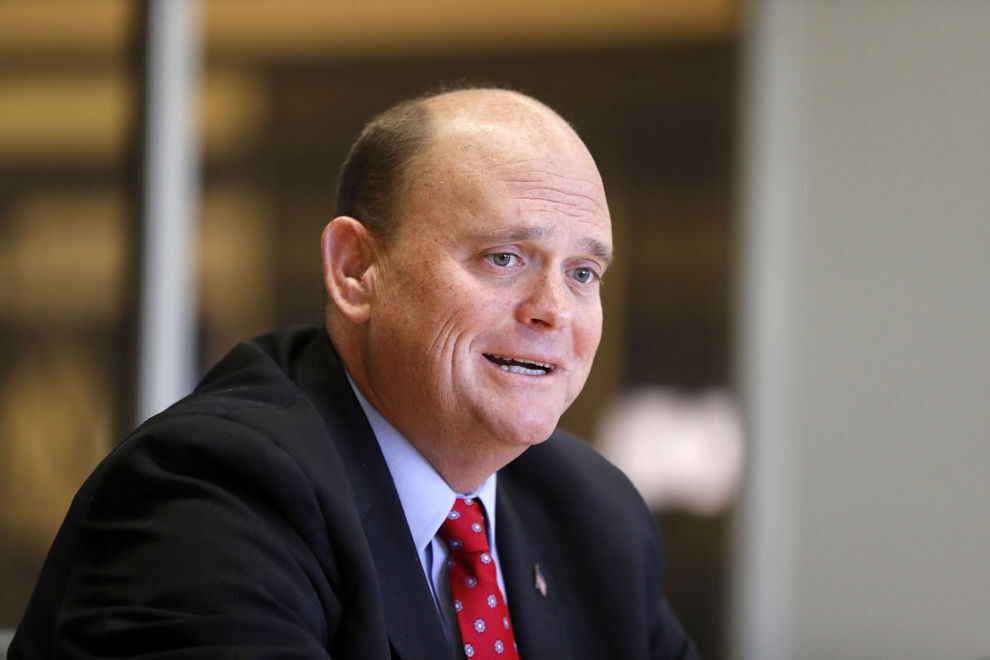
"We received a tremendous amount of calls, some of them very aggressive and some sometimes even of an intimidating, threatening nature," Reed said.
Reed attended even though he said last week that his offices had received numerous threats in retaliation for his infrastructure vote, including some that he had to report to the Capitol Police.
"Obviously, some people are caught up in the partisanship," he said. "I wanted to show we can do better than that."
Higgins wouldn't miss the bill-signing, either – because for him, it meant the first culmination of a decade-long battle.
Year after year, in Congress after Congress, Higgins introduced infrastructure bills of more than $1 trillion, basing their size on the infrastructure needs nationwide listed by the American Society of Civil Engineers. And year after year, Congress ignored Higgins' proposals – until America's crumbing roads and bridges and outdated airports and spotty WiFi became too much to ignore.
"I think there was a sense of urgency that things were falling apart – literally, physically," Higgins said. "But also there ... was a recognition that there's a great economic benefit to making these kinds of investments."

Democrats and Republicans in the Senate have come together on a bipartisan infrastructure package that could bring unprecedented amounts of money to Western New York for roads, bridges, lead pipe removal and much more.
Ironically, the bill that Congress passed and that Biden signed is exactly the same size as the one Higgins first proposed a decade ago. So now, as he begins his quest for a 10th term in a redrawn district, Higgins will be able to brag a little.
So will Schumer, who's also up for re-election next year and who, like Higgins, could face a primary challenge from the left.
Moreover, the infrastructure bill is the second hugely significant piece of legislation that Schumer shepherded through the deeply divided Senate and into law since he became majority leader in January, the other being Biden's American Rescue Plan, which passed in March.
And Schumer, speaking at the bill signing ceremony, vowed to work to pass one more huge piece of legislation: Biden's $1.75 trillion plan to bolster the social safety net.
"Today's signing is a major and historic step forward," Schumer said. "And we will keep working with you, Mr. President, to build on today's success by passing the rest of your Build Back Better agenda."


