

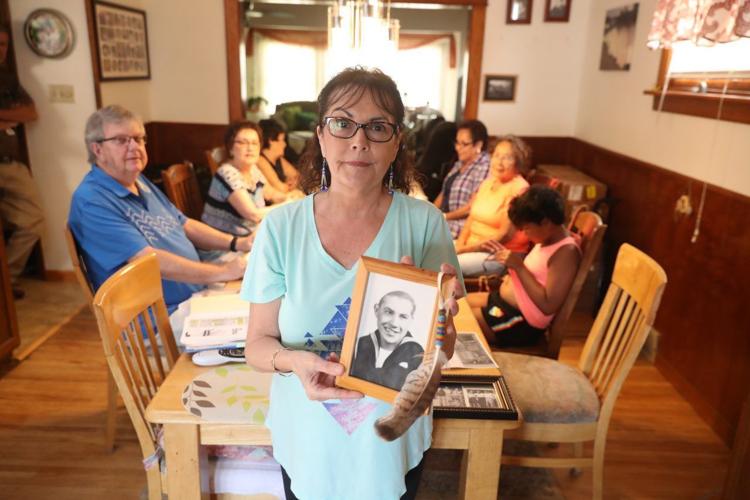
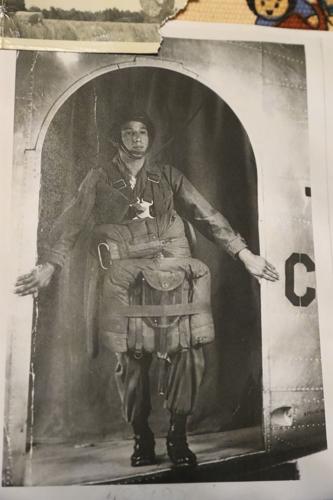
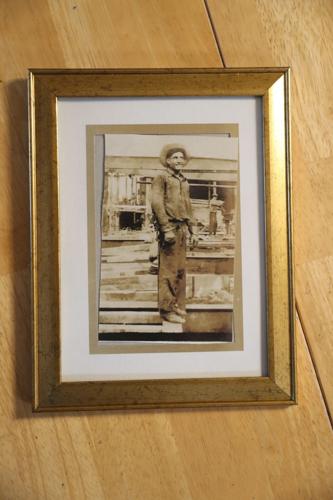
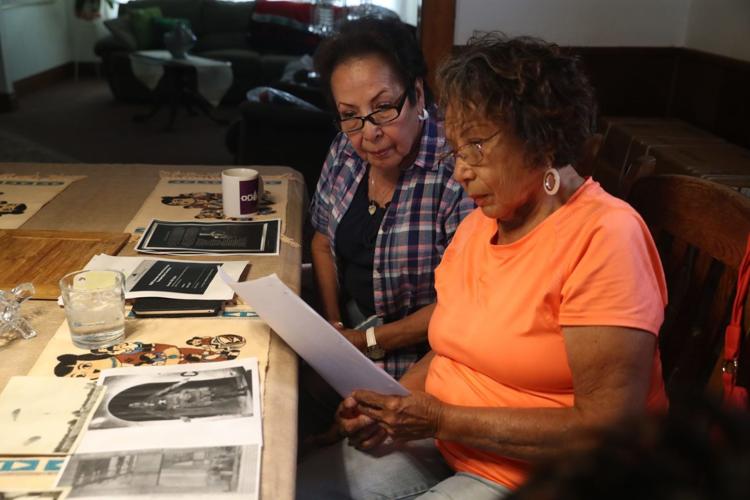
Patricia White Hancock still has vivid memories of her brother. She was a little girl when Gatlin White served with the Army’s 82nd Airborne Division, a guy who would routinely show up with teddy bears and even a children's table and chairs for his sisters at Christmas.
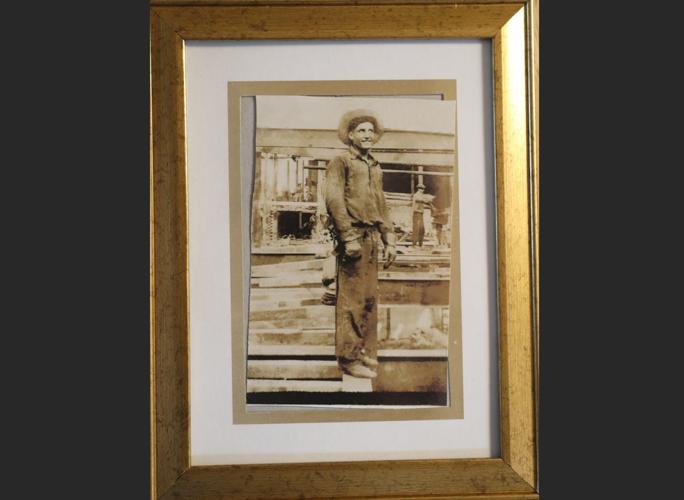
They were born into the Seneca Nation on the Cattaraugus territory. After Gatlin completed his duty with the Army, he followed a familiar path of the time for many within the Haudenosaunee, or Iroquois Confederacy. He found work in what was known as “high steel,” helping to build postwar towers in Northeastern cities.
Hancock and her sister, Jacqueline White Gibson, say Gatlin took a job close to home in the mid-1950s. According to old newspaper clippings, he was hired as an ironworker by Bethlehem Steel. His work involved climbing onto the girders of an unfinished highway bridge in Buffalo while assembling 22,000 tons of steel as part of what would soon be called the Skyway.
People are also reading…
Those ironworkers were in the crosshairs of the unpredictable winds of Lake Erie, long before many of the safety precautions taken for granted today. On Jan. 4, 1955, while bolting a stringer beam, Gatlin fell 100 feet onto Ganson Street, making him the first worker to die on that monumental project.
More than 64 years later, his sisters recall their mother's grief when a messenger arrived at their door. Hancock and Gibson still honor Gatlin – and his potential – every time they cross the Skyway. He was a top student at Gowanda High School, they said, and they reflect on all he might have done with his life, the contributions he never had a chance to make.
“He was only 22,” Hancock said. “It’s very important that he is remembered.”
Three ironworkers died in 1955, in the final months of building the span. There was White, of the Seneca Nation. Two months later, Daniel Smith – who spent much of his childhood at the legendary Lackawanna orphanage operated by Monsignor Nelson Baker – fell to his death, at 57.
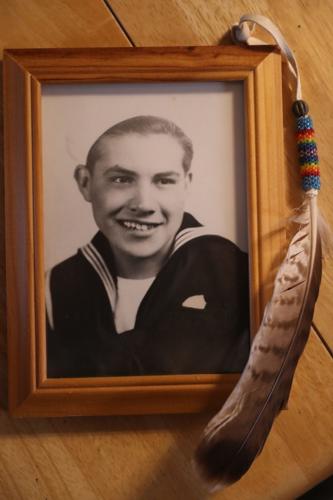
The final tragedy involved Mitchell LeClair, 30, part of the rich ironworking tradition from the Mohawk community at Kahnawake, in Quebec. LeClair died in April 1955. Articles at the time said a gust of wind caught the scaffolding he was carrying and hurled him from the span, while his brother Thomas and their father, Michael, worked at his side.
“They were traumatized,” said Florence "Mickie" Golba, one of Mitchell’s three daughters. She and her sisters, June Mahfoud and Celeste LeClair-Coleman, said their uncle and grandfather were never able to speak of the incident, even as Mitchell's daughters quietly wished someone would build a memorial to their dad.
They rarely talked openly of that dream, knowing the pain it would cause within the family.
Still, whenever they traveled over the bridge, LeClair-Coleman recalls how the sisters – raised as Catholics – made the sign of the cross.
"It's a spiritual thing," Golba said. "If they decide to take that Skyway down, there still has to be something for these men."
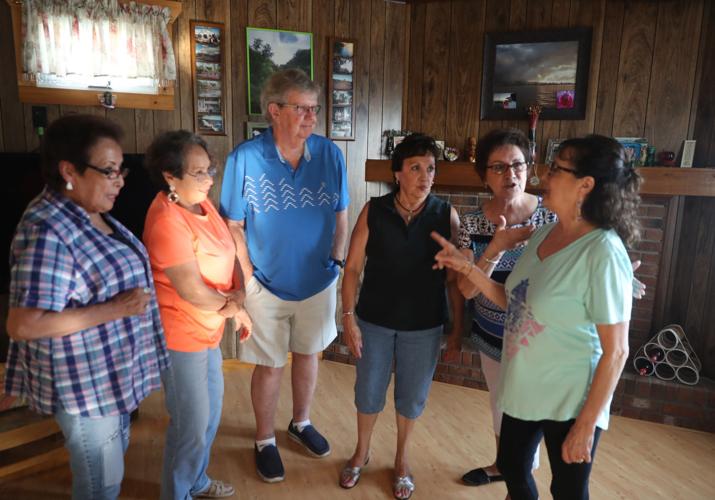
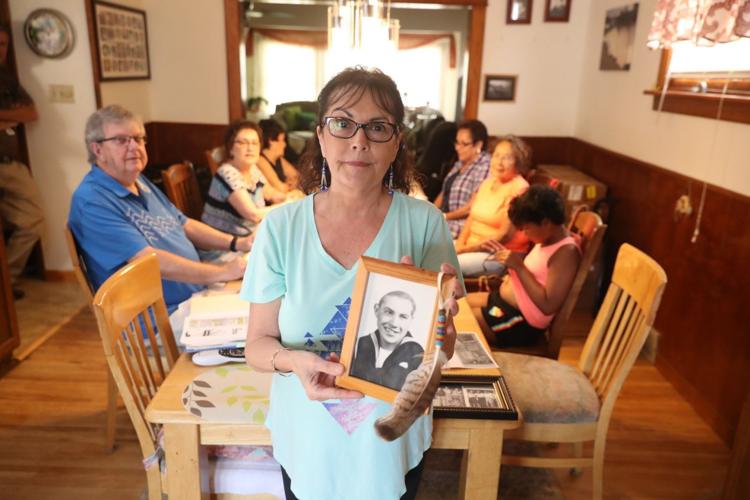
Friday, for the first time, members of all three families sat at the same table, at LeClair-Coleman's house in Buffalo. While they share common pain going back 64 years, they agreed it was LeClair-Coleman who finally brought them together, once she began her formal drive for a monument a few years ago.
She was born seven months after her father's death and two days after the opening of the Skyway. That knowledge gives her a sense of fate tinged with sorrow, a belief her family is bound in the most profound way to the bridge. She is retired now from teaching at the Native American Magnet School in Buffalo, allowing her time to focus on the notion of honoring her father and his fellow workers.
The subject was impossible to broach while her grandfather and uncle were alive, both wounded by what they saw on the day that Mitchell died – even as the prominence of the Skyway made it impossible for Mitchell's descendants to forget.
"I've never crossed that bridge without thinking of it," said Joe Mahfoud, June's son and a prominent Western New York musician.
Tom LeClair was separated by just 11 months from his brother Mitchell, a Navy veteran of World War II. It was only after Tom's death, earlier this decade, that Mitchell’s daughters felt free to work toward a memorial.
On their urging, State Sen. Tim Kennedy – joined by Sens. Patrick Gallivan and Chris Jacobs as co-sponsors – introduced a bill calling for the Skyway to be renamed as “The Fallen Skywalkers Bridge,” referring to the way ironworkers are described, with awe and honor, in Mohawk culture.
Uncertainty about the Skyway’s future is causing the three families to rethink their goal. A high-profile design competition for alternatives to the bridge is building toward an end, and then state transportation officials will begin moving toward the lengthier official process for deciding whether the Skyway stays or goes.
No one can be sure how long the bridge will be around, which means changing the name might not be the wisest means of a lasting tribute.
“The bottom line,” said Molly Hirschbeck, communications director for Kennedy, “is that the senator wants to create a memorial.”
Monday, Kennedy will meet with the families, both to update them on the process and to talk about possible directions for a monument.
Mark Weber, a retired West Seneca schoolteacher, said the entire journey will simply formalize what he has felt since he attended Daniel Smith's funeral, as a child.
Smith, who died at 57, was Weber's great-uncle. In the same way as Weber's grandfather, Smith spent much of his childhood in St. Joseph's Protectorate, an orphanage that was part of Father Baker's works of charity in Lackawanna.
To Weber, that intimate history – meshed with the powerful native heritage of LeClair and Gatlin White – only elevates the meaning of the Skyway, a monumental structure built by ironworkers whose work ethic reflected something essential about the region.
No matter what happens next with the bridge, the challenge for the designers of any tribute will be capturing what amounts to a kind of civic soul.
"Once you know you've lost someone on it," Weber said of the Skyway, "that makes it, forever, into something else."
Sean Kirst is a columnist with The Buffalo News. Email him at skirst@buffnews.com or read more of his work in this archive.


