Angelina Guatemala, 64, counted on federal food stamps after retiring a couple of years ago in Ogden, Kansas.
But a rules change Congress adopted last year for the Supplemental Nutrition Assistance Program means she needs to return to work 20 hours per week to get help buying food. She said finding a job is tough because painful dermatitis makes it hard to hold things in her hands or stand for long. Without SNAP, she’s stretching her meals.
"I'm the type of person who has rice and beans, and I’m OK for today. I’m not picky," Guatemala told USA Today. "If I can get a piece of chicken, I can stretch it out for two or three days. But for now, nothing."
SNAP rolls have dropped 10% since congressional Republicans expanded work and documentation requirements in legislation President Donald Trump signed on July 4, 2025. Reaction has been divided over whether 4 million fewer people receiving food benefits is cause for concern or celebration.
People are also reading…
Low-income families' budgets have been stretched by the rising cost of groceries, housing and utilities since the pandemic, advocates say. The New York Federal Reserve Bank recently reported "a remarkable increase in food insecurity, particularly among lower- and middle-income households and households with young children."
More than 42 million people — about one in eight Americans — participated in SNAP when Congress tightened the work rules last year, receiving an average of $188 per month to buy food, according to the Agriculture Department. But the legislation cut federal spending by a projected $187 billion over 10 years by expanding work requirements and requiring states to chip in more.

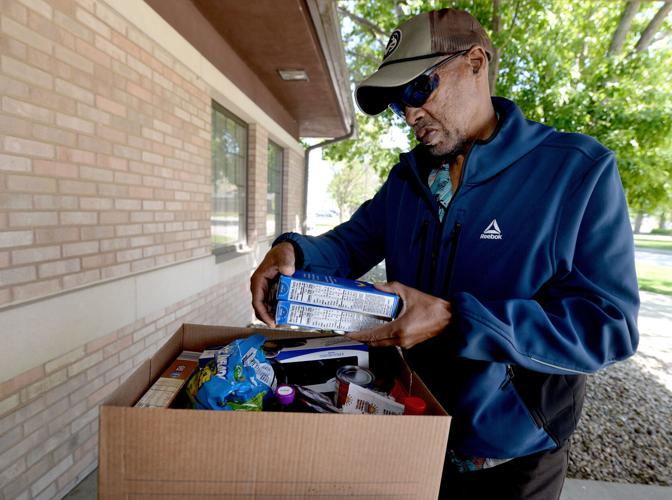
Davine Oliver looks over some of the groceries he received at the Holy Family Food Pantry on May 13 in Springfield, Ill.
The program ballooned during the Great Recession, growing from 28 million participants in 2008 to a peak of 47 million in 2014. Participation ebbs and flows with the economy, dropping to 35 million in 2019.
SNAP became a focal point of the 43-day government shutdown last year. Congress eventually approved funding for SNAP and other agencies on Nov. 12.
But tighter eligibility rules had already begun in many states, leading to confusion about the new rules and what was funded.
'Jumping through hoops'
SNAP requires participants to work 20 hours per week in a paid or unpaid job, in training or in volunteer service. The legislation expanded who is required to work and what documentation they must provide.
The work requirement previously stopped at 55 years old, but the legislation extended it to 64. Participants caring for children up to 18 years old had been exempted, but the policy changed to those with children 14 and younger.
The bill also required more documentation of work and income to participate.
In Kansas, for example, recipients must fill out a 30-page application with 200 questions to get benefits of about $150 per month, according to Haley Kottler, who works on hunger issues at the Appleseed Center for Law and Justice in Kansas.
"People are already jumping through hoops to get the food that they need," Kottler said. "Any more restrictions or requirements on the program really do create hardships."
SNAP participants report trouble providing documentation for things like unpaid work or rent paid to relatives, according to advocates. State workers who process the forms were stretched thin before the stricter rules and now process more paperwork, advocates said.
The legislation "came in at a point where it just crippled what was already a bad system," said Gina Plata-Nino, SNAP director at the Food Research and Action Center. "It just clogged the system, for lack of a better word."
More costs moving to states
Starting Oct. 1, states must cover 75% of SNAP's administrative costs, up from 50%. Democrats and food advocates worry that states will reduce food benefits to pay the higher administrative costs.
Another change kicking in by Oct. 1, 2027, will require most states to pay up to 15% of the food benefits that the federal government now covers, based on errors for overpayment or underpayment.
States began adopting the new rules on Oct. 1, 2025, with some receiving waivers to delay the start.
As of February, the most recent month for which data is available, the starkest drop in recipients was in Arizona, where nearly half left. The number fell from 892,565 participants in July to 448,976 in February, according to the Agriculture Department.
The second-biggest drop was in North Carolina at 18.6%. Florida, Georgia and Nevada each saw declines of about 15%, according to the department.
Republicans decry fraud, Dems worry about hunger
SNAP’s new rules remain contentious in Congress.
At a House Agriculture Committee hearing on June 4, Rep. Scott DesJarlais, R-Tennessee, noted that authorities found 450,000 cases of false Social Security numbers and nearly 200,000 cases of benefits paid in the name of dead recipients. Rep. Trent Kelly, R-Mississippi, said "fraud and abuse was rampant in some areas" and "took away from the well-deserving."
But Rep. Jim McGovern, D-Massachusetts, said "hunger is getting worse" and the average $2-per-meal benefit from SNAP isn’t even enough to buy coffee at Dunkin’ Donuts.

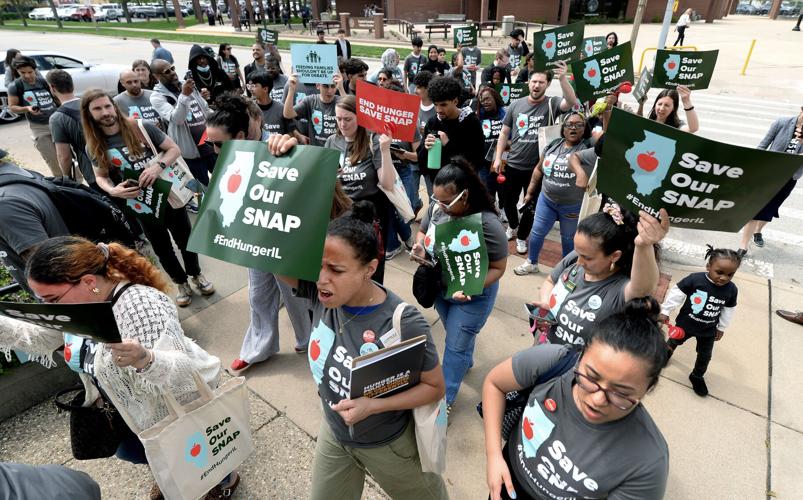
People march from the Capitol Complex Visitors Center to the Illinois State Capitol during the Supplemental Nutrition Assistance Program rally on April 14 in Springfield, Ill.
The White House announced June 10 that food-stamp dependency was "plummeting" by 4.3 million participants since Trump signed the bill.
Agriculture Secretary Brooke Rollins credited the administration's crackdown on fraud and recipients who aren't legally authorized to be in the country, as well as the new rules.
She said federal authorities have made 900 arrests for SNAP fraud during the last year and recovered $132 million in restitution.
"Restoring the integrity of these programs, including in SNAP, is very, very important to this administration and to our USDA," Rollins said. "And this is just the tip of the iceberg."
Rollins told senators no one has been kicked off SNAP, but adults without young children must work or volunteer.
"No one in Washington or in America wants to see a family go hungry," Rollins said. "We have more people working today than ever before. This is a celebration of work and the dignity of work, and wages are higher than they've ever been before."