


Dr. Anthony Fauci’s personal diary has been cited in renewed attacks against the top immunologist who became the public face of the nation's response to the COVID-19 pandemic.
Obtained by subpoena, more than 1,500 pages of the 85-year-old former National Institute of Allergy and Infectious Diseases director’s diary are now in the public record. It is rare for private, personal writings from former government officials to be obtained by the government and released to the public. In this case, Fauci's diary was created and stored on government servers.
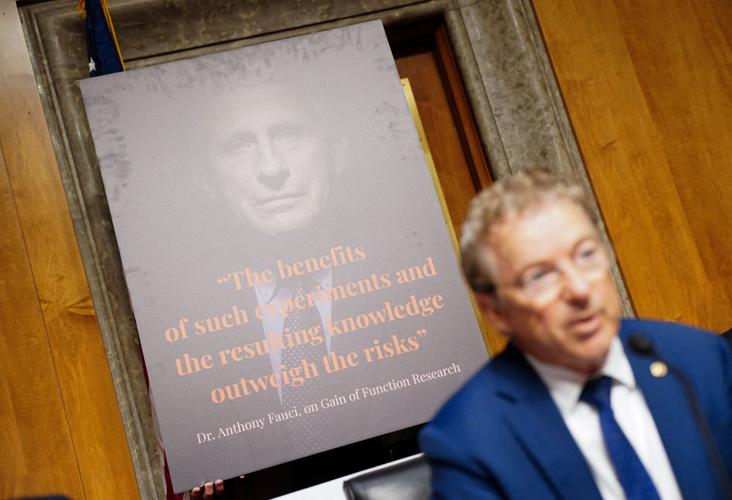
The pages, released by U.S. Sen. Rand Paul, R-Kentucky, give insights into Fauci’s thoughts on everything from COVID-19’s origins and the ensuing public health responses to his contentious relationship with President Donald Trump and Fauci’s own celebrity. Paul, who heads the Senate Homeland Security and Government Affairs Committee, had been investigating the origins of COVID-19, and the diaries were ultimately turned over by Health and Human Services Secretary Robert. F. Kennedy Jr.
People are also reading…
They span in sections from 2001 to 2015, as well as from January 2020 — during the early onset of the pandemic — through December 2022. The World Health Organization estimates that more than 7 million people have died globally from COVID-19, including 1.2 million in the United States.
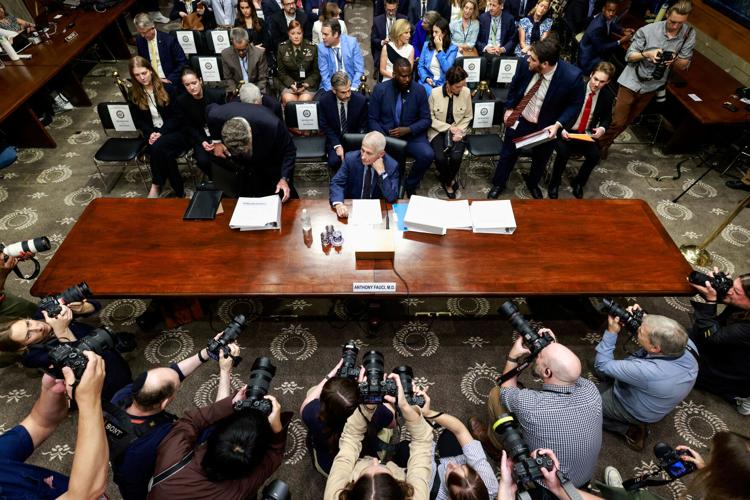
Here are four notable topics in Fauci's writings, with direct, unedited quotes from his diary. During a July 29 Senate hearing, Fauci repeatedly invoked his 5th Amendment constitutional right not to incriminate himself.
Origins of COVID-19
In early 2020, his diary entries included looking into the origins of the then-novel coronavirus, including a belief held by many Republicans that the virus originated at the Wuhan Institute of Virology in China and that American funding helped lead to its creation. Several studies have said available evidence suggests the virus spilled over naturally from animals to humans.
On Jan. 3, 2020, he described “unusual cases of pneumonia” in Wuhan. He entered almost daily updates on COVID-19, including case counts and entry of travelers.
In late January 2020, he described “conspiracy theories” about the virus that created the pandemic and how it was manufactured, and if that manufactured virus was released intentionally or unintentionally. He said: “I suggest that we get a larger group of qualified evolutionary biologists/virologists together under the auspices of a convening body and carefully look at this. We agreed to convene by phone the next day.”
In 2021, he said he faced pressure from the right, specifically from Paul. But he said it was “molecularly impossible” that funds the United States gave to the Wuhan lab created the virus.
In August of that year, he also referenced House Republicans who continued to push the idea that a lab leak caused COVID-19, and that the National Institutes of Health had a role in it, but Fauci said it was “based on no new information or data.”
He said the accusations stem from the “Big Lie” about Trump winning the 2020 election, despite his loss in the popular vote and electoral college count, and that Trump was right about China causing the virus, while Fauci helped create the virus.
“Next, discredit Fauci and it looks like trump is telling the truth,” he said on Aug. 2, 2021. “It is plain and simple a concerted effort aimed at getting trump reelected and exonerating him from any blame in the complete mess up of his response to COVID-19.”
A 2022 study provided evidence that the coronavirus originated in animals at a seafood market and suggested further study. The World Health Organization issued a report in 2025 saying it had more understanding of the virus' origins, but needed more information, and China wouldn't provide it.
In 2025, the CIA said it was “more likely” the virus came from a lab than nature, though it said it had “low confidence” in its assessment.
School closures
In retrospect, weeks- or even monthslong closures of schools became a flashpoint in the backlash to public health orders trying to contain the spread of COVID-19, even as officials tried to understand more about how people infect one another.
In late January 2020, Fauci wrote about Chinese officials closing schools, and he began referencing Americans needing to close schools when the virus arrived in the country.
On March 15, around the time cities and states began lockdown orders, Fauci brought up his conversations with former New York City Mayor Bill de Blasio and California Gov. Gavin Newsom about closing schools in both Democratic-controlled jurisdictions. Early in the pandemic, New York City became the nation’s epicenter for the outbreak.
A day later, he said he formulated a “more aggressive mitigation” 15-day strategy that included closing schools. Later, in April, he referenced conversations with Florida Gov. Ron DeSantis, a Republican, who wanted to keep schools open, but he said DeSantis later called and said he was evaluating the situation.
Later, he said he clarified to Mark Meadows, the president's top aide, that he never said not to open schools, but that a vaccine should be ready when schools are reopened. Still, in early July, Fauci said, "Trump wants to open the schools at all costs. Clearly he does not care about the safety of the chidren.”
In August, he acknowledged the default position should be to reopen schools because of the “psychological effects on children,” as well as children depending on school breakfasts and lunches for meals, and the effect on working families. But he said the primary consideration should be on the health, safety and welfare of children and teachers and their families.
“I have stated that one size does not fit all and decisions should be based on the level of infection in the community,” he said.
Trump ‘a true embarrassment’ and ‘a very strange guy’
Fauci made several disparaging comments about Trump while he was in his first term and afterward. In different passages, Fauci said Trump was "out of control," a "true embarrassment,” and “a very strange guy.”
“Trump getting out of control in pushing to open up the country and get the economy back before election day," Fauci wrote on May 22, 2020.
"He is desparate," Fauci wrote, with a misspelling. ''This is all about re-election.”
In the summer, he wrote about his relationship with Trump, in which the president was “Okay” with Fauci in person and telling reporters their relationship is fine but then retweeting posts attacking Fauci.
“He is a very strange guy," Fauci wrote in a July 28, 2020, diary entry.
Days before the 2020 election, Fauci said on Oct. 15: "As the election nears, the cases increase and surges are inevitable as we enter cooler weather. Trump is on the campaign trail spewing nonsense. He is really out of control. A true embarrassment."
How did Fauci deal with his own fame?
Fauci served seven American presidents while heading the National Institute for Allergy and Infectious Diseases, resigning in 2022 after more than four decades. Although a pillar in research, such as with HIV/AIDS, Fauci was unknown to most of the American public until he began regularly appearing in news briefings and major cable news network interviews during the pandemic
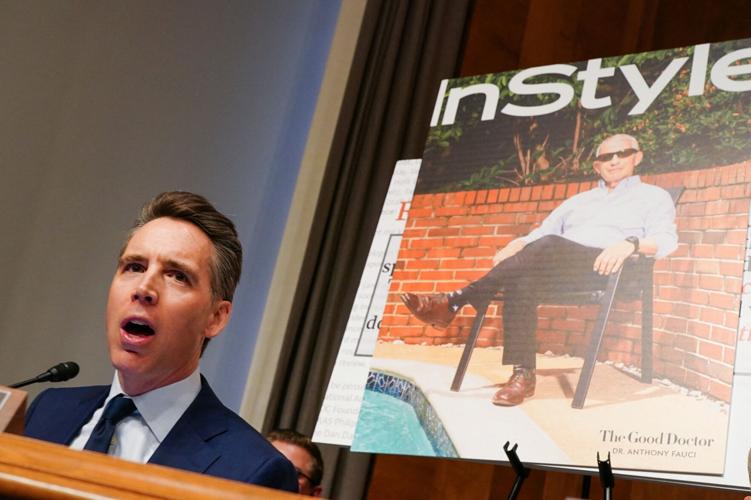
In his diary, he highlighted several major news stories about him. His entries have become fodder for his critics about his self-promotion.
“Press still hot and heavy about me," he wrote on April 7, 2020. A month later, on May 21, 2020, he called a front-page Washington Post article “very flattering.”
“The situation with my national and international fame is explosive and really unimaginable. It is not [hyperbole] to say that today I am the most famous and talked about person in the country and one of the most recognizable [person] in the world.”
Fauci became a household name at the height of the COVID-19 pandemic, as Americans sought credible information about protecting themselves and others. That fame put him at the center of criticism about public health responses, including in hindsight years later.
Contributing: Joey Garrison and Erin Mansfield


