

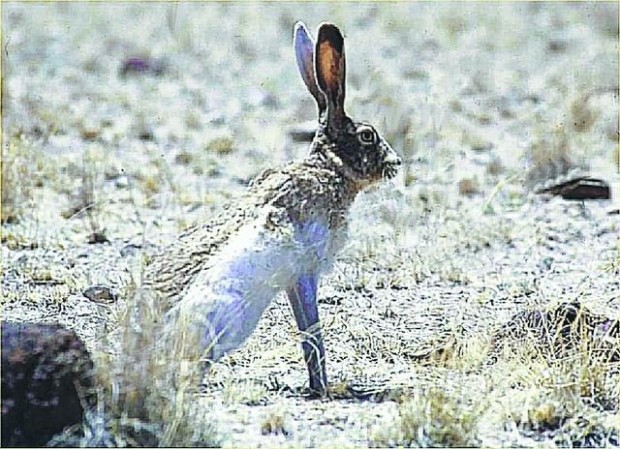
ALBUQUERQUE — Rabbits are certainly known for their propensity for multiplying, but one species of jackrabbit is having trouble keeping up.
There are an estimated 150 white-sided jackrabbits left in the United States, and federal wildlife officials announced Wednesday that they will study the elusive rabbit to determine if it needs to be protected under the Endangered Species Act.
It's not lack of libido that's holding back the white-sided jackrabbit.
The U.S. Fish and Wildlife Service says the biggest threat is change to the rabbits' habitat brought on by drought, grazing, the suppression of wildfire and the encroachment of shrubs into the Chihuahuan grasslands of New Mexico's bootheel — the only place in the United States where the jackrabbit has been documented. Wildfire revitalizes grasslands, which the rabbits depend on.
People are also reading…
Nicole Rosmarino, a biologist with the Western environmental group WildEarth Guardians, said the existing pressures on the white-sided jackrabbit likely will worsen.
The Fish and Wildlife Service says it's uncertain how climate change will affect the jackrabbit and its habitat, but it plans to look more closely at the potential impact during its 12-month review. After the review, the agency will decide whether the rabbit warrants protection as an endangered or threatened species.
Besides the white-sided jackrabbit, WildEarth Guardians is seeking protections for other species, including the Sonoran desert tortoise.


