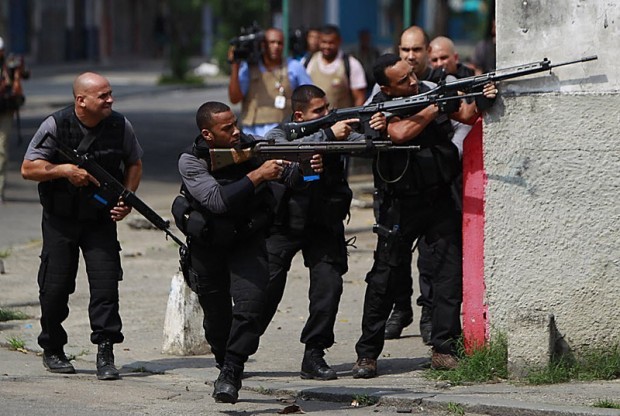
RIO DE JANEIRO - Elite police units in borrowed Navy tanks rumbled through a heavily fortified slum Thursday in an effort to apprehend drug gang leaders they blame for five days of widespread violence, even as scores of armed youths fled to a neighboring shantytown.
Authorities say that gang members who hide out in numerous shantytowns have erected roadblocks on major highways to rob motorists en masse, torched more than 40 cars and buses, and shot up police outposts - all to protest against a security program that has been pushing them from slums where they've held sway for decades.
The officers arrived in the Vila Cruzeiro shantytown under the cover of police helicopters and amid the rattle of high-caliber gunfire despite the gang members' efforts to block access with burning vehicles.
As police entered, scores of gangsters were seen fleeing down jungle-covered hills, across an area known as "the green hell," to a neighboring gang stronghold, the Alemao slum.
People are also reading…
Businesses in the neighborhood shut down, and officials sent 12,000 students home from 10 schools and a day-care center in the region, the city's education department said.
Thursday's push into Vila Cruzeiro and other shantytowns in the city left eight people dead and one police officer wounded, authorities said. Police arrested 11 men and seized gasoline drums and sticks of dynamite.
Since late Sunday, authorities have arrested more than 150 suspects in police raids at nearly 30 shantytowns in the northern and western parts of Rio. At least 23 people have died, many of them suspected gang members, though police may not have accounted for all of those killed in Thursday's operation.
Getulio Vargas state hospital, located at the bottom of the hillside covered by the sprawling Vila Cruzeiro shantytown, took in 23 injured people in 24 hours, said Valeria Bravo, Rio state Health Department spokeswoman.
The police raids are part of the government's effort to clean up the seaside city before it hosts the World Cup soccer final in 2014 and the 2016 Olympics. Over the past two years, authorities have established permanent police posts in 13 slums as part of an effort to bring basic services to the communities and rid them of drug trafficking-related violence.
Several residents of the hillside community sat on the steps of shuttered storefronts, unable to go back home and unsure when their lives would return to normal.
"What am I going to do? I can't go to work, I can't go home," said Maria das Gracas Fonseca, who works cleaning houses in an affluent neighborhood on the city's south side. Sitting next to her in the shade were her 7-year-old son and 8-year-old daughter. They had no school Thursday, and no one to take care of them, Fonseca said.
"I need the work, but my children are more important," she said. "I don't even know where we'll sleep tonight, but I will be with them."
Police have not released the identities of all those killed in the five days of clashes, but spokesman Henrique de Lima Castro Saraiva did acknowledge Wednesday that "bystanders would be affected" by the battles.