A Missouri community made the right choice by banning a giant data center for at least one year. The move to halt the project has made this Teddy Roosevelt conservationist, conservative and lover of democracy very happy.

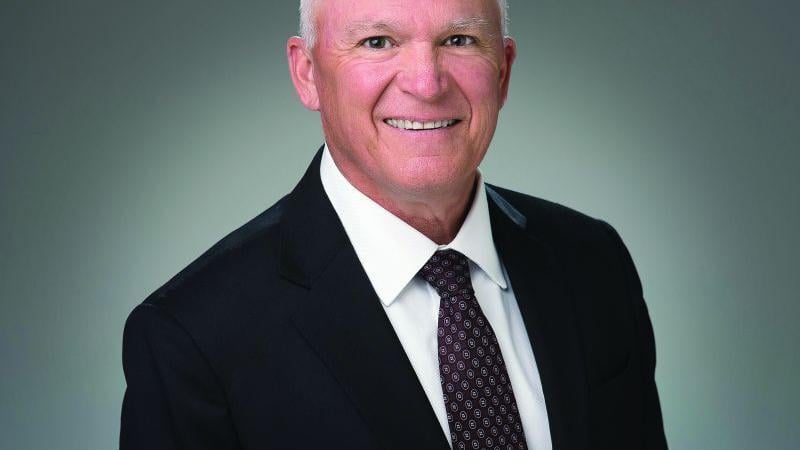
Lynn Schmidt
President Theodore Roosevelt, commonly called “The Conservation President,” saw conservation as a belief in protecting our shared natural heritage for future generations rather than allowing short-term private interests to exhaust resources. Roosevelt’s conservation philosophy was rooted in the idea of stewardship for the common good, a core democratic principle.
Roosevelt also was a conservative for his skepticism about rapid, large-scale changes that might have unintended consequences.
Residents and city leaders in St. Charles, Missouri, recently weighed the benefits of being a part of the current digital revolution, with its promised economic impact, against mounting concerns for its residents and local ecosystems. They ultimately decided that progress shouldn’t come at the expense of livable communities and used our democratic system to make their voices heard.
Traditional data centers, as well as artificial intelligence data centers, are being proposed and built across the country. They contain hardware such as servers, storage systems and networking equipment. These centers can increase noise, air and light pollution, consume significant amounts of water and energy, and can put a strain on local infrastructure. They can also have a negative impact on local habitat and the environment.
The secrecy-shrouded Project Cumulus would have been built in an already-contaminated floodplain, the Elm Point Well Field. This chemical contamination led St. Charles to shut down six of its seven wells, forcing it to purchase water from the city of St. Louis and run the water through a pipeline that runs under the Missouri River.
Besides the concern for further contamination of the water supply, data centers consume massive amounts of that water, using millions of gallons daily for cooling systems, creating competition with residential users during droughts and dry seasons.
In 2024, Google reported that the company’s data center in Council Bluffs, Iowa, consumed 1 billion gallons of water, which is enough to supply all of Iowa’s residential water for five days.
Data centers also are voracious consumers of electricity, typically using 10 to 50 times more energy per square foot than a typical commercial office building. A single large facility can consume as much power as a small city, straining local electrical grids and driving up energy costs for everyone.
A 2024 Electric Power Research Institute report estimates Arizona’s data centers could more than double their energy use by 2030, consuming up to 16.5% of the state’s total electricity.
These centers generate noise pollution from the constant noise from cooling systems and backup generators that run around the clock. This hum can become a persistent source of frustration for nearby residents and reduce property values.
The effects may not only harm humans. The Missouri Department of Conservation said the site would likely cause issues for three federally threatened species and a species recently removed from the endangered list. These include Indiana bats and Northern long-eared bats, and decurrent false aster plants. The site is within the geographic range of nesting bald eagles.
The lack of transparency surrounding the project is another concern. The company trying to build the data center is secret. Korb Maxwell, an attorney for the company, would only say it’s a Fortune 100 company.
Residents petitioned to “Stop the Hazardous Data Center." Nearly 5,500 residents signed the petition within a week after it launched.
This isn’t to say data centers serve no purpose. They are essential infrastructure for our digital economy. The construction phase generates substantial economic activity through local contractors, suppliers and temporary workers.
While they create some permanent jobs, the number is often smaller than communities initially expect. Most data centers employ only about 50 permanent workers.
Roosevelt once said, “The movement for the conservation of wildlife, and the larger movement for the conservation of all our natural resources, are essentially democratic in spirit, purpose and method.”
With that spirit in mind, and understanding the ramifications of the proposed data center, the residents of St. Charles would have made Roosevelt proud.