

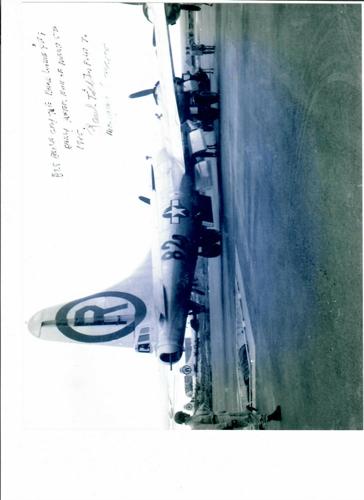

Twenty-one days after Dr. Robert Oppenheimer's successful atomic bomb test at the Trinity site in New Mexico, 280 miles from Tucson, Col. Paul Tibbets was flying the B-29 Enola Gay, named after his mother. The slim 9,700-pound uranium bomb was secured in the plane's bomb bay. The warplane was flying 15 and a half miles east of the Japanese 2nd Army Headquarters and the military naval base at Hiroshima when the early morning sun first reflected off the white buildings and combat ships below. Flying at an altitude of 30,700 feet, nearly 6 miles high, and at a speed of 330 mph, Tibbets and his crew were minutes away from their AP, the "T bridge" in the city's center, their aiming point.
In Japan, it was 8:15:17 a.m. after a 2,000-mile flight, only 17 seconds off the scheduled target flight plan. The bombardier had his left eye pressed against the Norton bombsight viewfinder when the sound of the pneumatic bomb doors opening automatically was heard. "Little Boy" slipped its hitch and dove into history. In 43 seconds, the bomb exploded at the preset altitude of 1,890 feet above the ground. To the crew, it seemed like an eternity.
The plane instantly became lighter, and the B-29's noise shot upward as Tibbets carried out the getaway maneuver to put as much distance as possible between the aircraft and the nuclear blast. It was a 155-degree right dive with a 60-degree bank, putting great stress on the plane and crew, causing the tail gunner to say it felt like he was the last man in a game of crack-the-whip. With the four engines at full throttle, the craft quickly lost 1,700 feet of altitude, falling away from the target. Tibbets was flying America's largest bomber like a fighter plane.
In a fury of atom-splitting energy, a fireball started to rise like a boiling furnace, with an estimated inner temperature of one hundred million degrees Fahrenheit. A minute later, the first shock wave struck the aircraft heading eastward, about nine miles from the explosion point. The wave traveled at the speed of sound, 1,100 feet per second, hitting the Enola Gay with violent force.
And then there it was—the growling, bellowing atomic cloud thrusting higher, alive, clawing for altitude as it attacked God's heaven. The giant purple mushroom cloud rose above the burning, bubbling tar smudge of a city, already soaring beyond 45,000 feet, more than three miles above the aircraft's altitude. The cloud continued to grow and was still visible an hour and a half after the B-29 flew south from Hiroshima. They flew 400 miles before the tail gunner said the plume was no longer visible.
During the flight, everything the crew said during the bomb run was recorded. Remarkable personal descriptions beyond their understanding were carefully preserved, and the wire spool recording was officially handed over to an Army information officer upon arrival at the Tinian air base. It has not been heard of since.
Col. Tibbets said, "As we viewed the awesome spectacle below, we were sobered by the knowledge that the world would never be the same. War, the scourge of the human race since time began, now held terrors beyond belief. I reflected that the kind of war in which I was engaged over Europe in 1942 was now outdated." He added, "Now certainly we have developed the ultimate argument for keeping the peace." Most would have thought this would have ended the war. But not the Japanese.
The Japanese quickly downplayed the city's losses, even encouraging citizens to continue fighting. Later that evening, a Tokyo radio news bulletin reported, "A few B-29s hit Hiroshima city at 8:20 AM and fled after dropping incendiaries and bombs. The extent of the damage is now under survey." A broadcast the next day indicated "some damage" in the city. Later, the Japanese government admitted in more detail, "It seems that the enemy used a new type of bomb."
Award-winning writer Jerry Wilkerson lives in SaddleBrooke. He is a former press secretary for two U.S. Congressmen and a prior WBBM CBS NewsRadio Chicago and Chicago Daily News correspondent. He is a retired police commissioner and Navy veteran. Email: franchise@att.net.


