
With Independence Day upon us, it seems appropriate to recognize and celebrate our area’s red, white and blue birds. Although we don’t have any pure red, white or blue birds, we do have plenty of birds with at least some of those colors. In the red category, we have Northern Cardinal, Pyrrhuloxia and Vermilion Flycatcher with lots of red, as well as several birds, like Gila and Ladder-backed Woodpeckers, with fewer red feathers. Birds with more than a few white feathers include White-winged Dove, Northern Mockingbird, Ladder-backed Woodpecker and White-crowned Sparrow. The only “Blue” birds (more on that below) that are typically found in the area are the Woodhouse’s Scrub-Jay, Blue Grosbeak, Belted Kingfisher (rare) and the Great Blue Heron, who looks more gray than blue.
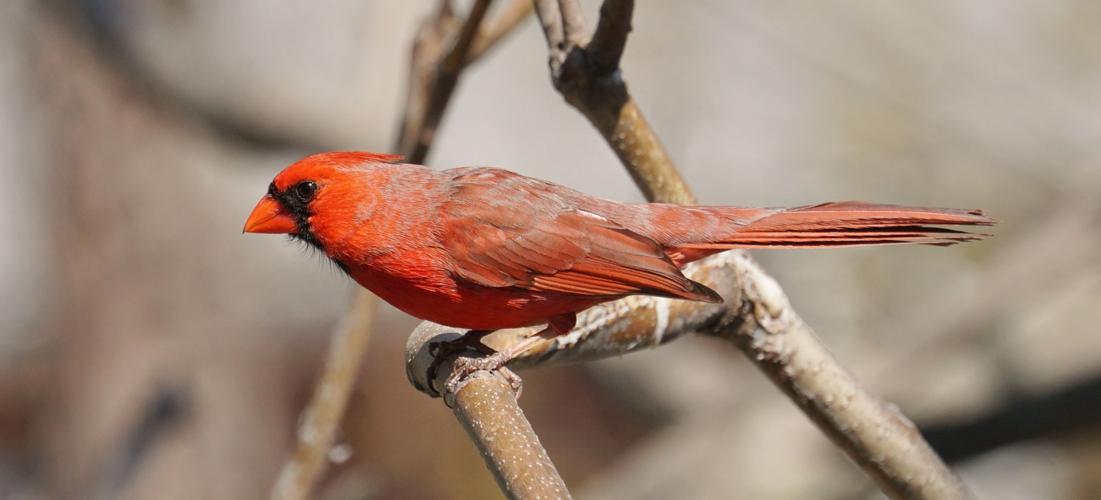
Red Birds in SaddleBrooke
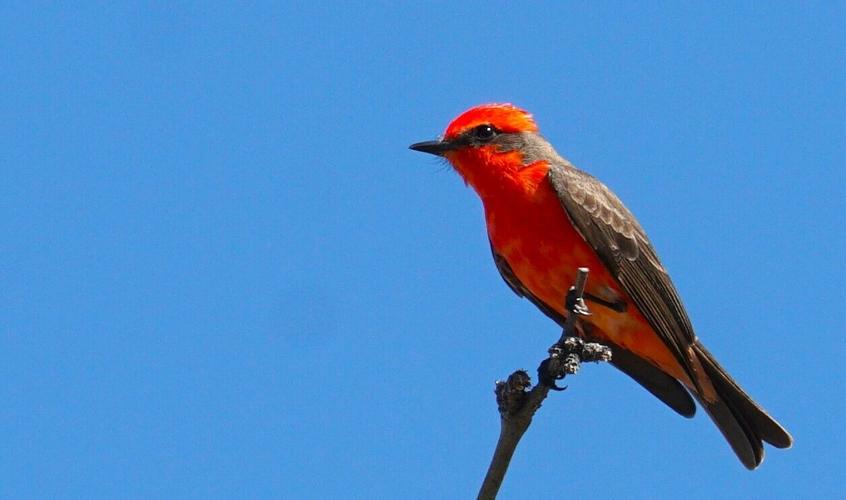
A recent article discussed Cardinals and Pyrhuloxia, well-known to most SaddleBrooke birders. The Vermilion Flycatcher (Pyrocephalus rubinus), at 6 inches, is smaller than our other two red birds. The Cardinal and Pyrhuloxia are also year-round residents here, while many of the female Vermilions, a resident of Mexico and points south, only visit us in the summer to nest and raise young. Female Vermilion Flycatchers are not red at all. They have a pinkish underbelly, and are often mistaken for Say’s Phoebe, a more common and larger (7.5 inches) SaddleBrooke bird. An adult male, however, is unmistakable with his brilliant red body and head. During the summer, both male and female birds are often found together, and they typically perch over or near water. They will flit toward the ground, not unlike a butterfly, scoop up an insect and return to their perch. Another very red bird (again, male only) found in the summer in nearby Peppersauce Campground, is the Summer Tanager.
SaddleBrooke’s White Birds
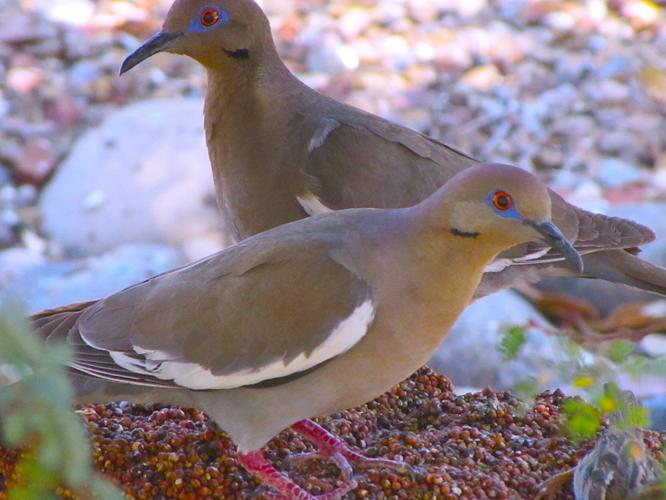
White-crowned sparrows, with their bright white crown stripes, winter here regularly, and are easily attracted to seed feeders. Juveniles do not have white feathers (their crowns are striped, brown), but they can be identified by the same yellow bill found on adults. Both male and female adult birds, incidentally, look alike. Northern Mockingbirds and Phainopepla are gray and black, but both have distinctive white wing patches. White-winged Doves, which winter in southern Arizona and Mexico, have white feathers along the rim of their tail, as well as the distinctive white wing patch. To some extent, the White-winged Dove could be considered our most complete Fourth of July bird, since it also has a blue orbital ring around a red-orange iris.
“Blue” Birds
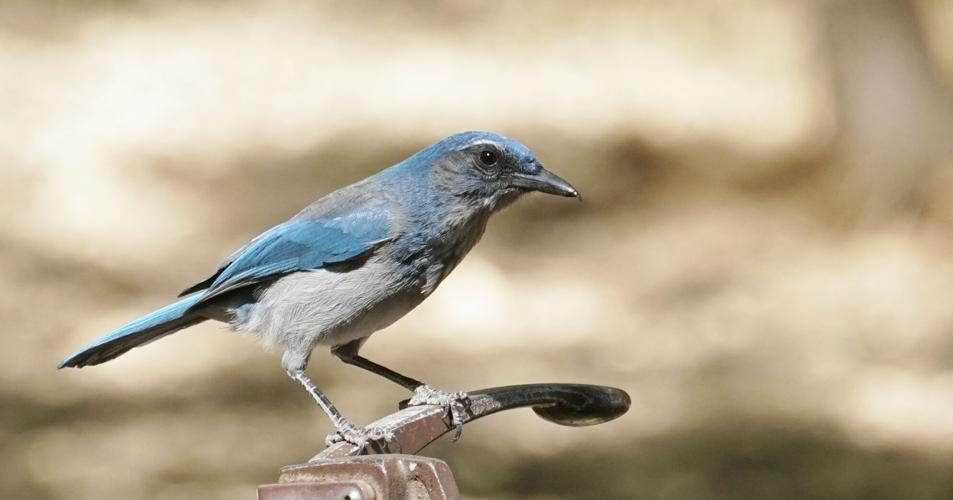
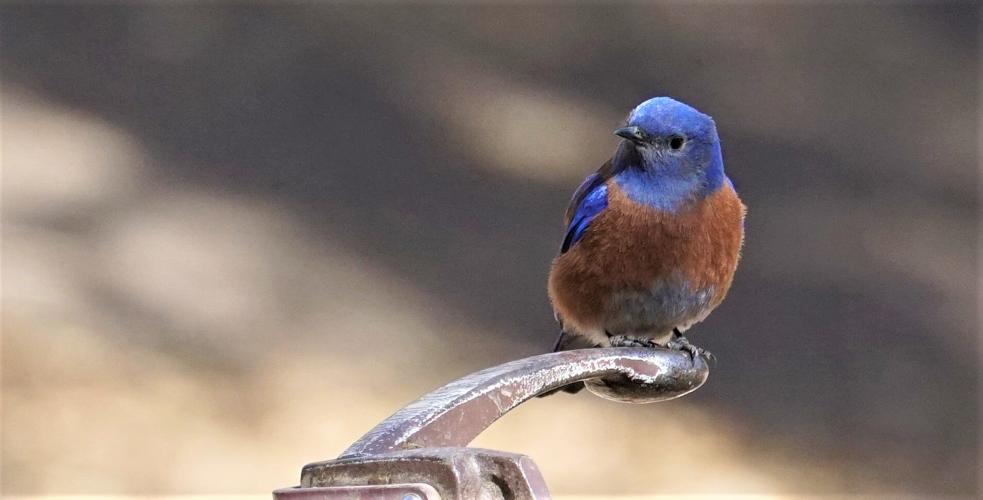
Although Belted Kingfishers are rare visitors to SaddleBrooke’s golf ponds, it is not unusual to find a Great Blue Heron fishing the shallows of those ponds. Woodhouse’s Scrub-Jays can be found in the area throughout the year, although they are more commonly seen in the winter. If you see a flash of blue in SaddleBrooke’s winter, it is possibly a Scrub-Jay, unless you’re on the golf course watching a flock of smaller blue birds, in which case you would be seeing Western Bluebirds. The beautiful Blue Grosbeak is found at the Catalina Regional Park Pond nesting in the spring and summer.
Speaking of blue birds, although there are many “blue” birds throughout the world, not a single bird feather is colored blue. Feather colors typically result from pigmentation, but not in the case of blue. Blue bird feathers are the result of light refraction, produced by the unique structure of the feather. The iridescent colors commonly seen in hummingbird feathers are generated in a similar fashion. You can prove the absence of blue in a feather by lighting it from beneath. That blue-appearing feather magically turns brown. Maybe we should call our Fourth of July birds ‘red, white and refracted.’
Our National Symbol, the Bald Eagle
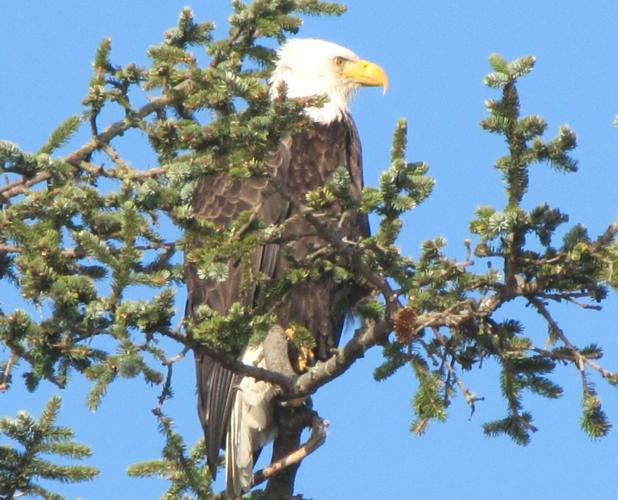
A discussion of Fourth of July birds would be incomplete without mentioning our national bird, the Bald Eagle. As far as I know, Bald Eagles have yet to be spotted in SaddleBrooke, but it may just be a matter of time. They are found in many places in the state, with high numbers in the next county, Maricopa, including nearby Tempe. Eagles often follow Osprey populations, and since we have had occasional visits by Ospreys, we should be on the lookout for Eagles, as well.
If you have questions or comments about SaddleBrooke’s birds, or to receive emailed information about birds from Bob and Prudy, call (520) 330-0366 or email bobandpru@gmail.com. Previously published articles can be found online at birdingthebrookeandbeyond.com.
 For sale: Tucson's Park Place mall


