

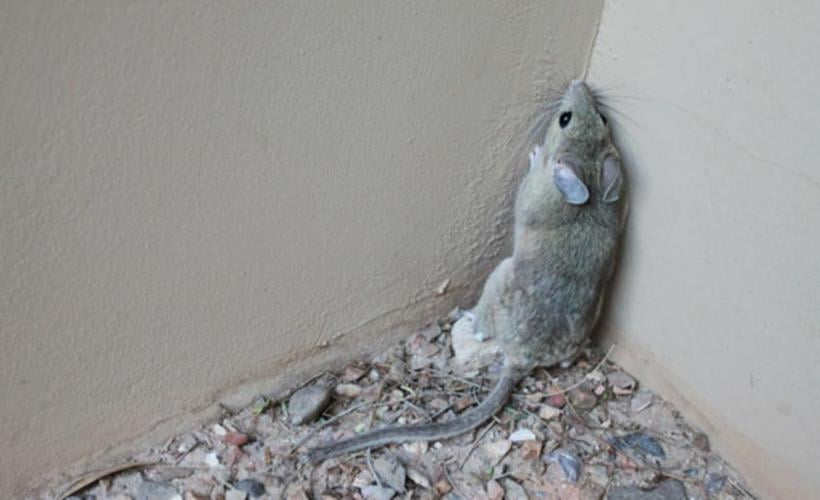

When someone says the term pack rat, people likely think of a friend or relative who has trouble letting go of old souvenirs and clothes. Most people likely do not realize the continuing population explosion of the rodent known as the pack rat.
Pack rats, also referred to as woodrats or trade rats, are typically gray rat-sized mammals with large ears, large dark eyes and a relatively long tail. Although absent from most of the New England area, eight species of pack rats are widely distributed through much of the rest of North America including here in Arizona. These rodents have poor eyesight and are actually nearly blind. They are usually found entering homes this time of year to have their offspring, which means this is the exact time to be mindful.
In houses, pack rats are active at night, searching for food and nest material. Pack rats are known for their characteristic searching of materials to bring back to their nests creating an ever-expanding collection. As the name “pack rat” implies, they have a tendency to pack away small objects such as jewelry, utensils, can tabs, and other items.
A peculiar characteristic is that if they find something they want, they will drop what they are currently carrying and “trade” it for the new item. They are particularly fond of shiny objects. They can also be quite vocal and boisterous.
Pack rats can cause extensive damage to your property. Not only do pack rats damage and destroy landscaping, contaminate attics and crawl spaces, they can also chew through electrical wiring, damage AC units, pool heaters, spas, and spoil food. They leave behind body oils, pheromones, fecal pellets, and urine trails because they habitually follow these scents back to these trails. They may also shred upholstered furniture and mattresses for lining their nests.
In terms of getting rid of pack rats, there are several things people can do. The most effective rat control begins with prevention by disposing of trash and wood piles properly. Another thing homeowners can do is to maintain sanitary conditions in their home. Finally, when pack rats become a problem in and around structures, making sure any openings in the structure foundation and pipes should be sealed as well as checking for openings in attic vents that could lead to a pack rat entry.
The majority of pack rat populations in structures can be controlled by using traps. Pack rats show little fear of new objects in their environment.
One thing to keep in mind if you have a serious outbreak: pack rats can be an important factor in the transmission of certain diseases and parasites such as Hantavirus. Although their role in transmitting disease is considered minor, dead pack rats will generate awful odors. Homeowners should definitely not handle dead pack rats or droppings with bare hands (especially in plagued areas).
In addition to the above do-it-yourself means, if your problem becomes serious, Mr. Pack Rat, an independent division of our company, specializes in pack rats and is known in SaddleBrooke and our surrounding Tucson communities for their excellent work.
A 2015 study found that houseplants may reduce psychological stress, so here are four colorful plants that will boost your mood.


