


I first wrote about Costa Rica 20 years ago, when we first travelled there in January 2005. We returned there seven years later, and I wrote a second article in May 2013. Costa Rica is a magical place, especially for birders, and we returned for a third visit last December. I was less than a serious birder on those first two trips, recording just 241 total species. When we left for our third visit, I had reached 1,931 total species and was determined to record 2,000 species before we headed home. We had rented a car during our second visit, but driving in Costa Rica is as pleasant as having a root canal, so, we scheduled our third trip without any car rentals. We also decided to keep our trip simple, with an eight-day stay at a renowned birding destination, Rancho Naturalista, followed by a relaxing five-night stay at a beach resort on the Pacific Ocean. We also booked several in-between nights near the San Jose airport at a delightful tiny bed and breakfast, and our two resort destinations were able to provide us reasonably-priced private auto transportation.
Rancho Naturalista is a small birding resort about a three-hour drive from San Jose, which we had long wished to visit, and it did not disappoint. Hidden in the rain forest at 3,400-feet, it welcomes birders with three included daily meals, patios and balconies open to feeding stations and a staff of competent birding guides to take guests to several local birding destinations. The 20-acre site has several hiking trails, and eBird shows a remarkable number of bird species that have been documented here (522). By contrast, the Arizona eBird hot spot with the most species is Sweetwater, with 325 species. In fact, the total number of species for Rancho Naturalista is just 50 birds short of the total for the entire state of Arizona, and the total number of species for Costa Rica (926) is huge, especially when you consider that the entire country is about the size of our state of West Virginia. The primary guide at Rancho Naturalista is Harry Barnhardt, a Brit that has been guiding at the Rancho for fifteen years, and he became our daily birding guide for our eight-day stay. Harry, his wife, Meche, and the other resort guides are all expert birders with invaluable knowledge about every local bird. Guided birding was extremely reasonable at a total charge of 90 USD for a morning trip or 70 USD for an afternoon trip, regardless of the number of participants. In addition, there was a transportation charge that ranged from 10 USD per person for nearby destinations up to 140 USD for longer all-day drives.
When you consider the habitat characteristics of Costa Rica, this large number of bird species is more understandable. Although small, the country’s elevation ranges from sea level to more than 12,000-feet, a topography that includes wetlands and active volcanoes. In addition to sitting just one country from the continent of South America, Costa Rica’s eastern border fronts 132 miles of the Caribbean while the western border fronts more than 800 miles of the Pacific Ocean. Costa Rica’s more than 920 species packed into 20,000 square miles easily gives the country the most bird species per square mile of any country in North, Central or South America. With this rich selection, my original count of 241 species from my two earlier trips was easily expanded to 338, including 49 new life birds (for a current total of 2,010 species).
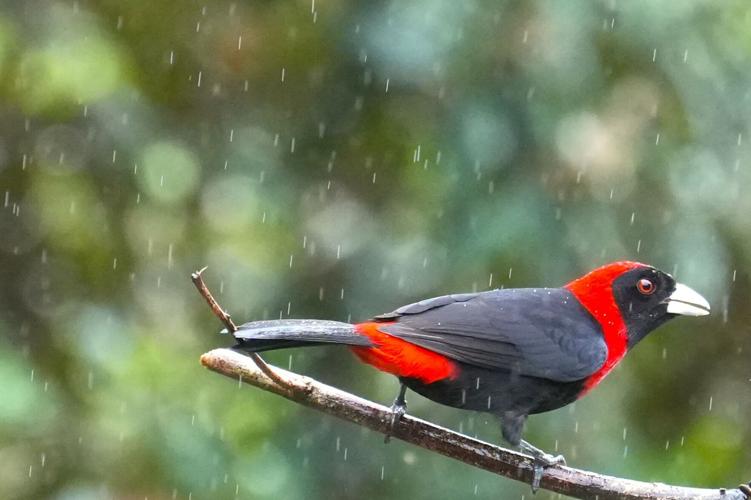
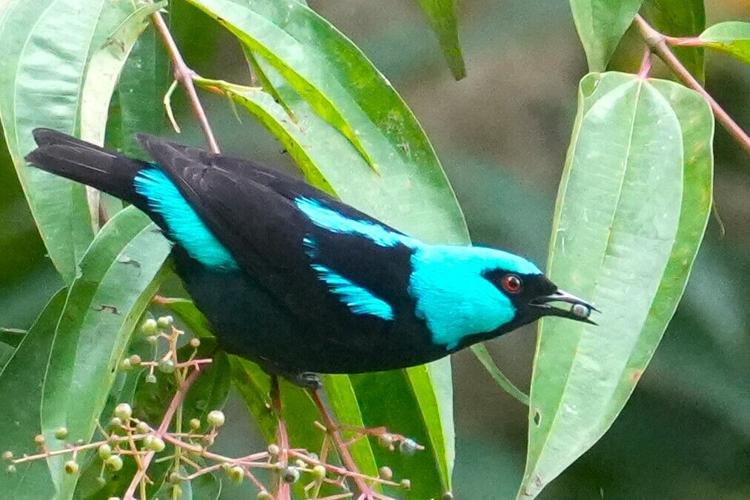
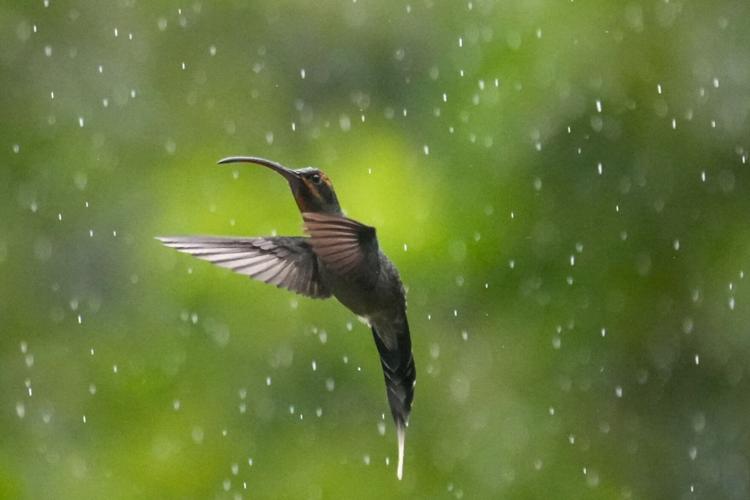
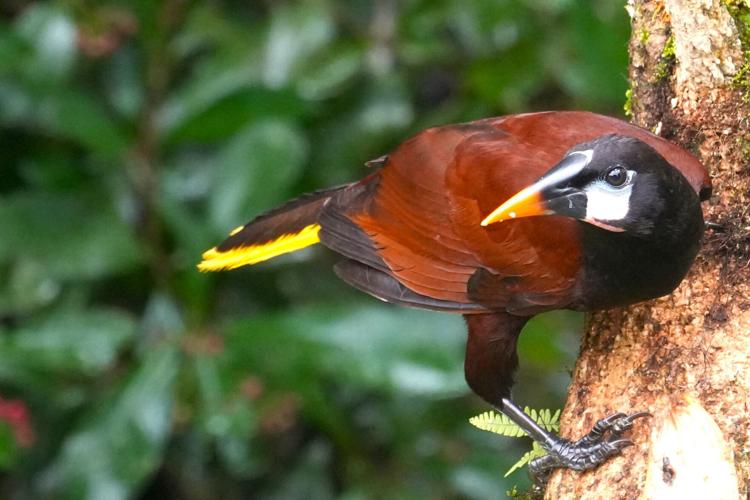
It would be hard to choose a favorite from the birds on December’s trip, but the variety of hummingbirds was certainly stunning, as were the tanagers. The haunting call of the elusive, White-breasted Wood-Wren was especially notable, as was the near electronic call of the oropendolas. My two-thousandth bird was the White-vented Euphonia. I would have preferred the superman-like Scarlet Macaw or the gorgeous Resplendent Quetzal, but beggars can’t be choosers.
If you have questions or comments about SaddleBrooke’s birds, or to receive emailed information about bird walks led by Bob and Prudy, call (520) 825-9895 or email bobandpru@gmail.com. Previously published articles can be found online at birdingthebrookeandbeyond.com.


