

Greg Hansen's Guide to the 2017 NCAA Tournament
- Updated
Star sports columnist Greg Hansen tells you what to watch for during the upcoming NCAA Tournament.
- Greg Hansen
- Updated
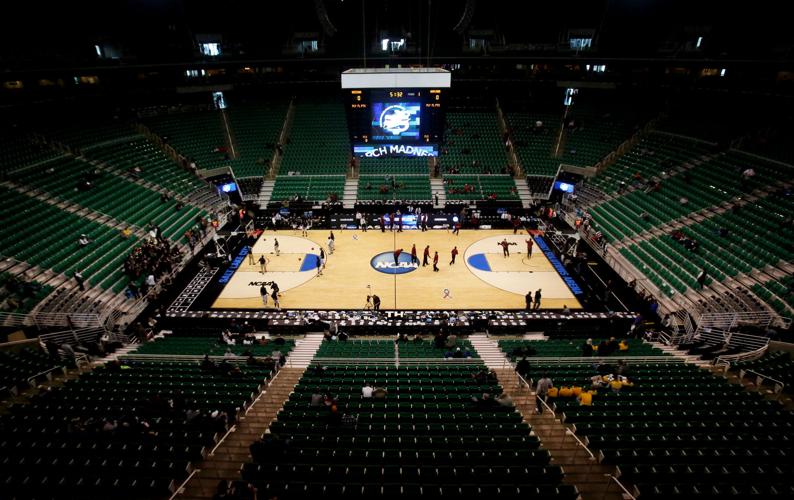
Arizona has been sent to Salt Lake City five times for NCAA basketball tournaments. That is surpassed in school history only by 11 visits to the greater Los Angeles area, which included games in Long Beach, Anaheim, the old L.A. Sports Arena, Pauley Pavilion and Staples Center. Here’s the Big Five from SLC:
- Greg Hansen
- Updated
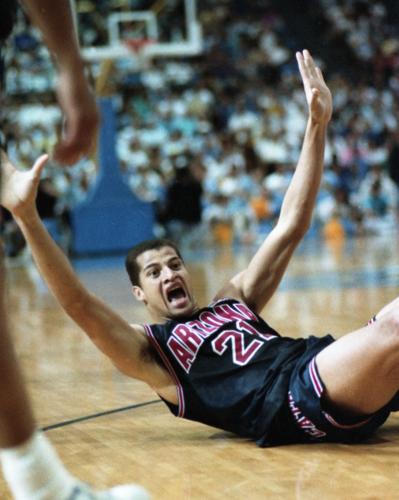
1. In 1991, the Wildcats beat BYU in a round-of-32 game, 76-61. The Cougars featured 7-foot-6-inch center Shawn Bradley, who would go on to play 12 NBA seasons. Bradley has since been a counselor at a nearby high school academy before moving to St. George, Utah, where he ran for public office (and lost), and is the father of six kids. In that ’91 game, Bradley scored 10 points and had six rebounds. Arizona’s Brian Williams schooled Bradley with a 24-point, 11-rebound double-double.
- Greg Hansen
- Updated
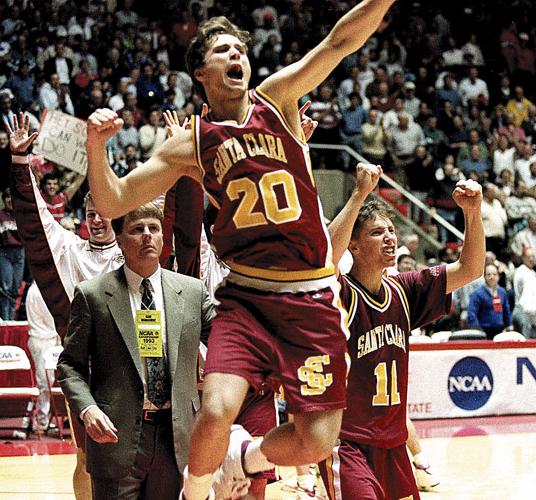
2. In Arizona’s shocking 1993 first-round loss to 15th-seeded Santa Clara, 64-61, the Broncos did not bring a pep band to the arena. Because Santa Clara was a significant underdog and because the game took place between winter final exams and spring recess, the band did not travel to Salt Lake City. The school hired the Vanderbilt band, which had played earlier in the day as the Commodores beat Boise State, and gave them red and white T-shirts. A year later, the NCAA ruled that each team must have its own band on site.
- Greg Hansen
- Updated
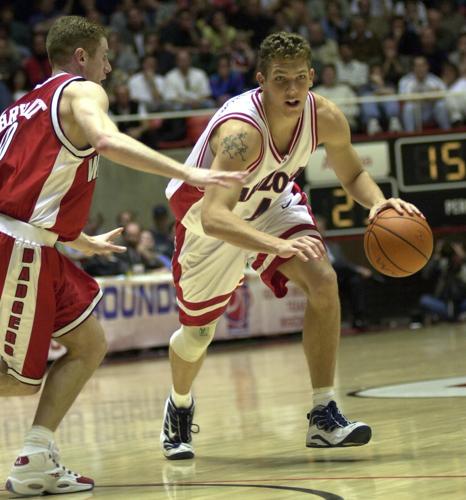
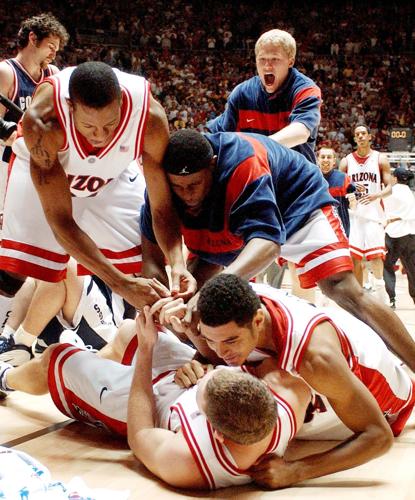
3. Arizona finagled a No. 1 seed to SLC in 2000 even though star center Loren Woods had missed the final six games of the regular season with a back injury and would not play. Arizona continued to list Woods as “game-to-game,” and the NCAA Selection Committee considered him part of the overall résumé. The Wildcats lost 66-59 to eighth-seeded Wisconsin in a round-of-32 game as an athletic Sudanese forward, Duany Duany, played effectively against Woods’ replacement, the 6-foot-8-inch Justin Wessel.
- Greg Hansen
- Updated
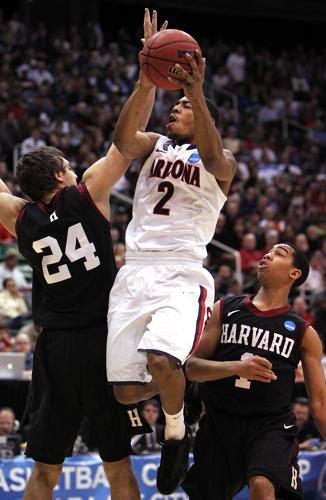
4. In 2003, Arizona beat eighth-seeded Gonzaga 96-95 in double overtime, given a reprieve when Zags guard Blake Stepp missed an open 12-foot shot on the final play of regulation. Stepp scored 25 points in the game. After his basketball career, Stepp became a regular on the U.S. professional poker tour.
- Greg Hansen
- Updated
5. In 2013 as a No. 6 seed, Arizona appeared destined for a round-of-32 showdown with Mountain West Conference champion New Mexico, coached by Steve Alford. The third-seeded Lobos had gone 29-5. But Harvard stunned UNM in the opening round and Arizona took advantage, beating Harvard 74-51 as point guard Mark Lyons scored a career-high 27 points. Harvard shot 27.6 percent afield, the lowest figure ever by an Arizona NCAA opponent.
- Greg Hansen
- Updated
Basketball on the NCAA’s biggest stage does strange things to even the most cool of customers.
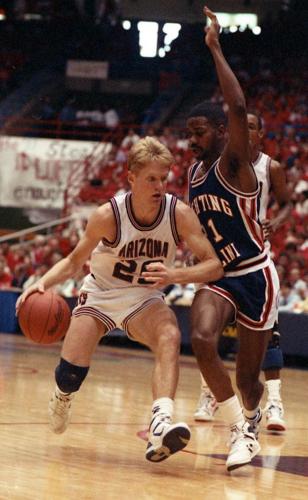
Arizona point guard Steve Kerr was a 55 percent career shooter. But in his seven NCAA Tournament games as a Wildcat, he shot 24 of 62 — or 39 percent. Kerr set the NCAA record for 3-point accuracy in 1988 by making 57 percent of his 3’s. But he shot 12 for 32 (38 percent) from 3-point distance in his NCAA Tournament career. Kerr departed Arizona shooting 2 for 13 afield in the Final Four against Oklahoma.
Point guard Damon Stoudamire, who I consider the second-best player behind Sean Elliott in school history, similarly struggled in the tournament.
Stoudamire shot 40 for 118 (34 percent) afield in eight NCAA games. His UA career accuracy was 45 percent. Stoudamire made just 26 percent of his 3-point shots in the NCAAs, far below his career average of 41 percent. He was 5 for 24 from the field in the 1994 Final Four against Arkansas and, gulp, 0 for 7 in the painful 1993 first-round loss to 15th-seeded Santa Clara.
And that’s not all. In the 2001 national championship game, Arizona guards Jason Gardner and Gilbert Arenas shot a combined 0 for 12 from 3-point distance in a loss to Duke. And Salim Stoudamire was just 2 for 13 from the field in a stinging 2005 Elite Eight loss to Illinois.
- Greg Hansen
- Updated
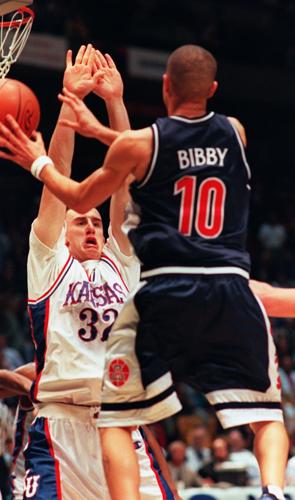
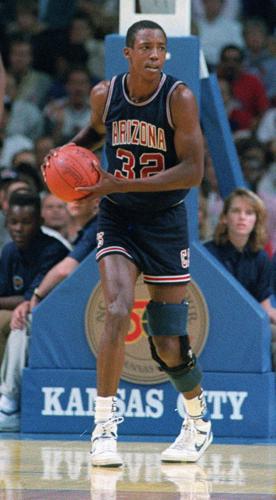
1. Freshman Mike Bibby scored 21 points on 7-for-11 shooting in a colossal upset of No. 1 overall seed Kansas in the 1997 Sweet 16.
- Greg Hansen
- Updated
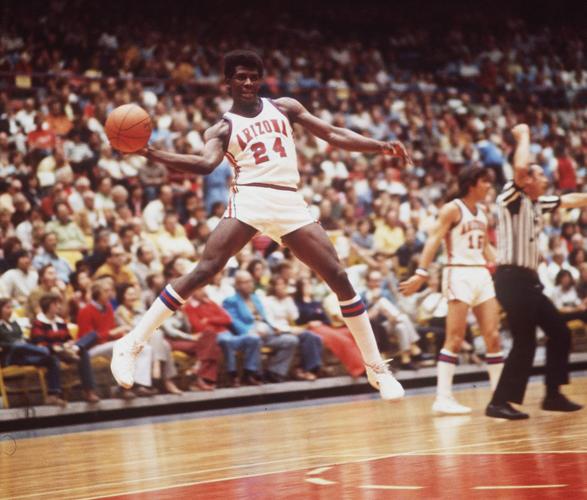
2. Sean Elliott was at his best in the 1988 Final Four, even though his teammates weren’t. Elliott scored 31 points and grabbed 11 rebounds in a loss to Oklahoma.
- Greg Hansen
- Updated
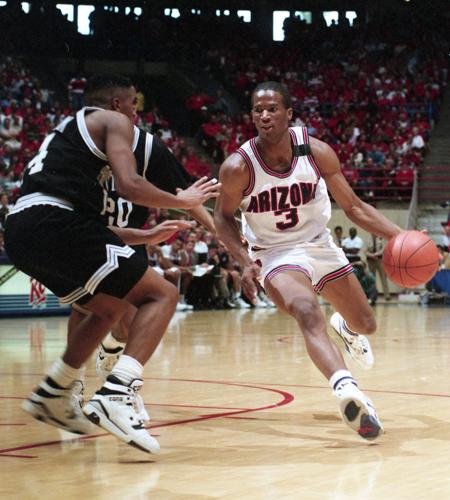
3. Herman Harris scored 31 points (with nine rebounds) in the 1976 Sweet 16 victory over UNLV. Some estimate that about 10 of Harris’ 13 field goals were from 3-point distance; the 3-point line didn’t exist until 1987.
- Greg Hansen
- Updated
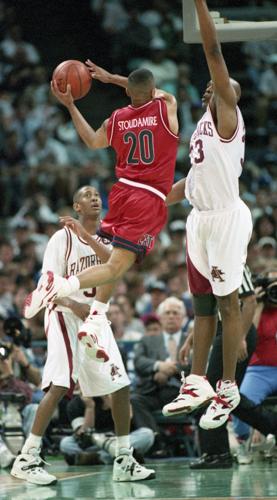
4. Khalid Reeves scored 30 points in the 1994 round-of-32 against Virginia and ACC defensive player of the year Cornel Parker in a 71-58 win.
- Greg Hansen
- Updated
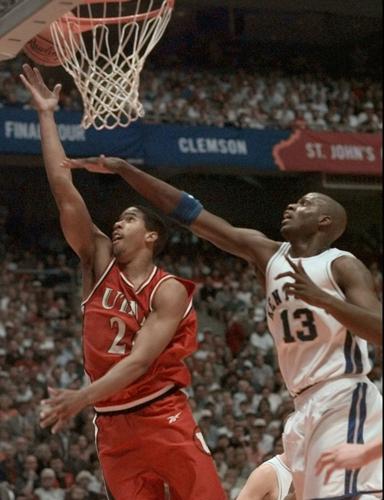
1. Corliss Williamson, Arkansas, 1994 Final Four. The lane-clogging Williamson scored 29 points with 13 rebounds in a 91-82 victory.
- Greg Hansen
- Updated
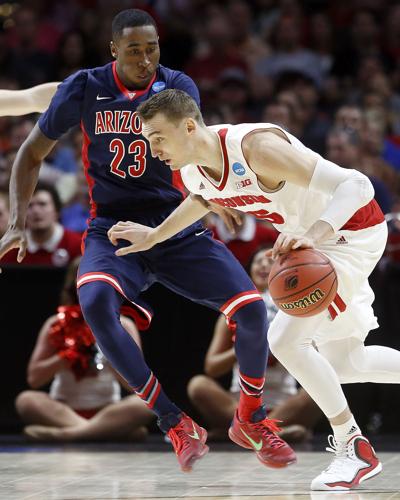
2. Andre Miller, Utah, 1998, Elite Eight. The Utes’ point guard produced a triple-double in a 76-51 upset victory: 18 points, 14 rebounds, 13 assists.
- Greg Hansen
- Updated
3. Sam Dekker, Wisconsin, 2015, Elite Eight. The deadly distance shooter scored 27 points on 8-of-11 shooting while making five 3-pointers in the Badgers’ 85-78 victory. Special mention: Badger teammate Frank Kaminsky scored 28 and 29 points in successive Elite Eight victories over Arizona.

- Greg Hansen
- Updated
4. Deron Williams, Illinois, 2005 Elite Eight. In a wild comeback, the Illini point guard scored 22 points and had 10 assists, with five 3-point baskets, winning 90-89 in overtime.
- Greg Hansen
- Updated
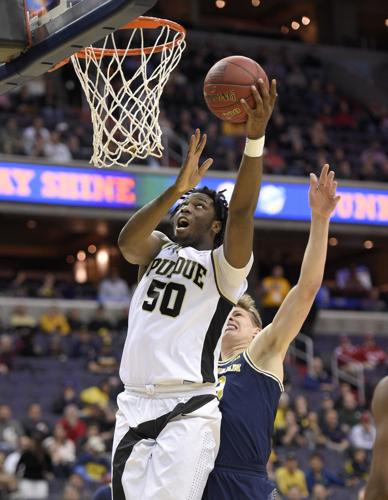
1. Purdue. Center “Biggie” Swanigan and his Boilermaker buddies are going to Milwaukee to play Vermont and then, perhaps, Iowa State in a No. 4-vs.-No. 5 game that could produce a team capable of taking down Kansas a week later.
- Greg Hansen
- Updated
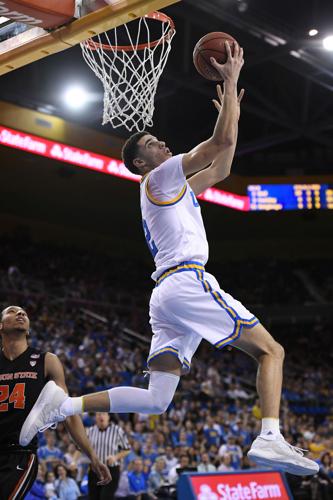
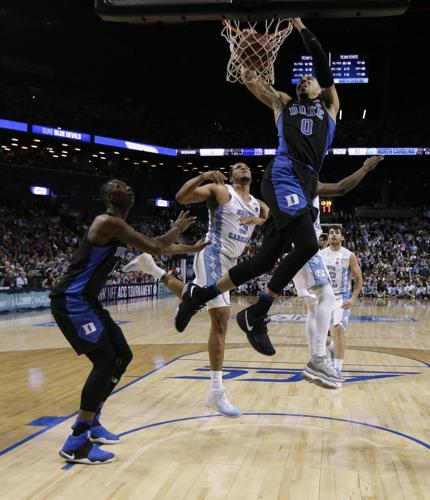
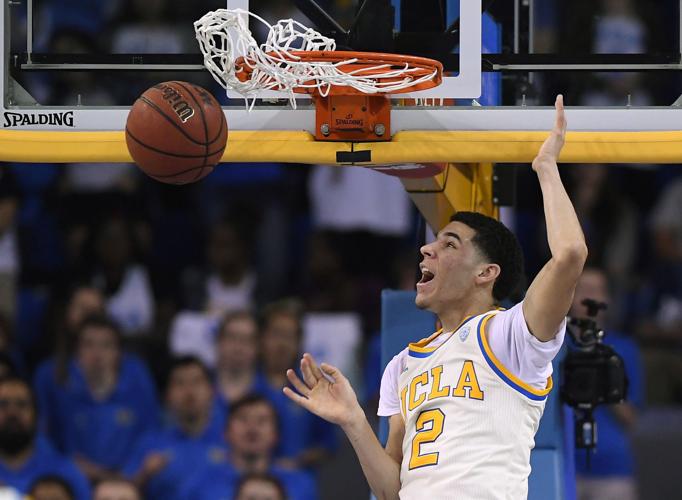
2. UCLA. A week ago, Lonzo Ball was a bigger story than anyone else in college basketball. His shooting buddies were the team no one wanted to play. One loss to an Arizona team hitting its stride doesn’t change any of that. Look for a first-one-to-100 shootout with Kentucky next week.
- Greg Hansen
- Updated
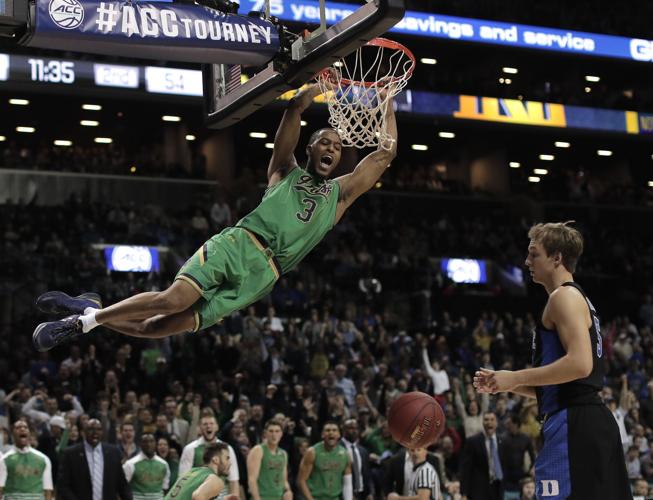
3. Duke. The Blue Devils’ path to the Elite Eight appears too easy: Troy, South Carolina and probably Baylor, the most overrated team in the tournament. Most talent in the field? It’s the Blue Devils roster as commanded by Coach K.
- Greg Hansen
- Updated
4. Notre Dame. No coach is more due than the Irish’s Mike Brey, who, like Sean Miller, lost two recent Elite Eight games and has been kicking at the Final Four door since 2001. Notre Dame has played Duke and Louisville twice, Florida State three times, as well as North Carolina this season. If the Irish meet the Zags, no one wearing Fightin’ Irish colors will be cowed.
- Greg Hansen
- Updated
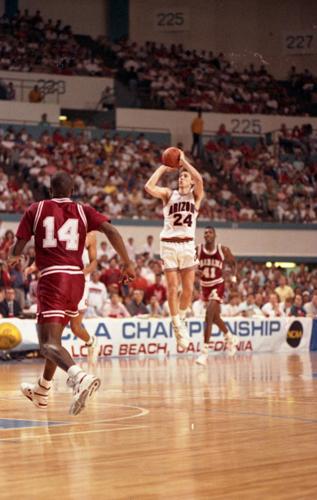
1. Arizona was twice sent to Long Beach, California, for first-round games in Lute Olson’s early days. Both were losses (to Auburn in 1986 and Alabama in 1990) at the dingy Long Beach Arena. What is it people say about Oakland? “There’s no ‘there’ there?” That was Long Beach. No one seemed to care, not even standout UA forward Brian Williams, who went scoreless against Bama in the 1990 second-round loss.
- Greg Hansen
- Updated
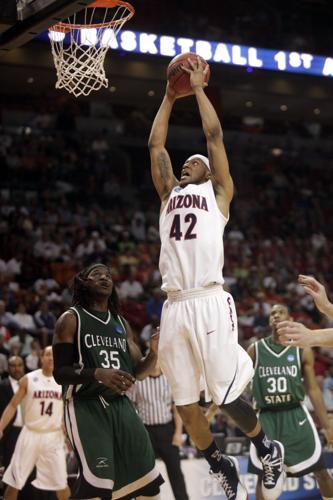
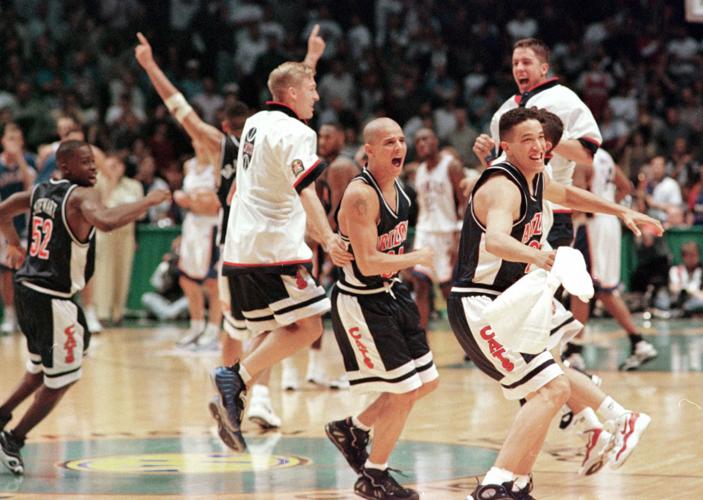
2. Arizona played first- and second-round games against Utah and Cleveland State in 2009 at AmericanAirlines Arena in downtown Miami, the stereotypical NBA center. The Wildcats won both games and only 8,990 attended, leaving about 12,000 empty seats. It was hot, muggy and no one showed up, not even Arizona State All-American James Harden. He played in a round-of-32 game the night Arizona beat Cleveland State to advance to the Sweet 16. Harden shot just 2 for 10 from the field and missed all five 3-pointers he took in an exit loss to Syracuse an hour before coach Russ Pennell piloted Arizona to the Sweet 16 on the same floor.
- Greg Hansen
- Updated
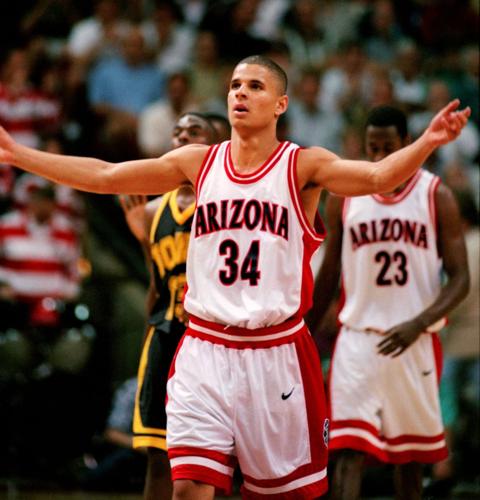
3. The Birmingham-Jefferson Civic Center in downtown Birmingham, Alabama, was built in 1976. When Arizona arrived to play Kansas and then Providence in the 1997 Sweet 16 and Elite Eight, it seemed like the date might’ve been wrong. Maybe it was built in 1896. The Civic Center was due for renovation, and it finally got one in 2009. Arizona made the best of the lack of local interest in some out-of-town basketball teams, bolting to the Final Four and a national title. Top-seeded Kansas drew 17,647 fans to the Friday night opener, but when Providence and Arizona arrived for the Sunday afternoon title game, only 13,721 showed up.
- Greg Hansen
- Updated
In its 30 seasons as an NCAA Tournament team in the Pac-12 era, Arizona has played in 34 different arenas from as far east as Washington D.C, and Providence, Rhode Island, to the deep south, Birmingham, Alabama, and all places West — Seattle, Sacramento, Portland, Anaheim, Long Beach and San Diego.
The Wildcats have even played at McKale Center — it lost to UTEP in overtime in 1987 — and at Arizona State (1996), where it beat Iowa to reach the Sweet 16.
That’s 81 games. I’ve been to all 81. Here’s how I rate the venues:
- Greg Hansen
- Updated
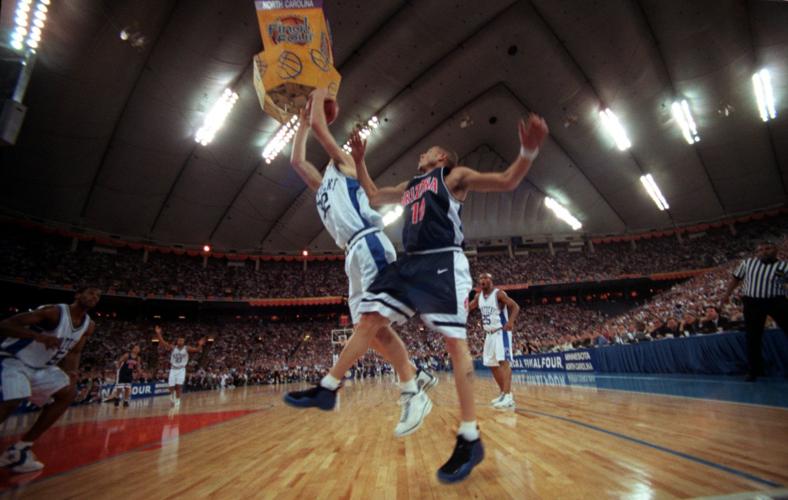
1. RCA Dome, Indianapolis, 1997. Downtown Indy was juiced. Everyone was working on a sleep-debt in a contagious party fever. Everything was within walking distance and two No. 1 seeds — Kentucky and North Carolina — joined the Wildcats in the most historic sporting event in UA history. The RCA Dome itself was enormous (47,028 attended) but the tension and electricity made it feel like McKale Center.
- Greg Hansen
- Updated
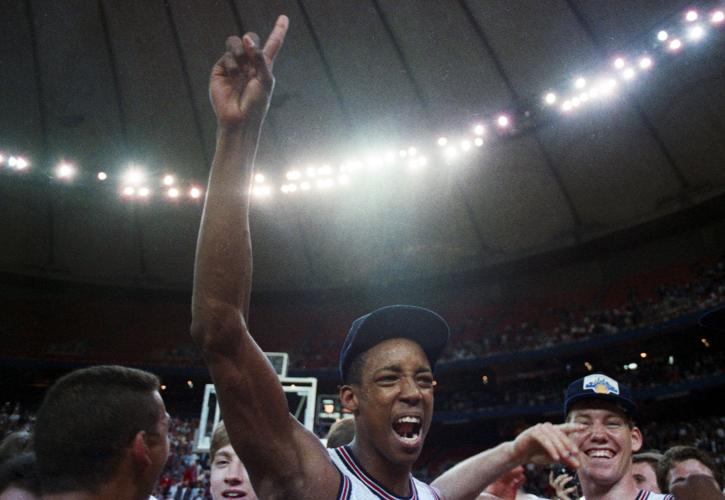
2. Kingdome, Seattle, 1988. It was Arizona’s arrival on the big stage, and when you spotted North Carolina coach Dean Smith in the downtown Sheraton Hotel lobby it made an impression that the Final Four was at stake. The Kingdome was way too big for any basketball game (22,400 attended Arizona’s victory over the Tar Heels), but for one weekend it was a basketball heaven, and it’s hard to beat Seattle as a walk-around city.
- Greg Hansen
- Updated
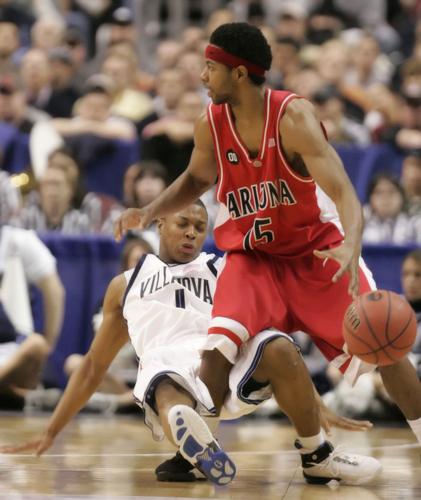
3. Wachovia Center, Philadelphia 2006. The NCAA committee allowed Villanova to play at the home of the 76ers, which was only a few miles from ’Nova’s campus. Tickets (20,500) were valued by the hometown fans and it was probably as loud as any arena Arizona ever witnessed. Villanova beat the Wildcats in a classic 82-78 round-of-32 finish, but the real bonus was being able to stay at the Four Seasons hotel in downtown Philly and spend the week visiting Independence Hall and other Colonial treasures.
- Greg Hansen
- Updated
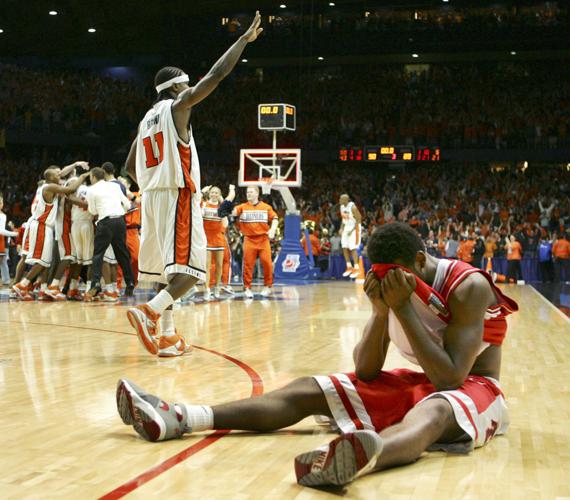
4. Allstate Arena, Chicago, 2005. There wasn’t much neutral about the “neutral” court setting for the Illinois vs. Arizona Elite Eight showdown. It was cold with snow flurries all week in Chicago, and there was almost no community feel, even in downtown Chicago. But once at the Allstate Arena (capacity 16,597) it wasn’t much different than playing on the Illini’s campus 137 miles away. Everyone wore Illinois orange and the crowd was as loud as any I’ve ever heard, be it The Pit in Albuquerque or old Mac Court at Oregon. Illinois’ stunning comeback from a 15-point deficit in the final four minutes to win in overtime was over-the-top drama.
- Greg Hansen
- Updated
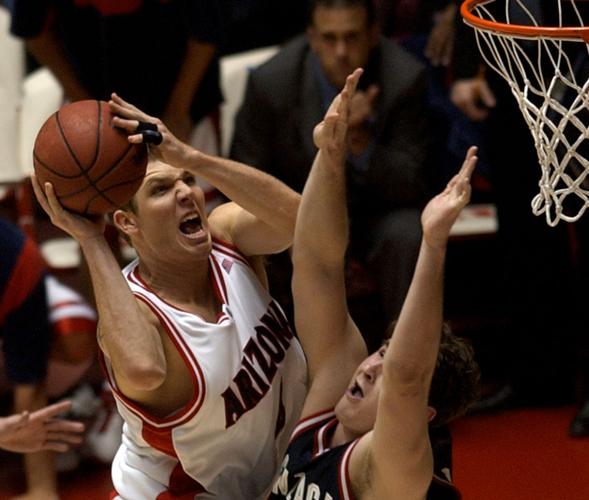
5. Huntsman Center, Salt Lake City, 2003. Arizona has played 31 games in Salt Lake City, dating to the old Einar Nielsen Fieldhouse in the ’50s, engaging two Utah Final Four teams there during the Western Athletic Conference days. But the 2003 round-of-32 game against Gonzaga stands above all. Salt Lake City has been a basketball town for more than six decades, and the Utah fans never disappoint. It’s a basketball-centric atmosphere and the final half and two overtimes against the Zags that afternoon – attended by a full house (14,627) — shook down some thunder. Arizona won 96-95 as Luke Walton hit clutch shot upon clutch shot.

- Greg Hansen
- Updated
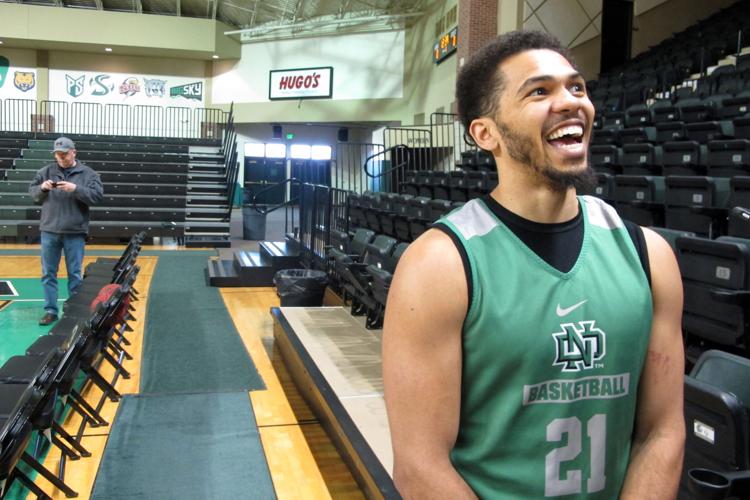
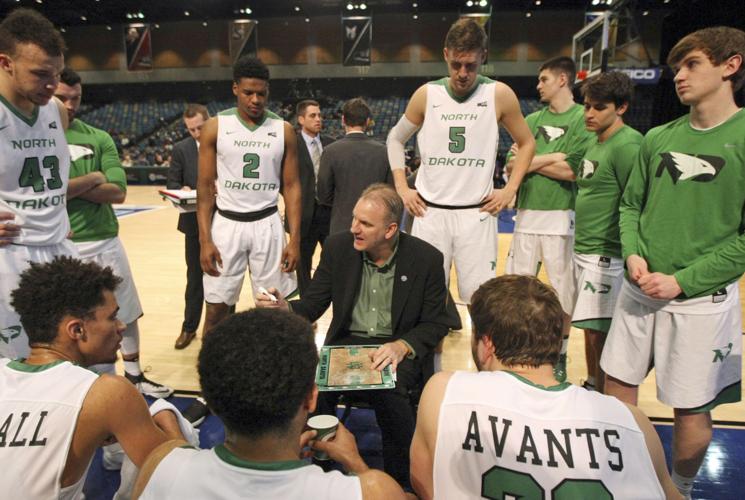
1. Their original name was Fighting Sioux. It was “retired” in 2012 by the NCAA even though 63 percent of voters in North Dakota approved its retention. Fighting Hawks won a name-the-team contest, edging the Nodaks and Roughriders.
- Greg Hansen
- Updated
2. Former North Dakota hockey player and alumnus Ralph Engelstad, who made a fortune as a Las Vegas hotel/casino owner, donated $100 million to his alma mater, which included funds for the basketball arena. The facility opened in 2004, two years after Engelstad’s death. It is not commonly referred to as the Engelstad Arena, but rather “The Betty,” after his wife.
- Greg Hansen
- Updated
3. The Fighting Hawks play in the Big Sky Conference, which is 1,630 miles from Big Sky rival Northern Arizona.
- Greg Hansen
- Updated
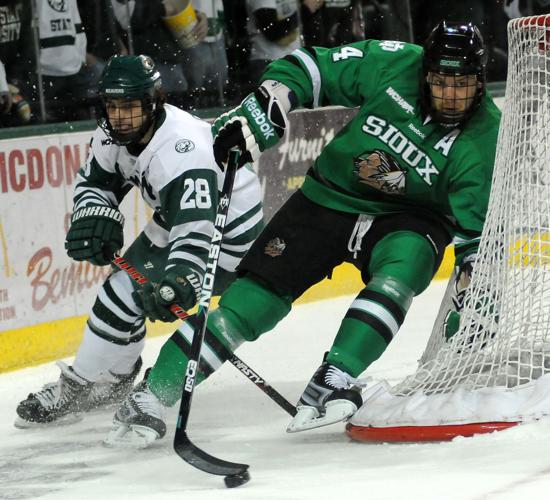
4. North Dakota has won eight NCAA Division I national hockey championships since 1959, including the 2016 title. The Fighting Hawks have averaged 11,505 fans per home game this season. The school’s basketball team averaged 2,139 per game.
- Greg Hansen
- Updated
UCLA beats Kentucky in the Sweet 16 and then rolls over North Carolina in a classic South baracket title game.
- Greg Hansen
- Updated
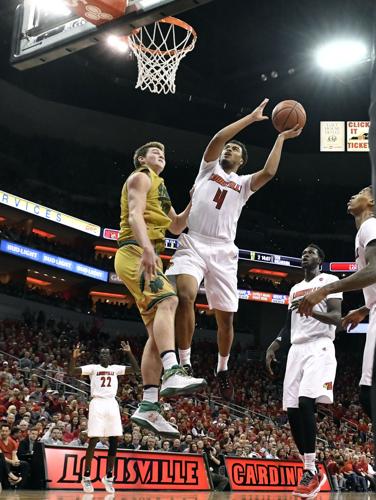
Louisville stops Kansas in the Midwest finale, even though the game will be played in Kansas City.
- Greg Hansen
- Updated
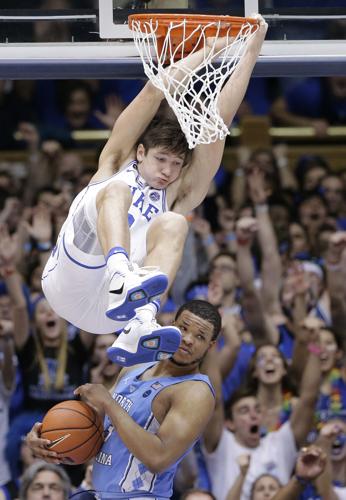
Duke crushes Villanova’s run for back-to-back titles on the big stage in New York City.
- Greg Hansen
- Updated
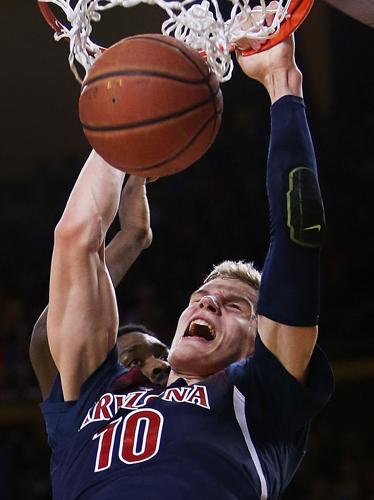
Arizona ends its 16-year Final Four-less agony by showing Notre Dame the door in downtown San Jose, California.
More like this...
- Greg Hansen
Arizona has been sent to Salt Lake City five times for NCAA basketball tournaments. That is surpassed in school history only by 11 visits to the greater Los Angeles area, which included games in Long Beach, Anaheim, the old L.A. Sports Arena, Pauley Pavilion and Staples Center. Here’s the Big Five from SLC:
- Greg Hansen
1. In 1991, the Wildcats beat BYU in a round-of-32 game, 76-61. The Cougars featured 7-foot-6-inch center Shawn Bradley, who would go on to play 12 NBA seasons. Bradley has since been a counselor at a nearby high school academy before moving to St. George, Utah, where he ran for public office (and lost), and is the father of six kids. In that ’91 game, Bradley scored 10 points and had six rebounds. Arizona’s Brian Williams schooled Bradley with a 24-point, 11-rebound double-double.
- Greg Hansen
2. In Arizona’s shocking 1993 first-round loss to 15th-seeded Santa Clara, 64-61, the Broncos did not bring a pep band to the arena. Because Santa Clara was a significant underdog and because the game took place between winter final exams and spring recess, the band did not travel to Salt Lake City. The school hired the Vanderbilt band, which had played earlier in the day as the Commodores beat Boise State, and gave them red and white T-shirts. A year later, the NCAA ruled that each team must have its own band on site.
- Greg Hansen
3. Arizona finagled a No. 1 seed to SLC in 2000 even though star center Loren Woods had missed the final six games of the regular season with a back injury and would not play. Arizona continued to list Woods as “game-to-game,” and the NCAA Selection Committee considered him part of the overall résumé. The Wildcats lost 66-59 to eighth-seeded Wisconsin in a round-of-32 game as an athletic Sudanese forward, Duany Duany, played effectively against Woods’ replacement, the 6-foot-8-inch Justin Wessel.
- Greg Hansen
4. In 2003, Arizona beat eighth-seeded Gonzaga 96-95 in double overtime, given a reprieve when Zags guard Blake Stepp missed an open 12-foot shot on the final play of regulation. Stepp scored 25 points in the game. After his basketball career, Stepp became a regular on the U.S. professional poker tour.
- Greg Hansen
5. In 2013 as a No. 6 seed, Arizona appeared destined for a round-of-32 showdown with Mountain West Conference champion New Mexico, coached by Steve Alford. The third-seeded Lobos had gone 29-5. But Harvard stunned UNM in the opening round and Arizona took advantage, beating Harvard 74-51 as point guard Mark Lyons scored a career-high 27 points. Harvard shot 27.6 percent afield, the lowest figure ever by an Arizona NCAA opponent.
- Greg Hansen
Basketball on the NCAA’s biggest stage does strange things to even the most cool of customers.
Arizona point guard Steve Kerr was a 55 percent career shooter. But in his seven NCAA Tournament games as a Wildcat, he shot 24 of 62 — or 39 percent. Kerr set the NCAA record for 3-point accuracy in 1988 by making 57 percent of his 3’s. But he shot 12 for 32 (38 percent) from 3-point distance in his NCAA Tournament career. Kerr departed Arizona shooting 2 for 13 afield in the Final Four against Oklahoma.
Point guard Damon Stoudamire, who I consider the second-best player behind Sean Elliott in school history, similarly struggled in the tournament.
Stoudamire shot 40 for 118 (34 percent) afield in eight NCAA games. His UA career accuracy was 45 percent. Stoudamire made just 26 percent of his 3-point shots in the NCAAs, far below his career average of 41 percent. He was 5 for 24 from the field in the 1994 Final Four against Arkansas and, gulp, 0 for 7 in the painful 1993 first-round loss to 15th-seeded Santa Clara.
And that’s not all. In the 2001 national championship game, Arizona guards Jason Gardner and Gilbert Arenas shot a combined 0 for 12 from 3-point distance in a loss to Duke. And Salim Stoudamire was just 2 for 13 from the field in a stinging 2005 Elite Eight loss to Illinois.
- Greg Hansen
3. Herman Harris scored 31 points (with nine rebounds) in the 1976 Sweet 16 victory over UNLV. Some estimate that about 10 of Harris’ 13 field goals were from 3-point distance; the 3-point line didn’t exist until 1987.
- Greg Hansen
3. Sam Dekker, Wisconsin, 2015, Elite Eight. The deadly distance shooter scored 27 points on 8-of-11 shooting while making five 3-pointers in the Badgers’ 85-78 victory. Special mention: Badger teammate Frank Kaminsky scored 28 and 29 points in successive Elite Eight victories over Arizona.
- Greg Hansen
1. Purdue. Center “Biggie” Swanigan and his Boilermaker buddies are going to Milwaukee to play Vermont and then, perhaps, Iowa State in a No. 4-vs.-No. 5 game that could produce a team capable of taking down Kansas a week later.
- Greg Hansen
2. UCLA. A week ago, Lonzo Ball was a bigger story than anyone else in college basketball. His shooting buddies were the team no one wanted to play. One loss to an Arizona team hitting its stride doesn’t change any of that. Look for a first-one-to-100 shootout with Kentucky next week.
- Greg Hansen
3. Duke. The Blue Devils’ path to the Elite Eight appears too easy: Troy, South Carolina and probably Baylor, the most overrated team in the tournament. Most talent in the field? It’s the Blue Devils roster as commanded by Coach K.
- Greg Hansen
4. Notre Dame. No coach is more due than the Irish’s Mike Brey, who, like Sean Miller, lost two recent Elite Eight games and has been kicking at the Final Four door since 2001. Notre Dame has played Duke and Louisville twice, Florida State three times, as well as North Carolina this season. If the Irish meet the Zags, no one wearing Fightin’ Irish colors will be cowed.
- Greg Hansen
1. Arizona was twice sent to Long Beach, California, for first-round games in Lute Olson’s early days. Both were losses (to Auburn in 1986 and Alabama in 1990) at the dingy Long Beach Arena. What is it people say about Oakland? “There’s no ‘there’ there?” That was Long Beach. No one seemed to care, not even standout UA forward Brian Williams, who went scoreless against Bama in the 1990 second-round loss.
- Greg Hansen
2. Arizona played first- and second-round games against Utah and Cleveland State in 2009 at AmericanAirlines Arena in downtown Miami, the stereotypical NBA center. The Wildcats won both games and only 8,990 attended, leaving about 12,000 empty seats. It was hot, muggy and no one showed up, not even Arizona State All-American James Harden. He played in a round-of-32 game the night Arizona beat Cleveland State to advance to the Sweet 16. Harden shot just 2 for 10 from the field and missed all five 3-pointers he took in an exit loss to Syracuse an hour before coach Russ Pennell piloted Arizona to the Sweet 16 on the same floor.
- Greg Hansen
3. The Birmingham-Jefferson Civic Center in downtown Birmingham, Alabama, was built in 1976. When Arizona arrived to play Kansas and then Providence in the 1997 Sweet 16 and Elite Eight, it seemed like the date might’ve been wrong. Maybe it was built in 1896. The Civic Center was due for renovation, and it finally got one in 2009. Arizona made the best of the lack of local interest in some out-of-town basketball teams, bolting to the Final Four and a national title. Top-seeded Kansas drew 17,647 fans to the Friday night opener, but when Providence and Arizona arrived for the Sunday afternoon title game, only 13,721 showed up.
- Greg Hansen
In its 30 seasons as an NCAA Tournament team in the Pac-12 era, Arizona has played in 34 different arenas from as far east as Washington D.C, and Providence, Rhode Island, to the deep south, Birmingham, Alabama, and all places West — Seattle, Sacramento, Portland, Anaheim, Long Beach and San Diego.
The Wildcats have even played at McKale Center — it lost to UTEP in overtime in 1987 — and at Arizona State (1996), where it beat Iowa to reach the Sweet 16.
That’s 81 games. I’ve been to all 81. Here’s how I rate the venues:
- Greg Hansen
1. RCA Dome, Indianapolis, 1997. Downtown Indy was juiced. Everyone was working on a sleep-debt in a contagious party fever. Everything was within walking distance and two No. 1 seeds — Kentucky and North Carolina — joined the Wildcats in the most historic sporting event in UA history. The RCA Dome itself was enormous (47,028 attended) but the tension and electricity made it feel like McKale Center.
- Greg Hansen
2. Kingdome, Seattle, 1988. It was Arizona’s arrival on the big stage, and when you spotted North Carolina coach Dean Smith in the downtown Sheraton Hotel lobby it made an impression that the Final Four was at stake. The Kingdome was way too big for any basketball game (22,400 attended Arizona’s victory over the Tar Heels), but for one weekend it was a basketball heaven, and it’s hard to beat Seattle as a walk-around city.
- Greg Hansen
3. Wachovia Center, Philadelphia 2006. The NCAA committee allowed Villanova to play at the home of the 76ers, which was only a few miles from ’Nova’s campus. Tickets (20,500) were valued by the hometown fans and it was probably as loud as any arena Arizona ever witnessed. Villanova beat the Wildcats in a classic 82-78 round-of-32 finish, but the real bonus was being able to stay at the Four Seasons hotel in downtown Philly and spend the week visiting Independence Hall and other Colonial treasures.
- Greg Hansen
4. Allstate Arena, Chicago, 2005. There wasn’t much neutral about the “neutral” court setting for the Illinois vs. Arizona Elite Eight showdown. It was cold with snow flurries all week in Chicago, and there was almost no community feel, even in downtown Chicago. But once at the Allstate Arena (capacity 16,597) it wasn’t much different than playing on the Illini’s campus 137 miles away. Everyone wore Illinois orange and the crowd was as loud as any I’ve ever heard, be it The Pit in Albuquerque or old Mac Court at Oregon. Illinois’ stunning comeback from a 15-point deficit in the final four minutes to win in overtime was over-the-top drama.
- Greg Hansen
5. Huntsman Center, Salt Lake City, 2003. Arizona has played 31 games in Salt Lake City, dating to the old Einar Nielsen Fieldhouse in the ’50s, engaging two Utah Final Four teams there during the Western Athletic Conference days. But the 2003 round-of-32 game against Gonzaga stands above all. Salt Lake City has been a basketball town for more than six decades, and the Utah fans never disappoint. It’s a basketball-centric atmosphere and the final half and two overtimes against the Zags that afternoon – attended by a full house (14,627) — shook down some thunder. Arizona won 96-95 as Luke Walton hit clutch shot upon clutch shot.
- Greg Hansen
1. Their original name was Fighting Sioux. It was “retired” in 2012 by the NCAA even though 63 percent of voters in North Dakota approved its retention. Fighting Hawks won a name-the-team contest, edging the Nodaks and Roughriders.
- Greg Hansen
2. Former North Dakota hockey player and alumnus Ralph Engelstad, who made a fortune as a Las Vegas hotel/casino owner, donated $100 million to his alma mater, which included funds for the basketball arena. The facility opened in 2004, two years after Engelstad’s death. It is not commonly referred to as the Engelstad Arena, but rather “The Betty,” after his wife.
- Greg Hansen
4. North Dakota has won eight NCAA Division I national hockey championships since 1959, including the 2016 title. The Fighting Hawks have averaged 11,505 fans per home game this season. The school’s basketball team averaged 2,139 per game.
More like this...
Tags
Most Popular
-
15 popular movies filmed in Arizona to add to your watch list
-
Colorado River's two big lakes drop to lowest water levels on record
-
Tucson church employee accused of embezzling $335K
-
Tucson mom arrested by immigration agents after leaving Pima County courthouse
-
Son arrested in 65-year-old mother’s death in Vail

