

Pac-12 After Spring: A look at each team's strengths and weaknesses
- Updated
With training camp fast approaching, the Star's Michael Lev looks around the league at Arizona's competition.
- Michael Lev
- Updated
Spring football is over. Real football is still far, far away.
To help bridge the gap, we’re going to check in on Arizona’s competition in the Pac-12. Over the next few weeks, we’ll run some of the best comments from the league’s coaches after their recent participation in a conference call to wrap up spring ball.
We’re calling it “Pac-12 After Spring,” an homage to #Pac12AfterDark (and a distant runner-up to “Spring Exit Interviews,” which colleague Doug Haller of The Arizona Republic already coined).
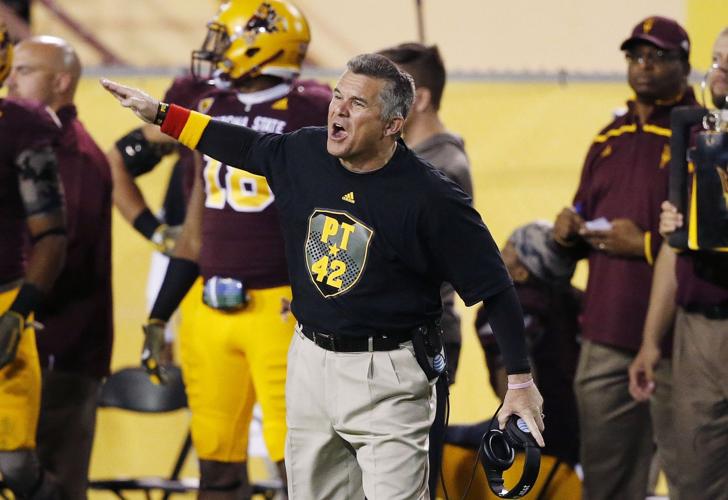
Going in alphabetical order, Arizona State’s Todd Graham is first up to the plate:
(on the QB competition among Bryce Perkins, Brady White and Manny Wilkins)
“All three of them have been very, very impressive. One thing I like about all three of them, they can all extend plays. They all are athletic guys. Taylor Kelly was able to do that for us, and we kind of like that.
“Manny’s been here the longest. You can tell he’s got a little experience. All three of them throw the ball extremely well. Each one of them has different things. Bryce is probably, as far as play-action, getting the ball on the perimeter, he’s got an ‘it’ factor to him. Brady, character-wise, he’s a 4.0 student. Highly intelligent kid. Can really, really throw the football.
“It’s been a very close race in the spring. It’ll go through the summer. And it’ll clear up, just like it did with Taylor (in 2012). We didn’t announce Taylor being the starter until the first week, and we won’t announce a starter till the first week with these guys. But we’ll know who the starter is far before that. We did with Taylor. After the first week and a half of camp, everybody knew Taylor was going to be the starter.
“I love the fact that we have three really talented guys, and adding a fourth one; Dillon Sterling-Coe coming in is one of the most talented kids we’ve ever signed. I feel good about that position.
“We’ll see how it goes. There’s a possibility we could use a couple guys. You can only have one starter. We’ll see how that transpires. But I think it will really clear up within two weeks of camp.”
(on the defense’s mentality and approach after a disappointing 2015 season in which ASU allowed the most passing yards in the nation)
“I think it’s very good. We did some positive things last year. The biggest thing was just giving up big plays in pass defense. A lot of that had to do with injury and personnel and things like that that are just part of it. Playing in the Pac-12, that’s one of the challenges. But I think we were second in the conference in rush defense (third, actually). We got a lot of takeaways.
“Our guys, I think they’re motivated. We pride ourselves on being a team that’s going to play great defense. Especially how we attack. Our guys have a little bit of a chip on their shoulder. I like that. I think we’ve got some true leadership emerging.
“At defensive line you’ve got Tashon (Smallwood) and Ami Latu, JoJo Wicker. There’s some impressive guys up there.
“The key for us is going to be in the back end. Just not giving up big plays. I like their mentality. That’s going to be a big, big deal, just continuing to develop.
“We’ve got a little bur in our saddle about going out and righting (the) ship. It all starts with defense and having a championship defense. I loved our mentality this spring. We were very basic and very simple. We have four new offensive linemen, and we wanted to help and aid in their progression and not just go out there the first day and throw the kitchen sink at them. I love how they work. They don’t say much. They just work hard. They’re really close as a unit, and I like that.”
(on rebuilding the offensive line after losing multiple starters)
“We’ve got the best in the business coaching them in Coach (Chris) Thomsen. He does a great job developing our guys.
“We’re going to be young, but we’re going to be athletic. I think we’re going to be more athletic than we’ve been. It’s just getting them to play as a unit. There’s no substitute for experience.
“But honestly, as we sat in our staff meetings throughout the spring, Coach Thomsen was pleased with their development. That’s going to be the key for us. New quarterback. Four new starters on the offensive line. The good news is, very talented tight end corps, receiver corps and running back corps. All veterans. We’ve got a lot of playmakers. The key for us is designing the system where we don’t make it too complicated. We keep that threshold where it needs to be and not have negative plays.”
- Michael Lev
- Updated
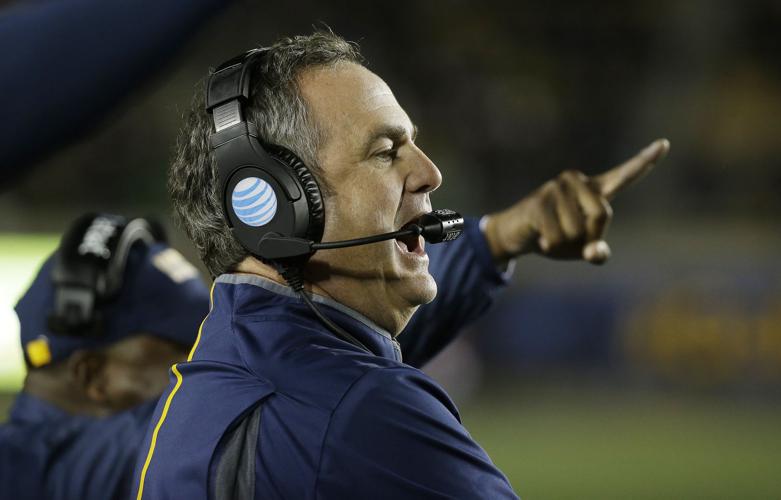
Today’s Q&A is with Cal coach Sonny Dykes, who got a lot of questions about quarterbacks and quarterbacking.
(on QBs struggling to transition from the “Air Raid” offense to the NFL)
“The thing I’ve always found is, football’s football. I can remember a number of years ago, when we started running this stuff in the late ’90s at Kentucky. The thing was (then), ‘This is not going to work in the SEC.’ It worked pretty well. We had Tim Couch. He was the first pick in the draft. We won some games at Kentucky. Hal (Mumme) took them to a New Year’s Day bowl game.
“We went into the Big 12 at Texas Tech in 2000, and the first thing everybody said was, ‘You can’t win in the Big 12 unless you run the football and play smash-mouth football.’ And then when I left in 2006, every team was a spread team.
“If you look at the New England Patriots, they’re probably the closest thing to a spread team. I would say them or the Indianapolis Colts when Peyton Manning was there. Those teams seemed to do pretty well. They spread the ball out and had quarterbacks that could operate a system and an offense.”
(on new offensive coordinator/quarterbacks coach Jake Spavital)
“Jake’s a young guy who’s really had a great track record of developing quarterbacks. You go back and look at the guys he’s had a chance to work with – Brandon Weeden, Case Keenum, the guy at West Virginia (Geno Smith), Johnny Manziel. All of the guys he’s had have been pretty good ones and been pretty productive guys and have played at a high level. I think that gives him credibility, instantly, to (Cal's) quarterbacks and our offense.
“He’s a great communicator. … He’s on the same page as all the coaches. He’s organized. He’s methodical in his approach. So he fits in perfect.
“We come from the same system. Kliff Kingsbury was our quarterback at Texas Tech in 2001, 2002, 2003. Kliff got into coaching, and Jake kind of learned from Kliff. It’s been one of those things where we think the same way. We have the same beliefs. It’s been fun to see how he’s taken it and tweaked it a little bit, kind of how I took it and tweaked it when I was a coordinator. It’s been a great situation. I’ve been really pleased. I think our players are excited.
“It’s going to look a little bit different at times. To the average person it’s going to look pretty much the same. But there’s certainly some differences in the way it’s administered. The quarterback has to do a little more the way we’re doing it now. He has a little more control of the offense than maybe he did in the past.”
(on Cal’s skill set on offense)
“Something that’s different about this group, we’ve got a really good catch-and-run group of receivers. We were really blessed to have good receivers here, but they were more down-the-field guys. These guys can catch the ball in space and create things and make plays. With Melquise Stovall and Greyson Bankhead, those guys give us a little different element than we’ve had. They give us that ability to break a tackle or slip a tackle and make some big plays.
“The biggest difference in our offense right now is just our size, our strength and our depth on our offensive line. That’s been something we’ve had to rebuild, and it’s taken us some time to get there. I think the strength of our team’s probably going to be our offensive line. That certainly hasn’t been the case leading up to this. That gives us some capabilities to run the ball, and run it when people know we’re going to run it, which is important. Knock some people off the ball. That’s our hope. I don’t think we’re there yet, but I think we can certainly get there.
“And once we decide who the quarterback is going to be” – likely between Chase Forrest and Ross Bowers – “we’re going to have to make adjustments and figure out how to put them in situations where they can be successful.”
UPDATE: Former Texas Tech QB Davis Webb announced this week that he's transferring to Cal
- Michael Lev
- Updated
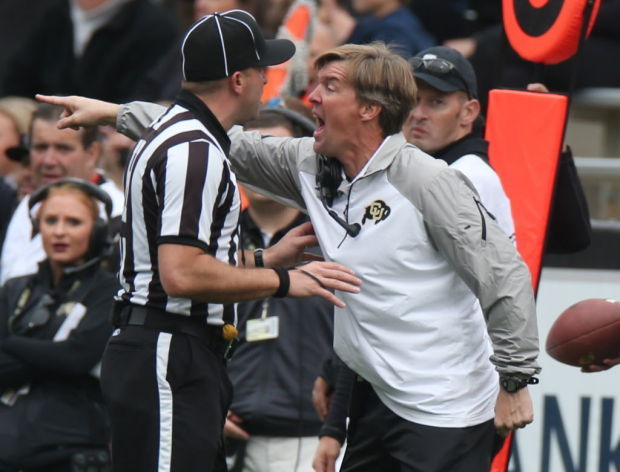
Today’s "Pac-12 After Spring" Q&A is with Colorado coach Mike MacIntyre. Coming next week: Oregon’s Mark Helfrich, Oregon State’s Gary Andersen and Stanford’s David Shaw.
Here’s MacIntyre:
(on the status and impact of nose tackle Josh Tupou, who sat out last season because of off-the-field issues)
“Josh Tupou will be rejoining the team. He should be here this summer.
“He’s a pro nose guard. He’s 325 pounds. He’s very athletic. He can bend. He can move. He’s 6-foot-4. He’s perfect for a 3-4 defense. He’ll be a big key for our defense.”
(on junior linebacker Derek McCartney donating bone marrow to a cancer patient)
“We’ve been doing this program (Be The Match) for seven years. We’ve had two kids match. Derek came to me and said, ‘Coach, I matched.’ I said, ‘Great.’ He said it’d be during spring practice. I said that’s fine. It’s more important to save a life than to miss a few spring practices.
“He was able to give it to a man and safe his life. It’s an exciting thing to do. He (McCartney) is doing really well. I saw him (earlier this month). He’s doing good. Getting bigger and stronger.”
(on what he sees from the team after several near-misses the past two seasons)
“I see 21 seniors on scholarship and 22 juniors on scholarship. I see guys that are hungry, and they’ve been in the heat of the battle. Even the backups have been in the heat of the battle in some really close games. We came out on top in a few of them; we need to come out in a lot more.
“I see more of an attention to detail by those young men. We don’t have to tell them things over and over. They understand what they need to do. I see a drive in them off the field, on the field. It’s become 24/7, 365 to them, and as you do that, it helps (you) mature and … handle those situations.”
- Michael Lev
- Updated
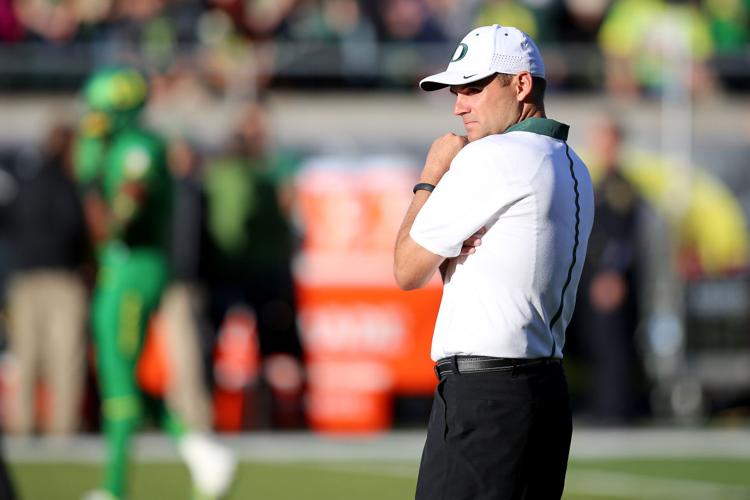
Today’s Q&A is with Oregon coach Mark Helfrich, whose team is undergoing transitions on defense and at quarterback. Still to come this week: Oregon State’s Gary Andersen and Stanford’s David Shaw.
Here’s Helfrich:
(on the influence of new defensive coordinator Brady Hoke and the pros and cons of him being a former head coach)
“It’s been great. He’s been everything (we) expected in terms of (being) demanding and at the same time a players’ coach. Disciplinarian. A guy that immediately shows he cares about the guys and cares about them as people. And then at the same time, can really be demanding on the field. That’s been a great balance.
“From my standpoint, there’s way more pros than cons. There’s things that he’s been through that you can learn from or take advice on, whether that’s off the field, game-management things, recruiting. Both he and David Yost, the other new member of our staff, have added a bunch just in terms of making us validate why we do things, and if change is needed, tweaking it slightly. I anticipate that being nothing but a blessing.”
(on the high standard in the Oregon quarterback room)
“I think that’s a burden and also a beauty of the deal – trying to push them as much as possible. They’re all very conscientious guys in terms of wanting to do well and prepare well and compete. They also know there’s an extremely high standard here and expectation here of how that position is supposed to play. And then at the same time, utilize your resources. Utilize Royce Freeman, Tony Brooks-James, Kani Benoit, Darren Carrington, Charles Nelson, Kirk Merritt. These guys that are proven commodities. Be a point guard when you need to, be a playmaker when you need to. And just learn at as quick of a rate as possible.
“We’re going to push them, and we’re going to try to play better than we ever have at that position. But that might look different than Marcus (Mariota) breaking an 80-yard run. That just might be making a perfectly placed ball to Darren Carrington and letting him do the rest.”
(on having all the QB candidates available in spring as opposed to last year with Vernon Adams’ delayed arrival)
“It’s obviously the preferred method, having those guys in. We’re going to make it work however it falls from a production standpoint. We don’t have any choice.
“I think last year it was a different vibe. At the same time, Jeff Lockie and Taylor Alie did a good job of working through it and battling through it. Internally, we didn’t talk about the unknown or talk about what might happen. I know there was a ton of chatter on the outside that they managed and got through.
“Now we’ve got three guys that really are competing for the job (Travis Jonsen, Dakota Prukop and Terry Wilson) and a couple guys that aren’t at this point (Lockie and Alie), which is also difficult. But those guys, Jeff and Taylor, have managed that really, really well. It’s just a matter of distributing the reps with the long term in mind and knowing that we’re not going to decide who the starting quarterback is this spring. That’s not gonna happen.
“You can definitely tell (Prukop has) played more football than these other guys at this point. Certainly at the collegiate level. He’s got a natural charisma about him. But I also think Travis has that. Terry has that.
“It’s kind of a weird blend. Travis hasn’t practiced really ever here, but he’s been in the classroom listening to everything and observing everything. He just hasn’t done it. And Terry has been here for (just a handful of) weeks and is operating in some ways at a very high level and in some ways doesn’t know where the bathroom is. So those things all collide at some point. Dakota’s doing some good things. And he’s doing some things that we’ll improve upon leading into fall camp.”
- Michael Lev
- Updated
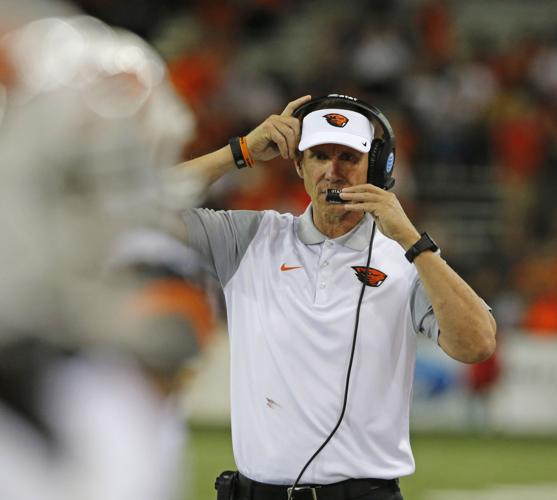
Today’s Q&A is with Oregon State coach Gary Andersen, who’s in the midst of a massive rebuilding project in Corvallis. Still to come this week: Stanford coach David Shaw.
Here’s Andersen:
(on ramping up the competitiveness and work ethic within the program this offseason)
“It definitely wasn’t a party like 1999. The offseason for us was a great opportunity to get a real clear look of where we are and to be honest with ourselves and understand exactly where we sit within the pecking order and where we deserve to be. It was a tough offseason from Day 1 until today. A high accountability level has been expected from every coach, trainer, manager, player in the program. We have to outwork people.
“We want to change the culture. It’s easy to talk about those things. We’ve tried to use a few terms with them. Hopefully they’ll hold true to those terms. We had a plan to identify and create … a different culture than we were living in. We have to live in the hard. It’s hard to get better. And it’s hard to chase people. We have to be able to do that. We have to wake up every morning and have high expectations for that day. And then we have to judge ourselves and have some checks and balances with our program – coaches to players, players to coaches, student-athletes to the student body. Everybody that’s involved.
“We put that process in place. It’s a long story. A lot of different things that we’ve done. But we’re working hard. There’s been some days that are better than others. It all starts with players in this game, and we respect that as a group of coaches. We’re going to give them what they need, but we’re also going to push them extremely hard. This has been a taxing offseason. It continues to be.”
(on the status of the rebuilding project after a 2-10 season in Year 1 under Andersen)
“I don’t know how to really gauge that because when it’s changed (at Andersen’s previous stops), it’s changed at kind of strange places or maybe places where you wouldn’t predict. I don’t think there’s a script to write out and say, ‘Where are these kids and what are they doing?’ We have some days where we look at ourselves and we’re definitely moving forward. But I think the key is to understand when you’re (among) the elite of the elite and the best of the best, just doing what’s good is not even close to good enough. On the field, off the field.
“I (will) walk through (the facility) today, and I’m going to look at the players’ lounge and see what it looks like. Does it look like a big-time Division I players’ lounge? Are they respecting what they have and taking care of their business from A to Z? It may seem like a little thing and not meaningful for a lot of people, but all those little spots, those little, different areas that we have to excel in (are important).
“Making strides? I believe so. But it’s like I tell these kids: It’s all lip service until we get out there and show exactly what we’re doing. We are winning championships and competing for Pac-12 titles in the classroom. That’s great for us. It’s not going to make ESPN. It’s not going to be running across the bottom of the Pac-12 Network. But it does matter to us because I think that’s a big step. If you take care of yourself academically and socially, I believe it will carry on to the field.
“So where are we? We’re going to work hard today. Live in the hard. And wake up and grind hard tomorrow, I promise you that.”
(on the Beavers’ crowded backfield and whether Andersen wants a clear No. 1 runner)
“It would be great to have a Melvin Gordon, a Robert Turbin, a James White, a Kerwynn Williams. It would be wonderful to have one of those guys. Then you’ve got yourself a feature back. I think you earn your right to be a feature back. We don’t have a back that deserves that right.
“Right now our No. 1 back is Ryan Nall. But we’ll see. He hasn’t played enough. You’ve got to put (together) a back-to-back-to-back to become that guy.
"I think you need three very good backs to be able to compete in this league throughout the season. Would it be nice to have a highlighted back that’s your workhorse, that’s your war-daddy back? Absolutely. I believe we have a couple young men that potentially can get there. But we’re not there today.”
- Michael Lev
- Updated
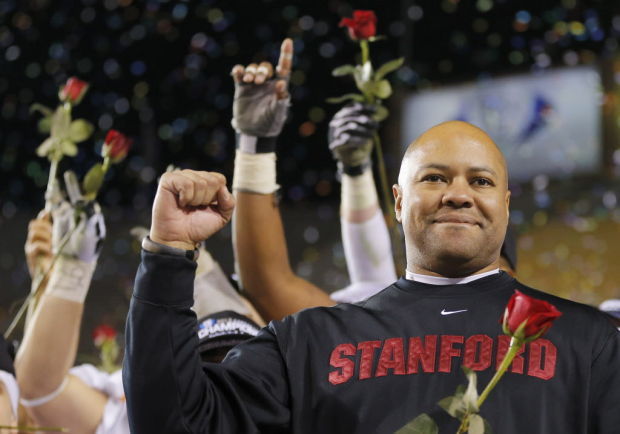
Today’s Q&A is with Stanford coach David Shaw, who, like many others in the league, is sorting through a quarterback competition. Next week will be L.A. Week as we feature UCLA’s Jim Mora and USC’s Clay Helton. But first, here’s Shaw:
(on what QB candidates Keller Chryst and Ryan Burns need to do to win the job)
“The biggest thing is operating the machine. It starts first and foremost with getting in and out of the huddle as fast as possible so we can have more time at the line of scrimmage. Utilizing the snap count. Redirecting the protections. Handling the audible system. Getting the ball snapped before the 40-second clock runs out. Then making great decisions. It’s a lot.
“Both guys have done well. But at the same time, both guys need to ramp it up. We need to get quicker. We’re going to be pretty hard on them in training camp as far as operating faster. We need to go (at) a game tempo during practice to make sure those guys can operate like that when the lights come on.
“We’ll see who starts. But if it stays neck and neck all the way through without a clear winner – even if it’s just a slight edge by somebody – I’d anticipate possibly both guys playing early in the year just to continue the evaluation process into the season.”
(on rebuilding the offensive line and how much shuffling is required to finalize that)
“Probably not a lot of shuffling, but we’re not done by any stretch. Coming out of spring, I thought Jesse Burkett really played extremely well at center. I thought there would be quite a few more mistakes playing with the first offense and putting everything on his shoulders. He was very, very impressive throughout the entire spring.
“(Another) guy who makes us feel very good about where we are right now is David Bright. He could play left tackle or right tackle, either way if necessary – or guard if necessary. Casey Tucker spending most of the spring at left tackle gives us a lot of comfort also. He also could play left tackle or right tackle.
“We’ve still got a battle going on at guard. A.T. Hall, I thought, had a really good spring. He has shown he’s about ready to play as well. Brandon Fanaika was solid all spring. Those roles will start to solidify themselves throughout training camp.
“It’s just nice to know we’ve got a good group that we think we can get 5-6 (regulars) out of, and then we’ll see with our freshmen coming in if those guys can contribute in our short-yardage and goal-line packages.”
(on the team loosening up and having fun last season and whether that’s carried over)
“Not as of yet. I hope we get there again. Right now the team’s mindset is about not taking anything for granted. Really knowing we have a lot of spots we’re competing for. Knowing we’ve got high expectations.
“The spring wasn’t really that loose. It was really, really good. It was very physical. It was very intense.
“I think we have to earn the right to be loose. I think that team last year, about midseason, started to play at a really high level and started to enjoy themselves, and you saw us play with emotion and energy and passion – but still play physical and tough and hardnosed. I don’t think that’s something that can just kind of happen. The team has to earn the right to be that way.
“It has to happen organically. It can’t be forced. And it can’t be frivolous. We can’t have a lot of fun if we’re not playing well. We can’t be loose if we are making mistakes.”
- Michael Lev
- Updated
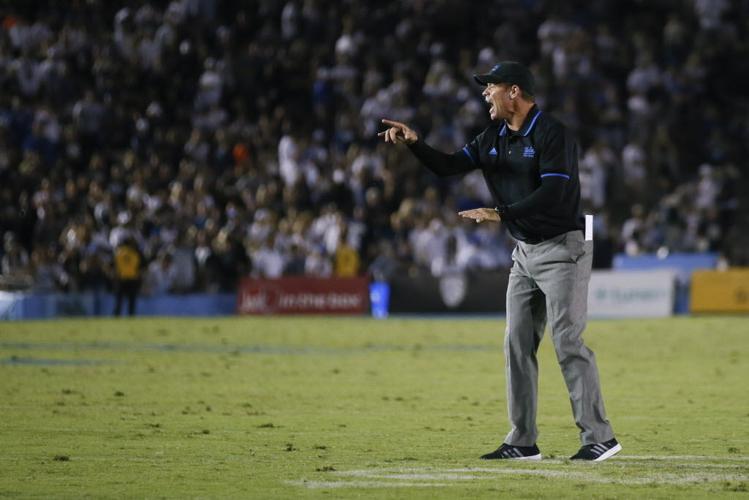
Today’s Q&A is with UCLA coach Jim Mora, who has moved a key player from defense to offense and who, unlike most of his Pac-12 peers, doesn’t have a quarterback battle to worry about.
Still to come this week: USC’s now full-time coach, Clay Helton. But first, here’s Mora:
(on having players leave early for the NFL draft and what that says about the Bruins program)
“It’s kind of a new phenomenon – three and out. It’s a little bit new for us. It says that we’re recruiting some pretty good players that are developing into guys that are capable of playing in the NFL.
“Every recruit that comes in has that dream of playing in the NFL. I don’t know that all of them dream about going after three years of college, but I think it says a lot about the quality of athlete that we do recruit. And, I think, the quality of coaching and the way they are developed. These guys are ready to play. It says a lot about the individuals, and it says a lot about the program.”
(on shifting Ishmael Adams from defensive back to wide receiver)
“He was very fun to watch this spring, just the progress that he made from the first practice to the end. He’s an electric guy when he has the ball in his hands. We’ve seen him do some special things as a punt returner and kickoff returner. We’ve seen him do some special things after interceptions. And now to be able to give him the ball where we want and when we want and let him go do it is going to be fun to watch.
“He really developed as a route runner. It’s not easy. It’s an art. There’s an art to running routes. I was really excited to see the development he made as a route runner.
“He’s a gym rat. He loves football, and he loves to study the game. He’s always up in the coaches’ offices bending Coach (Eric) Yarber’s ear, trying to find new things he can look at and study to enhance his game. It’s always fun to be around guys like that – guys that are always searching for a better way to do it.”
(on the mental makeup Josh Rosen needed to start at QB as a freshman and how playing will help him)
“I think it takes someone who’s got some special gifts, not only athletically but emotionally and mentally … to handle that pressure. Playing in a major media market like Los Angeles, at a school like UCLA and at venue like the Rose Bowl (takes) great talent week in and week out. Someone who has a calm about them, a self-confidence, and understands how to prepare. Josh has all of those things. He’s very well-rounded as a football player and very well-rounded as a human being.
“Playing the game is where you making your biggest jumps in terms of improvement at any position, I believe. Practice is great; you’re going to improve in practice. But when you get thrown into competition, that’s where you see the biggest gains.”
- Michael Lev
- Updated
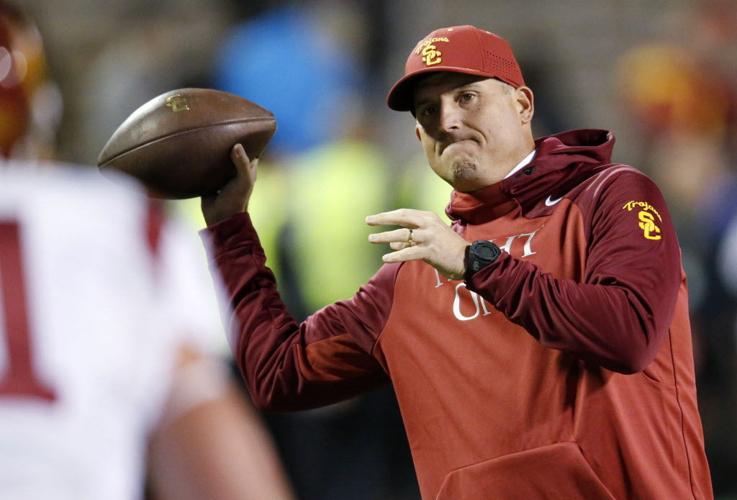
Today’s Q&A is with USC coach Clay Helton, who has a quarterback situation to sort out and the toughest Week 1 opponent imaginable.
We’ll wrap up the series next week with Utah’s Kyle Whittingham, Washington’s Chris Petersen and Washington State’s Mike Leach.
But first, here’s Helton:
(on the biggest surprises of spring camp)
“Really two surprises. I really liked how the offensive-line unit came together and how much progress they made over 15 practices. Having two senior tackles (Zach Banner and Chad Wheeler) and three junior interior players (Toa Lobendahn, Damien Mama and Viane Talamaivao), I was hoping for those guys to gel under a new offensive-line coach who I think does a tremendous job in Neil Callaway. I was not anticipating how much progress they did make. By the end of camp, I thought they were as functional as they’ve been since we’ve been here, over the last six years.
“The other is probably how competitive the quarterback battle has been and how well both quarterbacks played. Between Max (Browne) and Sam (Darnold), and even Jalen (Greene), how he progressed, and Matt (Fink), just to see those kids play – I did not (anticipate) the level of play and competitiveness those kids brought to the table. I was not expecting that. I was anticipating a real good quarterback in Max Browne that had four camps under his belt to have a bigger gap. That’s what happens when you sign the best of the best, when they’re all competing together. It turns into a heck of a competition.”
(on rebuilding the defensive line)
“Probably our thinnest position right now, just to be honest with you. We had a very healthy spring with the exception of one spot, which was the defensive line with Kenny Bigelow, who was kind of our elder statesman and our leader on that front (suffering a season-ending torn ACL). To lose him really hurt us.
“We’re talented, but we’re young at the position. It reminds me a lot of when Damien, Viane and Toa came in (in 2014). You knew that you were going to go through some growing pains, (but) you would look up in a year or so and those guys would be ready. The problem is, they’ve got to be ready now (on the defensive line). We’re going to have to play above our head right now at that position.”
(on how often he mentions opening-week foe Alabama)
“As a coach, I try to focus just on us getting better. We made it all about ball (in spring), worried about fundamentals, technique, physicality, toughness – those qualities that we believe are going to win a championship.
“I’m not naïve. I know this game is special to our players. You could even hear them mention it: ‘Hey, that’s not good enough. That’s not going to beat Alabama.’ They know how special this game is, the tradition behind it.
“I don’t sell it as a coach, but these kids are smart enough to know that it’s a big game, it’s the opening game and it’s a game for them to be able to prove where they’re at, and they’re taking it to heart.”
- Michael Lev
- Updated
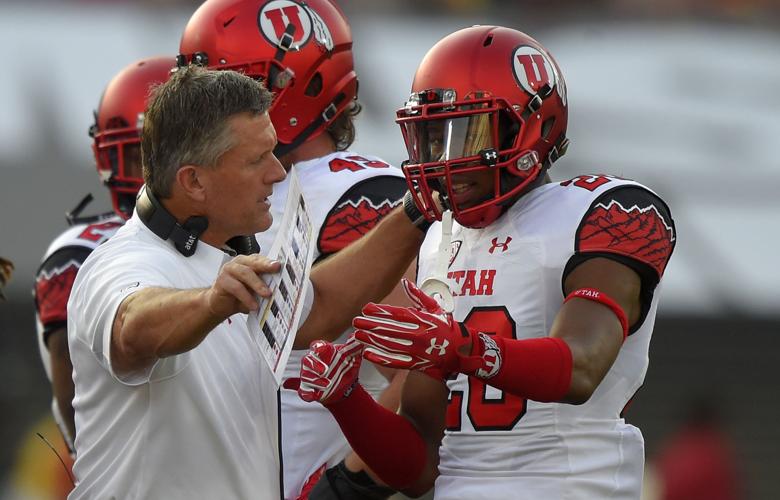
Today’s Q&A is with Utah coach Kyle Whittingham, who, like so many of his brethren, heads into fall camp not knowing the identity of his starting quarterback.
We’ll wrap up the series this week with Washington’s Chris Petersen and Washington State’s Mike Leach. But first, here’s Whittingham:
(on the competition at linebacker, where Utah must replace all three starters)
“It’s a complete rebuild at that spot. We got a good start on that in spring. Sunia Tauteoli came out of spring as the clear-cut No. 1 linebacker. Cody Barton is probably No. 2 right now. And probably Christian Drews … came out No. 3.
“What we’re looking for is five. We need a pair and a spare. We used to call ourselves a 4-3 defense. But last year we were in 4-3 16 percent of the time. That’s almost become a dinosaur. It’s almost all 4-2 nickel. We’ve got to come away with five ’backers – a two-deep at each spot and a spare who can play either spot.
"Between those three guys and the guys we’ve got coming in in the summer, the recruits – we’ve got a couple JC guys and a couple high school kids coming in – we think we’ll be able to get that solidified. But it won’t be until fall camp is probably a couple weeks in before we identify who those five guys are going to be."
(on what has impressed him about freshman quarterback Tyler Huntley)
“Everything. The way the guy came in. First of all, his ability to assimilate the offense and absorb it. He’s a very quick learner, a highly intelligent kid. It was very impressive the way he was able to grasp the concepts and what we’re doing. His athleticism is incredible. His quickness in the pocket and his escapability – he can throw on the run. He makes some throws that … you just don’t see a freshman make. We’re excited about him.
“He was impressive enough in spring that when we get to fall camp, it’s going to be a three-way battle. We’ve got three guys competing for the job, in no particular order (Huntley, Troy Williams and Brandon Cox). He’s right there on equal footing with the other two guys. If he continues to make progress, he’s going to be a guy that may end up starting for us. We’ll see.”
(on QB Troy Williams, who suffered an undisclosed injury about halfway through spring camp)
“He was very good as well. He was exactly what we hoped he would be. He was very polished. His throwing mechanics, footwork (were) exceptional. He’s got Division I experience – Pac-12 experience at that. (Williams transferred from Washington, via Santa Monica College.) He’s taken Pac-12 snaps. That’s why we recruited him.
“Unfortunately, it was right at practice (No.) 8 that he went down with the injury. He wasn’t able to finish, and that’s too bad. His trajectory was definitely going up. He was doing some really good things and probably in the lead at the time that he did go down.
“But he’ll get his chance in fall. We’re going to start from square one with those guys. He will get his opportunity. Even though it’s unfortunate – and (missing) those last seven practices certainly is to his disadvantage – he can certainly make that up in the summer and in fall camp.”
- Michael Lev
- Updated
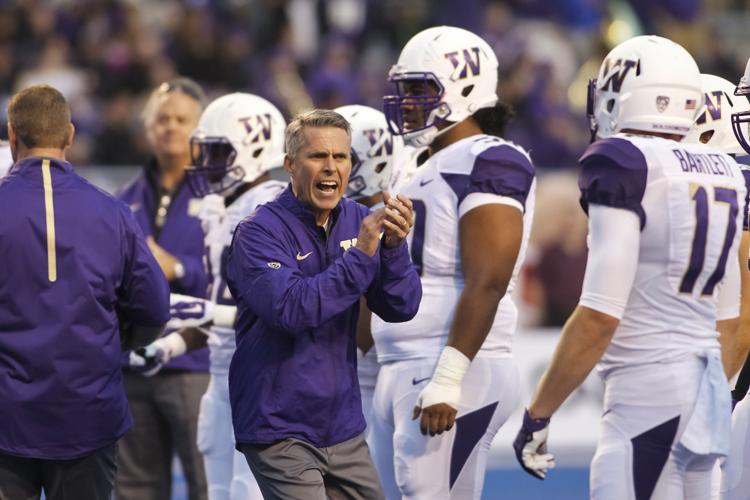
Today’s Q&A is with Washington coach Chris Petersen, whose team has emerged as a dark-horse contender thanks in part to the rapid development of quarterback Jake Browning.
We’ll wrap up the series on Friday with Washington State’s Mike Leach. But first, here’s Petersen:
(on what enabled Browning to thrive as a freshman last season)
“One, he came from a really, really good high school program (Folsom [Calif.] High). He was coached well. Threw the ball a ton. He broke all the national records (for) touchdowns. He had a pretty good body of work coming in. And he’s about as focused and driven as any freshman that I’ve been around for a long time. He put tremendous work in.
“Even with all that being said, he’s still a freshman. It’s still really, really hard. But he had those things going for him, and that gave him a fighting chance.”
(on whether freshmen in general are better prepared to contribute immediately nowadays)
“Yeah, for sure. I think the coaching is more advanced. The kids are training earlier, year-round, all those different things. And then just with depth issues, I think you’re forced to play them.
“So the combination of all those things really kind of adds up. You’re going to see freshmen playing. They’re better coached. They’re more prepared. Nobody has enough depth. And so away you go.”
(on whether quarterbacks specifically believe they’re able to play earlier now)
“I would think so. I will tell you this: I think any freshman coming in and really wanting and thinking that’s going to be their deal, to play right away, that’s not an ideal situation. I think Jake would tell you that. As much as he wanted to play, I think the whole thing was harder than he thought it was going to be.
“You’ve got some special guys. But it’s just rare. And if you can actually sit and learn for at least a year, at that position, it’s not that much different than the NFL. Those guys that get thrown in there as rookies, it looks good on paper. And then you’ve got to go in there and play against all that? The ideal situation, if they can learn for some time and not have to go, is better for everybody involved.”
- Michael Lev
- Updated
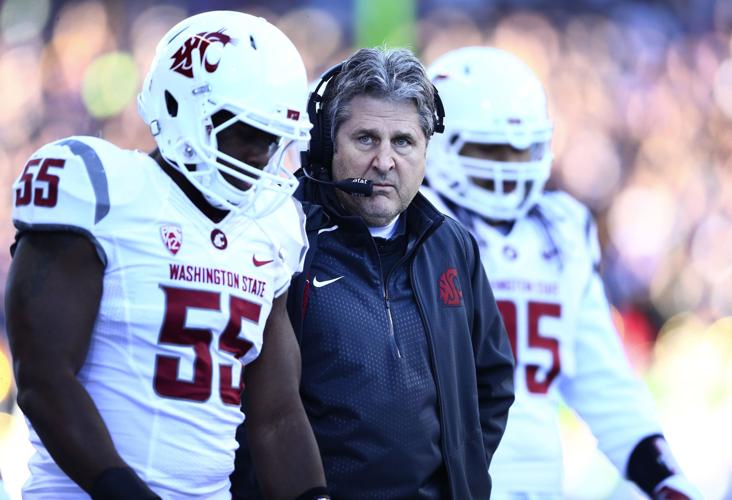
Today’s 11th and final Q&A is with Washington State coach Mike Leach, who unfortunately was not given the opportunity to talk about Washington State football. We made it all the way to the end before this happened. I apologize on behalf of my colleagues who cover the Pac-12 who didn’t take advantage of the fact that the Cougars are actually good and interesting now.
At least Leach is entertaining. Here he is going off on the satellite-camp controversy and the notion that spread-system quarterbacks can’t play in the NFL. At bottom, you can find links to all of the previous 10 Q&As.
(on the value of satellite camps within the Pac-12 and across college football)
“Let’s be clear: The Pac-12, among their schools, 11 of them already have voted to have satellite camps. (It is believed that Stanford is the only school that didn’t.) That part’s indisputable. Sadly, we failed to place a vote that reflected the will and wishes of our schools. So this conference already is overwhelmingly in favor of satellite camps. Just so there’s no confusion.
“I think everybody would benefit (from having them). The mission of higher education and Division I schools is to provide opportunities. And the more opportunities, the better it is for everybody.
“If you’re a low-income person, (from) a low-income family, that is qualified and skilled enough to be a Division I college football player, and you have the opportunity to get discovered, whether through a satellite camp or any means, it does nothing but (1) help edify your life and (2) help build the product of college football, which in the end helps everybody.
“I can’t fathom anybody that would be against satellite camps, although it’s clear that one school is. The only reason that they could possibly be against satellite camps is for some selfish motivation of locking other schools out of the opportunity to see their players.”
(on whether it’s harder for QBs from Air Raid or spread-style offenses to transition to the NFL)
“I think the entire thing’s ridiculously absurd. … No. 1, the best thing is to throw as many balls as possible and read as many defenses as possible. The more leeway you have at the line of scrimmage, the better. There’s an awful lot of spread quarterbacks that have played in the NFL and have done so successfully. A lot of times, for their own convenience, folks will want to suggest otherwise. Of course that’s really not true. I’ve had a number of them on NFL teams. I haven’t had a guy that was a premier starter. But given the fact there’s 30 teams, as far as actually being on teams, I probably have more on teams than most schools.
“The other thing that’s interesting, the NFL, from one team to the next, there’s a wide variety of how they value the quarterback position – what they value, what they want. The failure for everybody to be on the same page is why there’s so much struggle in the NFL for them to find quarterbacks. When you consider that virtually every team in the NFL has drafted a quarterback in the first round, and yet there’s so many of them that weren’t drafted or weren’t drafted in the first round that are starting, that means the entire evaluation process is flawed to a point.
“The most important thing to keep in mind with regard to quarterbacks is, the most important asset they have is elevating the efforts and skills of the people around them. There’s nothing they do that’s more important than that.”
More like this...
- Michael Lev
Spring football is over. Real football is still far, far away.
To help bridge the gap, we’re going to check in on Arizona’s competition in the Pac-12. Over the next few weeks, we’ll run some of the best comments from the league’s coaches after their recent participation in a conference call to wrap up spring ball.
We’re calling it “Pac-12 After Spring,” an homage to #Pac12AfterDark (and a distant runner-up to “Spring Exit Interviews,” which colleague Doug Haller of The Arizona Republic already coined).
Going in alphabetical order, Arizona State’s Todd Graham is first up to the plate:
(on the QB competition among Bryce Perkins, Brady White and Manny Wilkins)
“All three of them have been very, very impressive. One thing I like about all three of them, they can all extend plays. They all are athletic guys. Taylor Kelly was able to do that for us, and we kind of like that.
“Manny’s been here the longest. You can tell he’s got a little experience. All three of them throw the ball extremely well. Each one of them has different things. Bryce is probably, as far as play-action, getting the ball on the perimeter, he’s got an ‘it’ factor to him. Brady, character-wise, he’s a 4.0 student. Highly intelligent kid. Can really, really throw the football.
“It’s been a very close race in the spring. It’ll go through the summer. And it’ll clear up, just like it did with Taylor (in 2012). We didn’t announce Taylor being the starter until the first week, and we won’t announce a starter till the first week with these guys. But we’ll know who the starter is far before that. We did with Taylor. After the first week and a half of camp, everybody knew Taylor was going to be the starter.
“I love the fact that we have three really talented guys, and adding a fourth one; Dillon Sterling-Coe coming in is one of the most talented kids we’ve ever signed. I feel good about that position.
“We’ll see how it goes. There’s a possibility we could use a couple guys. You can only have one starter. We’ll see how that transpires. But I think it will really clear up within two weeks of camp.”
(on the defense’s mentality and approach after a disappointing 2015 season in which ASU allowed the most passing yards in the nation)
“I think it’s very good. We did some positive things last year. The biggest thing was just giving up big plays in pass defense. A lot of that had to do with injury and personnel and things like that that are just part of it. Playing in the Pac-12, that’s one of the challenges. But I think we were second in the conference in rush defense (third, actually). We got a lot of takeaways.
“Our guys, I think they’re motivated. We pride ourselves on being a team that’s going to play great defense. Especially how we attack. Our guys have a little bit of a chip on their shoulder. I like that. I think we’ve got some true leadership emerging.
“At defensive line you’ve got Tashon (Smallwood) and Ami Latu, JoJo Wicker. There’s some impressive guys up there.
“The key for us is going to be in the back end. Just not giving up big plays. I like their mentality. That’s going to be a big, big deal, just continuing to develop.
“We’ve got a little bur in our saddle about going out and righting (the) ship. It all starts with defense and having a championship defense. I loved our mentality this spring. We were very basic and very simple. We have four new offensive linemen, and we wanted to help and aid in their progression and not just go out there the first day and throw the kitchen sink at them. I love how they work. They don’t say much. They just work hard. They’re really close as a unit, and I like that.”
(on rebuilding the offensive line after losing multiple starters)
“We’ve got the best in the business coaching them in Coach (Chris) Thomsen. He does a great job developing our guys.
“We’re going to be young, but we’re going to be athletic. I think we’re going to be more athletic than we’ve been. It’s just getting them to play as a unit. There’s no substitute for experience.
“But honestly, as we sat in our staff meetings throughout the spring, Coach Thomsen was pleased with their development. That’s going to be the key for us. New quarterback. Four new starters on the offensive line. The good news is, very talented tight end corps, receiver corps and running back corps. All veterans. We’ve got a lot of playmakers. The key for us is designing the system where we don’t make it too complicated. We keep that threshold where it needs to be and not have negative plays.”
- Michael Lev
Today’s Q&A is with Cal coach Sonny Dykes, who got a lot of questions about quarterbacks and quarterbacking.
(on QBs struggling to transition from the “Air Raid” offense to the NFL)
“The thing I’ve always found is, football’s football. I can remember a number of years ago, when we started running this stuff in the late ’90s at Kentucky. The thing was (then), ‘This is not going to work in the SEC.’ It worked pretty well. We had Tim Couch. He was the first pick in the draft. We won some games at Kentucky. Hal (Mumme) took them to a New Year’s Day bowl game.
“We went into the Big 12 at Texas Tech in 2000, and the first thing everybody said was, ‘You can’t win in the Big 12 unless you run the football and play smash-mouth football.’ And then when I left in 2006, every team was a spread team.
“If you look at the New England Patriots, they’re probably the closest thing to a spread team. I would say them or the Indianapolis Colts when Peyton Manning was there. Those teams seemed to do pretty well. They spread the ball out and had quarterbacks that could operate a system and an offense.”
(on new offensive coordinator/quarterbacks coach Jake Spavital)
“Jake’s a young guy who’s really had a great track record of developing quarterbacks. You go back and look at the guys he’s had a chance to work with – Brandon Weeden, Case Keenum, the guy at West Virginia (Geno Smith), Johnny Manziel. All of the guys he’s had have been pretty good ones and been pretty productive guys and have played at a high level. I think that gives him credibility, instantly, to (Cal's) quarterbacks and our offense.
“He’s a great communicator. … He’s on the same page as all the coaches. He’s organized. He’s methodical in his approach. So he fits in perfect.
“We come from the same system. Kliff Kingsbury was our quarterback at Texas Tech in 2001, 2002, 2003. Kliff got into coaching, and Jake kind of learned from Kliff. It’s been one of those things where we think the same way. We have the same beliefs. It’s been fun to see how he’s taken it and tweaked it a little bit, kind of how I took it and tweaked it when I was a coordinator. It’s been a great situation. I’ve been really pleased. I think our players are excited.
“It’s going to look a little bit different at times. To the average person it’s going to look pretty much the same. But there’s certainly some differences in the way it’s administered. The quarterback has to do a little more the way we’re doing it now. He has a little more control of the offense than maybe he did in the past.”
(on Cal’s skill set on offense)
“Something that’s different about this group, we’ve got a really good catch-and-run group of receivers. We were really blessed to have good receivers here, but they were more down-the-field guys. These guys can catch the ball in space and create things and make plays. With Melquise Stovall and Greyson Bankhead, those guys give us a little different element than we’ve had. They give us that ability to break a tackle or slip a tackle and make some big plays.
“The biggest difference in our offense right now is just our size, our strength and our depth on our offensive line. That’s been something we’ve had to rebuild, and it’s taken us some time to get there. I think the strength of our team’s probably going to be our offensive line. That certainly hasn’t been the case leading up to this. That gives us some capabilities to run the ball, and run it when people know we’re going to run it, which is important. Knock some people off the ball. That’s our hope. I don’t think we’re there yet, but I think we can certainly get there.
“And once we decide who the quarterback is going to be” – likely between Chase Forrest and Ross Bowers – “we’re going to have to make adjustments and figure out how to put them in situations where they can be successful.”
UPDATE: Former Texas Tech QB Davis Webb announced this week that he's transferring to Cal
- Michael Lev
Today’s "Pac-12 After Spring" Q&A is with Colorado coach Mike MacIntyre. Coming next week: Oregon’s Mark Helfrich, Oregon State’s Gary Andersen and Stanford’s David Shaw.
Here’s MacIntyre:
(on the status and impact of nose tackle Josh Tupou, who sat out last season because of off-the-field issues)
“Josh Tupou will be rejoining the team. He should be here this summer.
“He’s a pro nose guard. He’s 325 pounds. He’s very athletic. He can bend. He can move. He’s 6-foot-4. He’s perfect for a 3-4 defense. He’ll be a big key for our defense.”
(on junior linebacker Derek McCartney donating bone marrow to a cancer patient)
“We’ve been doing this program (Be The Match) for seven years. We’ve had two kids match. Derek came to me and said, ‘Coach, I matched.’ I said, ‘Great.’ He said it’d be during spring practice. I said that’s fine. It’s more important to save a life than to miss a few spring practices.
“He was able to give it to a man and safe his life. It’s an exciting thing to do. He (McCartney) is doing really well. I saw him (earlier this month). He’s doing good. Getting bigger and stronger.”
(on what he sees from the team after several near-misses the past two seasons)
“I see 21 seniors on scholarship and 22 juniors on scholarship. I see guys that are hungry, and they’ve been in the heat of the battle. Even the backups have been in the heat of the battle in some really close games. We came out on top in a few of them; we need to come out in a lot more.
“I see more of an attention to detail by those young men. We don’t have to tell them things over and over. They understand what they need to do. I see a drive in them off the field, on the field. It’s become 24/7, 365 to them, and as you do that, it helps (you) mature and … handle those situations.”
- Michael Lev
Today’s Q&A is with Oregon coach Mark Helfrich, whose team is undergoing transitions on defense and at quarterback. Still to come this week: Oregon State’s Gary Andersen and Stanford’s David Shaw.
Here’s Helfrich:
(on the influence of new defensive coordinator Brady Hoke and the pros and cons of him being a former head coach)
“It’s been great. He’s been everything (we) expected in terms of (being) demanding and at the same time a players’ coach. Disciplinarian. A guy that immediately shows he cares about the guys and cares about them as people. And then at the same time, can really be demanding on the field. That’s been a great balance.
“From my standpoint, there’s way more pros than cons. There’s things that he’s been through that you can learn from or take advice on, whether that’s off the field, game-management things, recruiting. Both he and David Yost, the other new member of our staff, have added a bunch just in terms of making us validate why we do things, and if change is needed, tweaking it slightly. I anticipate that being nothing but a blessing.”
(on the high standard in the Oregon quarterback room)
“I think that’s a burden and also a beauty of the deal – trying to push them as much as possible. They’re all very conscientious guys in terms of wanting to do well and prepare well and compete. They also know there’s an extremely high standard here and expectation here of how that position is supposed to play. And then at the same time, utilize your resources. Utilize Royce Freeman, Tony Brooks-James, Kani Benoit, Darren Carrington, Charles Nelson, Kirk Merritt. These guys that are proven commodities. Be a point guard when you need to, be a playmaker when you need to. And just learn at as quick of a rate as possible.
“We’re going to push them, and we’re going to try to play better than we ever have at that position. But that might look different than Marcus (Mariota) breaking an 80-yard run. That just might be making a perfectly placed ball to Darren Carrington and letting him do the rest.”
(on having all the QB candidates available in spring as opposed to last year with Vernon Adams’ delayed arrival)
“It’s obviously the preferred method, having those guys in. We’re going to make it work however it falls from a production standpoint. We don’t have any choice.
“I think last year it was a different vibe. At the same time, Jeff Lockie and Taylor Alie did a good job of working through it and battling through it. Internally, we didn’t talk about the unknown or talk about what might happen. I know there was a ton of chatter on the outside that they managed and got through.
“Now we’ve got three guys that really are competing for the job (Travis Jonsen, Dakota Prukop and Terry Wilson) and a couple guys that aren’t at this point (Lockie and Alie), which is also difficult. But those guys, Jeff and Taylor, have managed that really, really well. It’s just a matter of distributing the reps with the long term in mind and knowing that we’re not going to decide who the starting quarterback is this spring. That’s not gonna happen.
“You can definitely tell (Prukop has) played more football than these other guys at this point. Certainly at the collegiate level. He’s got a natural charisma about him. But I also think Travis has that. Terry has that.
“It’s kind of a weird blend. Travis hasn’t practiced really ever here, but he’s been in the classroom listening to everything and observing everything. He just hasn’t done it. And Terry has been here for (just a handful of) weeks and is operating in some ways at a very high level and in some ways doesn’t know where the bathroom is. So those things all collide at some point. Dakota’s doing some good things. And he’s doing some things that we’ll improve upon leading into fall camp.”
- Michael Lev
Today’s Q&A is with Oregon State coach Gary Andersen, who’s in the midst of a massive rebuilding project in Corvallis. Still to come this week: Stanford coach David Shaw.
Here’s Andersen:
(on ramping up the competitiveness and work ethic within the program this offseason)
“It definitely wasn’t a party like 1999. The offseason for us was a great opportunity to get a real clear look of where we are and to be honest with ourselves and understand exactly where we sit within the pecking order and where we deserve to be. It was a tough offseason from Day 1 until today. A high accountability level has been expected from every coach, trainer, manager, player in the program. We have to outwork people.
“We want to change the culture. It’s easy to talk about those things. We’ve tried to use a few terms with them. Hopefully they’ll hold true to those terms. We had a plan to identify and create … a different culture than we were living in. We have to live in the hard. It’s hard to get better. And it’s hard to chase people. We have to be able to do that. We have to wake up every morning and have high expectations for that day. And then we have to judge ourselves and have some checks and balances with our program – coaches to players, players to coaches, student-athletes to the student body. Everybody that’s involved.
“We put that process in place. It’s a long story. A lot of different things that we’ve done. But we’re working hard. There’s been some days that are better than others. It all starts with players in this game, and we respect that as a group of coaches. We’re going to give them what they need, but we’re also going to push them extremely hard. This has been a taxing offseason. It continues to be.”
(on the status of the rebuilding project after a 2-10 season in Year 1 under Andersen)
“I don’t know how to really gauge that because when it’s changed (at Andersen’s previous stops), it’s changed at kind of strange places or maybe places where you wouldn’t predict. I don’t think there’s a script to write out and say, ‘Where are these kids and what are they doing?’ We have some days where we look at ourselves and we’re definitely moving forward. But I think the key is to understand when you’re (among) the elite of the elite and the best of the best, just doing what’s good is not even close to good enough. On the field, off the field.
“I (will) walk through (the facility) today, and I’m going to look at the players’ lounge and see what it looks like. Does it look like a big-time Division I players’ lounge? Are they respecting what they have and taking care of their business from A to Z? It may seem like a little thing and not meaningful for a lot of people, but all those little spots, those little, different areas that we have to excel in (are important).
“Making strides? I believe so. But it’s like I tell these kids: It’s all lip service until we get out there and show exactly what we’re doing. We are winning championships and competing for Pac-12 titles in the classroom. That’s great for us. It’s not going to make ESPN. It’s not going to be running across the bottom of the Pac-12 Network. But it does matter to us because I think that’s a big step. If you take care of yourself academically and socially, I believe it will carry on to the field.
“So where are we? We’re going to work hard today. Live in the hard. And wake up and grind hard tomorrow, I promise you that.”
(on the Beavers’ crowded backfield and whether Andersen wants a clear No. 1 runner)
“It would be great to have a Melvin Gordon, a Robert Turbin, a James White, a Kerwynn Williams. It would be wonderful to have one of those guys. Then you’ve got yourself a feature back. I think you earn your right to be a feature back. We don’t have a back that deserves that right.
“Right now our No. 1 back is Ryan Nall. But we’ll see. He hasn’t played enough. You’ve got to put (together) a back-to-back-to-back to become that guy.
"I think you need three very good backs to be able to compete in this league throughout the season. Would it be nice to have a highlighted back that’s your workhorse, that’s your war-daddy back? Absolutely. I believe we have a couple young men that potentially can get there. But we’re not there today.”
- Michael Lev
Today’s Q&A is with Stanford coach David Shaw, who, like many others in the league, is sorting through a quarterback competition. Next week will be L.A. Week as we feature UCLA’s Jim Mora and USC’s Clay Helton. But first, here’s Shaw:
(on what QB candidates Keller Chryst and Ryan Burns need to do to win the job)
“The biggest thing is operating the machine. It starts first and foremost with getting in and out of the huddle as fast as possible so we can have more time at the line of scrimmage. Utilizing the snap count. Redirecting the protections. Handling the audible system. Getting the ball snapped before the 40-second clock runs out. Then making great decisions. It’s a lot.
“Both guys have done well. But at the same time, both guys need to ramp it up. We need to get quicker. We’re going to be pretty hard on them in training camp as far as operating faster. We need to go (at) a game tempo during practice to make sure those guys can operate like that when the lights come on.
“We’ll see who starts. But if it stays neck and neck all the way through without a clear winner – even if it’s just a slight edge by somebody – I’d anticipate possibly both guys playing early in the year just to continue the evaluation process into the season.”
(on rebuilding the offensive line and how much shuffling is required to finalize that)
“Probably not a lot of shuffling, but we’re not done by any stretch. Coming out of spring, I thought Jesse Burkett really played extremely well at center. I thought there would be quite a few more mistakes playing with the first offense and putting everything on his shoulders. He was very, very impressive throughout the entire spring.
“(Another) guy who makes us feel very good about where we are right now is David Bright. He could play left tackle or right tackle, either way if necessary – or guard if necessary. Casey Tucker spending most of the spring at left tackle gives us a lot of comfort also. He also could play left tackle or right tackle.
“We’ve still got a battle going on at guard. A.T. Hall, I thought, had a really good spring. He has shown he’s about ready to play as well. Brandon Fanaika was solid all spring. Those roles will start to solidify themselves throughout training camp.
“It’s just nice to know we’ve got a good group that we think we can get 5-6 (regulars) out of, and then we’ll see with our freshmen coming in if those guys can contribute in our short-yardage and goal-line packages.”
(on the team loosening up and having fun last season and whether that’s carried over)
“Not as of yet. I hope we get there again. Right now the team’s mindset is about not taking anything for granted. Really knowing we have a lot of spots we’re competing for. Knowing we’ve got high expectations.
“The spring wasn’t really that loose. It was really, really good. It was very physical. It was very intense.
“I think we have to earn the right to be loose. I think that team last year, about midseason, started to play at a really high level and started to enjoy themselves, and you saw us play with emotion and energy and passion – but still play physical and tough and hardnosed. I don’t think that’s something that can just kind of happen. The team has to earn the right to be that way.
“It has to happen organically. It can’t be forced. And it can’t be frivolous. We can’t have a lot of fun if we’re not playing well. We can’t be loose if we are making mistakes.”
- Michael Lev
Today’s Q&A is with UCLA coach Jim Mora, who has moved a key player from defense to offense and who, unlike most of his Pac-12 peers, doesn’t have a quarterback battle to worry about.
Still to come this week: USC’s now full-time coach, Clay Helton. But first, here’s Mora:
(on having players leave early for the NFL draft and what that says about the Bruins program)
“It’s kind of a new phenomenon – three and out. It’s a little bit new for us. It says that we’re recruiting some pretty good players that are developing into guys that are capable of playing in the NFL.
“Every recruit that comes in has that dream of playing in the NFL. I don’t know that all of them dream about going after three years of college, but I think it says a lot about the quality of athlete that we do recruit. And, I think, the quality of coaching and the way they are developed. These guys are ready to play. It says a lot about the individuals, and it says a lot about the program.”
(on shifting Ishmael Adams from defensive back to wide receiver)
“He was very fun to watch this spring, just the progress that he made from the first practice to the end. He’s an electric guy when he has the ball in his hands. We’ve seen him do some special things as a punt returner and kickoff returner. We’ve seen him do some special things after interceptions. And now to be able to give him the ball where we want and when we want and let him go do it is going to be fun to watch.
“He really developed as a route runner. It’s not easy. It’s an art. There’s an art to running routes. I was really excited to see the development he made as a route runner.
“He’s a gym rat. He loves football, and he loves to study the game. He’s always up in the coaches’ offices bending Coach (Eric) Yarber’s ear, trying to find new things he can look at and study to enhance his game. It’s always fun to be around guys like that – guys that are always searching for a better way to do it.”
(on the mental makeup Josh Rosen needed to start at QB as a freshman and how playing will help him)
“I think it takes someone who’s got some special gifts, not only athletically but emotionally and mentally … to handle that pressure. Playing in a major media market like Los Angeles, at a school like UCLA and at venue like the Rose Bowl (takes) great talent week in and week out. Someone who has a calm about them, a self-confidence, and understands how to prepare. Josh has all of those things. He’s very well-rounded as a football player and very well-rounded as a human being.
“Playing the game is where you making your biggest jumps in terms of improvement at any position, I believe. Practice is great; you’re going to improve in practice. But when you get thrown into competition, that’s where you see the biggest gains.”
- Michael Lev
Today’s Q&A is with USC coach Clay Helton, who has a quarterback situation to sort out and the toughest Week 1 opponent imaginable.
We’ll wrap up the series next week with Utah’s Kyle Whittingham, Washington’s Chris Petersen and Washington State’s Mike Leach.
But first, here’s Helton:
(on the biggest surprises of spring camp)
“Really two surprises. I really liked how the offensive-line unit came together and how much progress they made over 15 practices. Having two senior tackles (Zach Banner and Chad Wheeler) and three junior interior players (Toa Lobendahn, Damien Mama and Viane Talamaivao), I was hoping for those guys to gel under a new offensive-line coach who I think does a tremendous job in Neil Callaway. I was not anticipating how much progress they did make. By the end of camp, I thought they were as functional as they’ve been since we’ve been here, over the last six years.
“The other is probably how competitive the quarterback battle has been and how well both quarterbacks played. Between Max (Browne) and Sam (Darnold), and even Jalen (Greene), how he progressed, and Matt (Fink), just to see those kids play – I did not (anticipate) the level of play and competitiveness those kids brought to the table. I was not expecting that. I was anticipating a real good quarterback in Max Browne that had four camps under his belt to have a bigger gap. That’s what happens when you sign the best of the best, when they’re all competing together. It turns into a heck of a competition.”
(on rebuilding the defensive line)
“Probably our thinnest position right now, just to be honest with you. We had a very healthy spring with the exception of one spot, which was the defensive line with Kenny Bigelow, who was kind of our elder statesman and our leader on that front (suffering a season-ending torn ACL). To lose him really hurt us.
“We’re talented, but we’re young at the position. It reminds me a lot of when Damien, Viane and Toa came in (in 2014). You knew that you were going to go through some growing pains, (but) you would look up in a year or so and those guys would be ready. The problem is, they’ve got to be ready now (on the defensive line). We’re going to have to play above our head right now at that position.”
(on how often he mentions opening-week foe Alabama)
“As a coach, I try to focus just on us getting better. We made it all about ball (in spring), worried about fundamentals, technique, physicality, toughness – those qualities that we believe are going to win a championship.
“I’m not naïve. I know this game is special to our players. You could even hear them mention it: ‘Hey, that’s not good enough. That’s not going to beat Alabama.’ They know how special this game is, the tradition behind it.
“I don’t sell it as a coach, but these kids are smart enough to know that it’s a big game, it’s the opening game and it’s a game for them to be able to prove where they’re at, and they’re taking it to heart.”
- Michael Lev
Today’s Q&A is with Utah coach Kyle Whittingham, who, like so many of his brethren, heads into fall camp not knowing the identity of his starting quarterback.
We’ll wrap up the series this week with Washington’s Chris Petersen and Washington State’s Mike Leach. But first, here’s Whittingham:
(on the competition at linebacker, where Utah must replace all three starters)
“It’s a complete rebuild at that spot. We got a good start on that in spring. Sunia Tauteoli came out of spring as the clear-cut No. 1 linebacker. Cody Barton is probably No. 2 right now. And probably Christian Drews … came out No. 3.
“What we’re looking for is five. We need a pair and a spare. We used to call ourselves a 4-3 defense. But last year we were in 4-3 16 percent of the time. That’s almost become a dinosaur. It’s almost all 4-2 nickel. We’ve got to come away with five ’backers – a two-deep at each spot and a spare who can play either spot.
"Between those three guys and the guys we’ve got coming in in the summer, the recruits – we’ve got a couple JC guys and a couple high school kids coming in – we think we’ll be able to get that solidified. But it won’t be until fall camp is probably a couple weeks in before we identify who those five guys are going to be."
(on what has impressed him about freshman quarterback Tyler Huntley)
“Everything. The way the guy came in. First of all, his ability to assimilate the offense and absorb it. He’s a very quick learner, a highly intelligent kid. It was very impressive the way he was able to grasp the concepts and what we’re doing. His athleticism is incredible. His quickness in the pocket and his escapability – he can throw on the run. He makes some throws that … you just don’t see a freshman make. We’re excited about him.
“He was impressive enough in spring that when we get to fall camp, it’s going to be a three-way battle. We’ve got three guys competing for the job, in no particular order (Huntley, Troy Williams and Brandon Cox). He’s right there on equal footing with the other two guys. If he continues to make progress, he’s going to be a guy that may end up starting for us. We’ll see.”
(on QB Troy Williams, who suffered an undisclosed injury about halfway through spring camp)
“He was very good as well. He was exactly what we hoped he would be. He was very polished. His throwing mechanics, footwork (were) exceptional. He’s got Division I experience – Pac-12 experience at that. (Williams transferred from Washington, via Santa Monica College.) He’s taken Pac-12 snaps. That’s why we recruited him.
“Unfortunately, it was right at practice (No.) 8 that he went down with the injury. He wasn’t able to finish, and that’s too bad. His trajectory was definitely going up. He was doing some really good things and probably in the lead at the time that he did go down.
“But he’ll get his chance in fall. We’re going to start from square one with those guys. He will get his opportunity. Even though it’s unfortunate – and (missing) those last seven practices certainly is to his disadvantage – he can certainly make that up in the summer and in fall camp.”
- Michael Lev
Today’s Q&A is with Washington coach Chris Petersen, whose team has emerged as a dark-horse contender thanks in part to the rapid development of quarterback Jake Browning.
We’ll wrap up the series on Friday with Washington State’s Mike Leach. But first, here’s Petersen:
(on what enabled Browning to thrive as a freshman last season)
“One, he came from a really, really good high school program (Folsom [Calif.] High). He was coached well. Threw the ball a ton. He broke all the national records (for) touchdowns. He had a pretty good body of work coming in. And he’s about as focused and driven as any freshman that I’ve been around for a long time. He put tremendous work in.
“Even with all that being said, he’s still a freshman. It’s still really, really hard. But he had those things going for him, and that gave him a fighting chance.”
(on whether freshmen in general are better prepared to contribute immediately nowadays)
“Yeah, for sure. I think the coaching is more advanced. The kids are training earlier, year-round, all those different things. And then just with depth issues, I think you’re forced to play them.
“So the combination of all those things really kind of adds up. You’re going to see freshmen playing. They’re better coached. They’re more prepared. Nobody has enough depth. And so away you go.”
(on whether quarterbacks specifically believe they’re able to play earlier now)
“I would think so. I will tell you this: I think any freshman coming in and really wanting and thinking that’s going to be their deal, to play right away, that’s not an ideal situation. I think Jake would tell you that. As much as he wanted to play, I think the whole thing was harder than he thought it was going to be.
“You’ve got some special guys. But it’s just rare. And if you can actually sit and learn for at least a year, at that position, it’s not that much different than the NFL. Those guys that get thrown in there as rookies, it looks good on paper. And then you’ve got to go in there and play against all that? The ideal situation, if they can learn for some time and not have to go, is better for everybody involved.”
- Michael Lev
Today’s 11th and final Q&A is with Washington State coach Mike Leach, who unfortunately was not given the opportunity to talk about Washington State football. We made it all the way to the end before this happened. I apologize on behalf of my colleagues who cover the Pac-12 who didn’t take advantage of the fact that the Cougars are actually good and interesting now.
At least Leach is entertaining. Here he is going off on the satellite-camp controversy and the notion that spread-system quarterbacks can’t play in the NFL. At bottom, you can find links to all of the previous 10 Q&As.
(on the value of satellite camps within the Pac-12 and across college football)
“Let’s be clear: The Pac-12, among their schools, 11 of them already have voted to have satellite camps. (It is believed that Stanford is the only school that didn’t.) That part’s indisputable. Sadly, we failed to place a vote that reflected the will and wishes of our schools. So this conference already is overwhelmingly in favor of satellite camps. Just so there’s no confusion.
“I think everybody would benefit (from having them). The mission of higher education and Division I schools is to provide opportunities. And the more opportunities, the better it is for everybody.
“If you’re a low-income person, (from) a low-income family, that is qualified and skilled enough to be a Division I college football player, and you have the opportunity to get discovered, whether through a satellite camp or any means, it does nothing but (1) help edify your life and (2) help build the product of college football, which in the end helps everybody.
“I can’t fathom anybody that would be against satellite camps, although it’s clear that one school is. The only reason that they could possibly be against satellite camps is for some selfish motivation of locking other schools out of the opportunity to see their players.”
(on whether it’s harder for QBs from Air Raid or spread-style offenses to transition to the NFL)
“I think the entire thing’s ridiculously absurd. … No. 1, the best thing is to throw as many balls as possible and read as many defenses as possible. The more leeway you have at the line of scrimmage, the better. There’s an awful lot of spread quarterbacks that have played in the NFL and have done so successfully. A lot of times, for their own convenience, folks will want to suggest otherwise. Of course that’s really not true. I’ve had a number of them on NFL teams. I haven’t had a guy that was a premier starter. But given the fact there’s 30 teams, as far as actually being on teams, I probably have more on teams than most schools.
“The other thing that’s interesting, the NFL, from one team to the next, there’s a wide variety of how they value the quarterback position – what they value, what they want. The failure for everybody to be on the same page is why there’s so much struggle in the NFL for them to find quarterbacks. When you consider that virtually every team in the NFL has drafted a quarterback in the first round, and yet there’s so many of them that weren’t drafted or weren’t drafted in the first round that are starting, that means the entire evaluation process is flawed to a point.
“The most important thing to keep in mind with regard to quarterbacks is, the most important asset they have is elevating the efforts and skills of the people around them. There’s nothing they do that’s more important than that.”
More like this...
Tags
As featured on
Brian Casteel joins the UA over a half-dozen other offers.
 Japanese company invests in mine near Mount Lemmon
