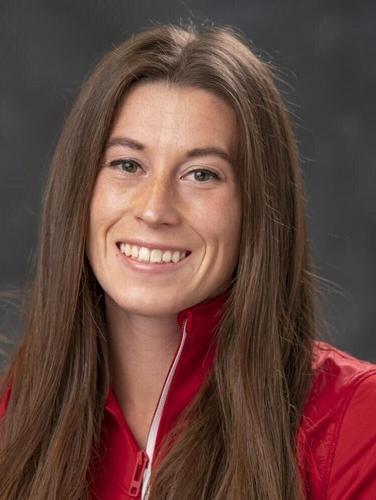
On the same day in January 2022 that Mackenzie Wartenberger told her runners that she was resigning for family reasons, the University of Wisconsin sang the praises of the women’s cross country coach in a tweet.
Some members of that team said they couldn’t believe their coach was being celebrated. Five women who ran for Wartenberger told the Wisconsin State Journal in interviews that they experienced mental abuse and a toxic culture on her team. One former runner, Brogan MacDougall, and her mother reported the abuse to athletics officials and the academic side of the university.
“It was just the biggest slap in the face,” MacDougall said. “It confirmed what I had been feeling the whole time: that the UW staff, everyone involved, didn’t actually care about us and what we were going through. It was all about protecting UW and their staff. So instead of having this scandal or acknowledging that we were really seriously abused on this team, they just let her go quietly.”
People are also reading…

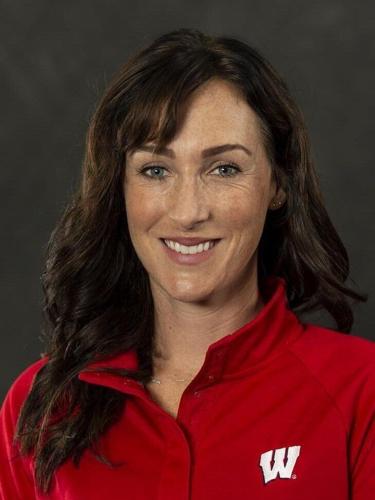
Wartenberger
Wartenberger was the first of two Wisconsin coaches in a span of four seasons to resign publicly on their own terms despite accusations of verbal abuse and other issues that had been reported to athletic department administrators.
Badgers women’s basketball coach Marisa Moseley cited personal reasons in a statement provided by Wisconsin when it announced her resignation March 9. Three athletes who played for Moseley described a lack of leadership and a toxic culture in the program. Like some of the cross country coach’s athletes, those basketball players were skeptical about the reason for the coach’s departure.
Wisconsin said it received no formal complaints about Moseley or Wartenberger, and personnel files obtained by the State Journal through a public records request confirmed that.
But letters obtained by the State Journal and interviews with former players and parents confirmed that accusations had been brought to the attention of the athletic department and university leadership.
Wisconsin declined multiple requests to answer questions about the allegations by former Badgers athletes and refused to make any personnel available for interviews for this story. In one of two statements it released, the university said that when concerns are raised by student-athletes, “we look into each case with an appropriate level of concern and gravity.”
A second statement was issued by athletic director Chris McIntosh after the State Journal provided a list of topics it wanted to cover in interviews. He said student privacy laws preclude university officials from commenting publicly on the accusations. “Any concerns put forth by our student-athletes are critical to me as Director of Athletics,” McIntosh said in his statement. “Every instance is treated with the utmost respect and care.”
Moseley and Wartenberger declined on-the-record interviews for this story, though Wartenberger did release a statement that in part said she did not want to interject her voice into the athletes’ stories.

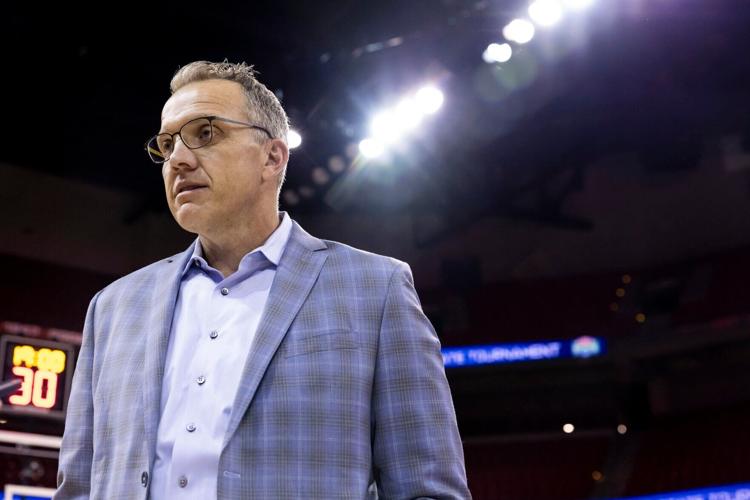
Chris McIntosh took over for Barry Alvarez as Wisconsin's athletic director in 2021.
'You were made to feel worthless'
Five athletes who ran under Wartenberger talked to the State Journal about what they say was mistreatment under the coach: MacDougall, Alissa Niggemann, Victoria Heiligenthal, Madison Mooney and Alexa Westley.
Three runners accused Wartenberger of body shaming, and two athletes said the coach downplayed injury concerns. The athletes said Wartenberger berated runners, many times during individual meetings on Tuesdays in her office at Camp Randall Stadium.
It was commonplace for a runner to show up for her meeting and see a teammate in tears leaving a session with Wartenberger, former athletes said.
“Behind closed doors, you were ripped to shreds and you were made to feel worthless,” said Westley, now an assistant coach at Rutgers. “There are these hot words in sports right now — abuse, mistreatment — all of those things are very, very heavy words. So I don’t just like throw them around because things can be taken very much out of context.”
Wartenberger was hired as women’s cross country coach and a track and field assistant in August 2019. Niggemann said she was dealing with personal issues that fall and struggling during a run at the Pheasant Branch Conservancy near Middleton. Wartenberger tried talking to Niggemann, who said her coach became annoyed by a lack of eye contact between the two.

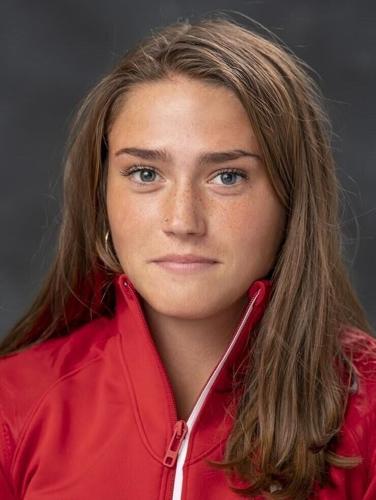
Alissa Niggemann
“She was talking to me and I wasn’t looking at her,” said Niggemann, who ended her career as a two-time Big Ten champion in the 3,000-meter steeplechase. “So she grabbed my ponytail and whipped me up and said, 'Look me in the eye.’ And I was trying to fight back tears.”
Mooney witnessed the incident and confirmed Niggemann’s account during an interview with the State Journal.
MacDougall described a situation that was “descending into chaos” by the fall of 2021.
“I was seeing how the (freshmen) were being treated and how other people were just in absolute crisis,” MacDougall said. “I was also in a bit of a crisis, so that’s when I was kind of trying to pull some alarm bells.”
MacDougall and her mother, Karen, met with Doug Tiedt, the Wisconsin senior associate athletic director who oversees the men’s and women’s cross country and track and field programs, in October 2021 to discuss the end of her collegiate running career.
Part of Brogan MacDougall’s frustration stemmed from a leg injury that she believed was serious. She said Wartenberger wanted her to push through the injury, and an MRI eventually confirmed that MacDougall had a stress fracture.
Heiligenthal said she had a similar experience.
“Mackenzie had told me in a one-on-one meeting that I wasn’t strong enough to be a D-I athlete and wasn’t built for the D-I level because I wasn’t able to push through an injury that you could potentially run through,” Heiligenthal said. “And then it turned out that I had a stress fracture in my foot. Later on it definitely was in my mind that it was kind of a told-you-so moment.”

Brogan MacDougall
MacDougall left the program in November 2021 but was able to remain on scholarship through the remainder of the academic year. She told her teammates in a message on GroupMe, a group messaging app, that Wartenberger’s treatment of her was a major reason for the departure.
“There are many defenses that have been used for her behavior. 'She’s always like this,' 'She’s gotten better,' or 'We all have to deal with it,'" MacDougall said in the message she shared with the State Journal. “But I would encourage everyone to ask themselves if these defenses are truly justified. I have had the privilege to be coached by an incredible coach before coming here and know that coaches are not supposed to make their athletes feel this way.
“It is not normal that so many of us are having mental health crises right now. I too have been dealing with depressive behaviors and suicidal ideation these last few weeks and the truth is that much of that was triggered by Mack.”
Karen MacDougall decided to seek help from the academic side of the university. She sent an email Dec. 17, 2021, to Ian Robertson, then dean of the UW-Madison College of Engineering, and copied McIntosh and the chancellor’s office.
She outlined the accusations against Wartenberger and made a plea to university officials to take action.
“We think the University must, and would want to, do better,” Karen MacDougall wrote in the email cosigned by her husband, Colin. “I am addressing our concerns to you as I have little faith in Athletics being interested or motivated to act. Brogan, like the other team members, is an amazing, strong woman who has been brought to her knees by this abuse.”
Tiedt, the administrator for the sport, wasn’t one of the recipients on the email but responded a day later and acknowledged it had been forwarded to him. “We take the concerns you expressed seriously,” he wrote, “and have been gathering information and inquiring further into the matters.”
It is unclear what happened next or whether an investigation was conducted. Tiedt responded to an interview request by referring the State Journal to Wisconsin athletic department spokespeople.
Wartenberger sent a one-sentence resignation email Jan. 6, 2022, to assistant athletic director for human resources Craig Hanson that listed her last day as June 30, 2022, the end date on her contract. She told her athletes on a video call a week later, and Hanson told her in a letter that she was to work remotely on “non-coaching duties” assigned by Tiedt.
Wisconsin paid Wartenberger through June 30, 2022, and she received notification June 24 that she qualified for a bonus of $8,843.50 — 10% of her salary — to be paid on her final day. The athletic department’s bonus policy rewards coaches based on team and individual performances.
The form letter about the bonus, dated more than five months after Wartenberger’s resignation letter and signed by McIntosh, congratulated her on a “great season” and ended with praise: “Job well done!”
The State Journal reached out to Wartenberger by phone and email to request an interview about the allegations. She responded with an emailed statement.
“Coaching student-athletes was an immense privilege, and I hold deep respect for the challenges they face — especially the unique pressures placed on female student-athletes today,” Wartenberger said. “I believe every woman deserves to have her voice heard, even when her experience may differ from my own perspective or intentions, and for that reason I will not be inserting my voice into their stories — this is not my space to occupy.”
What had been a chaotic period for the cross country team crescendoed later that year when Badgers runner Sarah Shulze died by suicide April 13, 2022, three months after Wartenberger resigned.
Shulze’s parents told the State Journal they believe multiple factors in their daughter’s life contributed to her death, including relationship issues and burnout from being a student-athlete.
Brigitte and Scott Shulze said their daughter told them earlier in her Badgers career that she was emotionally abused by Wartenberger but that other runners endured worse.
“You always have one or two on a team who may not get along with a coach and they just have their own agenda,” Scott Shulze said. “But when multiple people are bringing up things, to me, you need to dig deeper with the rest and then go and actually talk to other people on the team. Is this real? Is this happening? And find out what is going on. And I don’t think that happens. I don’t think it was happening at all.”

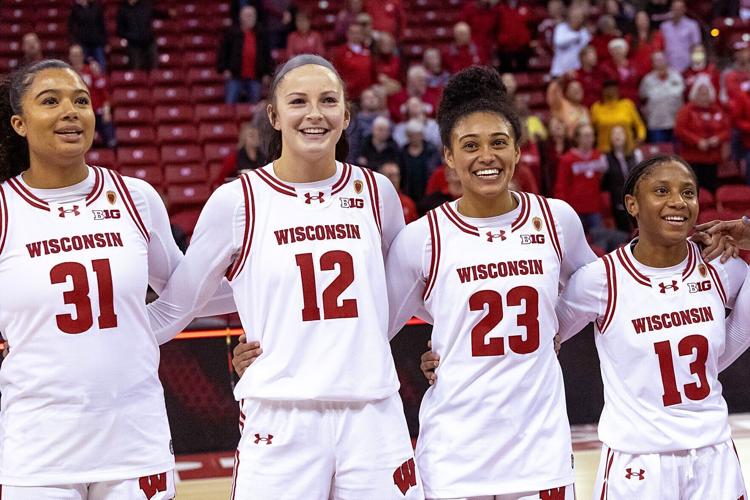
Wisconsin women's basketball players, from left, Imbie Jones, Tessa Grady, D’Yanis Jimenez and Ronnie Porter smile as “Varsity” plays after a 2023 win at the Kohl Center. Jones, Grady and Jimenez all transferred out of the program.
'Listen, this is no joke'
Tessa Grady decided to leave the Badgers women’s basketball team midway through her sophomore season, becoming the 16th player during Moseley’s four seasons in Madison either to transfer or outright leave the program with eligibility remaining. She and her parents, Rob and Keyburn Grady, met with Wisconsin senior associate athletic director Justin Doherty in early January to share some of their concerns about Moseley.
Keyburn Grady had been worried for months about her daughter’s mental health. A 90-second video on the women’s basketball program’s official Instagram account in November 2024 began with Tessa Grady staring at the floor during pregame warmups before the Badgers’ game against Providence in Cancun, Mexico.
Keyburn Grady noticed her daughter’s hair “was a ratted mess” and thought she looked disjointed, disgruntled and disconnected.
Keyburn Grady brought along an article about Shulze’s death to the meeting with Doherty. She placed it in the center of the table, facing it at Doherty and pointing it out to him.
“I just wanted to send a message that listen, this is no joke,” Keyburn Grady said.
Tessa Grady also hand-delivered to Doherty and later sent via email to Moseley and her entire staff a 4,100-word document detailing items she had journaled about Moseley’s coaching and treatment of her and others over 1½ seasons in Madison.
In it, Grady wrote that Moseley used the phrase “Spicy Tikka Chicken Masala” on multiple occasions, both during the 2023-24 campaign and this past season, to describe guard Leena Patibandla. The Ohio native, who’s still with the program, is listed in her bio on the Wisconsin athletic department’s website as the “first Indian-American to play at the Power 5 level.”
Those comments, which Grady wrote created “an uncomfortable atmosphere,” came after Moseley got herself in hot water by using the phrase “run-of-the-mill white” players while praising the diversity on her roster at the 2023 Big Ten media day event.
Patibandla did not reply to a voicemail seeking comment. Her teammates D’Yanis Jimenez and Imbie Jones confirmed Grady’s account.
Tessa Grady said she felt singled out after being one of 14 players to fail an offseason conditioning test after her freshman season. Grady said she was told that same day by Moseley that she was on her “last leg” and how “that little 'dream' of yours to play here is about to be gone,” a reference to comments Grady made that Wisconsin always had been her dream school.
“The numerous instances of toxicity, manipulation, bullying, racism and unprofessional behavior have left me finding it unbearable to play within this current environment,” Grady wrote.
Jimenez was left in tears, Grady wrote, after Moseley forced her to apologize to the entire team for turning over the ball late in a home loss to Butler that same season. Grady called the incident, which was confirmed by Jones, an “extremely degrading situation.”
Grady added that Jimenez briefly was removed from the program and had her banner removed from the Nicholas-Johnson Pavilion following her freshman campaign in 2023-24 for failing the same offseason conditioning test that Grady and nearly every one of her teammates also had failed. Jimenez, who was allowed back on the team after upperclassmen intervened, declined comment to the State Journal but confirmed the two items that referred to her in Grady’s letter.
Grady’s letter also included this quote attributed to former Monroe standout Sydney Hilliard, a regular starter who left the program in January 2023: “She is a big reason as to why I decided to leave and ultimately lose the joy for playing,” Hilliard said. “I felt that the environment she created made me feel insecure as an athlete.” Hilliard declined to be interviewed for this story but confirmed through her father, Greg, that those were indeed her words.
Grady wasn’t the first player to inform Wisconsin officials about her unhappiness with Moseley. Jones decided to transfer in April 2024 after one season with the Badgers. She said in a letter emailed to athletic director McIntosh, Moseley, the entire coaching staff and others that she planned to stick it out for a second season until Moseley made it clear during a series of meetings shortly after the 2023-24 season that she no longer was wanted in the program.
“I had higher expectations from the leadership here at UW and unfortunately the players that didn’t play really got the brunt of it,” Jones wrote in the letter that she shared with the State Journal. “No development, no opportunities, no room for growth or even belief in the players and no plans preparing them for the next season. It is unfortunate, and not the culture of positivity, winning and personal growth like I was once led to believe.”
Reached by phone, Moseley declined comment when presented with the athletes’ allegations.
A Wisconsin spokesperson declined a request for interviews with administrators about the claims against Wartenberger and Moseley and the athletic department’s responses. The school instead issued a statement in which it said “accusations or inferences of abuse, misconduct or impropriety by anyone — coaches, staff or student-athletes — are taken very seriously.” A list of questions sent to a spokesperson about the athletic department’s handling of allegations against Wartenberger and Moseley went unanswered.
McIntosh wrote in a two-paragraph statement, sent through a spokesperson, that he was “confident in the systems and processes we have in place to ensure matters of concern brought forward are handled appropriately.”
Moseley resigned in March after her fourth consecutive losing season. McIntosh told the State Journal weeks later that he had planned to bring her back in 2025-26. It was the first time he had answered questions about Moseley’s departure and came on the same day Wisconsin announced Robin Pingeton as Moseley’s replacement.
“I would just think it’s important to note we have not received a formal complaint against coach Moseley,” McIntosh said that day.
Tessa Towers, who played parts of two seasons at Wisconsin, was the first to go public with accusations of mistreatment against Moseley. In a series of 14 slides, posted Jan. 25 on social media platform TikTok, Towers said, among other things, that Moseley forced her to grant access to her therapy sessions, required Towers to get tested for autism against her will and made her sign a behavioral contract.
Towers, who transferred to Ball State in 2024, has retained an attorney and through him declined comment as she considers her legal options.
Wisconsin at the time of Towers’ allegations said in a statement that it was “looking into this matter.” Asked six weeks later for an update on that investigation, Doherty told the State Journal that Wisconsin had received no formal complaints regarding Moseley’s behavior.
He pointed the State Journal to a formal process, referring to one of its student-athlete policies, listed among the “policies and procedures” on the athletic department’s website.
'I feel like he didn’t really hear me'
The list of Wisconsin’s student-athlete policies that Doherty referenced has 30 entries, including a student-athlete complaint process that applies “when a student-athlete believes that they have been subject to unfair or inappropriate conduct by a coach or other staff member.”
The policy details multiple layers athletes have to clear in reporting allegations to officials, and only the last one makes it a formal complaint.
The initial step suggested in the policy is discussing the issue with the staff member they’re accusing. They can avoid that if they don’t feel comfortable with the confrontation.
An alternate initial step is reporting the complaint to the sport administrator, who “will attempt to facilitate a resolution through informal means, such as suggesting strategies for resolution or facilitating a conversation between the involved parties.”
A grievance that isn’t resolved after that point can be elevated to a formal complaint by the athlete. That triggers an investigation by an athletic department administrator, who then issues a report to the athletic director for a final decision.
Wisconsin also offers athletes the chance to have an exit interview, something Jones did with Doherty after she’d sent her letter about Moseley.
“Kind of what I got out of the meeting is he was like, here comes another girl that’s mad because she didn’t play,” Jones said. “I told him about my meetings, and probably in more detail because it was fresh. He didn’t even seem concerned. He was kind of like, if this was a problem, you should have come to me a long time ago and we could have sorted this out. I feel like he didn’t really hear me. He was obviously listening, but I don’t think he really heard me.”
Doherty, who retired in April, didn’t respond to an email from the State Journal seeking an interview or to a list of questions submitted through a Wisconsin spokesperson.
The student-athletes who came forward want to see an acknowledgement of their concerns.
“It was heartbreaking, and of course then if you don’t actually acknowledge that we’re being abused, they never gave us any resources,” Brogan MacDougall said. “We should have been having serious psychological counseling. ... There should have been serious reform. There should have been people losing their jobs. I don’t understand it. There was so much neglect. How does it go unpunished?”
Gallery: Badgers women's basketball coach Marisa Moseley

Wisconsin coach Marisa Moseley encourages her team during a Big Ten Conference game against Michigan State earlier this season at the Kohl Center.

Wisconsin women's basketball coach Marisa Moseley congratulates Sania Copeland (15) and Ronnie Porter (13) during the Badgers' nonconference game against Bradley earlier this season.

Wisconsin women's basketball coach Marisa Moseley celebrates during a nonconference game against Kansas State earlier this season.

Wisconsin coach Marisa Moseley instructs her team during a Big Ten Conference game earlier this season at the Kohl Center.

Wisconsin women's basketball coach Marisa Moseley encourages her team during a Big Ten Conference game against Minnesota earlier this season at the Kohl Center.

Wisconsin coach Marisa Moseley shouts instructions to her team during the first half of the team's Big Ten Conference opener earlier this season at the Kohl Center.

Badgers coach Marisa Moseley reacts in the first quarter of a the team's game against Florida State earlier this season at the Kohl Center.

Wisconsin coaches Greg Gard, from left, Paul Chryst, Marisa Moseley and Tony Granato talk after The Varsity Collective news conference inside the Hilton Garden Inn last year in Madison.

Wisconsin basketball coaches Marisa Moseley and Greg Gard chat after The Varsity Collective news conference inside the Hilton Garden Inn last year in Madison.

Badgers coach Marisa Moseley reacts to a turnover in UW's loss to Nebraska last season in Madison.

Badgers women's basketball coach Marisa Moseley talks with guard Krystyna Ellew during a game last season at the Kohl Center.

UW women's basketball coach Marisa Moseley celebrates a well-executed drill during practice last season.

Badgers women's basketball coach Marisa Moseley yells instructions to her players during a practice last season.

A collection of photos of Wisconsin women's basketball coach Marisa Moseley, who started at Wisconsin in March 2021.

Wisconsin coach Marisa Moseley talks with Serah Williams and Ronnie Porter, left, as they wait to check back in during a Big Ten Conference game this season at the Kohl Center.

Wisconsin coach Marisa Moseley directs her team during a Big Ten Conference game earlier this season at the Kohl Center.

Wisconsin coach Marisa Moseley signals to her team during a nonconference game earlier this season at the Kohl Center.

Wisconsin coach Marisa Moseley smiles at her players in the second half of the Super 16 round in the 2024 WNIT at the Kohl Center.

Wisconsin coach Marisa Moseley yells during the second half of a game last season at the Kohl Center.

Wisconsin coach Marisa Moseley speaks to her players during the first half of a game last season at the Kohl Center.

Wisconsin coach Marisa Moseley encourages her team during a Big Ten Conference game against Michigan State earlier this season at the Kohl Center.

Wisconsin women's basketball coach Marisa Moseley congratulates Sania Copeland (15) and Ronnie Porter (13) during the Badgers' nonconference game against Bradley earlier this season.

Wisconsin coach Marisa Moseley instructs her team during a Big Ten Conference game earlier this season at the Kohl Center.

Wisconsin women's basketball coach Marisa Moseley encourages her team during a Big Ten Conference game against Minnesota earlier this season at the Kohl Center.

Wisconsin coach Marisa Moseley shouts instructions to her team during the first half of the team's Big Ten Conference opener earlier this season at the Kohl Center.

Wisconsin coaches Greg Gard, from left, Paul Chryst, Marisa Moseley and Tony Granato talk after The Varsity Collective news conference inside the Hilton Garden Inn last year in Madison.

Wisconsin basketball coaches Marisa Moseley and Greg Gard chat after The Varsity Collective news conference inside the Hilton Garden Inn last year in Madison.

Badgers coach Marisa Moseley reacts to a turnover in UW's loss to Nebraska last season in Madison.

Badgers women's basketball coach Marisa Moseley talks with guard Krystyna Ellew during a game last season at the Kohl Center.

Badgers women's basketball coach Marisa Moseley yells instructions to her players during a practice last season.

Wisconsin coach Marisa Moseley talks with Serah Williams and Ronnie Porter, left, as they wait to check back in during a Big Ten Conference game this season at the Kohl Center.