

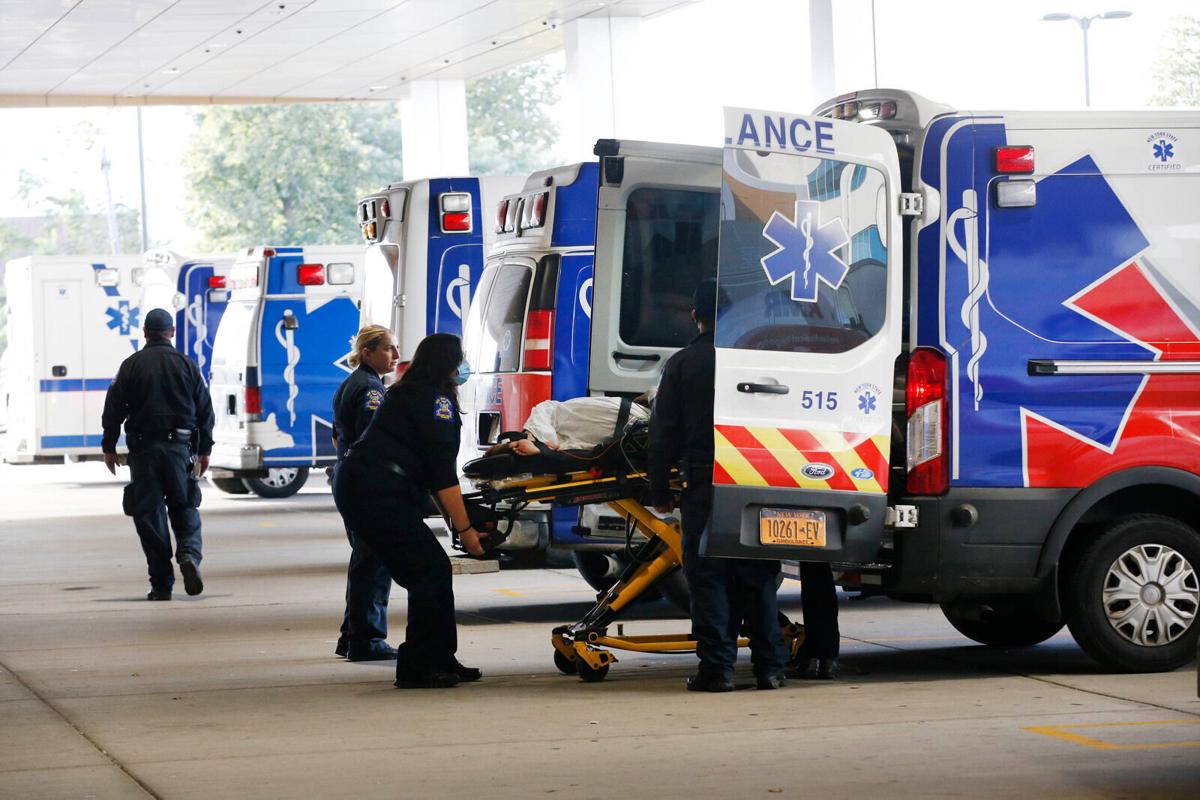
For Western New York's hospitals, it was the perfect storm.

For Catholic Health, keeping Mercy Hospital open means paying vastly higher wages to replacement workers. For striking workers, each day means more lost wages.
It started with the Covid-19 pandemic, which over the past 18 months has strained hospital staff.
Then, in late September came the state's vaccine mandate for health care workers, which pushed hundreds of employees to the sidelines because they refused to get the shot.
And just a few days later, on Oct. 1, came the Mercy Hospital strike, which idled many of the South Buffalo hospital's services, put 2,000 health care workers on the picket line and redistributed patients – and pressure – across the region's hospitals.
A month later, the Buffalo Niagara region's other hospitals are grappling with more patients. And patients are facing longer wait times for emergency services as volumes increase, while others are seeing their elective surgeries postponed due to a lack of available beds.
People are also reading…

The region's health care system, already squeezed after hundreds of workers lost their jobs or were put on leave because of the state vaccine mandate, is facing even more constraints if unionized workers at Mercy Hospital go on strike Friday.
In fact, 10 days after the strike began, Erie County Medical Center had 562 patients staying in its hospital – the highest inpatient census in the more than 100-year-old institution's history.
At Kaleida Health, while the emergency room wait times listed on its website for Buffalo General Medical Center and Millard Fillmore Suburban Hospital are regularly over an hour, patients often wait much longer.
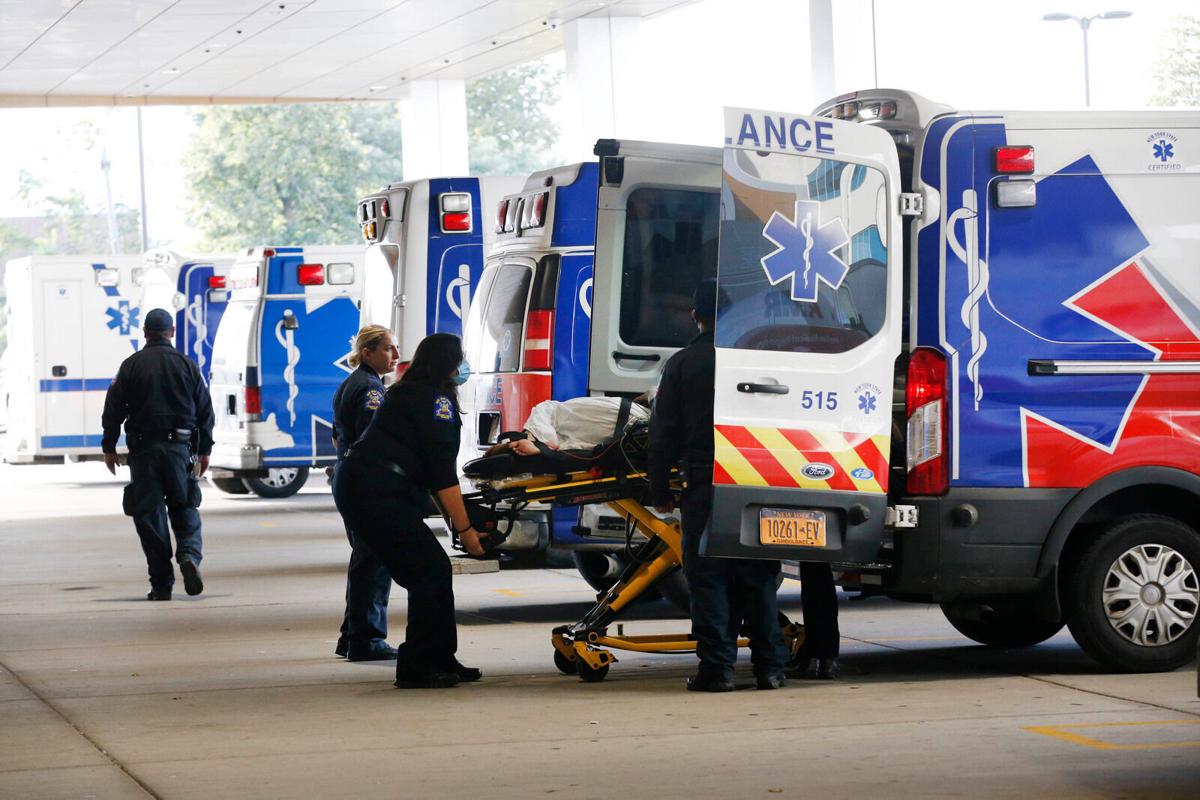
And for Erie County's Division of Emergency Medical Services, the job of coordinating medical communications between ambulances, hospitals and other providers has gotten even more challenging.
Catholic Health and the striking workers' union, the Communications Workers of America Local 1133, continue to bargain and work toward a deal, one month into a dispute over wages and staffing levels. Catholic Health is paying millions of dollars each week to a staffing firm for replacement workers to keep Mercy Hospital operating, albeit at a significantly reduced scale.

Mercy Hospital of Buffalo was caring for less than half as many patients on Wednesday than i…
For instance, Catholic Health said Mercy Hospital is caring for about 100 patients daily, down from its usual census of more than 300. Its emergency department is seeing about 50 visits a day, compared with the typical 145-160 patients daily.
“It’s a fraction of the care we can provide at this hospital, which means others in the community needed to step up or there’s been long delays in care," Catholic Health President and CEO Mark Sullivan said.
Some of that burden also has shifted to Catholic Health's other hospitals, which all are at or near capacity, spokeswoman JoAnn Cavanaugh said.
Since the strike began, the number of staffed hospital beds across Western New York has fallen – sharply. As of Oct. 30, there were 2,188 hospital beds across the region, down about 461, or 17%, from 2,649 beds the day before the strike began, according to state Health Department data.
Similarly, the number of staffed intensive care unit beds was 288 on Oct. 30, down 131, or about 31%, from 419 ICU beds on Sept. 30.
With fewer beds, the percentage of occupied beds has pushed higher as of Oct. 30, to 87.1% in hospital beds and to 87.5% in ICU beds.
For the region's other hospitals, it is still unclear when the storm will subside.

Mercy has suspended inpatient elective surgeries, and is diverting ambulances from the hospital and Mercy Ambulatory Care Center.
ECMC
Go back to 2019, before Covid-19, and it was rare to see the inpatient census at ECMC go above 500.
Maybe a bad flu season or a spike in traumatic injuries in the summer months could cause that number to hit 501 or 505, but such a figure would set off a warning signal inside the campus to try to alleviate that burden.
“If red alert used to be 501, you can imagine what 562 did to the building," Dr. Sam Cloud said of the inpatient total on Oct. 11.
ECMC is licensed for 573 beds.
Cloud, ECMC's associate medical director and an attending physician in the emergency department, said that increased patient load gets distributed to the same amount of workers.
Like Catholic Health, ECMC also has struggled to hire. Spokesman Peter Cutler said ECMC has about 500 open clinical positions.
To help with the higher demand, ECMC had four nurses and one tech from New York-Presbyterian Hospital make the trip to Buffalo. Three of them worked in the emergency department, and two were in one of the critical care units for one week, working their last day at ECMC on Oct. 22.
Cloud said ECMC's inpatient census on Oct. 26 stood at 538, lower than the peak a couple weeks earlier, but still high. That number climbed to 557 people as of Monday morning, Cutler said.
In addition to more patients coming in, Cloud said ECMC also has had a decrease in patients leaving the hospital.
With shortages of nursing home staff and home health aides, ECMC is holding 39 people who no longer need to be hospitalized because they can't find alternative care in the community.
"We're getting bottlenecked with the patients in the building," Cloud said.
So much so that ECMC's "left without being seen" rate in its emergency department, which means a patient left the hospital without being seen by a doctor, has increased significantly.
Cloud said ECMC typically aims to have that rate below 3.5%. Now?
"We’ve been having days where the left without being seen rate is 20% because the ER is so full that patients decide after waiting for a couple hours that they don’t want to wait any longer," he said.
Cloud did say, however, that ECMC's staff is trained to see which patients need to be seen immediately, such as those who are unstable or have a serious medical condition.
Even before Mercy Hospital decreased its inpatient capacity amid the strike, ECMC was having difficulty treating all of the patients that came in through its emergency department.
In September, ECMC had 800 people leave without being seen, compared with just 200 in September 2020, ECMC President and CEO Thomas J. Quatroche Jr. said.
"It's creating a real – not only a challenge for us for access for patients, but obviously financially," Quatroche said. "Those are patients that would have been treated, and we would have been reimbursed for it."
With challenges this big, there are no immediate fixes.
"It’s going to take us a while to dig out of this," Cloud said.

The reasons health care workers cite for striking are similar: They have endured the demands and exhaustion of working through the pandemic and insist hospitals staff up to help shoulder the workload.
Kaleida
On the first day of the Mercy Hospital strike, Kaleida saw an immediate surge in patients needing cardiac and stroke care. That first day, within an hour, Kaleida had to call in an extra team to respond to heart attacks and another team for strokes, said Dr. Michael Mineo, chief medical officer at Buffalo General, Millard Fillmore and DeGraff Medical Park.
Buffalo General is seeing more than 10 additional ambulances a day, he said. And Kaleida's website almost always lists the emergency room wait time at Buffalo General at more than an hour.
In reality, it can be much longer. Mineo said the wait time in Buffalo General's emergency room can be as much as 12-16 hours, though he noted patients are almost always seeing a doctor in triage, where a patient's illness or injury is assessed shortly after arrival.
Millard Fillmore is seeing in excess of an additional two or three ambulances a day, Mineo said. Even DeGraff in North Tonawanda, 20 miles north of Mercy Hospital, is seeing 60 to 70 patients a day – record highs in recent history, Mineo said.
With labor and delivery services at Mercy also suspended, he said Oishei Children's Hospital has had a 35% increase in deliveries since the strike began.
To adjust, Kaleida has been postponing some elective surgeries on a case-by-case basis, due to a lack of available beds, Mineo said.
One month into the Mercy strike, Mineo said the increased patient demand has remained elevated.
"We had the surge," he said. "We developed some processes, which gave us a quick benefit, but the challenge we're having now is just extreme fatigue amongst our staff. They were fatigued from Covid, and the last thing they needed was the additional volume from a strike outside our system."
Kaleida also has struggled to hire and has 300 open positions across the system. Mineo said Kaleida has hired more recruiters, approached retired staff and agreed to an incentive program with the unions representing many of its workers that allows some employees to earn extra pay for picking up additional shifts.
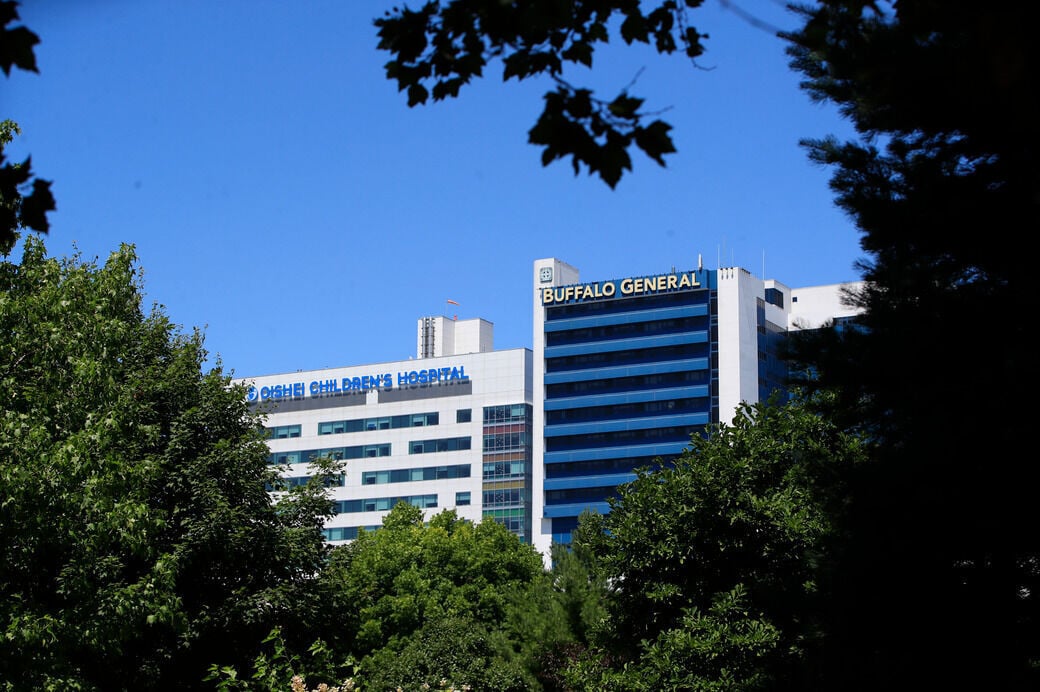
Kaleida's staffing crunch has been aggravated by the pandemic, the state's vaccine mandate and a patient volume increase stemming from an ongoing strike at Mercy Hospital.
"It's showing some effectiveness in some areas, but really it's encouraging the staff we already have to keep coming to work," Mineo said. "But it doesn't address the issue of needing more people."
Patrick Weisansal, vice president of CWA Local 1168, which represents 3,800 workers at Kaleida, said the pandemic and the Mercy strike has put a spotlight on the longstanding issue of hospital staffing.
"It's always been busy," said Weisansal, a 12-year Buffalo General employee who is a CT scan technologist at the facility. "It's just adding more onto the plate."
While the Mercy strike has grabbed the headlines, he said many other hospitals find themselves in a similar situation with burned-out employees looking for improvements in their next contract. CWA Local 1168 represents some workers at Catholic Health's St. Joseph Campus, which is part of the ongoing negotiations.
The union's contract with Kaleida expires at the end of May.
"The strike, yes, has an impact on volume," Weisansal said. "But the problems we've been seeing are the same they've been."
Emergency Medical Services
Coordinating medical communications already could get complicated. It only became more challenging through a pandemic and amid staffing shortages at hospitals and at ambulance companies.
"The strike at Mercy has compounded it," said Gregory Gill, deputy commissioner of Erie County's Division of Emergency Medical Services. "Instead of ambulances driving 10-15 minutes to a hospital, they’re driving 30 minutes to a hospital. It’s hitting the volunteers in the southern area, south of the city, because of the lack of hospitals there."
To this point, he said north of Buffalo has fared a little better.
"Taking Mercy out of the mix really increases the burden on the volunteers," Gill said.
To adapt, Gill said the county is working on being able to transport patients to immediate care facilities if the injury or illness is more low risk. In New York, he noted, the patient makes the determination of what hospital they want to go to.
Gill called the strike "a tipping point," with the patients that Mercy would have treated being redistributed to other facilities across Western New York.
“It’s quite the ripple effect throughout the whole system," he said.


