

Merle's Automotive Supply is something of a Tucson institution, but the modern version is as far from the days of a shade tree mechanic with a pack of Lucky Strikes in his rolled-up T-shirt sleeve as a hybrid Lexus SUV is from a '56 Chevy Nomad wagon.
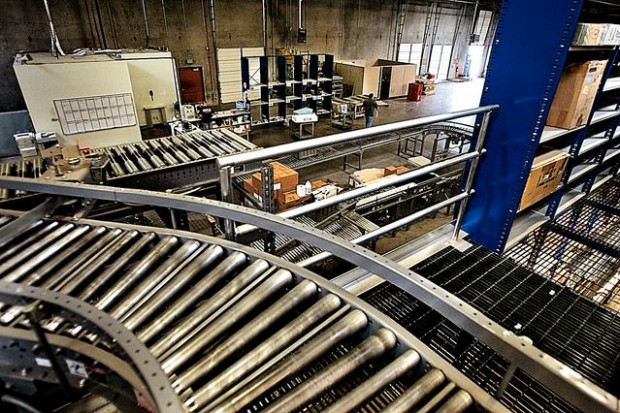
After dishing out parts from Merle's tan building on North Fourth Avenue from 1969 until 1993 and for 15 years on University Boulevard near North Stone, the locally owned company moved into a semi-automated parts warehouse three times the size of the original warehouse and store.
The 74,000-square-foot warehouse and company headquarters, in a business park at 4015 S. Dodge Blvd. near South Palo Verde Road and East Ajo Way, serves Merle's 14 Southern Arizona stores. There are eight retail Merle's in Tucson, including one in the corner of the new building, and one each in Green Valley, Nogales, Safford, Morenci, Globe and Casa Grande, said Merle's operations manager Bruce Bagenstos.
People are also reading…
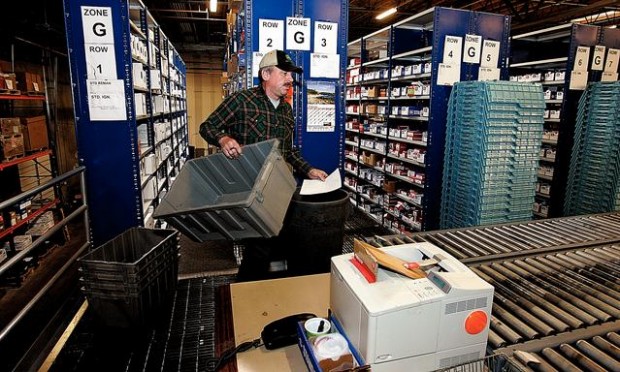
Twenty-three employees pluck the stores' parts orders from printers at the head of conveyor belt "streets" that run through eight zones, "neighborhoods" of towering shelves with related parts in the huge warehouse. They put the parts in plastic bins, coded for individual stores, and send them on their way down the conveyor belt streets, which lead to staging areas just inside the loading dock.
There, big trucks take daily loads of parts to replenish the retail stores' inventories and little trucks drive up throughout the day to pick up hot customer orders, many destined for local auto shops where mechanics need a part to get customers' cars back on the road.
Bagenstos says Merle's business is roughly 80 percent commercial (besides the auto repair shops, the big customers are mines, school districts, utility companies and other fleet operators) and 20 percent over-the-counter retail sales in Merle's stores.
Here's a Q&A with Bagenstos:
Q: Why expand in an economic downturn?
A: "It was in the works for two years. The economy has had an effect, not necessarily bad. People aren't buying new" cars, so they're fixing what they've got.
Q: How have you managed to expand while the Internet has stunted the growth or killed a lot of other local retail?
A: "(Internet companies) may have great prices, though there's some question about the shipping costs. But what is the availability and what happens if you have a problem?
"We do a lot for our customers. Stores transfer parts from the hub, but they also transfer between stores. Everybody pulls together. You don't get that on the Internet.
"It's a small town."
Q: How have things changed for do-it-yourselfers, the "shade-tree mechanics"?
A: "The first big shock was disc brakes; guys didn't know how to work on them. Then electronic ignitions. Now everything has a computer."