

ST. LOUIS — Jason Everitt approaches house calls like a doctor.
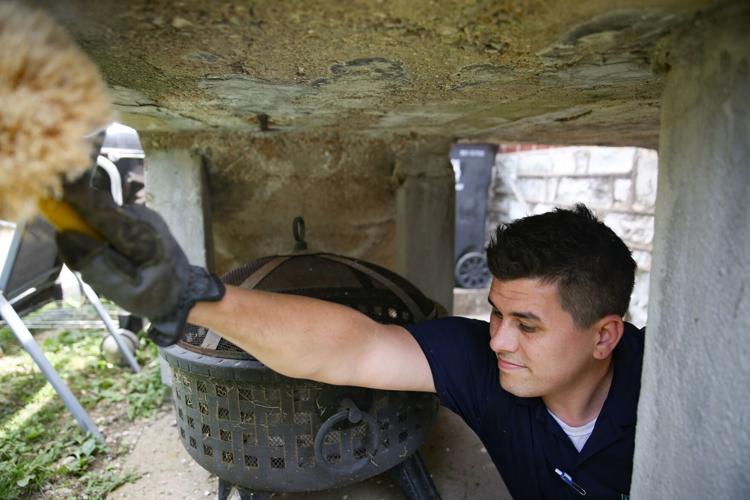
As the pest control technician walked up to a University City home this week, he immediately identified causes of infection — in this case, vines that formed an easy insect ladder to gaps leading into the roof — and began prescribing remedies to help keep bugs out.
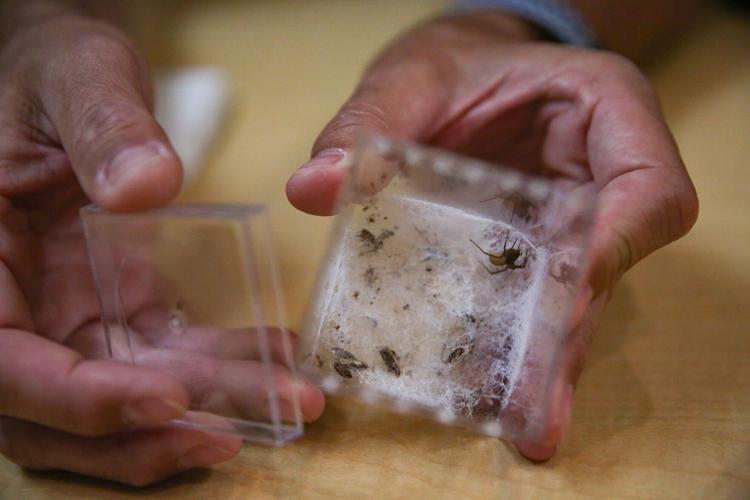
Recently, Everitt, technical director for Rottler Pest Solutions, and his team have been busy diagnosing cases of spiders descending from peoples’ attics, mostly the venomous brown recluse.
Pest control companies across the St. Louis area are reporting an annual surge in calls about spiders and insects, triggered by extreme heat. Such creatures are cold-blooded, so they move, eat and reproduce more as summer warmth spurs their metabolism. Their life cycles get a speed boost as they emerge from winter.
People are also reading…
“They have an on-off switch basically when they become active, and it’s usually temperature dependent,” said Kevin Rice, a University of Missouri entomologist.
But there’s a threshold to the amount of heat bugs and insects can tolerate. Extreme temperatures drive the critters from attics into lower levels of homes, Everitt said. That’s where they encounter people, creating the wave of pest reports.
“Spiders tend to go nuts” when temperatures heat up, said Jon Sloane, Rottler’s public relations manager.
Brown recluse spiders often take up residence in fall when temperatures cool off, Everitt said. The dense vegetation they usually hide in, like leaf litter, becomes too cold for them to survive. Seeking warmth, they take advantage of weak links in a home’s defenses, such as roof gaps, vents or chimneys, to get inside. Attics are one ideal location because of rising heat from the rest of the home.
Spiders and insects enter a period of slow metabolism over the winter, Rice said. Then, when ambient temperatures rise, the switch is flipped.
“Enzymes are being produced at a higher rate, they’re digesting things faster, they have to eat more, and they grow faster,” Rice said.
Even then, however, brown recluse spiders don’t often come near humans. They gained the name “recluse” for a reason, said Scott Wrozier, Rottler’s service manager. They spend most of their lives in one crack, crevice or vent waiting to ambush prey and aren’t aggressive to humans.
But spiders can dry out and die when it gets too hot, Everitt said. St. Louis’ record-breaking heat wave last week forced them out of their crevices.
Heat also pushes spiders’ food sources, like ants, inside in search of moisture and food, said Mike Bentley, director of training and education for the National Pest Management Association. That’s another factor that can drive predators indoors.
Brown recluse spiders can hide in clothes or shoes left on the floor, or crawl into bedsheets looking for a dark cavity, Wrozier said. Their defensive bite is often provoked by humans pressing against them when putting on clothes or rolling over in bed.
Venom in the brown recluse’s bite can cause swelling and a burning sensation. Severe reactions can include fever and death of skin tissue.
Bentley said a seasonal increase in pest activity is typical. In peak summer months , he said, “You can certainly expect that insect activity is going to be full bore.”
Spider calls have jumped about 50% over the past week and a half, Everitt estimated, with the majority about brown recluses. Silverfish, a small insect that chews up furniture and clothes, are second in line.
Allied Pest Control, based in Alton, is seeing a surge in calls about wolf spiders, the company said.
Everitt has seen cases of hundreds of brown recluses in a single home and one vacant house that had thousands. But catching a small number of spiders isn’t a large concern.
“In my world, one or two here and there isn’t that big of a deal,” he said.


