

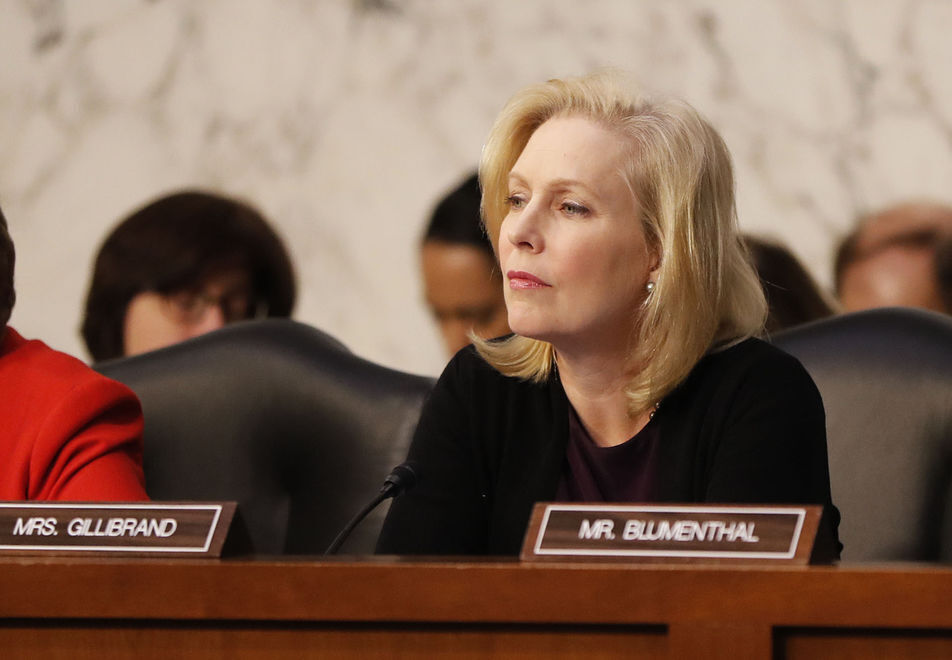
WASHINGTON – Sen. Kirsten E. Gillibrand finds a lot to like in $1.2 trillion infrastructure bill that President Biden signed earlier this week – which is no surprise, because she proposed several parts of the sprawling measure.
Gillibrand, a New York Democrat, held a conference call with reporters on Wednesday to praise the bill. She noted that it will bring $27 billion to New York for roads, bridges, internet access, airport projects, the removal of lead water pipes and other improvements.
"This package will create jobs, boost our economy, deliver funding to rebuild New York’s aging infrastructure and help rebuild underserved communities," Gillibrand said. “This once-in-a-generation investment will build a stronger, more resilient economy and lay the foundation for a brighter future.”
And while there's been plenty of discussion of the massive funding in the bill devoted to all sorts of projects to be completed in the next five years, there's been less focus on some of the more specific provisions of the bill, including those Gillibrand pushed.
People are also reading…
For example, she and Senate Majority Leader Charles E. Schumer, also a New York Democrat, pushed for $1 billion to reconnect communities that have been divided by the highway mistakes of the past. While Interstate 81 in Syracuse inspired their work on that issue, Gillibrand said some of the money could eventually be used to reconstruct Buffalo's Kensington Expressway, which divided the city's Humboldt Park neighborhood decades ago.
Such highways "divided communities of color and cut them off from the local economy," Gillibrand said.
The infrastructure bill also includes Gillibrand's Resilient Highways Act, which aims to raise or relocate highways out of areas that are prone to flooding by increasing federal funding for such moves and other changes aimed at protecting infrastructure from the impact of climate change.
Other provisions in the bill that Gillibrand pushed for include:
• The Stop Act. First introduced by Gillibrand in 2017, the Stop Act will establish a new federal program to fund the installation of public safety bollards and traffic barriers aimed at preventing acts of terror on pedestrian and bicyclist pathways. Gillibrand pushed the measure in response to a 2017 truck attack that killed eight and injured 11 along the Hudson River Park's bike path in New York.
• The Stop Underrides Act. The infrastructure bill also includes parts of a bill that Gillibrand introduced years ago aiming to minimize fatalities and injuries when passenger vehicles collide with tractor trailers. Those provisions will lead to a requirement that strengthened rear underride guards be installed on trucks and call for a study on the impact of side underride guards.
• Limousine safety standards. Gillibrand and Schumer also won inclusion of safety standards for limousines that they have been pushing since a 2018 crash in Schoharie that claimed 20 lives. The provisions provide funding to states to impound unsafe vehicles and call for research into safety equipment that should be required on limousines.
• PFAS funding. At Gillibrand's urging, the bill devotes $10 billion to addressing per- and polyfluoroalkyl substances, dangerous "forever chemicals" that have been linked to health problems in humans and animals.


